
A competency-based interview asks for evidence. Each question targets one job-related skill. Candidates answer with a real example of what they did. The premise: past performance is the best predictor of future performance, as the University of Washington explains. This guide covers the format, the competencies tested, sample questions for clinical and healthcare roles, answer structure, preparation steps, common mistakes and notes for employers.
TL;DR
- Competency-based interviews ask for specific past examples tied to job skills, such as teamwork, communication or conflict management.
- Every candidate is typically asked the same questions and scored against the same standards.
- Answers work best in STAR form: Situation, Task, Action, Result, with the result quantified where possible.
- Preparation: one example per competency, three to five stories that can be adapted, practiced aloud.
- Common failures: too much context, too much "we", too little on actions and results.
Table of Contents
- What a competency-based interview is
- Behavioral and situational questions
- Competencies employers assess
- Sample competency-based questions
- How to structure an answer: STAR
- How to prepare
- Common mistakes
- Notes for employers and hiring managers
- Our perspective
- Find roles and hire verified clinicians
- FAQ
- Sources
What a competency-based interview is
Definition: an interview built around competencies. A competency is a skill, knowledge area, ability or characteristic the job requires.
The University of Washington adds a useful point: competencies cover not only what a candidate knows, but how that knowledge is applied to meet job expectations.
The University of Wyoming describes these interviews as ones where questions test one or more specific skills and require concrete examples of behavior and experience in particular circumstances.
Key features:
- Questions are tied to the job, not to general personality.
- Answers are evidence-based, not opinion-based.
- Scoring follows defined criteria.
- Terms used interchangeably: behavioral interview, competency-based interview, structured interview. They overlap heavily.
How the structured format works
The U.S. Office of Personnel Management (OPM) defines a structured interview as an assessment that systematically asks about job-related competencies through past behavior and hypothetical situations. It uses standardized questions, order, scoring standards and rating scales for all candidates.
In practice, under the OPM model:
- All candidates receive the same predetermined questions in the same order.
- Trained interviewers take notes.
- The same rating standards apply to every answer.
- Structured interviews are typically designed around four to six competencies, though unusual or senior jobs may differ.
The University of Wyoming notes that structured interviewing can support thorough and equal evaluation, clear decision points, legally defensible criteria and a professional process.
Behavioral and situational questions
Two question types appear in these interviews. The Society for Human Resource Management (SHRM) separates them clearly.
| Type | What it asks | Typical opening | What it tests |
|---|---|---|---|
| Behavioral | A specific past example | "Tell me about a time when..." | What the candidate actually did |
| Situational | A realistic hypothetical | "What would you do if..." | Proposed judgment and response |
Yale's Office of Career Strategy notes that behavioral interviews commonly use prompts such as "Tell me about a time when" and "Give me an example of", asking for past accomplishments as an indication of future success.
In both types the question links to a job-related competency. Answers are evaluated against defined standards.
Practical rule for candidates: when the question asks about the past, tell a true story. When it describes a hypothetical, explain the reasoning step by step, then connect it to a similar real situation if one exists.
Competencies employers assess
No single list exists. Sources overlap, though.
- OPM names teamwork, oral communication, interpersonal skills, conflict management, and influencing or negotiating as well suited to structured interviews.
- Harvard's Mignone Center for Career Success says employers commonly assess problem-solving, teamwork, communication, writing, leadership, professionalism, qualifications, organizational fit, motivation and potential contribution.
- UConn's career center lists communication, critical thinking, equity and inclusion, leadership, professionalism, teamwork, technology and self-development.
- SHRM's interview competencies include business acumen, consultation, critical evaluation, ethical practice, flexibility, global and cultural effectiveness, learning orientation, relationship management and stress management or composure.
- A UK career guide lists adaptability, commercial awareness, conflict resolution, decisiveness, independence, resilience and others as regularly sought competencies.
Competencies in healthcare hiring
Healthcare roles weigh the same core set, applied to clinical settings:
- Teamwork: handoffs, multidisciplinary rounds, shift coverage.
- Communication: explaining information to patients, families and colleagues.
- Conflict management: disagreements with colleagues, difficult patient or family interactions.
- Adaptability: changing priorities, new policies, staffing gaps.
- Decision-making: acting with incomplete information.
- Professionalism and ethical practice: accountability, confidentiality, escalation.
More on which skills healthcare employers prioritize: top skills healthcare employers seek in 2026. Related hiring approach: skills-based hiring in healthcare.
Sample competency-based questions
Published university and employer guides share a pattern. The prompts below follow it, adapted to healthcare settings. They are practice prompts, not official question banks.
Communication
- Tell me about a time when explaining complex information to someone unfamiliar with the topic mattered. How was it handled?
- Describe a time when communication improved a difficult situation.
UConn's list of common prompts includes explaining complex information to an unfamiliar audience. In a clinical setting, a discharge explanation or a medication-change conversation is a natural example.
Adaptability
- Describe a time when priorities changed quickly. What changed in the approach?
- Tell me about adjusting to a new policy or system.
- Give an example of a problem that was not solved on the first attempt.
The Harvard Medical School sample behavioral-question guide includes adaptability prompts about adjusting quickly to changed priorities, working with difficult relationships, handling new policies and solving a problem not resolved at first.
Conflict resolution
- Tell me about a conflict with a colleague. What was the outcome?
- Describe settling a difficult dispute.
- Give an example of addressing a customer or colleague problem.
Yale's hiring-manager template includes conflict-management prompts about taking accountability for conflict, initiating contact to explain one's actions, addressing a problem and settling a dispute.
Critical thinking and decision-making
- Describe a decision made with incomplete information.
- Tell me about gathering facts and analyzing information before a decision.
- Give an example of a quick decision at work, and a difficult decision that needed explaining.
These match the decision-making prompts in Yale's template, which cover incomplete information, fact gathering, analysis, quick decisions and explaining hard ones.
Leadership and initiative
- Tell me about leading a team or project.
- Describe influencing people with conflicting agendas.
- Give an example of changing one's mind, or trying something new.
Similar prompts appear in a career guide's list of common questions: leading a team, handling workplace conflict, making a major decision, solving a problem creatively.
For a longer clinician-specific list, see the medical interview questions prep guide.
How to structure an answer: STAR
STAR is the standard method. Yale recommends it: briefly set the Situation, state the Task and your role, explain the Actions concisely, and describe the Result, quantifying it if possible.
| Step | Content | Rough share of answer |
|---|---|---|
| Situation | Brief context: setting, stakes | 15% |
| Task | The goal and the personal role | 10% |
| Action | Specific steps taken, in order | 50% |
| Result | Outcome, numbers, feedback | 25% |
The percentages are a working guideline, not a published rule. The point: actions and results get most of the time.
STAR-LA: adding learning
King County's STAR-LA method extends STAR with learning and application. Candidates explain what was learned and how it would apply to the job. This closes the loop for the interviewer: the example connects to the role being filled.

Candidates for practice-management or administrative roles can also read about nearshore healthcare staffing to see how non-clinical support teams are organized, which gives context for answers about workflow and delegation.
A worked example
Question: "Tell me about a time you handled a conflict with a colleague."
- Situation: On a medical-surgical unit, a coworker and the candidate disagreed over how to divide discharge tasks during short staffing.
- Task: Keep discharges on time and keep the working relationship intact.
- Action: Asked for a short private conversation. Listened first. Proposed a split by patient acuity. Wrote the plan on the unit board and checked in after the shift.
- Result: Discharges finished on schedule for the rest of the week. The split became the unit default.
- Learning: Raising a conflict early and privately costs less than letting it build.
This example is illustrative. Candidates should use their own true stories and real numbers.
How to prepare
Kellogg's career guidance suggests analyzing the job's main requirements and responsibilities, researching the company, and preparing a sell sheet that lists key skills and three brief story examples, then practicing in Situation/Action/Result format.
Steps:
- Read the posting. Mark each stated requirement. Each one is a likely competency.
- Research the employer. Harvard recommends researching the organization and role and practicing stories that connect skills to requirements.
- List competencies. Four to six is a workable set. Add the role's technical needs.
- Match one story to each. King County advises preparing one example for each competency from paid or unpaid experience and practicing how one story can highlight different competencies.
- Write the stories in STAR. Keep notes short. Do not memorize word for word.
- Practice aloud. Time each answer. Target about two minutes.
- Prepare strengths and weaknesses. Yale advises two or three examples for each, because interviewers are rarely satisfied with one.
Unpaid experience counts: clinical placements, volunteering, caregiving and student projects all supply stories. This matters for new graduates and for career changers.
Role-specific preparation
- Doctors and advanced practitioners: prepare examples on leadership, handoffs, ethical decisions and teaching. See the medical job application tips.
- Nurses: prepare examples on prioritization, escalation, teamwork and patient communication.
- Healthcare assistants: prepare examples on reliability, observation, communication and teamwork. See the guide on upgrading healthcare assistant applications.
- Home care assistants: prepare examples on independence, patient trust and handling unexpected situations. See standing out in home care applications.
- Skill gaps: if a competency has no strong example, a course can help build one. See the clinical skills courses guide.
Common mistakes
Fedweek lists rambling, excessive context, unclear competency evidence, too much "we" instead of "I", poor preparation, negativity about former employers and reading from a script as common interview mistakes.
Fixes:
- Too much context. Two sentences for the situation. Move to the action.
- Too little on results. End with an outcome, a number or feedback received.
- Only "we". Team work is real, but the interviewer scores the candidate. State the personal role. Yale advises explaining the individual role and actions concisely.
- Vague competency evidence. Name the skill through the action, not through adjectives.
- Blaming former employers. Describe the problem neutrally and focus on the response.
- One story for everything. Prepare several. Reusing one is acceptable only if it fits.
- Weakness answers with no steps. Yale advises naming a genuine development area and the steps taken to improve.
- Confidentiality slips. In clinical examples, remove patient identifiers. Describe the situation in general terms.
Notes for employers and hiring managers
Competency-based interviewing helps hiring teams compare candidates on equal terms.
Checklist:
- Choose four to six competencies from the job analysis, as OPM describes for structured interviews.
- Write the same questions for every candidate.
- Define what a strong, average and weak answer looks like before interviews start.
- Use a rating scale and take notes during each interview.
- Mix behavioral and situational questions.
- Score each competency separately, then compare.
Assessments can add data before the interview. See workforce assessments for clinicians and the guide to matching assessment questions to WHO and HRSA. For high application volume, see the AI resume screening playbook.
Our perspective
Competency-based interviews work best when both sides arrive prepared. Candidates need evidence. Employers need a fair structure.
In healthcare, the problem starts earlier. General professional networks mix specialties, so job leads and peer contacts are often not relevant. A nurse, a pharmacist and a locum physician look for different things.
ConnectedMedics is built for healthcare only. Profiles are verified. The jobs board is filtered by specialty. Members can see what roles ask for before they prepare. Each posting becomes a competency list for the interview.
The knowledge hub adds clinical insights and research summaries. These give candidates current material for answers about decisions, change and practice standards.
Employers get tools to post roles and reach verified clinicians, so structured interviews begin with a relevant pool.
David
Find roles and hire verified clinicians
ConnectedMedics lists healthcare roles with specialty filters. Candidates can match each posting's requirements to their prepared stories. The knowledge hub offers clinical guides and medical news for interview research.
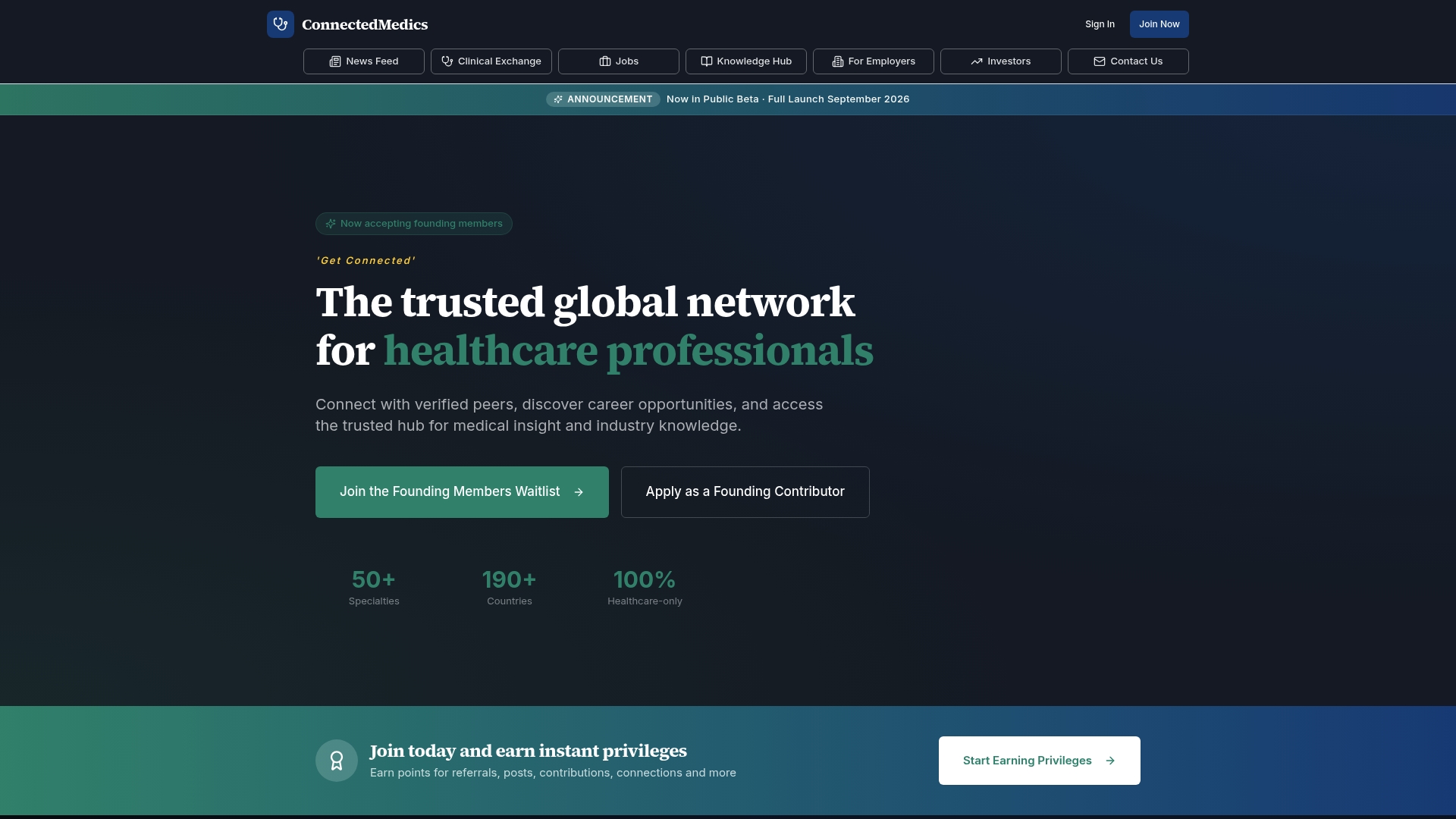
Employers can post jobs and reach verified clinicians. The Growth plan is £99 per month. Free, Enterprise and Premium Employer plans are also available. Compare plans on the employer plans page, read about Premium Employer, or start from the ConnectedMedics home page.
FAQ
What is a competency-based interview?
It is an interview where each question targets a job-related skill and asks for a real example. The method assumes that past behavior predicts future performance. Employers usually ask all candidates the same questions and score them on the same criteria.
What is the difference between behavioral and situational questions?
Behavioral questions ask what the candidate did in a past situation. Situational questions describe a hypothetical and ask how the candidate would respond. SHRM draws this same distinction. Both link to a competency and are scored against defined standards.
How long should an answer be?
No official rule exists. A common working target is about two minutes. Keep the situation to a few sentences. Spend most of the time on actions and the result.
How many examples should be prepared?
One per competency is the minimum. King County advises practicing how one story can be adapted to highlight different competencies. Three to five strong stories usually cover most questions.
What if there is no example for a question?
Use unpaid experience: placements, volunteering or study projects. If none fits, describe how the situation would be handled, then name the closest real experience and what it taught.
Sources
- Behavioral/Competency-based interviewing, University of Washington
- Structured Interviews, U.S. Office of Personnel Management
- Successful Selections STAR Based Interviewing, University of Wyoming
- Interviewing, Harvard FAS Mignone Center for Career Success
- Self-Assessment and Practice, UConn Center for Career Development
- Sample Job Interview Questions, SHRM
- Competency-based interviews: How to prepare, Prospects
- Sample behavioral questions, Harvard Medical School HR
- Hiring Manager Interview Template with Samples, Yale
- The Behavioral Interview, Yale Office of Career Strategy
- Interview Response Method, King County
- Introduction to Interviewing, Kellogg School of Management
- The Most Common Interview Mistakes, Fedweek
- Nearshore healthcare staffing guide