
The top skills healthcare employers seek combine verified clinical expertise with business operations proficiency and digital fluency. According to Indeed Hiring Lab, 64% of skills in healthcare job postings are healthcare and caregiving competencies, reflecting the sector's high regulatory standards and specialized knowledge requirements. Business operations skills appear in over 70% of postings, making them the second most demanded category. Certifications like the Certified Healthcare Financial Professional (CHFP) and Lean Six Sigma signal commitment to quality and efficiency, and 79% of healthcare employers pay a salary premium for candidates who bring specialized nonclinical skills to the table.
1. Which clinical skills are non-negotiable for healthcare employers?
Clinical competencies are the foundation of every healthcare hire. Employers require observable, certifiable skills that reduce patient risk and meet regulatory standards. Generic terms on a resume do not satisfy hiring managers. Specific, documented competencies do.
The core clinical skills employers mandate include:
- Clinical assessment and patient monitoring: Interpreting vital signs, detecting early patient deterioration, and following standardized protocols. Clinical monitoring described in specific terms on a resume outperforms vague language like "patient care."
- Medication administration: Accurate dosing, route selection, and adverse reaction recognition.
- Wound care and infection control: Demonstrated knowledge of sterile technique, dressing protocols, and hospital-acquired infection prevention.
- Clinical documentation: Precise, timely charting using standardized medical terminology. Employers treat documentation accuracy as a direct proxy for clinical judgment.
- Medical terminology proficiency: Fluency in anatomical and procedural language speeds up interdisciplinary communication and reduces error rates.
Healthcare employers require verifiable qualifications and explicit mapping of experience to clinical standards. This means your resume should describe what you monitored, which protocols you followed, and what outcomes you contributed to. A line like "monitored post-operative vital signs per PACU protocol for 30-bed unit" carries far more weight than "provided patient care."
Pro Tip: Review the job description for clinical terminology and mirror it precisely in your resume. Applicant tracking systems at large health systems like HCA Healthcare and Kaiser Permanente filter by keyword match before a human reviewer ever sees your application.
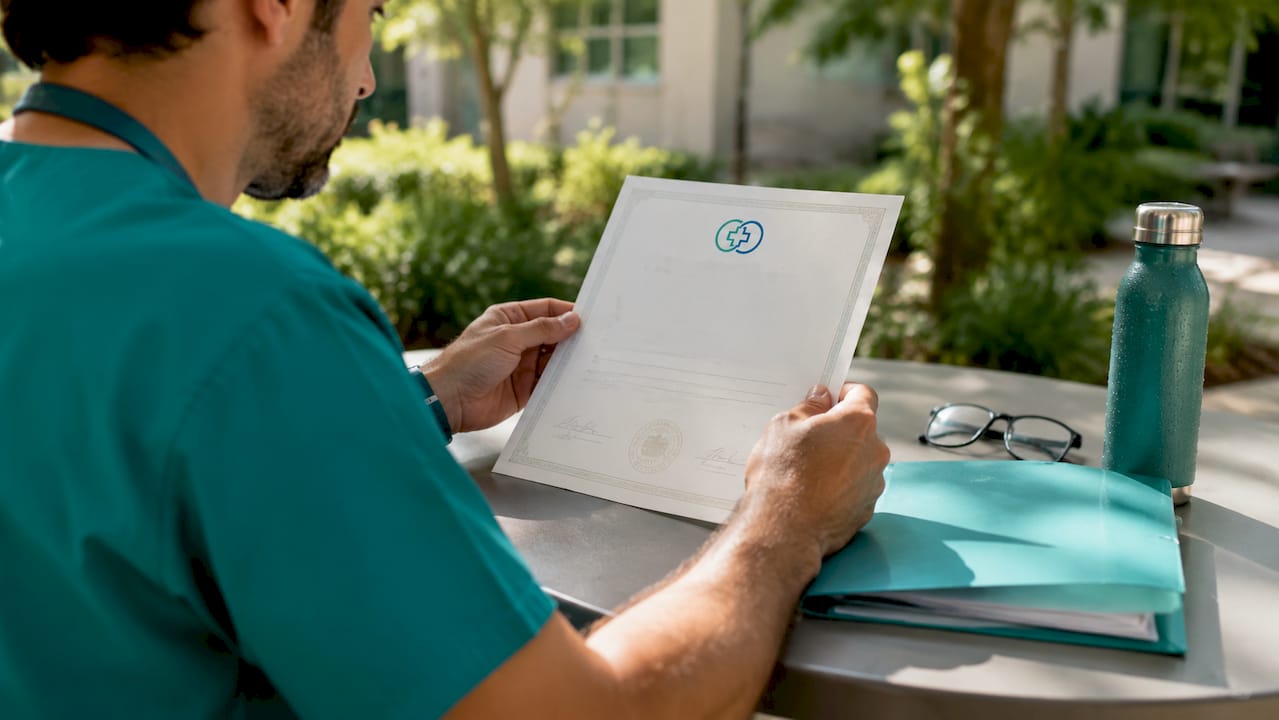
2. What soft skills and communication abilities do healthcare employers prioritize?
Soft skills are not secondary to clinical expertise. They are the mechanism through which clinical skills get applied safely and effectively. Employers at organizations like Mayo Clinic and Cleveland Clinic screen for interpersonal competencies because poor communication is a leading contributor to medical errors.
The most in-demand interpersonal and cognitive skills include:
- Empathy and compassion: Patients report better outcomes and higher satisfaction scores when care providers demonstrate genuine concern.
- Active listening: The ability to hear what a patient or colleague is not saying directly, then respond appropriately.
- Clear verbal and written communication: Handoff reports, care plan explanations, and family updates all require precision and clarity.
- Teamwork and interdisciplinary collaboration: Most care delivery involves physicians, nurses, pharmacists, and allied health professionals working in parallel. Friction between team members directly affects patient safety.
- Adaptability and resilience: Healthcare environments shift rapidly. Staff reassignments, protocol changes, and patient surges require professionals who recalibrate without losing performance quality.
"Cross-functional communication" ranks among the fastest-growing healthcare skills in 2026, according to Becker's Hospital Review, placing it alongside clinical monitoring and workflow optimization as a top hiring priority.
Soft skills belong in your job application, not just in interviews. Quantify them where possible. "Coordinated care plans across a 6-person interdisciplinary team for 20 daily patients" demonstrates collaboration more convincingly than "team player."
3. How do business operations and administrative skills impact healthcare hiring?
Business operations skills are now a near-universal requirement across healthcare roles. In all but 3 states, business operations rank just behind clinical skills in job postings. This category includes credentialing, insurance verification, office management, project management, and revenue cycle management.
The demand exists for a clear reason. Healthcare organizations operate under tight margin pressure, complex payer relationships, and evolving compliance requirements. Professionals who understand how the business side functions reduce administrative friction and support organizational sustainability.
Key business operations skills employers prioritize:
- Credentialing and insurance verification: Errors in these areas delay reimbursement and create compliance exposure.
- Revenue cycle management: Understanding billing codes, claim submission, and denial management directly affects an organization's financial health.
- Office management and scheduling: Efficient patient flow reduces wait times and improves capacity utilization.
- Project management: Professionals who can lead process improvement initiatives are consistently promoted into leadership roles.
- HR and workforce coordination: Knowledge of staffing ratios, onboarding processes, and labor regulations is valued at the department manager level and above.
Certifications formalize these competencies. The CHFP and Lean Six Sigma credentials signal a professional's commitment to quality and efficiency, and they drive both salary premiums and hiring preference. Candidates with revenue cycle management knowledge are more frequently considered for leadership and advancement roles than those without it.
Pro Tip: If you work in a clinical role, document any involvement in scheduling, billing, or compliance tasks. These experiences qualify as business operations skills and make your profile more competitive for senior positions. The healthcare assistant specialization guide from Connectedmedics outlines how certifications map to specific role types.
4. Which digital and technology skills are shaping healthcare employer expectations?
Digital fluency is now a baseline requirement, not a differentiator. The question employers ask is not whether you can use software. They want to know whether you can interpret data, identify bottlenecks, and act on insights to improve patient outcomes. Digital fluency in healthcare means analytical thinking and operational participation, not just logging into a system.
The table below compares foundational digital skills with advanced competencies that command salary premiums:
| Skill level | Examples | Employer value |
|---|---|---|
| Foundational | EHR navigation, Microsoft 365, scheduling software | Required for most roles; table stakes |
| Intermediate | Data reporting, EHR integration, digital patient engagement | Preferred; increases hiring competitiveness |
| Advanced | AI/automation tools, cybersecurity basics, workflow analytics | Commands salary premium; prioritized for leadership |
AI and automation proficiency is the single nonclinical skill commanding the highest pay premium, cited by 46% of employers who pay more for specialized skills. Electronic health record systems like Epic and Cerner are the most commonly referenced platforms in job postings. Familiarity with population health management tools and clinical decision support software further distinguishes candidates.
True digital fluency also means understanding how EHR integrations affect patient engagement and how operational efficiency tools reduce margin pressure. Professionals who can articulate this connection in interviews consistently outperform those who list software names without context. For a practical breakdown of how digital skills factor into healthcare vacancy requirements, Connectedmedics publishes regularly updated data on listed skill demands.
5. How to tailor your skill profile to the role and local market
Employers seek professionals who combine a solid clinical core with contextual skills tailored to local labor market needs. A rural critical access hospital in Montana has different administrative priorities than an urban academic medical center in Boston. Recognizing this distinction and reflecting it in your application is a concrete competitive advantage.
Practical steps for tailoring your skill profile:
- Research regional job postings: Use platforms like Connectedmedics, which lists over 4,600 active healthcare vacancies, to identify which skills appear most frequently in your target geography and specialty.
- Identify role-specific priorities: Clinical support roles weight patient monitoring and documentation. Health IT roles weight EHR proficiency and data analysis. Finance and HR roles weight credentialing, compliance, and project management.
- Close skill gaps with targeted education: Platforms like Coursera and the American Health Information Management Association (AHIMA) offer short courses in coding, data analytics, and compliance that translate directly to resume line items.
- Reflect local language requirements: In markets with large non-English-speaking patient populations, bilingual proficiency is listed as a preferred or required qualification. Spanish fluency, for example, is a documented hiring preference in Texas, California, and Florida healthcare markets.
- Update your resume for each application: Map your documented experience to the specific skills listed in each job posting. Generic resumes underperform targeted ones in both ATS filtering and human review.
For guidance on tracking workforce trends by region and specialty, Connectedmedics provides data-driven resources built specifically for healthcare professionals navigating local market shifts. Understanding skills-based job matching also helps professionals align their profiles with what employers are actively filtering for in 2026.
Key takeaways
The most competitive healthcare candidates in 2026 combine documented clinical competencies with business operations knowledge, digital fluency, and role-specific contextual skills.
| Point | Details |
|---|---|
| Clinical skills must be specific | List protocols, settings, and outcomes rather than generic terms to pass ATS and impress reviewers. |
| Business operations are near-universal | Over 70% of healthcare postings require business operations skills alongside clinical expertise. |
| Digital fluency goes beyond software | Employers want professionals who analyze data and improve workflows, not just navigate EHR systems. |
| Certifications drive salary premiums | CHFP and Lean Six Sigma credentials increase both hiring preference and compensation offers. |
| Tailor skills to role and region | Match your skill profile to the specific demands of the job type and local labor market. |
What I've learned about skills that actually move the needle in healthcare careers
Most healthcare professionals I've observed focus almost entirely on clinical credentials when preparing for a job search. That focus is understandable. Clinical competence is the core of the work. But it's also the baseline. Every serious candidate has it. What separates the ones who advance quickly is the layer on top.
The professionals who move into senior roles fastest are the ones who can speak the language of operations. They understand how their clinical work connects to billing cycles, compliance requirements, and patient flow metrics. They don't need to be accountants or IT specialists. They need to be conversant enough to contribute to cross-functional conversations. That conversance is what certifications like Lean Six Sigma actually signal to a hiring committee.
Digital fluency follows the same pattern. Listing "Epic" on a resume is table stakes in 2026. What gets attention is a candidate who can describe how they used Epic's reporting tools to identify a documentation gap, then worked with their team to close it. That's the difference between using a tool and demonstrating operational value.
My recommendation: treat your skill development as a portfolio, not a checklist. Clinical skills are the foundation. Business operations and digital fluency are the structure. Soft skills are what make the whole thing functional under pressure. Build all three deliberately, document them specifically, and update them continuously. The healthcare job application process rewards professionals who can show, not just tell.
— David
Find your next role with Connectedmedics
Connectedmedics is built exclusively for healthcare professionals. The platform provides verified profiles, a global jobs board with over 4,600 active vacancies, and a knowledge hub with clinical insights and career resources contributed by verified medical experts. Whether you are a nurse practitioner looking for a specialty role or an administrator targeting a leadership position, Connectedmedics matches your skill profile to relevant openings without the noise of generic job boards. Create your profile, showcase your certifications, and set up job alerts filtered by specialty, location, and role type at connectedmedics.com.
FAQ
What are the top skills healthcare employers look for in 2026?
Healthcare employers prioritize clinical competencies like patient monitoring and documentation, business operations skills like credentialing and revenue cycle management, and digital fluency including EHR proficiency and data analysis. Certifications such as CHFP and Lean Six Sigma further strengthen a candidate's profile.
Why do healthcare employers value business operations skills?
Business operations skills appear in over 70% of healthcare job postings because they support workflow efficiency, compliance, and financial sustainability alongside direct patient care responsibilities.
Which digital skills command the highest salary premium in healthcare?
AI and automation proficiency is cited by 46% of employers who pay more for nonclinical skills, followed by credentialing and office management expertise.
How should healthcare professionals present soft skills on a resume?
Quantify soft skills with specific examples. Describing coordination of a six-person interdisciplinary team for 20 daily patients demonstrates collaboration more effectively than listing "teamwork" as a bullet point.
How can healthcare professionals identify skill gaps for their target role?
Review active job postings in your target specialty and region, then compare listed requirements against your current credentials. Resources like the medical specialty career guide from Connectedmedics provide role-specific skill breakdowns to guide targeted upskilling.