
Healthcare professionals face a job search unlike any other. Between shift schedules, licensure requirements, and credentialing paperwork, the process to apply healthcare vacancies efficiently demands more than a polished resume. It requires a system. This guide covers exactly that: from organizing your documents before you apply, to batch processing applications without losing quality, to using recruiters and AI tools that do the heavy lifting. Whether you're a nurse, allied health professional, or revenue cycle specialist, these steps will cut wasted time and improve your results.
Table of Contents
- Key takeaways
- How to apply healthcare vacancies efficiently: preparation first
- Applying in bulk without losing quality
- Verification and follow-up after submitting
- Leveraging recruiters, job boards, and AI tools
- My take on what actually works
- Find your next role with Connectedmedics
- FAQ
Key takeaways
| Point | Details |
|---|---|
| Prepare credentials first | Gather licensure, certifications, and immunization records before applying to avoid delays. |
| Use clinical language in resumes | ATS systems in healthcare score resumes higher when exact clinical terminology matches job descriptions. |
| Batch your applications | Apply to 10 to 15 jobs per session using tiered tailoring to balance volume with quality. |
| Follow up within 48 hours | Prompt responses to recruiter outreach significantly improve your chances of moving forward. |
| Use specialized platforms | Healthcare-specific job boards and verified networks give access to roles not listed on general sites. |
How to apply healthcare vacancies efficiently: preparation first
Before submitting a single application, your documents need to be in order. Healthcare hiring is not like corporate recruiting. Employers cross-reference your credentials against state databases, and any gap or inconsistency can stall or kill an offer before it's made.
Credentials and licensure
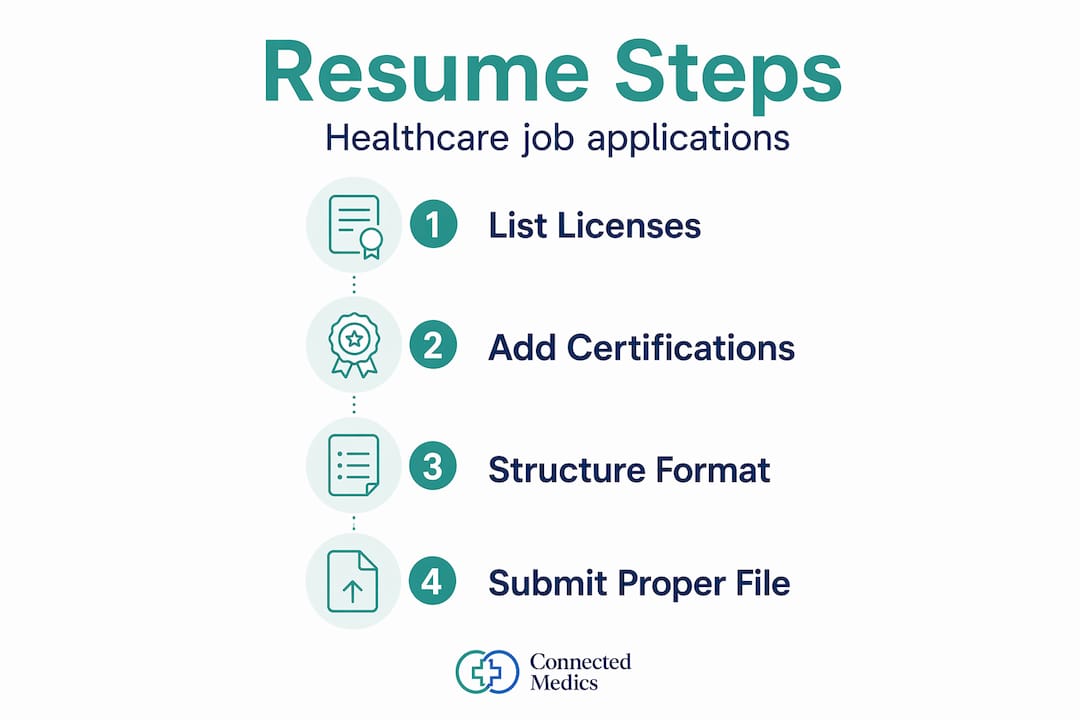
Your resume needs a dedicated section near the top that lists your license type, state, license number, and expiration date. Employers verify this data directly, so licensure sections near the top of your resume reduce bottlenecks in the hiring process. Don't bury this information in the middle of the page.
Certifications like BLS, ACLS, and PALS are not just checkboxes. Employers verify certification currency and the issuing body, so make sure each one is current and correctly attributed. An expired BLS card can disqualify you from a role you're otherwise perfect for.
Resume structure for healthcare
Your resume format matters more than most clinicians realize. Submitting resumes in PDF can cause parsing issues with applicant tracking systems. Use a single-column format with standard section headings like "Clinical Experience," "Licensure," and "Certifications" to maximize ATS compatibility.
Include measurable achievements where possible. "Reduced patient wait time by 18% through triage protocol improvements" is far more useful than "responsible for triage."
Documents to have ready before you start applying:
- Current resume in Word format (ATS-friendly, single column)
- License certificates with state, number, and expiration
- BLS, ACLS, PALS, or specialty certifications with issue dates
- Immunization records (hepatitis B, TB test, flu, COVID documentation)
- Three professional references with current contact details
- Background check authorization forms (many systems require these upfront)
Pro Tip: Create a single folder on your computer or cloud drive that holds all credential documents. Label each file clearly with the document type and expiration date. When a recruiter asks for your BLS card at 9 PM, you'll have it in 30 seconds.
| Document | What to include | Why it matters |
|---|---|---|
| License certificate | State, number, expiration date | Employers verify against state databases |
| Certifications | BLS/ACLS/PALS with issuing body | Currency and source are both verified |
| Immunization records | Hepatitis B, TB, flu, COVID | Required for most clinical environments |
| References | Name, title, current phone and email | Outdated contacts cause delays |
Applying in bulk without losing quality
The biggest mistake healthcare professionals make is treating each application as a standalone project. That approach works for one or two applications. It breaks down at ten.
The answer is a batch system with tiered tailoring. Here's how it works in practice:
-
Build your job list first. Spend 30 minutes identifying 10 to 15 relevant roles before tailoring anything. Filter by specialty, location, and required credentials. A batch approach to applying allows you to process multiple applications per session without sacrificing quality on each one.
-
Create a modular base resume. Your base resume covers your full clinical history, skills, and credentials. From there, you swap in or out specific sections depending on the role. A critical care nurse applying to both ICU and step-down positions needs two versions, not ten.
-
Extract keywords from each job description. ATS systems in healthcare score resumes lower when general language replaces exact clinical terminology. If a job description says "hemodynamic monitoring," your resume should say "hemodynamic monitoring," not "patient monitoring."
-
Apply tiered tailoring. Tier 1 (deep): your top three target roles get a fully customized resume and a tailored cover letter. Tier 2 (standard): mid-priority roles get keyword adjustments and a lightly edited cover letter. Tier 3 (light): lower-priority roles get the base resume with minimal changes.
-
Track every submission. Use a spreadsheet or a free tracking tool to log the role title, employer, date submitted, and current status. This prevents the embarrassing mistake of applying twice to the same position or sending the wrong company name in a cover letter.
-
Use AI tools strategically. AI tools like RoboApply can scan job boards, tailor resumes based on job description language, and generate cover letter drafts. They save hours each week. The catch: always review AI output before submitting. Automated tools don't know your specific clinical context, and a generic cover letter that mentions "patient-centered care" without specifics will read as hollow to any experienced hiring manager.
-
Proofread for wrong names and outdated info. The fastest way to get rejected is sending a cover letter addressed to the wrong hospital. It happens more than you'd think when applying at volume.
Pro Tip: Set aside two dedicated application sessions per week rather than applying sporadically. Consistency in your schedule keeps your tracking sheet current and prevents the mental overhead of picking up where you left off.
Verification and follow-up after submitting
Submitting the application is not the finish line. In healthcare hiring, what happens after submission often determines whether you get the offer.
Typical timelines to know:
Compliance teams process background checks, drug screens, and licensure verifications within 1 to 2 weeks of offer acceptance. That means any delay in providing documents on your end adds directly to that timeline. Have everything ready before you need it.
What to do after you apply:
- Respond to recruiter emails and calls within 24 to 48 hours. Hiring managers notice who is responsive, and in high-demand specialties, fast candidates often get prioritized.
- Keep a digital portfolio ready to share on request. This includes your resume, license copies, certifications, and references in one shareable folder or link.
- Follow up on applications after 5 to 7 business days if you haven't heard back. A brief, professional email referencing the role title and your application date is appropriate. Don't follow up more than twice.
- Update your tracking sheet with every interaction: phone screen dates, interview offers, documents requested, and offers received.
Pro Tip: Set a calendar reminder 7 days after each application submission. If you haven't heard back, that's your cue to send a short follow-up note. Most applicants never follow up at all, so this alone sets you apart.
Maintaining organized records also protects you. If a credentialing team claims they never received your TB test results, you want a timestamped email showing exactly when you sent them.
Leveraging recruiters, job boards, and AI tools
Not all job search tools are equal. For healthcare professionals, the difference between a general job board and a healthcare-specific platform can be the difference between 50 irrelevant listings and 10 roles that actually match your license and specialty.
Specialized recruiters vs. general boards
Many healthcare roles are never posted publicly but are managed exclusively through staffing agencies and dedicated recruiters. These hidden positions are often in high-demand specialties or at facilities that rely entirely on agency pipelines. Connecting with a healthcare-specific recruiter gives you access to this market without additional application effort on your part.
Using specialized recruiters also reduces time-to-fill because they handle much of the credentialing coordination. They know what documents each facility requires and often have direct relationships with hiring managers.
| Resource | Advantages | Limitations |
|---|---|---|
| Healthcare-specific job boards | Relevant filters, verified roles, specialty matching | Smaller total volume than general boards |
| General job boards | High volume, broad reach | Low relevance, many non-clinical roles |
| Staffing agencies and recruiters | Hidden market access, credentialing support | Less control over role selection |
| AI application tools | Speed, keyword optimization, cover letter drafts | Requires human review before submission |
What to look for in a healthcare job platform:
- Verified employer listings with active vacancy status
- Filters for specialty, license type, and location
- Direct recruiter contact or messaging features
- Credential verification or document upload support
- Access to healthcare admissions efficiency resources that inform your broader job search strategy
Platforms built specifically for healthcare professionals, like the ConnectedMedics marketplace, list over 4,600 active vacancies filtered by specialty and verified by the platform. That's a different experience from scrolling through thousands of unrelated postings on a general site.
My take on what actually works
I've reviewed how hundreds of healthcare professionals approach their job searches, and the pattern is consistent. The ones who get hired fastest are not the ones who apply to the most jobs. They're the ones who apply to the right jobs with the right documents already in hand.
The biggest time waster I see is applying before you're ready. A missing immunization record or an expired certification can pause a hire for two weeks. That delay costs you the role in a competitive market.
What I've found actually works is treating the job search like a clinical workflow. You don't walk into a procedure without your equipment ready. The same logic applies here. Credentials organized, resume formatted correctly, tracking sheet active, and follow-up scheduled.
I've also seen professionals over-rely on AI tools and under-rely on human relationships. Automation handles volume. Recruiters handle access. The combination is where the real efficiency gain lives. A well-connected healthcare recruiter can get your resume in front of a hiring manager the same day. No AI tool replicates that.
The advice I'd give any clinician starting a job search: spend your first hour on preparation, not applications. Everything after that moves faster.
— David
Find your next role with Connectedmedics
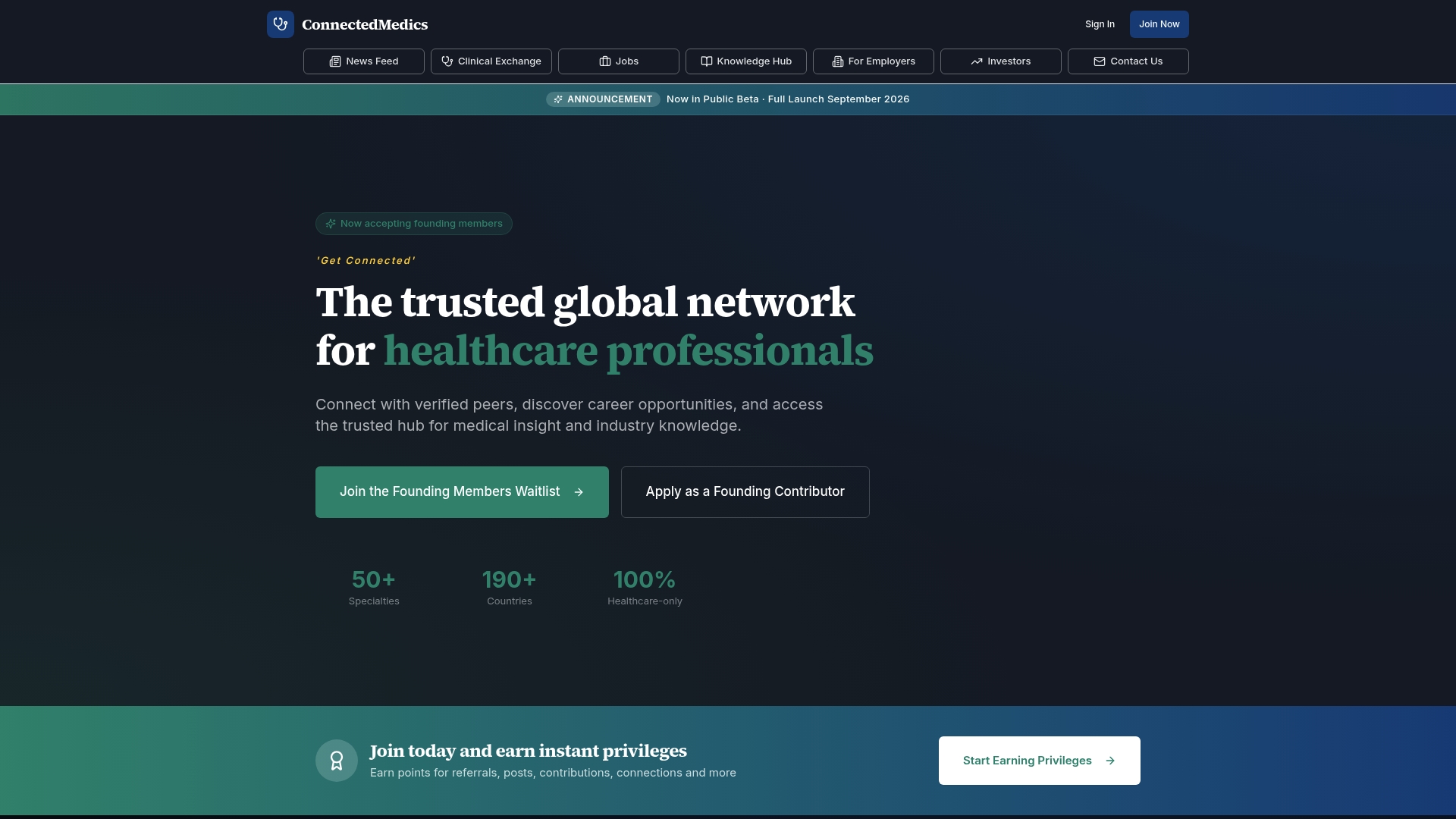
Connectedmedics is built exclusively for healthcare professionals. The platform provides verified vacancy listings across specialties, direct recruiter connections, and a knowledge hub with clinical career resources. With over 4,600 active roles on the ConnectedMedics jobs network, you can filter by specialty, location, and role type without sorting through irrelevant postings. Recruiters on the platform work with verified professional profiles, which speeds up credentialing and shortens hiring timelines. If you're ready to apply healthcare vacancies efficiently and connect with opportunities that match your qualifications, Connectedmedics is the place to start. Explore the platform and connect with verified recruiters today.
FAQ
What documents do you need before applying to healthcare jobs?
Prepare your current license with state and expiration date, active certifications (BLS, ACLS, PALS), immunization records, and professional references before starting your search. Having these ready prevents delays once an offer is made.
How long does healthcare credential verification take?
Compliance processing typically takes 7 to 14 days after offer acceptance. Any missing documents on the applicant's end extend this timeline directly.
How do ATS systems work for healthcare resumes?
Healthcare ATS platforms score resumes based on exact clinical terminology matching the job description. Using precise clinical vocabulary improves your score and increases the chance a recruiter sees your application.
Should you use AI tools to apply for healthcare jobs?
AI tools are useful for generating keyword-optimized resumes and cover letter drafts at scale, but every submission needs human review. Automated output lacks the clinical specificity that hiring managers assess in cover letters.
What is the best way to follow up after applying?
Send a brief, professional follow-up email 5 to 7 business days after submitting if you have not received a response. Reference the role title and application date, and keep the message under five sentences.