
Medical interview questions fall into four critical categories that healthcare employers use to evaluate candidates: cultural fit, clinical competence, red-flag management, and business alignment. Structured frameworks like STAR govern how interviewers score responses, with clinical reasoning carrying roughly 50% of the weight in behavioral answers. Knowing these categories before you walk into the room changes how you prepare, what stories you tell, and how confidently you perform. This guide covers the top question types, real examples, and the frameworks that signal clinical maturity to hiring panels in 2026.
What are the main medical interview question categories?
Healthcare employers organize doctor interview questions into four buckets. Each bucket tests a different dimension of your fit for the role.
- Cultural fit. These questions assess whether your values and communication style match the organization's. Expect prompts like "Why do you want to work here?" or "Describe your ideal team dynamic." Interviewers look for alignment with mission statements and departmental culture, not generic enthusiasm.
- Clinical competence. These questions evaluate your medical knowledge and decision-making under pressure. Scenario-based prompts ask you to walk through a differential diagnosis or explain how you managed a deteriorating patient. The goal is to confirm you can function safely and independently.
- Red-flag management. Gaps in employment, adverse outcomes, or license issues all fall here. Hiring panels expect candor about mistakes framed with reflection and learning. Denial or deflection signals safety-culture immaturity.
- Business alignment. These questions check your grasp of practice operations. Panels ask about RVU targets, call schedules, and credentialing timelines. Unpreparedness on business metrics signals inexperience to experienced hiring managers.
Pro Tip: Review the organization's mission statement and recent press releases before your interview. Referencing a specific program or initiative in your cultural fit answers shows genuine research, not rehearsed enthusiasm.
Top 25 example healthcare interview questions with answer guidance

The questions below span all four categories. Each includes a brief note on what the interviewer is actually testing.
Cultural fit and motivation
- "Tell me about yourself." Keep this to 90 seconds. Lead with your specialty, your clinical philosophy, and one reason this role fits your goals.
- "Why do you want to work at this organization?" Name a specific program, patient population, or value that drew you here.
- "Describe your ideal work environment." Align your answer with what you know about their team structure and culture.
- "How do you handle conflict with a colleague?" Use a real example. Show resolution, not avoidance.
- "Where do you see yourself in five years?" Connect your growth goals to the organization's trajectory.
Clinical competence
- "Walk me through how you manage a septic patient." Use SBAR or a named clinical protocol. Show systematic thinking.
- "Describe a time you made a diagnostic error." Admit it, explain what you learned, and describe the system change you made.
- "How do you stay current with clinical guidelines?" Name specific journals, CME programs, or professional societies.
- "Tell me about a complex case you are proud of." Lead with the clinical challenge, not the outcome.
- "How do you approach shared decision-making with patients?" Cite a specific framework or patient example.
Behavioral and teamwork
- "Describe a difficult patient interaction." Use the STAR method. Focus on your actions and the result.
- "Tell me about a time you disagreed with a supervisor." Show respect, evidence-based reasoning, and a constructive outcome.
- "Give an example of a time you led a team under pressure." Quantify the stakes and your specific role.
- "Describe a situation where you had to adapt quickly." Emphasize clinical judgment, not just flexibility.
- "How do you handle burnout or stress?" Be honest. Panels respect self-awareness over invulnerability.
Red-flag management
- "We noticed a gap in your employment. Can you explain?" Prepare a brief, honest narrative. Frame it around growth or personal circumstances without over-explaining.
- "Have you ever had a malpractice claim or license action?" Answer directly. Explain context, outcome, and what changed in your practice.
- "Why did you leave your last position?" Keep it professional. Focus on what you are moving toward, not what you are leaving behind.
Business alignment
- "What are your expectations around call schedules?" Know the industry norm for your specialty before answering.
- "Are you familiar with RVU-based compensation models?" Know recent RVU figures for your specialty and be ready to discuss productivity expectations.
- "When can you start?" Physician credentialing typically requires 60–120 days. Give a realistic timeline and avoid overpromising.
- "What are your salary expectations?" Research market rates before the interview. Connectedmedics publishes 2026 salary benchmarks by specialty that give you a credible reference point.
- "How do you feel about quality metrics and reporting?" Show familiarity with HEDIS, Press Ganey, or similar frameworks relevant to your specialty.
- "Are you open to telehealth responsibilities?" Answer honestly and show awareness of how telehealth fits into modern practice.
- "Do you have any questions for us?" Always prepare three specific questions. Asking nothing signals low interest.
Pro Tip: For clinical scenario questions, state your framework in the first sentence. "I would approach this using SBAR" immediately signals structured thinking before you say another word.
How to use the STAR and SBAR frameworks in your answers
Two frameworks dominate clinical interview prep: STAR for behavioral questions and SBAR for clinical scenarios. Both signal structured thinking to interviewers.
STAR stands for Situation, Task, Action, and Result. The optimal weight for each component is not equal. Behavioral answers should allocate roughly 15% to the situation, 15% to your role, 50% to the specific actions you took with clinical reasoning, and 20% to the outcome. Most candidates invert this. They spend too long on context and rush through the actions that actually demonstrate competence.
SBAR stands for Situation, Background, Assessment, and Recommendation. It is the standard handoff communication tool in clinical settings. Using it in a scenario question shows you understand care escalation and team communication. Naming SBAR or the Five Rights of Delegation in your answer is often more valuable than a perfect clinical answer, because it demonstrates discipline and systems awareness.
| Framework | Best used for | Core strength |
|---|---|---|
| STAR | Behavioral and teamwork questions | Structures narrative with clear outcome |
| SBAR | Clinical scenario and handoff questions | Shows systems thinking and communication |
For MMI formats, quickly signpost your structure in the first 10–20 seconds. This reduces anxiety and keeps your answer within the time limit. Panels score concision as a clinical skill, not just a conversational preference.
Pro Tip: Record yourself answering one STAR question per day for a week. Watch it back with the sound off first. Body language and eye contact matter as much as content in panel interviews.
Practical preparation: story banks, timing drills, and follow-up
Strong clinical interview prep starts weeks before the interview, not the night before.
- Build a story bank. Prepare 6–10 real clinical experiences tagged by theme, such as teamwork, ethical dilemmas, resilience, and leadership. Tag each story to multiple question types so you can pull the right one quickly under pressure.
- Practice timed answers. Behavioral answers should run 90 seconds to 2 minutes. Set a timer and practice out loud. Silence is better than rambling. Panels notice when candidates cannot self-edit.
- Simulate both formats. Traditional panel interviews and MMI stations require different pacing. Practice each format separately. For MMIs, practice with a partner who can give real-time feedback on clarity and structure.
- Prepare logistics answers. Know your credentialing timeline, your preferred call ratio, and your earliest realistic start date. Vague answers to logistics questions signal poor self-awareness and create friction in the hiring process. The healthcare job search checklist from Connectedmedics covers these timelines in detail.
- Send a thank-you email within 24 hours. Post-interview follow-up is standard professional practice. Reference one specific detail from the conversation to show genuine engagement. Generic thank-you emails are forgettable. Specific ones are not.
- Review your medical job application materials. Interviewers often ask questions directly from your CV or personal statement. Know your own documents cold.
Common pitfalls and how to avoid them
The most common mistake in medical interviews is giving a generic answer that lacks clinical substance. Panels hear hundreds of "I am a team player" responses. What they remember is the candidate who described a specific patient, named a clinical framework, and explained what changed in their practice as a result.
"The silent question every hiring manager asks is: 'Can I sleep well at night if I hire this person?' Clinical trust and communication are what answer that question, not credentials alone." Physician Interview Questions 2026 | Ava Health
Addressing red flags with denial is the second most common error. Hiring panels already know about the gap or the adverse outcome. They want to see how you handle it. Candidates who name specific clinical frameworks in their answers and show genuine reflection consistently outperform those who give polished but hollow responses. Communication skills and the ability to perform under pressure carry equal weight to clinical knowledge in most hiring decisions.
Key takeaways
Mastering medical interview questions requires understanding the four evaluation categories, applying structured frameworks, and preparing a story bank of real clinical experiences before the interview.
| Point | Details |
|---|---|
| Four question categories | Prepare for cultural fit, clinical competence, red-flag management, and business alignment questions. |
| STAR weighting | Spend 50% of your behavioral answer on specific actions and clinical reasoning, not setup. |
| SBAR for scenarios | Naming SBAR in clinical scenario answers signals systems thinking and communication discipline. |
| Story bank | Build 6–10 tagged clinical stories to cover teamwork, ethics, resilience, and leadership questions. |
| Follow-up matters | Send a personalized thank-you email within 24 hours referencing a specific detail from the interview. |
What I have learned about medical interviews in 2026
Medical interviews have shifted. They are no longer credential reviews dressed up as conversations. Hiring panels in 2026 run structured, competency-based assessments. They score answers against rubrics. They look for clinical maturity, not just clinical knowledge.
The candidates I have seen succeed share one trait: they treat the interview as a clinical encounter. They listen carefully, structure their responses, and show genuine self-awareness about their limits. The ones who struggle tend to over-prepare scripts and under-prepare stories. A scripted answer sounds hollow the moment a follow-up question breaks the pattern.
Adaptability is the skill panels prize most right now. Healthcare systems are under pressure. Hiring managers want clinicians who can reflect honestly, communicate clearly, and adjust when circumstances change. Preparation should balance knowledge, storytelling, and self-awareness in equal measure. The top skills healthcare employers seek in 2026 confirm this shift toward interpersonal and adaptive competencies alongside clinical ones.
— David
Connectedmedics resources for your healthcare career
Connectedmedics is a verified network built exclusively for healthcare professionals. It offers a global jobs board with over 4,600 active vacancies, a knowledge hub with clinical insights from verified medical experts, and career resources tailored to the realities of medical hiring.
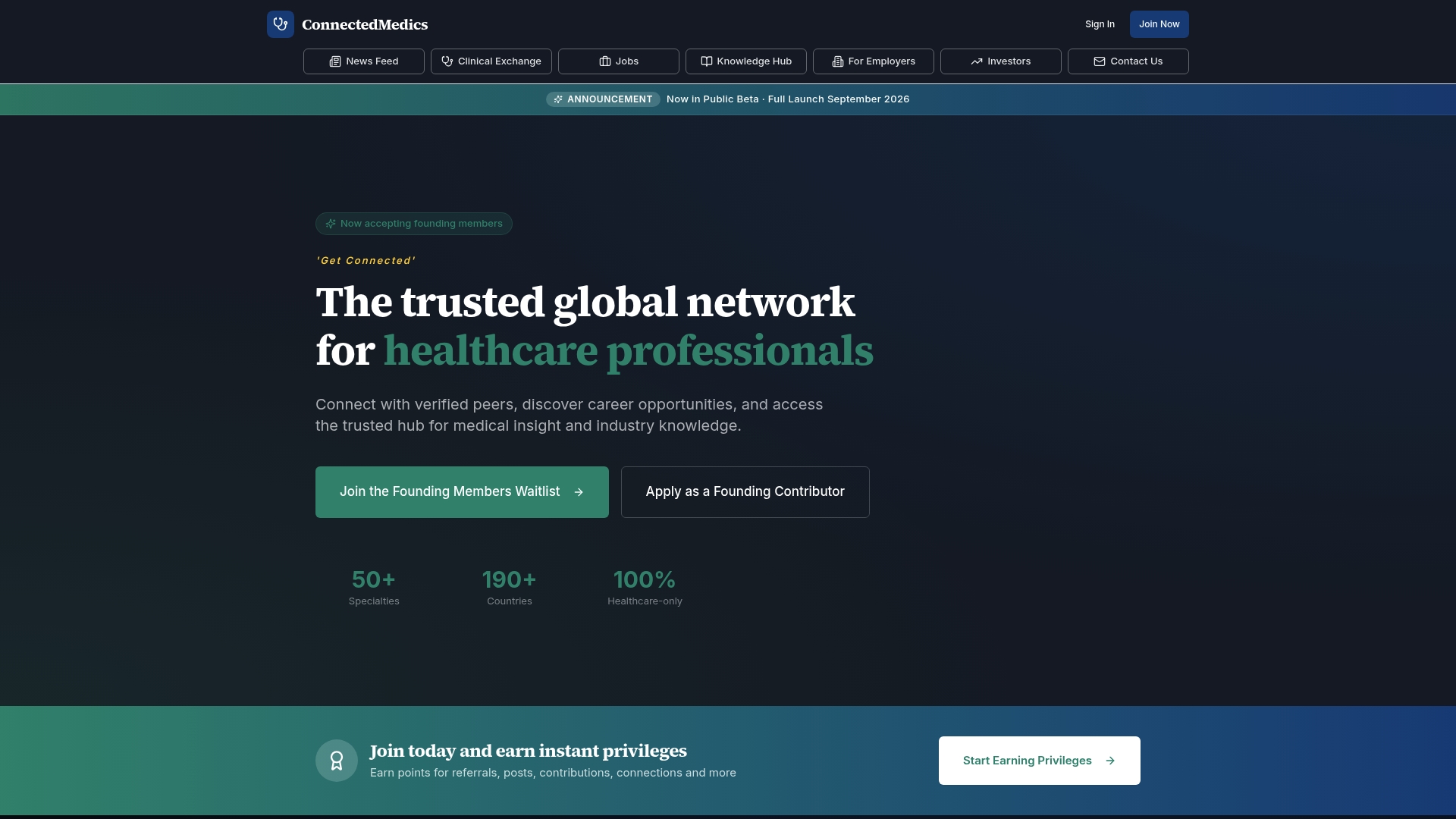
For interview prep, the Healthcare Salary Trends 2026 resource on Connectedmedics gives you the compensation benchmarks you need to answer business alignment questions with confidence. Knowing market rates by specialty before salary discussions puts you in a stronger position. The platform also connects you with peers in your specialty who have recently navigated the same hiring process, giving you real-world context that no prep guide can fully replicate.
FAQ
What are the four main types of medical interview questions?
Medical interview questions fall into four categories: cultural fit, clinical competence, red-flag management, and business alignment. Preparing answers for each category covers the full range of what hiring panels assess.
How long should a STAR answer be in a medical interview?
A STAR answer should run 90 seconds to 2 minutes. Spend roughly 50% of that time on your specific actions and clinical reasoning, with the remaining time split between context and outcome.
How should I handle a gap in employment during a medical interview?
Address the gap directly with a brief, honest narrative that frames the period around growth or personal circumstances. Candor framed with learning builds trust; denial or omission signals safety-culture immaturity to hiring panels.
When should I send a thank-you email after a medical interview?
Send a personalized thank-you email within 24 hours of the interview. Reference one specific detail from the conversation to reinforce your interest and professionalism.
What is the SBAR framework and when should I use it?
SBAR stands for Situation, Background, Assessment, and Recommendation. Use it when answering clinical scenario questions to show structured communication skills and familiarity with care escalation protocols.