
Most physician job searches take longer than expected. From the moment you decide to move until your first day on the job, the process typically spans 6 to 12 months, and that window shrinks fast if you skip the groundwork. A structured healthcare job search checklist for doctors is not a nice-to-have. It is the difference between a smooth transition and a delayed start date that costs you income and momentum. This guide gives you a step-by-step roadmap covering preparation, sourcing, contract evaluation, credentialing, and the negotiation moves most physicians miss.
Table of Contents
- Key takeaways
- 1. Start earlier than you think you need to
- 2. Build your credentialing dossier before you need it
- 3. Use a multi-channel job search pipeline
- 4. Leverage your network before job boards
- 5. Write a physician CV that passes the first filter
- 6. Evaluate offers beyond the base salary
- 7. Do due diligence on the employer
- 8. Understand credentialing timelines and proactively manage them
- 9. Compare job search strategies by career stage
- What I have learned from watching doctors search for jobs
- Find verified healthcare jobs on Connectedmedics
- FAQ
Key takeaways
| Point | Details |
|---|---|
| Start 12-18 months early | Define your priorities well before you apply to avoid rushed decisions and credentialing delays. |
| Use multiple search channels | Relying on one job board limits your options. Combine boards, referrals, and direct outreach. |
| Negotiate beyond salary | Call schedules, malpractice tail coverage, and termination clauses are all negotiable contract terms. |
| Prepare your credentialing dossier now | Missing documents are the top cause of start date delays, often adding months to your timeline. |
| Verify employer business models | Understanding ACO participation and compensation structures before signing protects your long-term interests. |
1. Start earlier than you think you need to
The physician job search timeline is not linear. It has hard dependencies. Credentialing alone can take three to four months after you accept an offer, and that clock does not start until your paperwork is complete. If you layer in state licensing, DEA registration, and notice periods, the math gets tight fast.
The standard advice is to begin your search 12 to 18 months before your target start date. For specialists in competitive markets or rural placements, that window is not generous. Primary care physicians may move faster, but they face their own bottlenecks in hospital credentialing queues.
Start by writing down your non-negotiables: geography, practice setting, call burden, partnership track, and income floor. This list becomes your filter. Without it, you will waste weeks evaluating positions that were never right for you.
Pro Tip: Create a one-page "priority document" ranking your top five criteria before you send a single application. Share it with any recruiter you work with. It saves time on both sides.
2. Build your credentialing dossier before you need it
This is the most overlooked step in any healthcare career checklist. Physicians routinely underestimate how much documentation credentialing requires, and how long third-party verifications take.

Medical staff delays account for 42% of credentialing holdups, while state licensing causes 38% and DEA approvals cause 15%. Most of those delays trace back to missing or outdated physician documents.
Your credentialing dossier should include:
- Current CV with no unexplained gaps
- Medical school diploma and transcripts
- Residency and fellowship completion certificates
- Board certification documents
- State medical licenses (all active and expired)
- DEA registration certificate
- Malpractice insurance history with dates and coverage limits
- Reference letters from supervising physicians
- ECFMG certificate if applicable
Update this file every six months regardless of whether you are actively searching. When an offer comes, you want to submit a complete packet on day one.
Pro Tip: Store your credentialing documents in a secure cloud folder with version dates. When a hospital asks for your malpractice history from 2019, you will know exactly where to find it.
3. Use a multi-channel job search pipeline
Internet job boards are the top source for physicians finding their first job at 21.7%, followed by referrals at 18.7%. Healthcare organization websites account for 12.3%, and residency or fellowship networks contribute 6.9%. No single channel dominates. That means your job search pipeline should run on multiple tracks simultaneously.
Platforms worth using include PracticeMatch, PracticeLink, Doximity Careers, Health eCareers, DocCafe, and specialty-specific boards tied to your professional societies. Each surfaces different employer types: academic centers, community hospitals, locum agencies, and private groups all post in different places.
Beyond boards, direct outreach works. Identify five to ten health systems in your target geography and contact their physician recruitment teams directly, even if no positions are listed. Openings often exist before they are posted publicly.
Pro Tip: Update your Doximity profile and LinkedIn before you start applying. Recruiters search both platforms actively, and an incomplete profile signals you are not serious.
4. Leverage your network before job boards
Referrals produce 18.7% of physician placements, and that number understates the real value of relationships. Many positions are filled through conversations at conferences, alumni dinners, and department hallways before they ever reach a job board.
Networking at conferences and through alumni associations builds the kind of warm leads that convert faster and with better terms. Hiring managers trust candidates who come recommended.
Practical steps for building your network during a search:
- Attend your specialty society's annual meeting with business cards and a clear pitch
- Reconnect with residency program directors who may know of openings
- Ask attendings and mentors for introductions, not just references
- Join specialty-specific online communities and participate in discussions
- Reach out to physicians already working at target organizations for informational conversations
The goal is not to ask for a job. It is to be the person they think of when a position opens.
5. Write a physician CV that passes the first filter
Best practices for doctor resumes start with one rule: the CV is not a biography. It is a filter-passing document. Recruiters and department chairs spend less than two minutes on an initial review. Your CV needs to surface the right signals immediately.
Lead with your specialty, board certification status, and years of experience. Follow with clinical training in reverse chronological order. List publications, presentations, and committee work, but only if they are current and relevant. A CV padded with decade-old abstracts signals poor judgment about what matters.
Keep formatting clean. No graphics, no color blocks, no unusual fonts. Applicant tracking systems used by large health systems parse plain text. Fancy formatting creates parsing errors that bury your application.
6. Evaluate offers beyond the base salary
Salary matters. But the physicians who end up unhappy in their jobs are usually the ones who negotiated hard on base pay and ignored everything else. The AMA recommends reviewing call schedules, malpractice tail coverage, and termination clauses as priority negotiation items.
Here is a comparison of the contract terms most physicians focus on versus the ones that actually affect daily quality of life:
| Contract term | What most doctors focus on | What actually matters |
|---|---|---|
| Base salary | Total dollar amount | RVU thresholds and bonus triggers |
| Call schedule | Frequency per month | Whether call pay is bundled into base |
| Malpractice | Coverage type | Who pays tail coverage if you leave |
| Termination | Notice period length | Whether termination is "without cause" |
| Partnership track | Existence of a track | Timeline, buy-in amount, and criteria |
Employers often bundle call pay into base salary, which obscures the true burden. Ask for call expectations in writing, including how coverage changes if the group loses a physician.
Pro Tip: Hire a healthcare attorney to review any contract before you sign. The cost is typically $500 to $1,500. It is the best money you will spend in this process.
7. Do due diligence on the employer
Before you sign, investigate the organization. AMA guidance is explicit: understand the employer's business model, ACO participation, and how compensation is structured relative to productivity metrics.
Ask current physicians at the organization about workload, administrative burden, and whether the culture matches what was described in interviews. Check public records for malpractice suits, CMS quality scores, and financial stability indicators for private groups.
Questions worth asking during interview preparation for physicians:
- What is the average panel size or daily patient volume?
- How has physician turnover looked over the past three years?
- What EHR system is used, and what is the documentation time expectation?
- How are compensation models adjusted when ACO performance targets shift?
- What support exists for prior authorizations and administrative tasks?
The answers tell you more about daily life than any offer letter will.
8. Understand credentialing timelines and proactively manage them
Credentialing typically takes three to four months, and 70% of organizations report that timeline as standard. Some cases stretch to six months when state licensing or DEA approvals lag.
The single most effective thing you can do is respond to every document request within 24 hours. Hospitals run credentialing in batches. If your file is incomplete when a review committee meets, you wait until the next cycle, which may be 30 to 60 days away.
Coordinate your relocation timeline with credentialing progress, not with your signed offer date. Moving your family before you have privileges confirmed creates unnecessary financial and logistical pressure.
Pro Tip: Assign one person at the hospital as your credentialing contact and check in with them every two weeks. Proactive follow-up catches stalled requests before they become month-long delays.
9. Compare job search strategies by career stage
Not every approach fits every physician. The right strategy depends on your specialty, career stage, and how quickly you need to move.
| Strategy | Best for | Key limitation |
|---|---|---|
| Job board applications | Residents and fellows entering the market | High competition, slower response times |
| Direct outreach | Experienced physicians targeting specific systems | Requires existing reputation or referral |
| Locum tenens first | Physicians exploring geography or settings | Temporary income, no benefits continuity |
| Recruiter-assisted search | Physicians with limited time for active searching | Recruiter incentives may not align with yours |
| Conference networking | Subspecialists in smaller fields | Slower pipeline, relationship-dependent |
The most effective searches combine at least three channels running in parallel. Passive application alone rarely produces the best offers.
What I have learned from watching doctors search for jobs
I have seen physicians with strong clinical records and excellent references spend 14 months in a job search that should have taken six. The pattern is almost always the same. They waited too long to start, relied on one or two channels, and treated contract review as a formality.
The uncomfortable truth is that the job search process rewards preparation more than credentials. A less decorated candidate with a complete credentialing dossier, a clear priority list, and a healthcare attorney reviewing their contract will often land a better position faster than a highly published physician who starts late and signs whatever is put in front of them.
What I have found actually works is treating this like a project with milestones, not a passive process. Set a start date for your search. Build your dossier now. Identify your top ten target employers and start conversations before positions are posted. And negotiate every contract term that affects your daily life, not just the number at the top of the offer letter.
The physicians who own this process, rather than react to it, consistently end up in better situations. Patience matters too. A credentialing delay is not a rejection. It is paperwork. Stay in contact, respond fast, and keep your pipeline moving while you wait.
— David
Find verified healthcare jobs on Connectedmedics
Connectedmedics is a professional network built specifically for healthcare providers, with over 4,600 active vacancies across specialties and practice settings. Unlike general job platforms, every listing is healthcare-specific and every profile is verified.
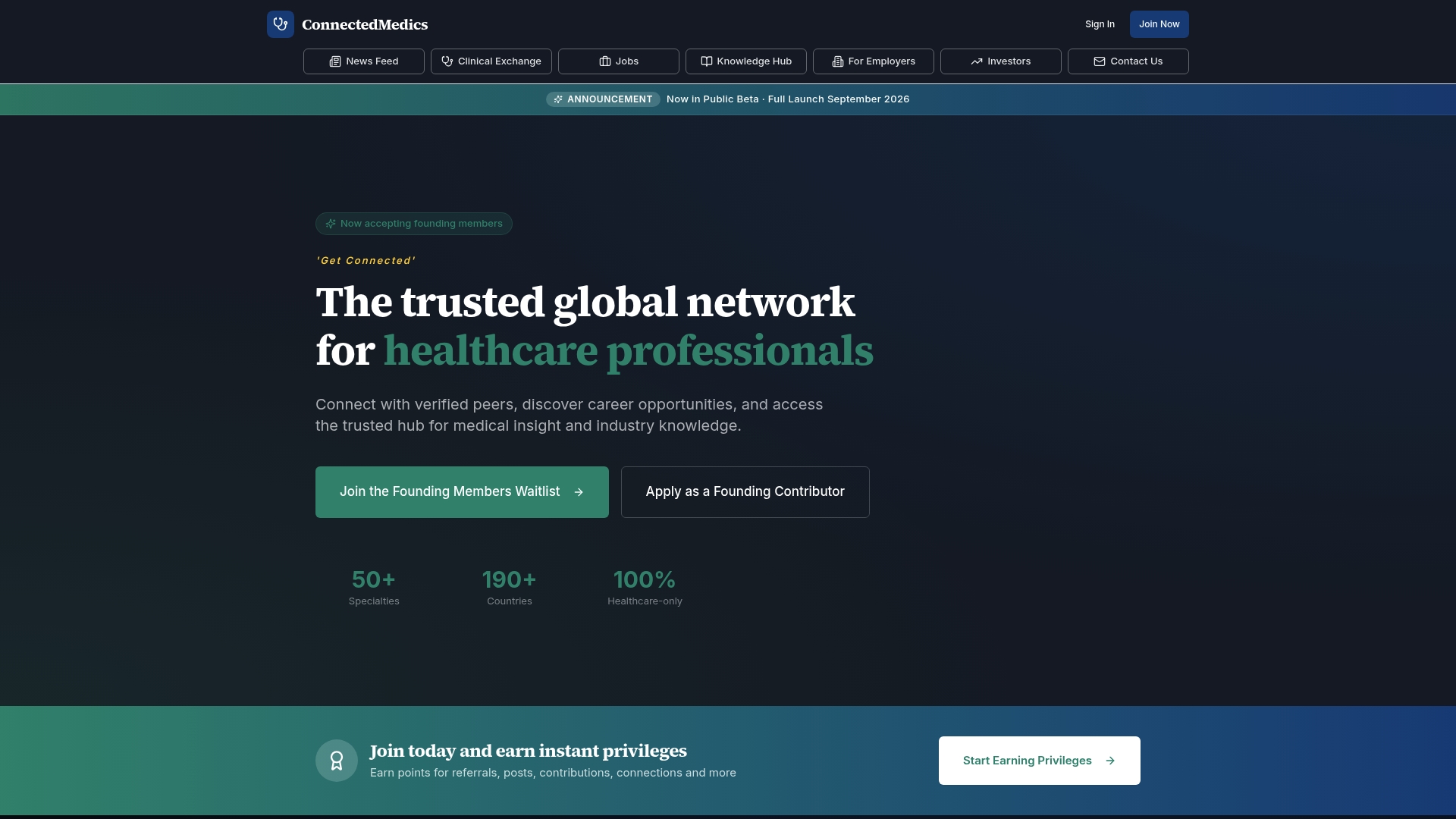
Doctors use the Connectedmedics job marketplace to search roles by specialty, location, and employer type without sorting through irrelevant postings. The platform also connects you with verified peers and clinical resources that support your career decisions at every stage. Whether you are starting your first attending search or making a mid-career move, Connectedmedics gives you a focused, reliable starting point for finding healthcare job opportunities that match your priorities.
FAQ
How long does a physician job search take?
Most physician job searches take 6 to 12 months from initial outreach to start date, accounting for contract negotiation, credentialing, and notice periods.
What causes the most credentialing delays?
Missing physician documents and state licensing backlogs are the top causes, with 42% of delays tied to incomplete files from the physician and 38% to state licensing processing times.
What contract terms should doctors negotiate beyond salary?
Call schedule caps, malpractice tail coverage responsibility, and termination-without-cause clauses are among the most important terms to negotiate in any physician contract.
Which job search channels work best for physicians?
Internet job boards lead at 21.7%, followed by referrals at 18.7% and healthcare organization websites at 12.3%. Using multiple channels in parallel produces the best results.
Do doctors need a healthcare attorney to review contracts?
Yes. A healthcare attorney identifies problematic clauses and negotiates terms that protect your income and career options. The cost is modest relative to the value of a well-structured contract.