
The most effective physician recruiting strategies combine three priorities: targeted sourcing through verified clinical networks and residency pipelines, a structured candidate experience with clear communication SLAs, and retention-focused onboarding that starts before day one. Teams that run all three in parallel fill roles faster and lose fewer hires in the first year.
Start here — your next 24–72 hours:
- Lock the role definition: specialty, call schedule, patient volume, and salary band
- Identify the two or three decision owners who must approve the offer
- Publish the salary range internally and confirm it is market-competitive
- Pull a list of target residency programs and fellowship directors to contact
- Draft a one-paragraph outreach message that leads with compensation and schedule details
- Schedule a kickoff call with your hiring manager to align on timeline and screening criteria
30/60/90-day owner priorities:
- Days 1–30 (Recruiter): Post the role on specialty-specific boards, initiate residency outreach, and screen the first candidate pool. Deliverable: five qualified candidates in pipeline.
- Days 31–60 (Hiring Manager + Recruiter): Conduct structured interviews, run site visits, and present the offer. Deliverable: offer extended and accepted.
- Days 61–90 (Credentialing Lead + HR): Complete credentialing, licensure verification, and onboarding prep. Deliverable: start date confirmed and 90-day onboarding plan in place.
Key Takeaways
Physician recruiting strategies that combine structured sourcing, a fast candidate experience, and retention-focused onboarding consistently outperform reactive, ad-hoc approaches across every specialty and market.
| Point | Details |
|---|---|
| AAMC shortfall projection | The gap could reach 86,000 physicians by 2036, making proactive pipeline building non-negotiable. |
| Six-step framework | A repeatable process from needs assessment to onboarding fills roles faster and retains hires longer than ad-hoc hiring. |
| Lead outreach with specifics | Salary range, call schedule, and patient volume in the first message increase physician response rates. |
| Cost of Vacancy as a budget lever | Monthly COV figures make the financial case for sourcing technology and dedicated recruiter capacity. |
| Connectedmedics for sourcing | Verified clinician profiles, specialty filters, and AI matching support passive candidate outreach and faster pipeline building. |
Table of Contents
- Why strategic physician recruitment matters right now
- A six-step physician recruitment framework you can run today
- Channels and outreach tactics that actually deliver physicians
- How to design offers and incentives that close physicians
- Candidate experience playbook: speed, transparency, and fewer drop-offs
- Retention-first onboarding that converts hires into long-term clinicians
- KPIs and governance to run physician recruitment as a business function
- How Connectedmedics supports this recruitment playbook
- What most physician recruitment playbooks get wrong
- Connectedmedics: a purpose-built network for physician sourcing
- Sources
Why strategic physician recruitment matters right now
The AAMC projects a national physician shortfall that could reach 86,000 physicians by 2036. That number reflects both an aging physician workforce and rising patient demand, and it creates sustained hiring pressure across every specialty and geography. Reactive, ad-hoc hiring cannot absorb that kind of structural gap.
Geographic maldistribution compounds the problem. HRSA data documents persistent primary care shortages in rural and underserved communities, where the competition for a single qualified candidate can involve a dozen employers. Turnover adds a financial dimension: a single physician vacancy typically costs an organization hundreds of thousands of dollars in lost revenue per month, before accounting for locum coverage and recruiter fees.
The AMA has called for systemic action on physician shortages, framing recruitment not as an HR function but as a patient-access and organizational-survival issue. That framing is the right one to use when requesting executive budget.
| Metric | Figure | Source |
|---|---|---|
| Projected national physician shortfall by 2036 | Up to 86,000 | AAMC |
| Primary care shortage areas documented | Ongoing, geographically concentrated | HRSA |
| Structured search vs. ad-hoc: outcome | Faster fill, longer retention | CI Health Group |
A six-step physician recruitment framework you can run today
CI Health Group's analysis of structured physician searches finds that teams using a repeatable process fill roles faster and retain hires longer than those using ad-hoc approaches. The CHAMPS physician recruitment plan organizes this work into planning, active recruitment, and retention phases, which maps cleanly onto the six steps below.
-
Needs assessment and role definition. Define the specialty, subspecialty, call expectations, patient volume, and compensation range before any outreach. Align the CMO, department chief, and HR on non-negotiables. Owner: CMO + Recruiter. Timeline: Week 1.
-
Sourcing and pipeline building. Activate at least three channels simultaneously: residency program directors, specialty-specific job boards, and a verified clinician network. Build a warm pipeline of passive candidates alongside active applicants. Owner: Recruiter. Timeline: Weeks 1–4.
-
Screening and qualification. Use a structured phone screen of 20–30 minutes. Cover licensure status, board certification, geographic preference, compensation expectations, and timeline to availability. Document responses in a shared ATS. Owner: Recruiter. Timeline: Weeks 2–5.
Phone screen bullets to cover: current licensure states, board status, earliest start date, call tolerance, salary expectations, and any geographic constraints.
-
Site visit and interview. Run two parallel itineraries: one for the physician (clinical rounds, peer introductions, department tour, meeting with the CMO) and one for the partner or family (school visits, neighborhood tour, community amenities). The AMA recruiting guide provides a site-visit template that covers both tracks. Owner: Hiring Manager + Recruiter. Timeline: Weeks 4–8.
-
Offer and negotiation. Present a written offer within 48 hours of the final interview. Include every component: base salary, productivity formula, signing bonus, loan repayment eligibility, relocation allowance, CME budget, and benefits summary. Owner: CMO + HR. Timeline: Weeks 6–10.
-
Onboarding and retention. Start credentialing and EHR access requests the day the offer is signed. Assign a physician mentor before the start date. Run a 30/90/180-day check-in cadence. Owner: Credentialing Lead + Department Chief. Timeline: Months 2–6.
Pro Tip: For multi-state hires, check Interstate Medical Licensure Compact eligibility on the first screening call. Licensure processing can add 60–120 days to the placement timeline, and catching it early prevents a last-minute delay after an offer is accepted.
Channels and outreach tactics that actually deliver physicians
Proactive sourcing through residency programs, verified clinician networks, and direct outreach consistently outperforms post-and-pray job advertising. Ava Health's physician recruiting guide highlights NPI databases, specialty networks, and personalized digital outreach as high-yield channels for reaching passive candidates who are not actively searching job boards.

| Channel | Best use case | Candidate segment | Priority timing |
|---|---|---|---|
| Residency / fellowship programs | Building a 6–18 month pipeline | New graduates, fellows | Ongoing, contact directors in Q3–Q4 |
| Verified clinician networks (e.g., Connectedmedics) | Passive candidates, specialty-specific sourcing | Mid-career, subspecialists | Urgent fills and pipeline building |
| Specialty job boards | Active job seekers, broad reach | All experience levels | Immediate posting on role approval |
| Referral programs | Warm candidates with cultural fit | Peer-referred physicians | Ongoing, incentivize with bonus |
| SMS / email sequencing | Follow-up after initial contact | Passive and semi-active | After first touchpoint, with consent |
Outreach execution tips:
- Lead every message with the three details physicians care about most: salary range, call schedule, and patient volume. Generic descriptions get ignored.
- Personalize the first line of any email or InMail with a specific detail about the candidate's training program or published work.
- Space follow-up messages at least five days apart; three touches over two weeks is a reasonable cadence before marking a candidate as non-responsive.
- For SMS outreach, obtain prior written consent and comply with TCPA requirements. Use SMS for brief, time-sensitive follow-ups only, not initial cold outreach.
Pro Tip: When contacting residency program directors, reach out in September or October for the following year's graduating class. Offer to present at a grand rounds or career panel, which builds program-level relationships that generate referrals for years.
How to design offers and incentives that close physicians
Compensation structure is where many offers fail. A base salary that looks competitive on paper can lose a candidate if the productivity formula is opaque, the call burden is understated, or the partnership timeline is vague. The AMA recruiting guide outlines the components every physician offer should address explicitly.
Offer components checklist:
- Base salary: State the guaranteed amount and the duration of any income guarantee (typically 12–24 months for new graduates).
- Productivity formula: Specify the RVU threshold, conversion factor, and when productivity bonuses begin.
- Signing bonus: Amount, payment schedule, and clawback terms if the physician leaves within a defined period.
- Loan repayment: Eligibility for NHSC loan repayment programs in underserved areas, or employer-funded repayment as a retention tool.
- Relocation allowance: Fixed amount or reimbursement cap, and whether it is taxable.
- CME budget and time: Annual dollar amount and number of days off for continuing education.
- Benefits summary: Health, dental, vision, malpractice coverage (occurrence vs. claims-made), and tail coverage responsibility.
- Partnership or ownership path: Timeline, buy-in amount, and criteria for eligibility.
Negotiation timeline:
- Day 0: Verbal offer with key terms, confirmed by the CMO or department chief.
- Day 1–2: Written offer letter delivered.
- Day 5–7: Follow-up call to address questions; involve legal counsel if contract language is disputed.
- Day 10–14: Target signed agreement.
Pro Tip: Clarify restrictive covenants and non-compete scope before the candidate reviews the contract, not after. A non-compete radius that surprises a candidate at the contract stage is one of the most common reasons offers fall apart late in the process.
Two contract clauses to address early: the call schedule (exact expectations, not a range) and the tail coverage obligation on departure. Overpromising on either creates legal exposure and damages trust if the reality differs from what was discussed during recruitment.
Candidate experience playbook: speed, transparency, and fewer drop-offs
Physicians evaluate employers the same way employers evaluate candidates. Slow response times, vague job descriptions, and disorganized site visits signal operational dysfunction. Understanding why physicians struggle to find relevant roles helps recruiters see the process from the candidate's side and fix the friction points that cause drop-offs.
Response time SLAs:
- Recruiter acknowledges application or inquiry: within 24 hours.
- Hiring manager responds to a recruiter's candidate recommendation: within 48 hours.
- Post-interview feedback delivered to candidate: within 48 hours of the interview.
- Written offer delivered after final interview: within 48 hours.
What to lead with in outreach:
- Salary band (or a confirmed range, not "competitive")
- Call schedule (exact frequency and overnight expectations)
- Patient volume and panel size
- Practice setting and EMR platform
- Timeline to partnership or ownership, if applicable
Site visit agenda (dual itinerary):
Physician track: clinical department tour, shadowing or case observation, peer lunch with current physicians, meeting with CMO or department chief, review of EHR and workflow tools, Q&A with practice manager.

Partner/family track: neighborhood and housing tour, school visit or information session, meeting with a community liaison or relocation specialist, local amenity overview (restaurants, recreation, cultural institutions).
Two-week post-visit follow-up checklist:
- Day 1–2: Send a personalized thank-you note from the hiring manager, not a template email.
- Day 3–5: Address any open questions the candidate raised during the visit.
- Day 7: Check in by phone to gauge interest level and surface any concerns.
- Day 10–14: If interest is confirmed, move to offer presentation.
Retention-first onboarding that converts hires into long-term clinicians
Onboarding is where retention is won or lost. A physician who spends the first 90 days navigating credentialing delays, unclear workflows, and no peer support is a flight risk by month six. A complete physician onboarding checklist covers the operational steps; the framework below adds the relational and milestone-based elements that drive long-term retention.
-
Days 1–30 (Credentialing Lead): Submit all credentialing and privileging applications. Confirm DEA registration, state licensure, and malpractice coverage are active. Complete EHR access setup and schedule system training. Deliverable: physician is credentialed and cleared to see patients.
-
Days 31–90 (Department Chief + Mentor): Assign a physician mentor from the same specialty. Schedule weekly check-ins for the first 60 days. Review patient panel ramp-up plan and adjust if productivity targets are unrealistic. Deliverable: mentor relationship established, ramp plan confirmed.
-
Days 91–180 (HR + Department Chief): Conduct a formal 90-day stay interview. Ask directly about workload, peer relationships, administrative burden, and career development expectations. Address any concerns before they become resignation triggers. Deliverable: stay interview completed, action items documented.
Retention interventions tied to milestones:
- Month 3: Stay interview and workload review.
- Month 6: Career path conversation (partnership timeline, subspecialty interests, leadership opportunities).
- Month 12: Compensation review against market benchmarks.
- Annually: Formal professional development plan with CME budget allocation.
Early retention risk signals to monitor:
- Missed shifts or repeated schedule change requests in the first 90 days
- Low patient satisfaction scores relative to peers in the same specialty
- Absence from department meetings or peer events
- Direct feedback about administrative burden or EHR frustration
When a risk signal appears, the department chief should initiate a direct conversation within five business days, not wait for the next scheduled check-in.
KPIs and governance to run physician recruitment as a business function
Physician recruitment run without metrics is a cost center. Run with the right KPIs, it becomes a measurable driver of patient access and revenue. Tracking healthcare workforce trends alongside internal recruitment data gives leadership the context to approve sourcing investments before vacancies become crises.
Core KPIs to track:
- Time-to-fill by specialty: Measure from role approval to signed offer. Benchmark against specialty norms (primary care typically fills in 90–120 days; subspecialties can run 180–270 days).
- Offer acceptance rate: Target above 80%. Rates below 70% signal a compensation or candidate experience problem.
- Cost-per-hire: Include recruiter time, job board fees, travel for site visits, signing bonuses, and any agency fees.
- Cost of Vacancy (COV): Calculate monthly revenue lost per unfilled position. A single unfilled primary care physician can represent $50,000–$100,000 in lost monthly collections, making the case for sourcing technology investment straightforward.
- 1-year and 3-year retention rates: Track by specialty and hiring source to identify which channels produce the most durable hires.
Reporting cadence and governance:
- Weekly: Recruiter pipeline status report (candidates in each stage, blockers, upcoming site visits).
- Monthly: Hiring manager dashboard (time-to-fill progress, offer acceptance rate, open roles by department).
- Quarterly: Executive review (COV by department, 1-year retention rate, cost-per-hire trend, budget vs. actual spend).
- Escalation rule: Any role open beyond 120 days triggers a CMO review and a sourcing strategy reset.
Linking COV to sourcing investment is the most direct path to budget approval. If a single unfilled hospitalist position costs $75,000 per month in lost revenue, a $15,000 investment in a verified clinician network or a dedicated recruiter pays for itself in weeks.
How Connectedmedics supports this recruitment playbook
Connectedmedics is built specifically for healthcare recruitment, which means the sourcing pool is already filtered to verified clinical professionals rather than a general professional network where physician profiles are sparse and unverified.
Platform features tied to the playbook above:
- Verified clinician profiles: Every profile on Connectedmedics is verified, which removes the manual credential-checking step in early sourcing and reduces time spent on unqualified candidates.
- Specialty-specific job posting filters: Post a role with filters for specialty, subspecialty, location, and practice setting so the right candidates see it without wading through irrelevant listings.
- Over 4,600 active healthcare vacancies: The platform's existing job inventory signals an active candidate base, not a dormant database.
- AI-powered candidate matching: The platform's matching tools surface passive candidates whose profiles align with posted roles, supporting the proactive sourcing approach described in the tactics section.
- Employer analytics: Track posting performance, candidate engagement, and pipeline activity in one place, feeding directly into the KPI dashboard described in the measurement section.
- Peer-to-peer clinical communities: Recruiters can engage physicians in specialty forums before a role is posted, building warm relationships with passive candidates.
Pro Tip: When evaluating any recruitment platform, ask for three metrics before committing: average time-to-first-qualified-candidate-response, the ratio of active to passive candidates in your target specialty, and the platform's offer acceptance rate for roles similar to yours. These three numbers tell you more than any feature list.
For a healthcare recruitment platform guide that walks through evaluation criteria in detail, Connectedmedics's blog covers the procurement questions worth asking before any tool purchase.
What most physician recruitment playbooks get wrong
The conventional advice on physician recruiting focuses almost entirely on sourcing: post more jobs, reach more candidates, use more channels. That framing treats the vacancy as the problem. The actual problem, in most organizations, is that the process between first contact and signed offer is slow, disorganized, and candidate-unfriendly. Physicians are not passive consumers of job offers. They are evaluating the organization's operational competence in real time, and a recruiter who takes four days to return a call or presents a vague offer letter is already losing the candidate.
The second gap is the treatment of onboarding as an HR administrative task rather than a retention intervention. The first 90 days determine whether a physician stays for three years or leaves at 18 months. Organizations that invest in mentorship, structured ramp plans, and early stay interviews see measurably better retention, but most recruitment budgets are allocated entirely to sourcing and almost nothing to the post-hire period.
The third, and most underrated, issue is measurement. Most physician recruitment functions cannot tell you their cost-per-hire, their offer acceptance rate by specialty, or their 3-year retention rate by hiring source. Without those numbers, every budget conversation is a negotiation based on opinion rather than evidence. The teams that win executive support for recruitment investment are the ones that walk into the room with COV figures and a clear line from sourcing spend to patient revenue.
The playbook in this article is designed to close all three gaps: a structured process that respects physician time, an onboarding model that treats retention as a day-one priority, and a measurement framework that makes the business case for sustained investment.
Connectedmedics: a purpose-built network for physician sourcing
Generic professional networks were not designed for healthcare recruitment. Physician profiles are sparse, specialty filters are blunt, and the candidate pool is diluted with professionals from unrelated fields. Connectedmedics addresses that directly: every profile is verified, every job posting reaches a clinician-only audience, and the specialty filters match candidates to roles at the level of detail physician recruitment actually requires.
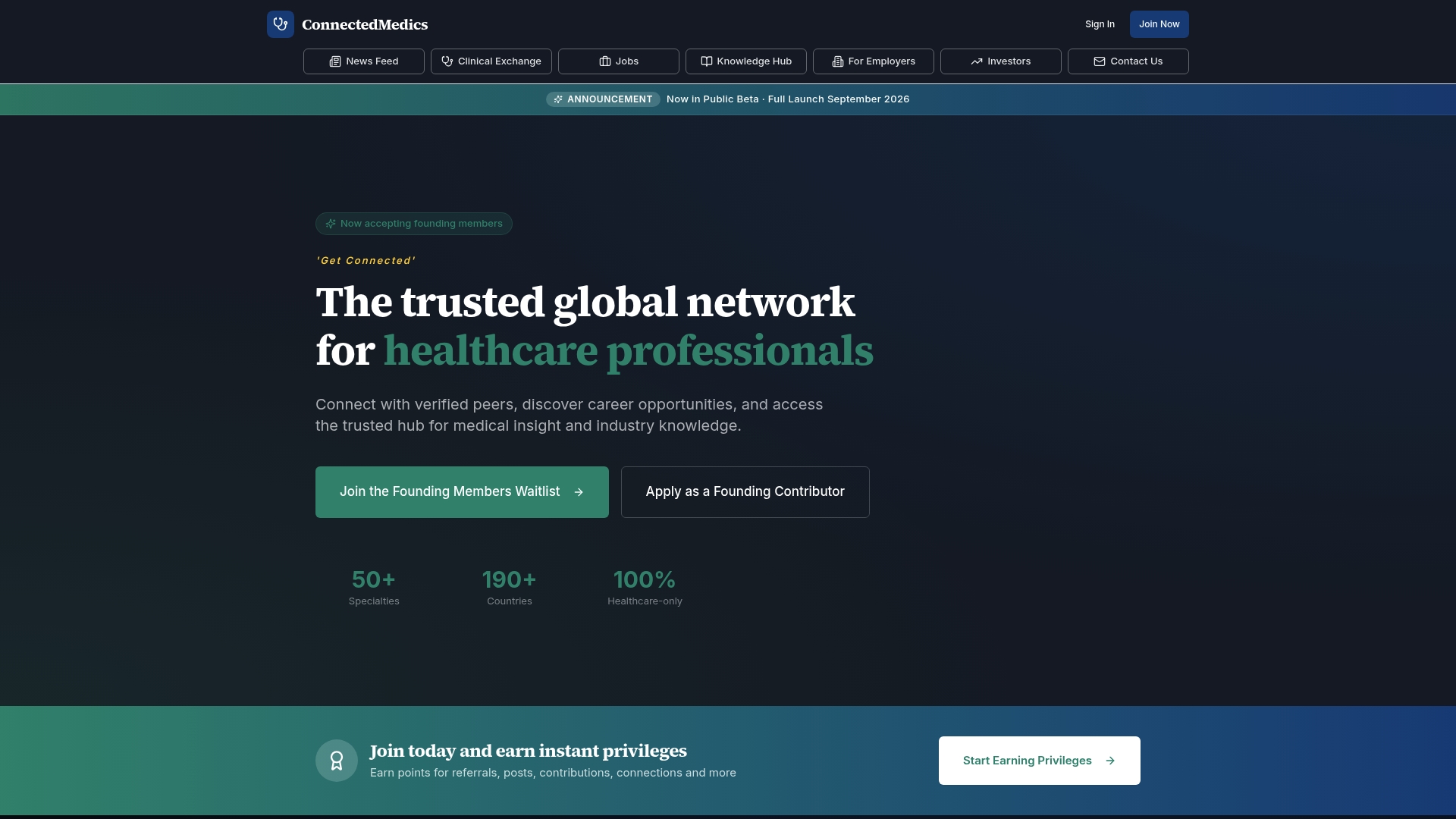
For recruiters running the sourcing and pipeline-building steps described in this article, Connectedmedics offers verified clinician profiles, AI-powered candidate matching, and employer analytics in one platform. The healthcare salary trends resource on the platform supports compensation benchmarking before offer design. With over 4,600 active healthcare vacancies already on the platform, the candidate base is active, not archived. To see how Connectedmedics fits your current open roles, visit Connectedmedics and request a recruiter demo.
Sources
The sources below provide data, templates, and structured plans that support the framework in this article.