
A healthcare recruitment platform is a specialized digital system that connects healthcare professionals with verified clinical job opportunities through credential verification, AI-driven applicant tracking, and automated scheduling. Unlike general job boards, these platforms are built around the unique demands of healthcare hiring, where license validation and certification currency are non-negotiable before any offer is made. Connectedmedics, for example, lists over 4,600 active healthcare vacancies and restricts access to verified medical professionals. The gap between a generic job search and a purpose-built medical staffing solution is wide, and understanding that gap is the first step to a faster, better-matched hire.
How does a healthcare recruitment platform accelerate hiring?
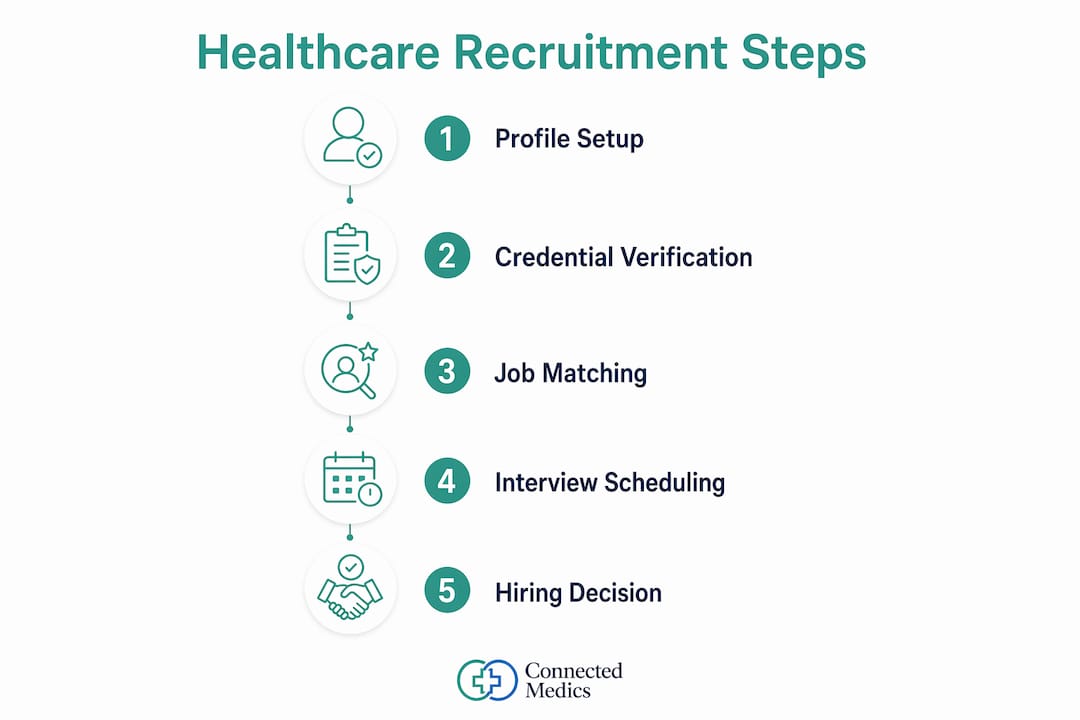
Specialized platforms cut hiring timelines through automation at every stage. AI tools handle resume parsing, credential pre-screening, and interview scheduling without manual back-and-forth. The result is measurable: responses within 24 hours and interviews secured within 1–2 business days are standard on platforms built for healthcare. That speed matters because unfilled clinical roles directly affect patient care.
The productivity gains extend beyond speed. AI-integrated platforms increase recruiting team productivity by 50% by eliminating manual resume sorting and scheduling threads. A recruiter who once spent hours reviewing unqualified applications can instead focus on candidate conversations. That shift changes the quality of every hire, not just the timeline.

For healthcare professionals, faster employer response rates mean less time in limbo between applications and decisions. Platforms that automate scheduling remove the friction of coordinating across clinical shift patterns. The lead-to-interview conversion rate increases by over 75% for employers using specialized platforms, which means professionals on these platforms hear back more often and more quickly.
Key automation features that drive these results include:
- Resume parsing: Extracts clinical credentials, certifications, and specialties automatically.
- Credential pre-screening: Cross-references license numbers against state board databases before a recruiter reviews the file.
- Automated scheduling: Matches interview slots to both recruiter and candidate availability without email chains.
- AI job matching: Ranks open roles by fit based on specialty, location, and certification status.
Pro Tip: Complete every field in your platform profile, including license expiration dates and certification numbers. Platforms that auto-verify credentials can only do so when the data is present and accurate.
What challenges do healthcare professionals face in traditional job searches?
Traditional job searches were not built for healthcare. The core problem is credential verification complexity, which requires manual cross-referencing with state board databases for licenses, expiration dates, and disciplinary history. That process extends hiring timelines substantially compared to other fields. A nurse applying through a general job board faces the same wait as any other candidate, plus an additional verification layer that can take weeks.
Certifications like BLS, ACLS, and PALS must be current at the time of hire. Letting any of them lapse, even briefly, removes a candidate from consideration for most clinical roles. Healthcare professionals managing 12-hour shifts often struggle to track renewal deadlines alongside an active job search.
The second major obstacle is ATS filtering. Most healthcare organizations use applicant tracking systems that automatically scan and filter resumes for keywords and formatting before any human reviews them. A resume that lists "patient monitoring" instead of the specific clinical terminology an employer uses gets filtered out automatically. Generic resumes fail healthcare ATS screening at a high rate.
Here is a structured approach to overcoming these obstacles:
- Audit your certifications first. List every credential with its expiration date before applying anywhere. Expired certifications disqualify applications before a recruiter sees them.
- Tailor every resume to the role. ATS software requires candidates to match specific clinical language and formatting. Pull keywords directly from the job description.
- Use specialty-specific platforms. Boards governed by professional associations list roles that never appear on general platforms. The American Nurses Association and American Physical Therapy Association both operate specialty-vetted job boards with opportunities absent from generalist sites.
- Apply during off-shift hours. Scheduling application time outside clinical shifts reduces errors and allows for proper resume customization.
- Track applications in a spreadsheet. Managing 10 or more active applications across platforms without a tracking system leads to missed follow-ups and duplicate submissions.
Pro Tip: Copy the job description into a text document and highlight every clinical skill term. Then check your resume against that list before submitting. This single step catches most ATS keyword gaps.
How do these platforms connect to certification and government programs?
Healthcare recruitment platforms do more than match resumes to job descriptions. The most capable platforms integrate directly with regulatory and government frameworks that govern where and how healthcare professionals can practice. This is where medical staffing solutions built for healthcare separate clearly from general hiring software.
The National Health Service Corps program is one concrete example. Candidates participating in NHSC loan repayment or scholarship programs must begin employment at approved sites within 6 months of graduation to meet Health Professional Shortage Area requirements. The Health Workforce Connector is the primary tool for accessing those approved sites. Platforms that integrate with or link to the Health Workforce Connector give NHSC candidates a direct path to compliant placements.
License verification against state boards is a separate but equally critical function. State medical boards, nursing boards, and therapy licensing bodies each maintain their own databases. Healthcare staffing agencies and specialized platforms manage this credentialing and licensing logistics, providing candidates access to roles not publicly advertised. That access matters because many high-value clinical positions are filled through agency relationships before they reach any public board.
| Platform feature | What it does | Why it matters |
|---|---|---|
| State board license verification | Cross-references license numbers and status in real time | Prevents placements that violate state practice laws |
| Certification currency check | Flags expired BLS, ACLS, or PALS credentials | Removes unqualified candidates before recruiter review |
| NHSC site access | Links to Health Workforce Connector approved sites | Required for NHSC program compliance within 6 months |
| Exclusive role access | Lists positions not posted on general boards | Expands candidate options beyond public job listings |
What strategies maximize results on recruitment platforms in 2026?
The professionals who get the most from healthcare employment services treat their platform profiles as living documents, not static resumes. Profile completeness directly affects how AI matching algorithms rank candidates for open roles. A profile missing a license number or specialty certification will rank lower than a complete one, regardless of experience level.
Practical strategies that produce results:
- Verify your credentials on the platform. Connectedmedics uses verified profiles as a trust signal to employers. Unverified profiles receive less visibility in search results and job matching.
- Use niche boards alongside broad platforms. Specialty-specific boards consistently list high-value clinical roles absent from broad platforms. Use both, but prioritize the niche boards for senior or specialized roles.
- Format resumes for ATS compliance. Avoid tables, graphics, and non-standard fonts. Use standard section headers like "Work Experience" and "Certifications." These formatting choices determine whether your resume reaches a human reviewer.
- Apply efficiently using platform tools. Platforms with one-click apply features and saved profiles reduce application time significantly. Review guidance on applying to healthcare vacancies efficiently to avoid common submission errors.
- Update your profile after every credential renewal. Platforms that auto-match based on certification status will only surface relevant roles if your renewal dates are current.
- Engage with the platform's knowledge resources. Connectedmedics hosts a knowledge hub with clinical insights contributed by verified medical experts. Staying current on specialty trends improves both interview performance and profile relevance.
The professionals who treat platform engagement as an ongoing practice, rather than a one-time application sprint, consistently report better match quality and shorter time-to-hire.
Key Takeaways
A healthcare recruitment platform reduces time-to-hire and improves job match quality by automating credential verification, ATS filtering, and scheduling in ways that general job boards cannot replicate.
| Point | Details |
|---|---|
| Credential verification is non-negotiable | Platforms that automate license checks against state boards remove the biggest delay in healthcare hiring. |
| ATS optimization determines visibility | Resumes without role-specific clinical keywords are filtered out before any recruiter sees them. |
| Niche platforms outperform general boards | Specialty-governed job boards list high-value clinical roles that never appear on generalist sites. |
| Profile completeness drives AI matching | Incomplete profiles rank lower in platform algorithms, reducing the number of relevant roles surfaced. |
| Government program integration matters | Platforms connected to NHSC and HPSA frameworks give candidates access to compliant, approved placements. |
What I have learned after watching healthcare hiring evolve
The single biggest mistake I see healthcare professionals make is treating a recruitment platform like a search engine. They log in, run a keyword search, apply to 15 roles with the same resume, and wonder why they hear back from two. That approach works on general job boards because general employers are not running credential checks before they open your file. Healthcare employers are.
The platforms that actually move the needle are the ones that do the credentialing work upfront. When your license is verified before you apply, you skip the queue that slows down every unverified candidate. I have watched professionals with identical qualifications get offers weeks apart, simply because one had a verified profile and the other did not.
The AI matching tools on modern platforms are genuinely useful, but only if you feed them accurate data. An AI that does not know your ACLS expires in three months will keep matching you to ICU roles you cannot legally accept. Keeping certification data current is not administrative housekeeping. It is the mechanism that makes the technology work for you.
The healthcare job market in 2026 rewards professionals who treat their digital profile with the same rigor they apply to their clinical documentation. Update it after every renewal, every new role, every completed training. The platform does the rest.
— David
Connectedmedics: a verified network for healthcare professionals
Healthcare professionals who want faster, better-matched job opportunities need a platform built specifically for clinical careers, not a general network with a healthcare filter added on.
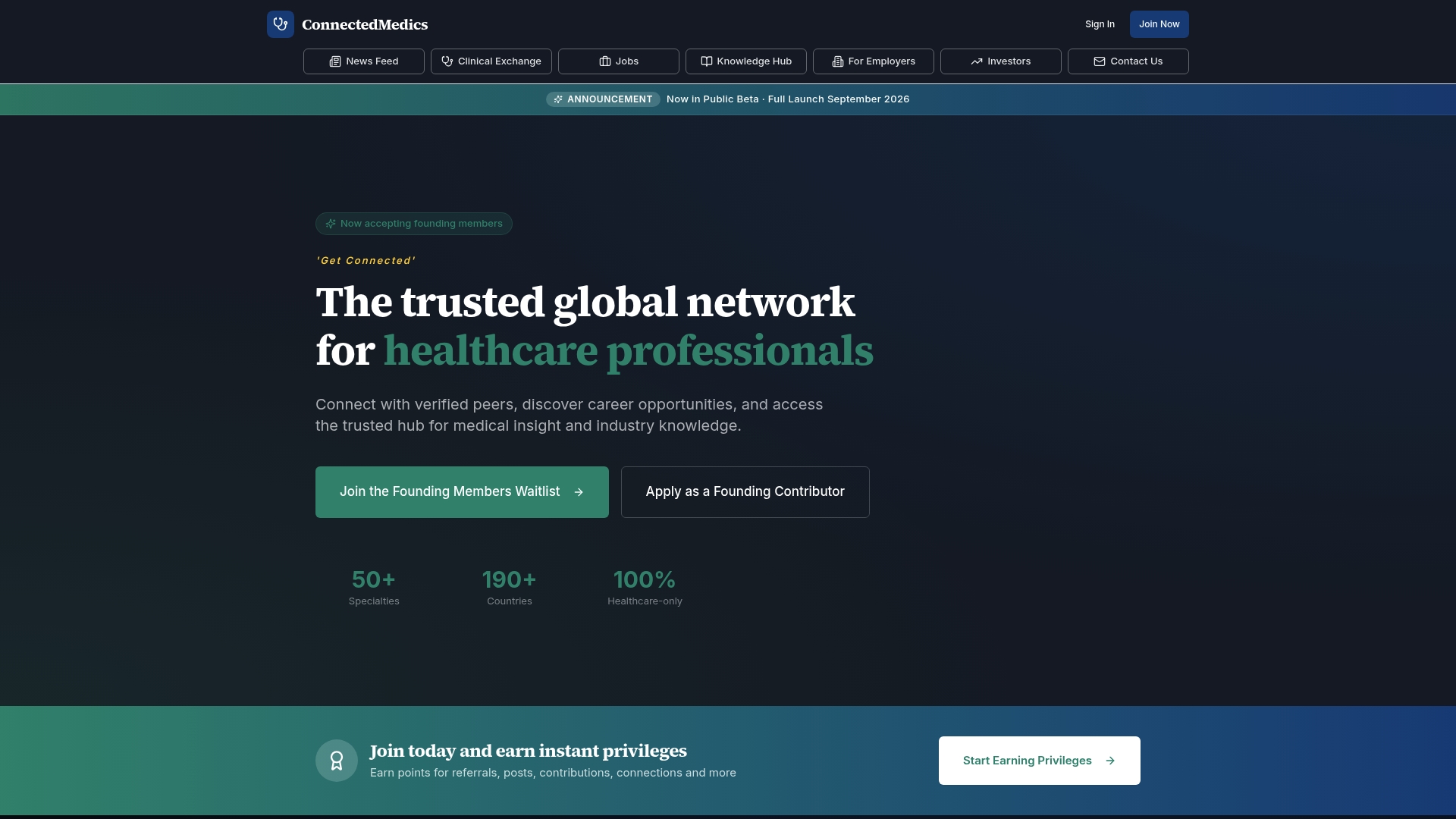
Connectedmedics is a global network for healthcare professionals with over 4,600 active vacancies, verified medical professional profiles, and a knowledge hub contributed by clinical experts. The platform's credential verification process means employers see qualified candidates first, and professionals see roles that match their actual license and specialty status. Founding members gain early access to the full job board and network features. Explore founding member benefits to see what verified membership includes.
FAQ
What is a healthcare recruitment platform?
A healthcare recruitment platform is a specialized digital hiring system that combines credential verification, AI-driven job matching, and applicant tracking for clinical roles. It differs from general job boards by validating licenses and certifications before connecting candidates with employers.
How do I find healthcare jobs on a specialized platform?
Create a complete profile with verified license numbers, certification dates, and specialty information. Platforms like Connectedmedics then match your profile to open roles automatically based on your credentials and location.
Why do healthcare resumes fail ATS screening?
Healthcare ATS systems filter resumes for specific clinical keywords and standard formatting. Generic resumes that omit role-specific terminology or use non-standard formatting are rejected before a recruiter reviews them.
What certifications do healthcare platforms verify?
Most platforms verify state medical and nursing licenses, and certifications including BLS, ACLS, and PALS. Verification involves cross-referencing state board databases for license status, expiration dates, and disciplinary history.
Is a nurse recruitment platform different from a general staffing platform?
A nurse recruitment platform is built around nursing-specific credentials, shift patterns, and specialty matching. General staffing platforms lack the credential verification infrastructure and specialty job inventory that clinical hiring requires.