
Healthcare professional wellness is the proactive maintenance of physical, mental, and emotional health through personal and organizational strategies that reduce burnout and sustain long-term career performance. The formal term used across clinical research is "occupational well-being," and it covers everything from stress management to contract negotiation. Work-life balance for doctors has become a top priority: 85% of physicians graduating from residency now prioritize it, up 22 percentage points since 2018. That shift reflects a profession finally treating its own health as a clinical problem worth solving. Resources from the CDC, the American Medical Association (AMA), and the Stanford Professional Fulfillment Index (PFI) now anchor the evidence base for this field.
What evidence-based strategies improve healthcare professional wellness?
The most effective wellness interventions combine structured programs, digital tools, and peer support rather than relying on any single approach. Research shows that layering methods produces stronger and more lasting results than meditation frequency or any one technique alone.
The SMART program (Stress Management and Resiliency Training) is one of the most studied interventions in this space. It produces effect sizes from d = 0.57 to 1.0 at two months, sustained at d = 0.41 to 0.65 at eight months. Those numbers mean the gains are not just post-workshop enthusiasm. They hold up nearly a year later.

App-based coaching is a newer but well-supported option. An 8-week asynchronous coaching study of 192 healthcare professionals showed significant improvements in professional fulfillment and reduced burnout as measured by the Stanford PFI. The asynchronous format matters because it fits into irregular shift schedules without requiring live attendance.
Coping strategy type also predicts outcomes. Adaptive coping strategies such as peer support, structured reflection, and culturally embedded practices reduce emotional exhaustion and build resilience. Maladaptive coping, like excessive self-distraction or avoidance, provides short-term relief but worsens chronic burnout over time. Knowing the difference is not obvious in the middle of a 14-hour shift, which is why structured programs help.
Reflective clinical supervision adds another layer. Compassion-focused supervision addresses individual emotional triggers rather than applying one-size-fits-all resilience training. It moves the conversation from "toughen up" to "what specifically is depleting you and why."
| Intervention | Effect at 2 months | Effect at 8 months | Format |
|---|---|---|---|
| SMART program | d = 0.57–1.0 | d = 0.41–0.65 | Group sessions |
| App-based biometric coaching | Significant PFI improvement | Not yet reported | Asynchronous digital |
| Reflective clinical supervision | Moderate resilience gains | Sustained with ongoing use | 1:1 or small group |
| Peer support networks | Reduced emotional exhaustion | Maintained with active use | Peer-led |
Pro Tip: Consistent use of multiple tools over time matters more than how often you meditate. Combining SMART, peer support, and even brief app-based check-ins produces compounding benefits that single-method approaches do not.
How do workplace policies and culture affect healthcare employee well-being?
Burnout is primarily an organizational issue, not a personal failure. The CDC's Total Worker Health approach makes this explicit: systemic changes like flexible scheduling and manageable workloads outperform individual resilience training when applied alone. That finding should shift where hospitals and health systems invest their wellness budgets.
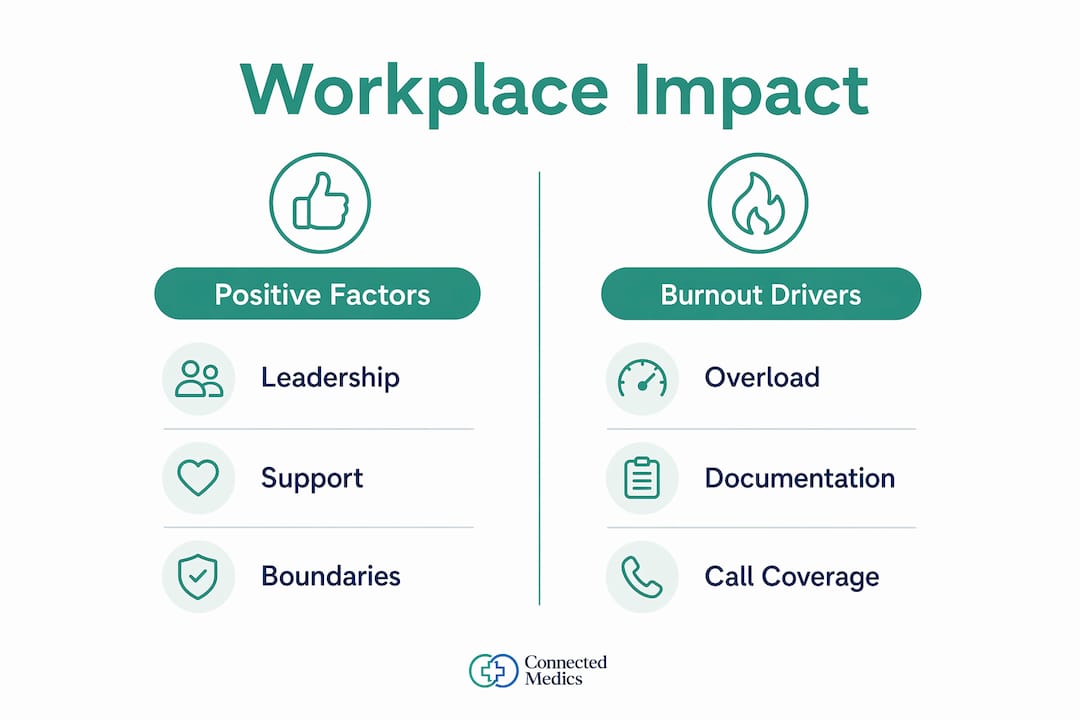
Leadership behavior is the most direct lever organizations control. Supervisors who model boundaries, acknowledge workload limits, and actively reduce administrative burden create conditions where wellness strategies can actually work. Without that top-down commitment, individual programs stall because the environment keeps generating the same stressors.
Administrative burden is a specific and underappreciated driver of burnout. Excessive documentation requirements, redundant approval processes, and poorly designed electronic health record (EHR) workflows consume time that clinicians would otherwise spend on patient care or recovery. Reducing that friction is a wellness intervention in itself.
Workforce planning that accounts for well-being outcomes, not just staffing ratios, is the next frontier for health systems serious about retention.
Key workplace policies that promote well-being:
- Flexible scheduling: Shift options that accommodate personal needs and reduce consecutive overnight call
- Call coverage caps: Written limits on on-call frequency and response expectations
- Protected non-clinical time: Scheduled hours for documentation, education, and recovery
- Peer support programs: Formal structures for confidential colleague support after critical incidents
- EHR optimization: Regular audits to reduce unnecessary documentation steps
- Mental health access: On-site or employer-covered counseling with no stigma barriers
Pro Tip: Healthy coping requires employer support, not just individual effort. If your organization offers a peer support program or an employee assistance program (EAP), use it before you need it. Familiarity with the resource reduces the barrier when stress peaks.
What personal tactics help healthcare professionals maintain balance?
Self-directed wellness starts with data, not willpower. Tracking subjective wellness metrics like stress levels, sleep quality, and energy across a 6-month period converts vague feelings into evidence. Clinicians have successfully negotiated protected weekends using exactly this kind of documented data. A spreadsheet showing 18 consecutive weekends on call is harder for an employer to dismiss than a verbal complaint.
Setting clear boundaries is the second pillar. This means defining when charting stops, when on-call phones go silent, and when personal time is genuinely off-limits. Boundaries without enforcement are just intentions. Scheduling personal time as a calendar block with the same weight as a clinical commitment changes the default.
Tools like the WeekdayDoc burnout risk calculators and financial planning resources help physicians model the real cost of overwork, including the financial and career implications of staying in a high-burnout role. That kind of concrete modeling makes the case for change more persuasive, both to yourself and to your employer.
Maladaptive coping deserves specific attention here. Excessive screen time, alcohol use, and compulsive overworking all feel like relief in the short term. Research confirms they delay help-seeking and worsen chronic burnout over time. Recognizing the pattern early is the intervention.
Daily and weekly self-care habits that research supports:
- Sleep protection: 7–9 hours as a non-negotiable clinical priority, not a luxury
- Physical activity: At least 150 minutes of moderate exercise per week, even broken into short blocks
- Social connection: Regular contact with peers outside the clinical environment
- Mindfulness practice: Brief daily sessions using apps like Headspace or Calm, prioritizing consistency over duration
- Digital detox windows: Defined periods with no work email or messaging
- Annual wellness review: A scheduled self-assessment of career satisfaction, workload, and personal goals
Pro Tip: Use a healthcare job search checklist when evaluating new roles. Wellness-supportive contract terms are easier to negotiate before you sign than after you are already burned out.
How does contract negotiation affect long-term wellness?
Employment contracts are wellness documents. Most healthcare professionals do not read them that way, and that oversight costs them years of unnecessary stress. The AMA identifies five contract clauses that directly drive physician burnout: call coverage terms, non-compete restrictions, productivity requirements, termination provisions, and the absence of reassessment clauses.
Non-compete clauses deserve particular scrutiny. Restrictive non-competes reduce career flexibility and trap physicians in roles that no longer fit their life circumstances. A physician who cannot leave without relocating their family has far less leverage to negotiate workload adjustments. That power imbalance feeds burnout directly.
Call coverage caps are equally critical. Contracts that leave call frequency undefined or uncapped create conditions where work hours spiral without any formal mechanism to push back. Negotiating a written cap before signing is far simpler than trying to renegotiate it mid-contract when you are already exhausted.
| Contract clause | Wellness risk if absent | Negotiation goal |
|---|---|---|
| Call coverage cap | Unlimited on-call hours and fatigue | Written frequency and response limits |
| Non-compete restriction | Career immobility and reduced leverage | Narrow geographic scope or removal |
| Productivity threshold | Unsustainable patient volume pressure | Realistic RVU targets with review periods |
| Reassessment clause | No formal mechanism to revisit terms | Annual or biannual contract review right |
| Termination without cause | Job insecurity and chronic anxiety | Reasonable notice period, 90 days minimum |
Pro Tip: Negotiate a "reassess contract in one year" clause at signing. It costs the employer nothing and gives you a formal, low-conflict window to address workload, call, or compensation issues before they become burnout triggers.
Key takeaways
Healthcare professional wellness requires both personal discipline and organizational commitment, and neither works well without the other.
| Point | Details |
|---|---|
| Evidence-based programs work | SMART and app-based coaching produce measurable, sustained reductions in burnout. |
| Organizational change outperforms individual effort alone | CDC's Total Worker Health approach shows systemic policy changes deliver stronger results. |
| Data-driven self-advocacy is effective | Six months of tracked wellness data strengthens workload negotiation with employers. |
| Contracts shape wellness outcomes | Uncapped call coverage and restrictive non-competes are direct burnout risk factors. |
| Adaptive coping protects long-term health | Peer support and reflective supervision outperform avoidance and self-distraction strategies. |
What I have learned about wellness that most articles miss
The conversation about healthcare professional wellness tends to split into two camps. One side tells you to meditate more and set better boundaries. The other side says it is all systemic and nothing changes until hospitals fix their culture. Both camps are partially right, and that is exactly the problem.
What I have seen consistently is that professionals who thrive long-term do two things simultaneously. They take personal responsibility for tracking their own data and negotiating their own contracts, and they also refuse to accept that burnout is their fault. Those two positions are not contradictory. They are complementary.
The contract negotiation piece is the most underused lever I know of. Most physicians I have spoken with have never asked for a reassessment clause. They did not know it was an option. The AMA has been saying for years that contract language drives burnout, and yet the conversation in most wellness programs never gets near an employment agreement.
Peer networks are the other underrated resource. Not LinkedIn-style networking, but genuine specialty-specific connections where you can ask a colleague how they handled a specific call coverage dispute or what their contract says about non-competes. That kind of peer networking is where real, practical wellness knowledge lives.
The professionals who burn out fastest are often the ones who wait for their organization to fix things. The ones who last are the ones who act on what they can control while pushing for systemic change at the same time.
— David
Wellness resources for healthcare professionals on Connectedmedics
Healthcare professionals looking for peer connections, career resources, and wellness-focused job opportunities have a dedicated space on Connectedmedics.
Connectedmedics is a verified global network built exclusively for medical professionals. The platform hosts over 4,600 active healthcare vacancies, a knowledge hub with clinical insights from verified experts, and specialty-specific peer connections that generic networks cannot replicate. For professionals navigating burnout, career transitions, or contract decisions, access to the right peers and the right roles matters. Connectedmedics provides both. Joining as a founding member gives early access to the full resource library and peer network.
FAQ
What is healthcare professional wellness?
Healthcare professional wellness, formally called occupational well-being, is the sustained maintenance of physical, mental, and emotional health for clinicians and medical staff. It includes stress management, work-life balance, peer support, and organizational policies that prevent burnout.
What causes burnout in healthcare workers?
Burnout results from a combination of excessive workload, administrative burden, poor call coverage terms, and inadequate organizational support. The CDC identifies systemic factors as the primary drivers, not individual stress tolerance.
How effective is the SMART program for reducing burnout?
The SMART program produces effect sizes of d = 0.57 to 1.0 at two months, sustained at d = 0.41 to 0.65 at eight months. Those results make it one of the most evidence-supported wellness interventions available to healthcare teams.
Can contract negotiation actually reduce burnout risk?
Yes. The AMA identifies call coverage caps, non-compete restrictions, and reassessment clauses as contract terms that directly affect burnout risk. Negotiating these terms before signing is more effective than trying to change them after burnout sets in.
What self-care habits have the strongest evidence for healthcare workers?
Consistent sleep, regular physical activity, peer connection, and adaptive coping strategies like reflective supervision show the strongest research support. Maladaptive coping such as avoidance and self-distraction worsens long-term outcomes despite short-term relief.