
Most nurses think peer networking means handing out business cards at a conference. It doesn't. Understanding what is peer networking for nurses means recognizing it as a structured practice of building genuine, trust-based professional relationships that support your career, your well-being, and your clinical growth. This article breaks down the types of nursing peer networks available today, the real benefits they offer, and practical strategies to build connections that actually last.
Table of Contents
- Key takeaways
- What peer networking for nurses really means
- Types of nursing peer networks
- Benefits of peer networking for nurses
- How to network effectively as a nurse
- Common barriers to peer networking
- Why peer networking changed my view of nursing careers
- Connect with nurses worldwide on Connectedmedics
- FAQ
Key takeaways
| Point | Details |
|---|---|
| Peer networking goes beyond contacts | It builds reputation, trust, and access to mentorship and career opportunities over time. |
| Multiple network types exist | Formal and informal structures serve different needs, from emotional support to specialty collaboration. |
| Burnout drops with peer support | Evidence shows peer programs increase resilience and self-efficacy, especially for newer nurses. |
| Barriers are real but manageable | Blame culture and time constraints are the top obstacles; confidentiality and scheduling flexibility help. |
| Digital platforms expand access | Online communities provide 24/7 connection across units, specialties, and geographic boundaries. |
What peer networking for nurses really means
Networking is widely misunderstood as contact swapping. In nursing, it means something more specific and more useful. Peer networking is the intentional practice of building relationships with fellow nurses and healthcare professionals based on shared goals, mutual respect, and trust. The output is not a larger contact list. The output is a professional reputation and a web of relationships that open doors.
Think about what actually happens when a charge nurse recommends you for a leadership program. Or when a colleague you met at a conference connects you with a recruiter for your ideal role. These outcomes come from relationships where someone knows your work, your character, and your ambitions. Networking builds recognition among both peers and leaders, making your capabilities visible in ways that a resume alone never does.
Peer networking also plays a clear clinical role. It includes knowledge exchange, collaborative problem solving, and peer-assisted learning. Research shows that peer-assisted learning works best when the experience gap between participants is small, creating a horizontal exchange rather than a teacher-student dynamic. That matters because nurses with two years of experience and nurses with ten are not well matched for this. You get the most from peers who are close to where you are.
Key outcomes nurses gain from active peer networking include:
- Access to mentors who guide specialty transitions and leadership development
- Exposure to different clinical approaches and institutional practices
- Advocacy from peers who can speak to your strengths in professional settings
- Emotional validation from colleagues who understand the specific pressures of nursing
Pro Tip: Before attending any networking event or joining any online community, write down two things: what you can offer others and what you genuinely want to learn. Showing up with both in mind makes every interaction more productive.
Types of nursing peer networks
Nurses have access to more networking structures than most realize. The options range from highly organized institutional programs to informal digital communities. Each serves a different purpose.
Formal nursing network structures
Formal networks operate with defined structure, membership criteria, and clear goals. Professional organizations and specialty associations fall into this category. These groups host annual conferences, publish peer-reviewed resources, and offer continuing education. Emergency Nursing 2026, for example, draws thousands of participants to Phoenix for peer learning and networking on a national scale. These events give nurses structured access to colleagues they would never meet within a single health system.
Institutional peer support programs represent another formal structure. UCLA Health's SupportingYou program trained 65 frontline nurses as confidential peer supporters who provide rapid assistance after traumatic clinical events. The program requires formal vetting and manager endorsement, and it operates independently from disciplinary reporting. That independence is what makes it work. Nurses will not seek support from a program they fear could affect their job.
Informal networking channels
Informal networks are self-organized and typically accessible without membership fees or applications. Online forums, social media groups, and intraorganizational digital communities all belong here.
Digital peer communities function like an always-open break room that transcends geographic and unit boundaries. Nurses use these spaces to ask clinical questions, process difficult shifts, and share resources at any hour. Facebook groups, Reddit threads, and specialty forums provide exactly this kind of persistent connection.
Here is a quick comparison of formal and informal peer network types:
| Network type | Examples | Primary purpose | Accessibility |
|---|---|---|---|
| Professional organizations | Specialty nursing associations | Education and advocacy | Membership required |
| Institutional programs | Peer support programs like SupportingYou | Emotional support and crisis response | Employer-based |
| Annual conferences | Emergency Nursing 2026 | Knowledge sharing and networking | Registration required |
| Online forums and social groups | Reddit, Facebook nursing groups | Peer discussion and support | Open or low barrier |
| Intraorganizational platforms | Hospital-based digital communities | Unit-level connection and morale | Internal access |
Most nurses benefit from using a combination. A formal professional organization keeps you connected to specialty-level developments. An informal online community keeps you grounded in daily peer support.
Benefits of peer networking for nurses
The benefits of peer networking for nurses reach further than most professionals expect. They span emotional health, clinical skill, and career trajectory.
Burnout reduction and emotional resilience
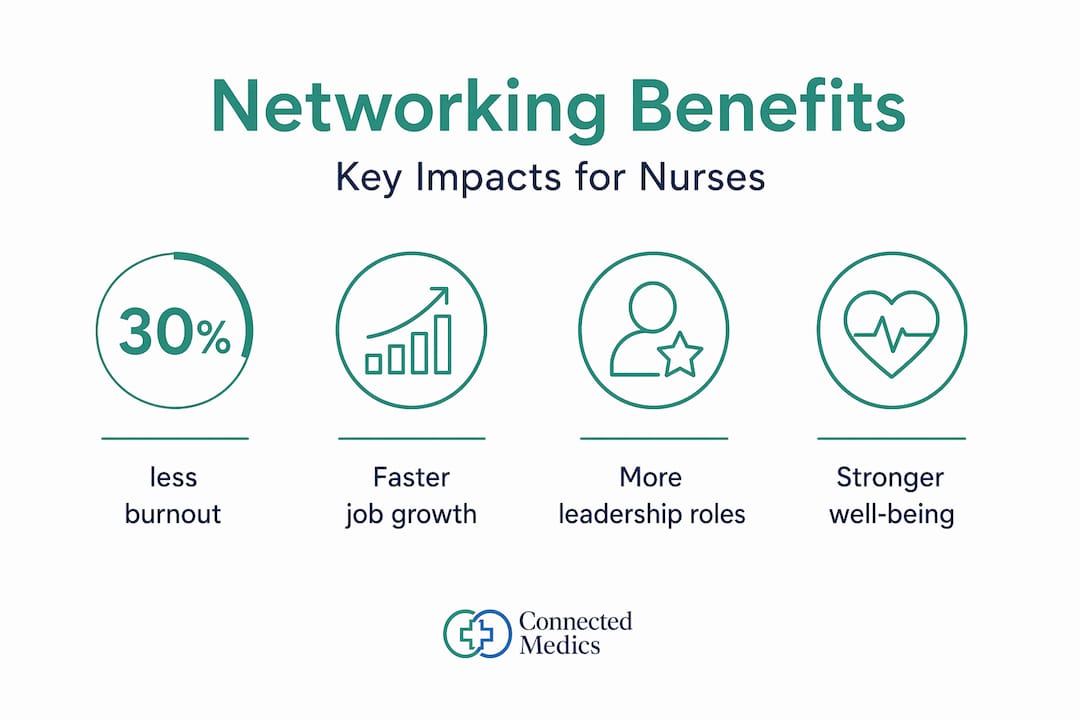
Nurse burnout is a systemic problem, and peer support is one of the most evidence-based tools against it. Peer support programs are a cost-efficient method to reduce burnout and improve retention, particularly for newer nurses. The mechanism is straightforward. When a nurse can talk to someone who has lived through the same clinical pressures and emotional weight, the isolation dissolves. That relief reduces the cognitive and emotional load that accumulates into burnout.
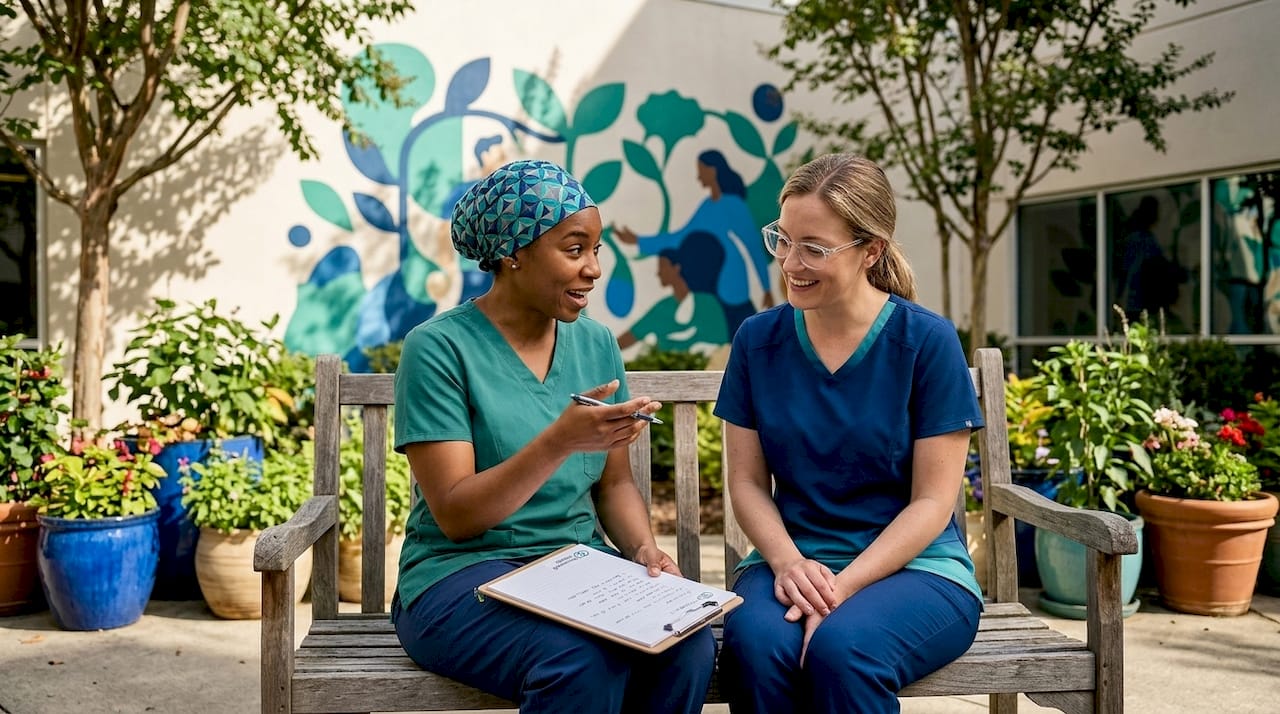
Peer support is also distinct from therapy. It is present-oriented. It normalizes emotional responses and helps nurses identify their own internal resources rather than providing clinical treatment. That distinction matters because nurses who would never seek formal mental health support will often talk to a trusted peer.
A pandemic-era study reinforced this. The Stress First Aid peer intervention model, deployed during COVID-19, increased self-efficacy and resilience among diverse health workers while reducing burnout. Non-mental health staff trained as peer supporters created measurable change at the unit level.
"Peer support is not about fixing someone. It is about being present, listening without judgment, and helping a colleague recognize they are not alone in what they are feeling."
Skill development and leadership growth
Peer support groups improve communication, collaboration, and leadership skills by providing regular forums where nurses practice these abilities in low-stakes environments. A nurse who shares a difficult patient case in a peer group is building clinical reasoning and communication skills simultaneously. Over time, these interactions build the confidence that translates into formal leadership roles.
Career access is the third major benefit. Strong peer networks surface job leads, introduce nurses to recruiters, and generate referrals. For nurses considering a shift in specialty or setting, peer connections are often what passive job searching in healthcare looks like in practice: staying visible and well-regarded so that opportunities find you.
How to network effectively as a nurse
Knowing the value of peer networking and knowing how to do it are different things. Here is a concrete approach.
-
Start with existing connections. Colleagues on your current unit, nurses from your training program, and former classmates are your first network. Reactivate those relationships with a direct message or coffee catch-up before expanding outward.
-
Join one focused community. Pick a single online forum, professional association, or specialty group and participate consistently. Showing up regularly in one space builds stronger credibility than scattered presence in ten.
-
Attend at least one in-person event per year. Conferences create relationship depth that digital tools cannot fully replicate. Meeting a colleague face to face accelerates trust significantly.
-
Give before you ask. Share a useful resource, answer a question in a forum, or introduce two colleagues who should know each other. Reciprocity is the foundation of lasting professional relationships.
-
Build a profile on verified platforms. A verified professional profile signals credibility and makes it easier for peers and recruiters to find and evaluate you.
-
Engage with your digital community's leadership. Research shows that leadership engagement in digital communities increases morale and psychological safety. When you see leaders participating, that is a sign the community is worth investing in.
Pro Tip: Set a recurring 15-minute block each week to respond to posts, send one message to a peer, or read one article in your specialty community. Consistency beats intensity every time when building a professional network.
Common barriers to peer networking
Understanding the obstacles is part of building a strategy to get past them. The most common barriers include:
- Blame culture at work. Fear of stigma or professional consequences keeps many nurses from seeking peer support. Organizational blame culture is one of the primary barriers to peer support participation, even when programs exist.
- Time constraints. Shift work, overtime, and fatigue leave little room for networking activities that feel optional. The fix is treating networking as part of professional development, not an add-on.
- Digital professionalism concerns. Nurses worry about privacy when discussing clinical experiences online. Using platforms with verified, healthcare-specific communities reduces this risk compared to general social networks.
- Unclear entry points. Many nurses do not know which organizations or communities are worth joining. Asking a trusted colleague where they find value is a faster path than independent research.
The organizational dimension is worth calling out separately. Peer support programs succeed when they are decoupled from formal reporting and operate with genuine confidentiality. High-blame environments lower engagement even when confidentiality is promised. If you are in a leadership role, that is where the work starts.
Why peer networking changed my view of nursing careers
I have watched nurses with similar credentials take completely different career trajectories. The difference is almost never technical skill. It is almost always the quality and activity of their professional network.
What most nurses miss is that peer networking is not something you do when you need something. It is a practice you maintain throughout your career so that when you need something, the foundation is already there. The nurses I have seen advance fastest are the ones who invested in relationships during stable periods, not just during job searches or burnout crises.
The other thing I have learned is that giving matters more than most people realize. When you contribute genuinely to a peer community, your reputation grows in ways that cannot be manufactured. People remember who helped them. That memory becomes career capital.
My take: approach peer networking as a long-term professional habit, not a tactical tool. The return on that investment compounds over years in ways that are hard to predict but impossible to ignore.
— David
Connect with nurses worldwide on Connectedmedics
Connectedmedics is built for healthcare professionals who want more than a generic professional network. It provides verified profiles, a global jobs board with over 4,600 active healthcare vacancies, and a knowledge hub with clinical insights contributed by verified medical experts.
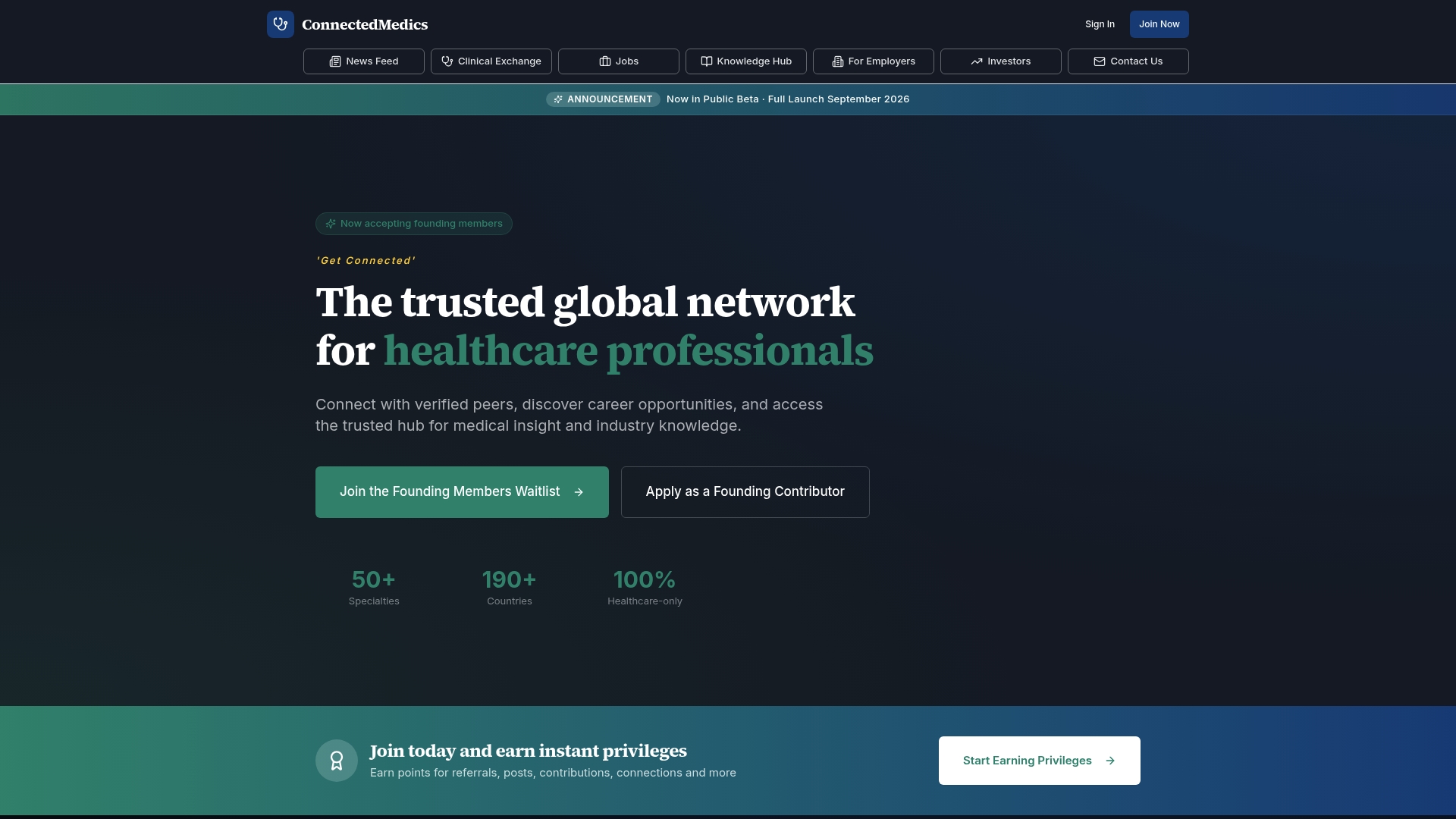
For nurses looking to put peer networking into practice, the Connectedmedics platform offers access to specialty-specific communities, career resources, and a professional marketplace tailored to healthcare needs. Whether you are building peer connections, exploring new roles, or staying current with clinical developments, Connectedmedics provides the infrastructure to do it in one verified, healthcare-specific environment.
FAQ
What is peer networking for nurses?
Peer networking for nurses is the practice of building professional relationships with fellow nurses and healthcare colleagues based on trust, shared experience, and mutual support. It includes emotional support, knowledge exchange, mentorship, and career collaboration.
What are the main types of nursing peer networks?
The main types include formal structures such as professional associations, specialty conferences, and institutional peer support programs, as well as informal structures such as online forums, social media groups, and intraorganizational digital communities.
How does peer networking reduce nurse burnout?
Peer support programs increase self-efficacy and resilience by normalizing emotional responses and reducing isolation. Research shows these programs are a cost-efficient method to reduce burnout, particularly for nurses in their early career years.
How can nurses start networking if they have limited time?
Start with existing colleagues and one focused online community. A consistent 15 minutes per week of engagement builds a strong network over time without requiring large time commitments.
What barriers do nurses face in peer networking?
The most common barriers are organizational blame culture, time constraints, privacy concerns in digital spaces, and uncertainty about where to start. Choosing confidential, healthcare-specific platforms and decoupling peer support from formal reporting processes reduces these obstacles significantly.