
A healthcare professional network is defined as a purposeful, career-focused community where healthcare workers connect to share knowledge, collaborate on clinical challenges, and advance their professional development. Unlike personal social networks or general platforms like LinkedIn, a medical professional network is built specifically around the needs of practitioners: verified credentials, specialty-relevant content, and career opportunities within healthcare. Organizations like the Healthcare Leaders of New York (HLNY) and platforms like Connectedmedics represent this category. These networks operate as structured systems, not casual contact lists, and their value compounds over time through sustained engagement.
What is a healthcare professional network and how does it work?
A healthcare professional network is, at its core, a professional-focused community connecting healthcare workers for career development, knowledge exchange, and collaboration. The distinction from a general professional network matters: healthcare networks are organized around clinical roles, specialties, and sector-specific career paths rather than broad industry categories.
These networks take several structural forms:
- Online platforms: Digital communities with member profiles, job boards, forums, and knowledge hubs. Connectedmedics and specialty-specific forums fall here.
- In-person professional associations: Regional or national groups like HLNY that host events, conferences, and mentorship programs.
- Academic and research networks: Communities built around clinical research, such as the TRANSFORM EVOLUTION program, which connects faculty across career stages to support mentorship and collaboration.
- Hybrid models: Organizations that combine digital tools with in-person events to maintain engagement across geographies.
The WHO framework for knowledge networks identifies three operational pillars that keep these communities functional: active membership, structured communication channels, and administrative infrastructure. Without all three, networks stagnate after their initial launch phase.
Pro Tip: When evaluating a network to join, check whether it has a dedicated administrative coordinator or staff. Networks with no operational backbone tend to go quiet within 18 months.

| Network Type | Primary Format | Best For |
|---|---|---|
| Online platforms | Digital profiles, job boards, forums | Career mobility, knowledge access |
| Professional associations | Events, conferences, committees | Leadership development, visibility |
| Research networks | Collaborative projects, publications | Academic and clinical researchers |
| Hybrid models | Digital tools plus in-person events | Broad engagement across career stages |
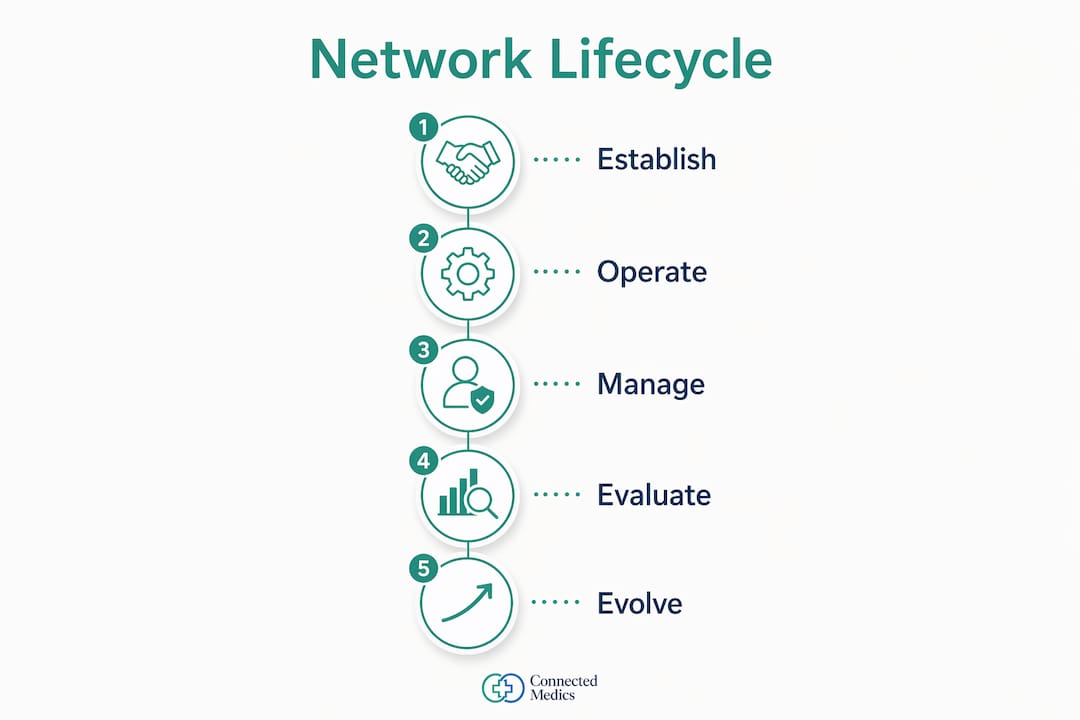
The lifecycle of a healthcare network matters as much as its structure. The WHO emphasizes managing networks through their full lifecycle, from launch through maturity, to sustain the collaboration benefits members joined for. Networks that treat launch as the finish line lose momentum quickly.
What are the benefits of joining a healthcare professional network?
The benefits of professional healthcare networks extend well beyond collecting contacts. Professional networking builds social capital, amplifies visibility within your specialty, and opens access to resources that are not available through formal employment channels alone.
The most direct benefits, ranked by career impact:
- Resource and knowledge exchange. Members gain access to clinical insights, research summaries, and peer-reviewed guidance that would otherwise require hours of independent searching.
- Mentorship and skill development. Structured networks connect early-career professionals with experienced practitioners who can accelerate career transitions and skill acquisition.
- Career advancement. Networks surface job opportunities, leadership roles, and speaking engagements before they reach public job boards. Connectedmedics, for example, lists over 4,600 active healthcare vacancies accessible to verified members.
- Visibility and reputation building. Contributing to discussions, publishing in network forums, or presenting at events builds a professional reputation within your specialty.
- Interdisciplinary collaboration. Cross-specialty connections improve patient care outcomes by exposing clinicians to approaches outside their primary training.
"Networking is an active, purposeful behavior that builds reputations and social capital over time. Physician leaders who treat it as a passive activity consistently underperform those who approach it strategically." — American Association for Physician Leadership
The TRANSFORM EVOLUTION program demonstrates this in practice. By integrating multistage faculty into a single network, it supports career transitions that individual mentorship programs cannot replicate. The model proves that structured, inclusive networks outperform informal contact-building at every career stage.
For nurses specifically, peer networking carries additional weight: it provides a support structure that reduces professional isolation, particularly for those working in rural or understaffed settings.
How do healthcare professional networks compare?
Not all healthcare networking platforms or associations serve the same purpose. Choosing the right network depends on your career stage, specialty, and goals.
- Connectedmedics targets verified healthcare professionals globally. It offers a specialty-specific jobs board with over 4,600 active vacancies, a knowledge hub with clinician-contributed content, and verified professional profiles that build credibility within the platform. It addresses the fragmentation problem that generic platforms like LinkedIn create for healthcare workers.
- LinkedIn functions as a broad professional network. It supports brand-building and cross-industry visibility but lacks healthcare-specific verification, clinical content, and role-relevant job filtering.
- HLNY (Healthcare Leaders of New York) operates as a regional association focused on leadership development through events, committees, and peer programming. Its value is depth of local connection rather than global reach.
- Academic networks like those supported by the TRANSFORM EVOLUTION program or institution-specific research consortia serve professionals whose career advancement depends on publications, grants, and research collaboration.
- Staffing-adjacent platforms connect healthcare workers to employment opportunities and are worth considering alongside traditional networks, particularly for those exploring passive job searching as part of a broader career strategy.
| Platform | Audience | Key Feature | Cost Model |
|---|---|---|---|
| Connectedmedics | All healthcare professionals | Verified profiles, 4,600+ vacancies | Free to join |
| Broad professional market | Brand visibility, cross-industry reach | Freemium | |
| HLNY | Healthcare leaders, NY region | Events, leadership programming | Membership fee |
| Academic consortia | Researchers, faculty | Collaborative research, mentorship | Institution-based |
The core differentiator is verification. Generic platforms allow anyone to claim clinical credentials. Networks built on verified profiles, like Connectedmedics, create a higher-trust environment where connections carry more professional weight.
How to join and build a healthcare professional network effectively
Joining a network is the easy part. Building one that actually advances your career requires a deliberate approach. eCornell's strategic networking course for healthcare leaders outlines a framework that applies at any career stage.
- Conduct a network audit. Map your current connections by category: mentors, peers, sponsors, and cross-specialty contacts. Identify gaps. Most professionals discover they are heavily concentrated in one category and underrepresented in others.
- Build a sponsor development plan. Sponsors differ from mentors. A sponsor actively advocates for you in rooms you are not in. Identify two or three senior professionals in your network who could serve this role and invest in those relationships specifically.
- Assemble a personal advisory board. This is a small group of five to seven contacts across specialties and career stages who provide honest feedback, strategic guidance, and access to their own networks.
- Engage consistently, not sporadically. The WHO lifecycle framework confirms that networks sustain value through ongoing engagement. Attending one conference per year does not build a network. Contributing to forums, commenting on posts, and following up after meetings does.
- Use digital platforms with purpose. Platforms like Connectedmedics allow you to contribute to the knowledge hub, engage with specialty-specific content, and signal expertise to peers and recruiters simultaneously.
Pro Tip: Set a recurring 30-minute weekly block specifically for network maintenance. Use it to respond to messages, share one piece of relevant content, or reach out to one contact you have not spoken to in 60 days. Consistency compounds.
Sustained professional networks require infrastructure support, including administrative coordination and financial resources, to remain effective long-term. This applies to the networks you join as much as the ones you build internally within your institution. Choosing networks with operational backing is not a luxury. It is a prerequisite for long-term value.
Key takeaways
A healthcare professional network delivers career value only when treated as an active, ongoing practice supported by verified connections and structured engagement.
| Point | Details |
|---|---|
| Definition clarity | A healthcare professional network connects practitioners for career development, knowledge sharing, and collaboration. |
| Structure matters | Effective networks combine active membership, communication channels, and administrative infrastructure. |
| Benefits are concrete | Joining delivers mentorship, career visibility, job access, and interdisciplinary collaboration. |
| Platform choice is strategic | Verified, specialty-specific platforms like Connectedmedics outperform generic networks for healthcare professionals. |
| Sustained engagement wins | Weekly, consistent participation builds social capital far more effectively than sporadic attendance. |
Why most healthcare professionals are networking wrong
Most healthcare professionals treat networking as something they do when they need something. A job change, a reference, a research collaborator. That reactive approach produces weak results because it asks for value before delivering any.
The professionals I have seen build genuinely powerful networks do the opposite. They contribute first. They share clinical insights, comment on peers' work, and make introductions without expecting anything in return. Over time, that behavior creates a reputation that precedes them in every room they enter.
The other mistake is treating all connections as equal. A network of 500 weak ties is less useful than a network of 50 strong ones. The AAPL research on physician leaders makes this explicit: purposeful, active networking builds social capital. Passive accumulation of contacts does not.
Healthcare is also a field where trust is the currency. Verified profiles and specialty-specific platforms matter because they filter out noise. When a connection on Connectedmedics reaches out, you know they are a credentialed practitioner. That baseline trust changes the quality of every interaction.
The most underused networking strategy in healthcare is the personal advisory board. Most clinicians have mentors. Very few have assembled a deliberate group of five to seven advisors across specialties, career stages, and institutional backgrounds. That structure forces you to maintain diverse relationships and gives you access to perspectives that a single mentor cannot provide.
Networking is not a soft skill. It is a career infrastructure decision. The professionals who treat it that way consistently outperform those who do not.
— David
Build your network with Connectedmedics
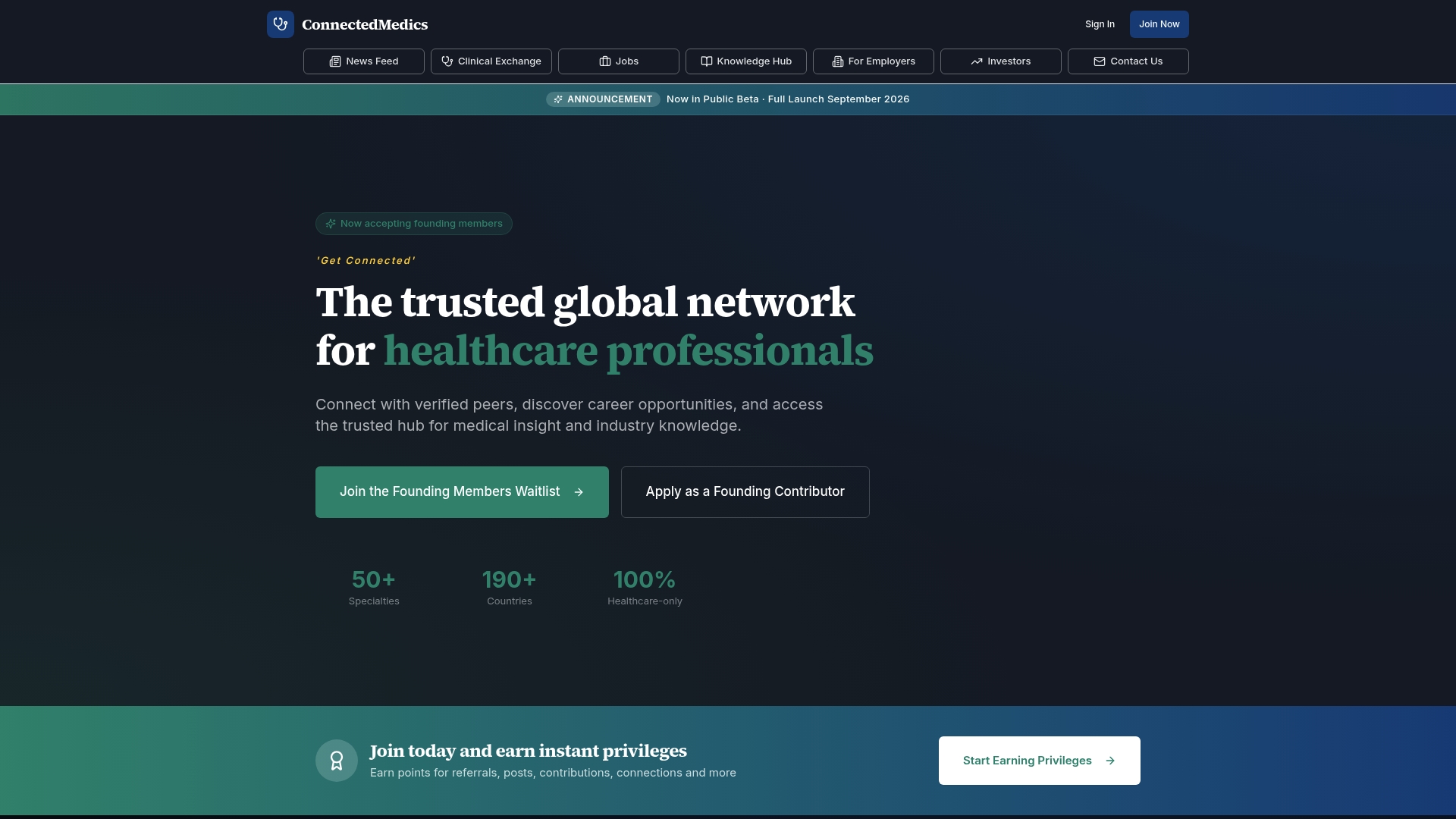
Connectedmedics is a global network built exclusively for healthcare professionals. The platform provides verified member profiles, a specialty-specific jobs board with over 4,600 active vacancies, and a knowledge hub with clinical content contributed by credentialed practitioners. For professionals looking to move beyond fragmented, generic platforms, Connectedmedics offers a purpose-built environment where every connection, job listing, and resource is relevant to your career. Whether you are exploring new roles, seeking peer collaboration, or building your professional reputation, the platform supports each stage of that process. Explore the ConnectedMedics Marketplace to connect with peers and access resources that match your specialty and career goals.
FAQ
What is a healthcare professional network?
A healthcare professional network is a structured community connecting healthcare workers for career development, knowledge sharing, and clinical collaboration. It differs from general professional networks by focusing on verified credentials, specialty-relevant content, and sector-specific opportunities.
How does healthcare networking differ from general professional networking?
Healthcare networking centers on clinical roles, verified credentials, and specialty-specific career paths, while general professional networking covers broad industries without role-specific filtering or verification. Platforms like Connectedmedics are built specifically for this distinction.
What are the main benefits of joining a healthcare professional network?
The primary benefits include access to mentorship, career advancement opportunities, knowledge exchange, interdisciplinary collaboration, and increased visibility within your specialty. Research confirms these networks build social capital and improve professional decision-making over time.
How do you join a healthcare professional network effectively?
Start with a network audit to identify gaps in your current connections, then build a sponsor development plan and engage consistently through digital platforms and in-person events. eCornell's strategic networking framework recommends assembling a personal advisory board as a core step.
What makes a healthcare professional network sustainable long-term?
The WHO identifies active membership, structured communication, and administrative infrastructure as the three pillars of network sustainability. Networks that lack operational support and consistent engagement tend to lose value within 18 months of launch.