
A home care assistant job is defined as a paid role providing direct personal care, daily living support, and light health monitoring to individuals in their own homes. Known in the industry as a Home Health Aide (HHA) or Personal Care Aide (PCA), this position sits at the front line of community-based healthcare. The role is regulated at both the federal level by the Centers for Medicare and Medicaid Services (CMS) and at the state level, meaning requirements and scope vary significantly by location. Understanding exactly what the job involves, what qualifications it demands, and where it can lead is the clearest path to deciding whether this career fits you.
What does a home care assistant do day to day?
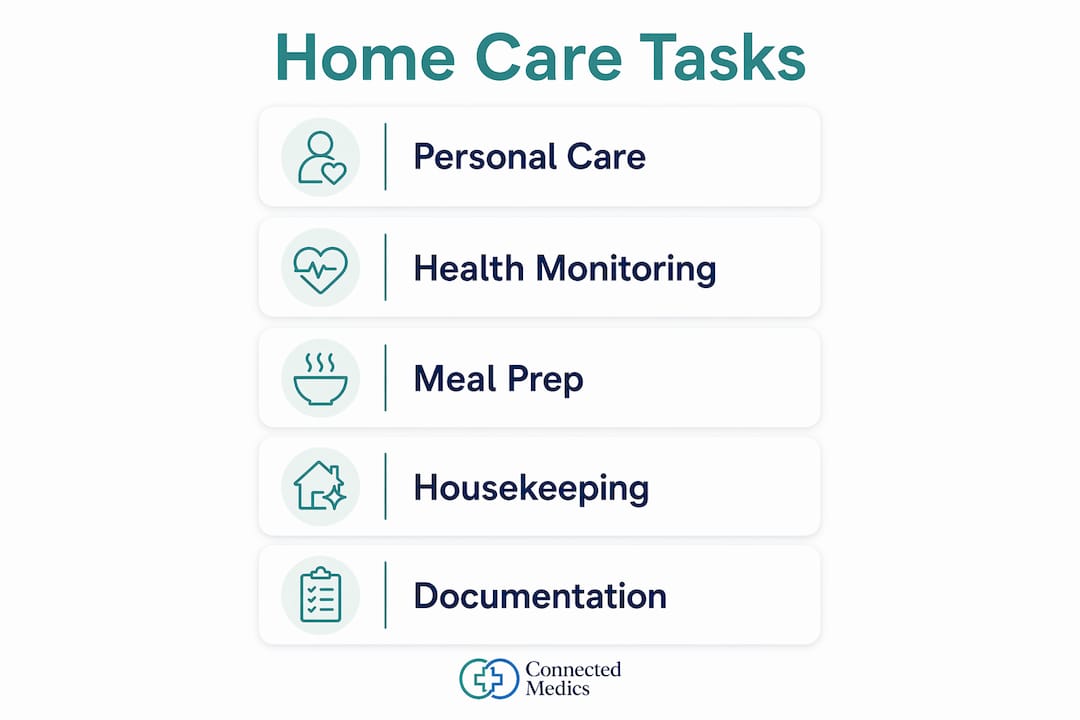
Home care assistants provide personal care, light clinical support, and assistance with daily activities to help clients maintain dignity and independence in their homes. The role is not one task. It is a structured set of responsibilities that spans physical care, health observation, household support, and documentation.
Personal care and hygiene
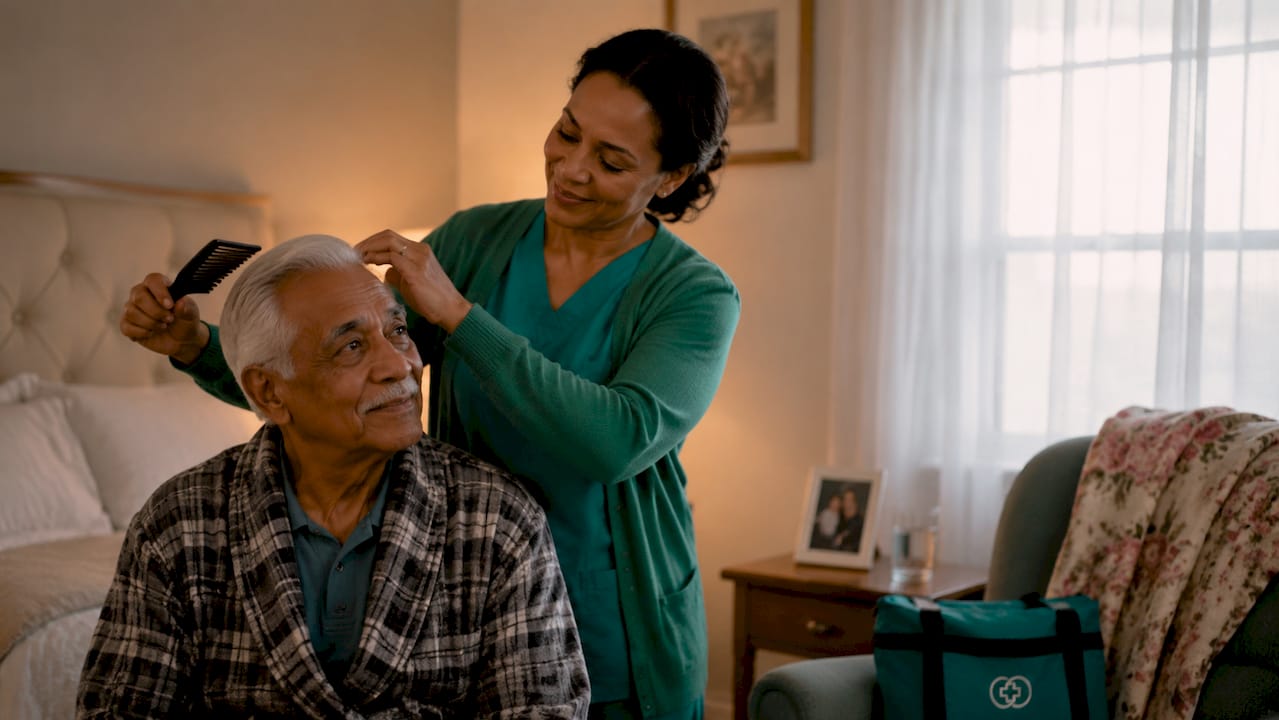
The most hands-on part of the job covers bathing, grooming, dressing, and toileting. These tasks require physical stamina and a calm, respectful manner. Clients may be elderly, recovering from surgery, or living with chronic conditions, so the aide must adapt to each person's pace and preferences.
Health monitoring and observation
Home care assistants track vital signs, check skin condition, and report any changes to the supervising nurse. One underappreciated fact: clinical observation during routine tasks like toileting can reveal early signs of infection or dehydration that are not visible to nurses during scheduled visits. This makes the aide's daily presence genuinely diagnostic in value, even without clinical authority.
Pressure injuries are another critical concern. Aides must follow repositioning schedules and immediately report non-fading redness to prevent serious skin breakdown. Missing this step can lead to serious, preventable harm.
Household and meal support
Home care assistant responsibilities also include meal preparation, light housekeeping, grocery errands, and medication reminders (not administration). These tasks directly affect a client's nutrition, safety, and quality of life at home.
Documentation and compliance
Accurate, real-time logging of visits and tasks is required for compliance with Medicare and Medicaid agency standards. Platforms like HHA Exchange are widely used for electronic visit verification. This is not optional paperwork. It is a federal compliance requirement under 42 CFR 484.80, and errors can affect agency reimbursement.
Pro Tip: Learn HHA Exchange or a similar electronic documentation platform before your first placement. Agencies report that new hires who already understand digital visit logging integrate faster and make fewer compliance errors.
What qualifications and training are needed?
Requirements for home care assistants vary by state and employer, but a clear baseline exists across most programs. The table below outlines the standard requirements and where variation occurs.
| Requirement | Standard / Notes |
|---|---|
| Education | High school diploma or GED equivalent |
| Background check | Clean criminal record covering 5 to 7 years |
| CPR/BLS certification | Required by most employers before first placement |
| TB and drug screening | Standard pre-employment screening |
| Driver's license | Required for roles involving client transportation or errands |
| Training hours (PCA) | 40 to 120 hours depending on state |
| Training hours (HHA) | Federal CMS minimum of 75 hours |
The distinction between a PCA and an HHA matters here. There is no single national certification standard for Personal Care Aides. Training for PCAs ranges from 40 to 120 hours depending on the state and program, while Home Health Aides follow a federal CMS floor of 75 hours. This means an HHA working under a Medicare-certified agency has a defined minimum training baseline, while a PCA's preparation can vary widely.
Technology skills are increasingly part of the home care assistant job description. Agencies using electronic documentation systems expect aides to log visits, record observations, and flag changes in real time using mobile devices. Candidates who treat this as a secondary skill are at a disadvantage in 2026.
Strengthening your job application with documented certifications and digital skills makes a measurable difference in hiring outcomes.
Pro Tip: If you are choosing between PCA and HHA training, the HHA pathway opens access to Medicare-certified agency roles, which typically offer more stable hours and structured supervision. The extra training hours pay off quickly.
How does a home care assistant differ from a nurse or PCA?
New recruits often assume home care assistants perform clinical tasks. The reality is that the role is to observe and report, not diagnose or administer medicine. Understanding these boundaries protects both the client and the aide legally.
| Role | Clinical authority | Training required | Supervision |
|---|---|---|---|
| Home care assistant (HHA) | None. Observes and reports only | 75 hours federal minimum | Registered Nurse (RN) |
| Personal Care Aide (PCA) | None. Personal care only | 40 to 120 hours by state | Varies by agency |
| Licensed Practical Nurse (LPN) | Medication administration, wound care | 12 months post-secondary | RN or physician |
| Registered Nurse (RN) | Full clinical authority | 2 to 4 year degree | Independent or physician |
Home health aides work under nurse-supervised care plans and cannot diagnose, administer medicine, or perform sterile procedures. Every task must fall within a legally defined scope and a nurse-approved plan. This is not a limitation unique to inexperienced workers. It applies at every career stage for this role.
The PCA sits closest to the HHA in scope but typically lacks the health monitoring component. PCAs focus on personal care and daily living support without the structured clinical observation duties that HHAs carry. The nurse, by contrast, holds full clinical authority and works within a completely different regulatory and liability framework.
Understanding these distinctions matters before you apply. Accepting a role with expectations that exceed your legal scope creates liability for you and your employer.
What are the career advancement opportunities?
A home care assistant career is not a ceiling. It is a starting point with clear pathways upward, and the healthcare sector's demand for trained workers makes advancement faster than in many other fields.
Common next steps from a home care assistant role include:
- Certified Nursing Assistant (CNA): The most direct upgrade. CNA certification significantly increases job security and wage potential. Many states allow HHA hours to count toward CNA training requirements, shortening the path.
- Home Health Aide Specialist: Some agencies offer specialist tracks in dementia care, pediatric home care, or post-surgical support. These roles command higher pay without requiring a full nursing credential.
- Hospice and palliative care aide: Hospice agencies actively recruit experienced home care workers. The emotional demands are higher, but so is the pay and the sense of purpose.
- Assisted living facility roles: Moving from private home settings to assisted living facilities offers more structured hours, team-based work, and often better benefits.
- Care coordinator or supervisor: With several years of experience, some aides move into scheduling, training, or supervisory roles within agencies.
Identifying training opportunities early is the single most effective way to accelerate this progression. Obtaining additional certifications like CNA early in your career significantly increases both job security and wage potential.
Specialization is another lever. The 2026 specialization guide for healthcare assistants breaks down which tracks offer the strongest return on training investment. Fields like pediatric home care and memory care are growing faster than general home care, and agencies in these areas are actively building their workforces.
Real career growth examples from working healthcare assistants show that most who advance do so within three to five years of their first placement, particularly those who pursue CNA certification within the first two years.
Key takeaways
A home care assistant job requires defined training, clear scope boundaries, and consistent documentation skills to deliver safe, compliant care.
| Point | Details |
|---|---|
| Role definition | Home care assistants provide personal care and health observation, not clinical treatment. |
| Training variation | HHAs follow a 75-hour federal minimum; PCA requirements range from 40 to 120 hours by state. |
| Scope boundaries | Aides observe and report changes. Diagnosis and medication administration fall outside legal scope. |
| Documentation matters | Electronic visit verification via platforms like HHA Exchange is a federal compliance requirement. |
| Advancement is real | CNA certification and specialization tracks in dementia or hospice care offer clear wage and role growth. |
What working in home care actually teaches you
From what I have observed across healthcare hiring and career development, home care assistance is one of the most misread entry points in the entire sector. People underestimate it going in and underestimate what it builds in them coming out.
The emotional richness of the work is real. Spending hours each week with the same client, tracking their health, supporting their routines, and being the person they trust most in their home creates a depth of professional relationship that most clinical roles never produce. That is genuinely valuable, and it shapes how you think about patient care for the rest of your career.
But maintaining professional boundaries is the hardest skill to master in this role, and most training programs spend almost no time on it. The boundary between compassionate care and emotional over-involvement is where burnout starts. I have seen capable, dedicated aides leave the field within two years because no one taught them how to separate professional empathy from personal attachment.
My honest advice: treat boundary maintenance as a clinical skill, not a personality trait. Practice it deliberately. Seek supervision when cases feel heavy. The aides who build long, sustainable careers in home care are not the ones who care the least. They are the ones who learned how to care consistently without losing themselves in the process.
The role is also evolving faster than most people realize. Electronic documentation, real-time health reporting, and integration with telehealth platforms are changing what competence looks like in this job. The aide who walks in knowing HHA Exchange and understanding why accurate visit logs matter is not just more hireable. They are safer for clients.
— David
Find home care assistant roles through Connectedmedics
Connectedmedics is a verified global network built exclusively for healthcare professionals, including home care assistants and HHAs seeking their next role. The platform lists over 4,600 active healthcare vacancies, filtered by specialty and location, so job searches stay relevant rather than generic. The knowledge hub includes clinical guides, career resources, and role-specific insights contributed by verified medical experts. For anyone entering or advancing in home care, Connectedmedics provides both the job leads and the professional context to make informed career decisions. Join the ConnectedMedics network to access verified home care assistant roles and peer resources in one place.
FAQ
What is the difference between an HHA and a PCA?
A Home Health Aide (HHA) follows a federal CMS training minimum of 75 hours and works under nurse-supervised care plans in Medicare-certified agencies. A Personal Care Aide (PCA) focuses on personal care tasks with state-regulated training that ranges from 40 to 120 hours and typically does not include structured health monitoring duties.
What does a home care assistant do that a nurse cannot delegate?
Home care assistants handle the consistent, daily personal care tasks that nurses do not have time to perform during scheduled visits, including bathing, grooming, meal preparation, and real-time health observation. Their daily presence allows them to detect early signs of infection or dehydration that are not visible during a nurse's periodic check.
How long does it take to become a home care assistant?
Most people complete HHA training in four to six weeks, depending on the program and state requirements. PCA training can be shorter, sometimes as little as two to three weeks, though requirements vary significantly by state.
Do home care assistants need a driver's license?
A driver's license is required for most home care assistant roles that involve transporting clients to appointments or running errands. Some urban agency roles do not require driving, but having a license expands the number of positions available to you.
What is the fastest way to advance from a home care assistant role?
Obtaining CNA certification is the fastest and most direct path to higher wages and expanded responsibilities. Many states allow documented HHA hours to count toward CNA training requirements, which shortens the overall time investment.