
Starting out as a healthcare assistant, it can be hard to see where the role leads. The examples of healthcare assistant career growth available today span clinical advancement, specialization, and administrative leadership. Yet many assistants stay in entry-level positions not because options are limited, but because the pathways are not clearly mapped out. This article lays out concrete examples, compares routes, and gives you a framework to choose the direction that fits your goals and circumstances.
Table of Contents
- Key takeaways
- Examples of healthcare assistant career growth: what to evaluate first
- 1. Band system progression in structured healthcare settings
- 2. Nursing Associate role
- 3. Transitioning to Licensed Practical Nurse or Registered Nurse
- 4. Specialist clinical roles
- 5. Surgical assistant and operating room roles
- 6. Clinic manager and practice manager roles
- 7. Healthcare administrator and quality improvement coordinator
- 8. Lateral moves as a growth strategy
- Comparing clinical vs. administrative career paths
- Strategic steps to grow in healthcare
- My take on navigating healthcare assistant career growth
- How Connectedmedics supports your career development
- FAQ
Key takeaways
| Point | Details |
|---|---|
| Multiple pathways exist | Healthcare assistants can advance clinically, into specializations, or through administrative and leadership roles. |
| Certifications accelerate growth | Credentials like CMA or RMA unlock higher pay and more specialized positions faster than experience alone. |
| Lateral moves build value | Moving across care settings before moving up is a proven strategy for building the skills needed for promotion. |
| Networking opens doors | Connecting with mentors and peers in healthcare uncovers job leads and advancement opportunities that are rarely advertised. |
| Employer programs matter | Clinical ladder programs and employer-supported training directly affect how fast and how far you can advance. |
Examples of healthcare assistant career growth: what to evaluate first
Before picking a direction, you need a framework. Not every path suits every person, and choosing the wrong one wastes time and money.
Education and certification requirements
Some paths require formal degrees. Others accept short certification programs. Healthcare assistant training can be as short as six months with a clinical practicum, making entry into advanced roles faster than most people expect. Knowing what each target role requires upfront prevents you from investing in the wrong credentials.
Clinical vs. administrative direction
Your preference for direct patient care versus organizational work shapes everything. Clinical paths keep you close to patients. Administrative paths move you toward management, technology, and operations. Both offer strong advancement opportunities in healthcare, but they demand different skill sets and personal temperaments.
Employer support and mentorship
The employer you work for matters as much as your own effort. Formal clinical ladder programs require at least one year of clinical experience and good professional standing. Assistants who find employers with structured development programs advance faster and with more financial support than those who go it alone.
Salary, work-life balance, and job satisfaction
Salary potential varies widely across paths. Specialization in fields like cardiology or oncology brings higher pay, but also higher demands. Consider what you want your day-to-day life to look like, not just what the job title says.
Pro Tip: Before committing to a career path, shadow someone already in that role for a day. What looks good on paper often feels different in practice.
1. Band system progression in structured healthcare settings
The NHS Band system is one of the clearest examples of a structured healthcare assistant career path. Assistants typically start at Band 2, handling basic patient support tasks. With the Care Certificate and Level 3 competencies, progression moves to Band 3 and Band 4, where clinical responsibility increases significantly.

Band 4 roles include positions like Assistant Practitioner, where you carry out clinical procedures under supervision. This is a meaningful step up in both pay and scope. The structured nature of the band system makes it one of the more predictable examples of healthcare assistant job progression.
2. Nursing Associate role
The Nursing Associate is a relatively new bridge role in the NHS, sitting between healthcare assistant and registered nurse. It requires a two-year foundation degree, often funded by employers. This role lets you practice nursing skills without completing a full nursing degree, making it a practical middle step for those who want more clinical responsibility without a multi-year commitment to a bachelor's program.
3. Transitioning to Licensed Practical Nurse or Registered Nurse
This is one of the most common success stories in healthcare careers. Many healthcare assistants use their patient care experience as a foundation for nursing school. The hands-on exposure to clinical workflows, documentation, and patient interaction gives you a real advantage over students entering nursing programs with no prior experience.
NHS support roles are explicitly framed as entry points into nursing and other healthcare careers. Timelines vary, but LPN programs typically take one year, while RN programs take two to four years depending on the degree level.
Pro Tip: If nursing school feels financially out of reach, look for employer tuition reimbursement programs before assuming you have to fund it yourself. Many healthcare systems offer this benefit and few assistants ask about it.
4. Specialist clinical roles
Specializing is one of the fastest ways to increase both pay and career options. Roles in cardiology, oncology, and phlebotomy involve advanced charting, memory screenings, and procedures that general assistants do not perform. Specialized knowledge commands higher pay and creates a clearer path to lead roles within those departments.
Certifications like the Certified Medical Assistant (CMA) or Registered Medical Assistant (RMA) are often required for these positions. Specialization in phlebotomy, cardiology, or EHR systems increases both job security and promotion chances in a measurable way.
| Specialty | Key skills required | Typical next role |
|---|---|---|
| Cardiology | EKG interpretation, patient monitoring | Cardiology Tech, Lead MA |
| Oncology | Chemotherapy support, patient education | Oncology Coordinator |
| Phlebotomy | Venipuncture, specimen handling | Lab Technician, Lead Phlebotomist |
| Surgical assistance | Sterile technique, OR protocols | Surgical Tech, OR Coordinator |
5. Surgical assistant and operating room roles
Moving into the operating room is a less-discussed but highly viable path. Surgical assistants support surgeons before, during, and after procedures. The role requires specific training in sterile technique and OR protocols, but many of the foundational skills healthcare assistants already have transfer directly. Apprenticeship programs in this area can pay up to $26.32 per hour during a 16-week paid training period, making it financially accessible even during the transition.
6. Clinic manager and practice manager roles
Not every example of healthcare assistant career growth points toward clinical work. Moving into a clinic or practice manager role is a strong administrative path. These positions oversee scheduling, staffing, compliance, and budgets. The skills you build as a healthcare assistant, including patient communication, workflow knowledge, and documentation, translate directly into management responsibilities.
The key differentiator for this path is adding management certifications and demonstrating leadership behaviors early in your current role. Volunteering to train new staff or lead process improvement projects signals readiness for management.
7. Healthcare administrator and quality improvement coordinator
Healthcare administration opens doors to roles like Quality Improvement Coordinator, Patient Services Manager, and eventually facility-level leadership. Mastery of AI-driven management tools and digital patient records positions assistants for roles like facility director or healthcare consultant, which represent the upper end of the administrative career track.
These roles require familiarity with healthcare IT systems. Becoming the go-to person for your employer's EHR software is an underestimated shortcut to lead roles that most assistants overlook entirely.
8. Lateral moves as a growth strategy
Career advancement in healthcare is rarely a straight line. Lateral movement across care settings builds the breadth of experience that employers look for before promoting someone into a senior or specialist role. Moving from a general ward to a specialist unit, or from a hospital to a community clinic, exposes you to different patient populations, workflows, and teams.
This kind of cross-training also builds relationships with a wider range of managers and clinicians. Advancement in healthcare depends heavily on internal support and relationships with management, not just qualifications on paper.
Comparing clinical vs. administrative career paths
| Factor | Clinical path | Administrative path |
|---|---|---|
| Day-to-day work | Direct patient care, procedures | Operations, staffing, compliance |
| Key credentials | CMA, RMA, nursing degree | Healthcare management cert, IT skills |
| Salary ceiling | High, especially with specialization | High, especially at director level |
| Job outlook | Strong demand, especially in specialties | Growing, driven by healthcare expansion |
| Advancement speed | Moderate, tied to education milestones | Can be faster with employer support |
| Best fit for | Those who want patient interaction | Those who prefer organizational work |
Both paths offer real advancement opportunities in healthcare. The right choice depends on where your strengths and interests actually sit, not on which path sounds more impressive.
Strategic steps to grow in healthcare
Knowing the options is one thing. Moving on them is another. Here are the steps that consistently separate healthcare assistants who advance from those who stay stuck:
- Get certified early. CMA and RMA credentials open doors that experience alone does not. Many assistants delay certification and lose years of advancement opportunity as a result.
- Use clinical ladder programs. These programs exist specifically to support progression, but are underused because assistants do not know they qualify. Ask your HR department directly.
- Build your network. Networking and mentorship within healthcare uncovers job leads and career advice that never appear in job postings. Platforms built for healthcare professionals give you access to peers and recruiters in your specialty.
- Master your employer's EHR system. Becoming the most capable user of your facility's electronic health records software is a concrete, low-cost path to a lead role that most assistants ignore.
- Seek out specialized training. Ear health, for example, is one niche where NHS-accredited training courses let assistants expand their clinical scope quickly and with recognized credentials.
- Align with employers who invest in staff. Employers with formal development programs and tuition support are worth prioritizing, even if starting pay is slightly lower.
Pro Tip: Set a 12-month career review date with yourself. Write down where you want to be in one year, what credentials you need, and what relationships you need to build. Review it every quarter.
My take on navigating healthcare assistant career growth
I've spent years watching healthcare assistants underestimate what their role actually gives them. The clinical exposure, the workflow knowledge, the patient communication skills — these are genuinely valuable, and most assistants do not use them strategically.
What I've seen work consistently is this: the assistants who advance fastest are not always the most qualified. They are the ones who ask questions, build relationships with senior staff, and show up for opportunities before they feel ready. The role of an aural care specialist is a good example of a niche that many assistants overlook entirely, yet it offers real clinical scope expansion with relatively short training.
The biggest missed opportunity I see is clinical ladder programs. They exist, they pay, and almost nobody applies. That is not a qualification problem. It is an awareness problem.
My honest advice: stop waiting until you feel fully prepared. The preparation happens through doing the role, not before it.
— David
How Connectedmedics supports your career development
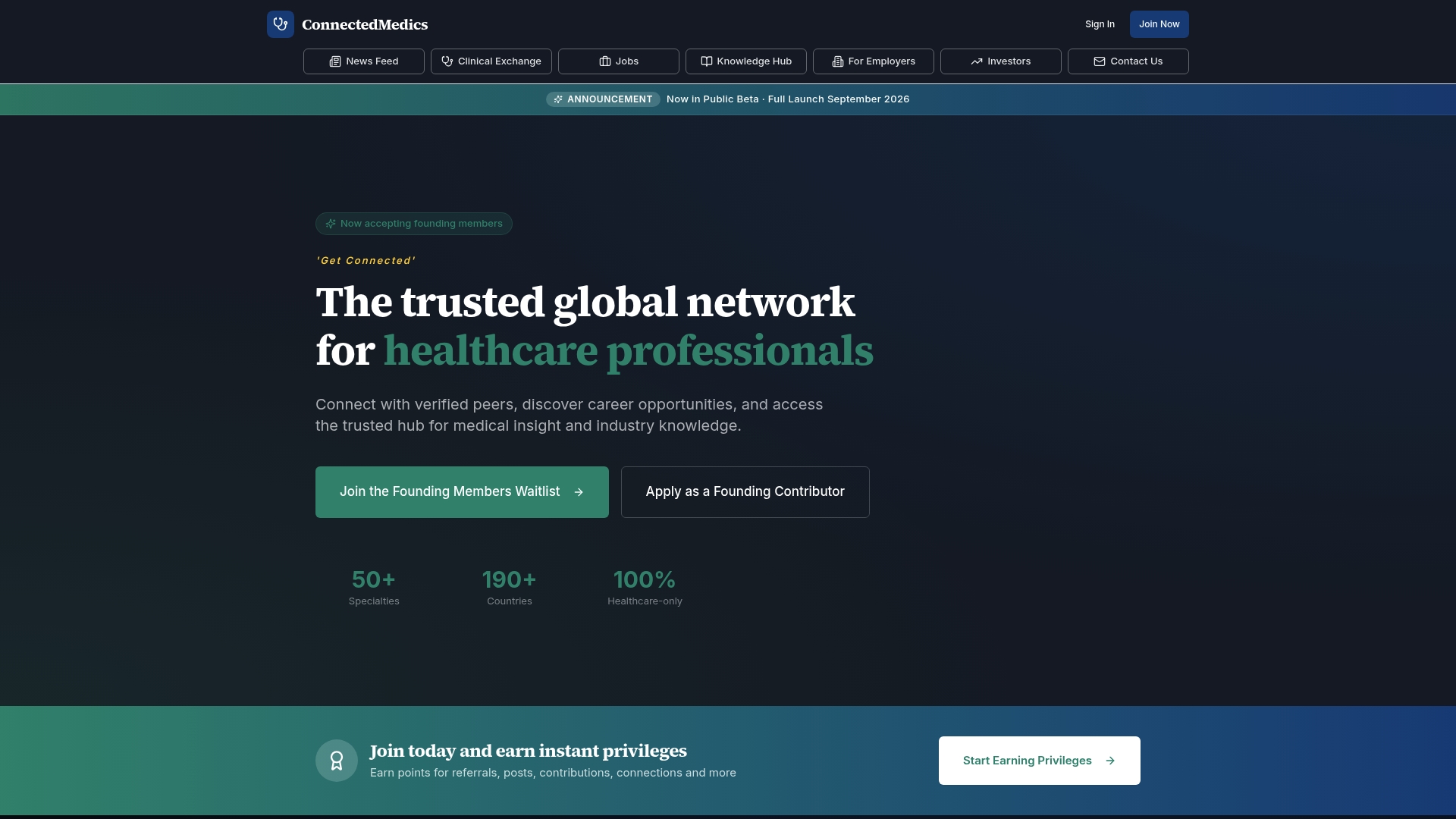
Connectedmedics is built specifically for healthcare professionals who want more than a generic job board. The platform offers verified professional profiles, a global jobs board with over 4,600 active healthcare vacancies, and a knowledge hub with clinical updates and career resources contributed by verified medical experts.
For healthcare assistants mapping out their next move, Connectedmedics connects you with recruiters actively hiring for healthcare-specific roles and with peers who have already made the career transitions you are considering. The Connectedmedics marketplace also lists education and certification resources relevant to your advancement goals. Whether you are targeting a clinical specialty or an administrative leadership role, join Connectedmedics to access the network and resources that match where you want to go.
FAQ
What are common examples of healthcare assistant career growth?
Common examples include progression through NHS Bands 2 to 4, transitioning into Nursing Associate or RN roles, specializing in cardiology or surgical assistance, and moving into clinic or practice management positions.
How long does it take to advance as a healthcare assistant?
Timelines vary by path. LPN programs take about one year, RN programs two to four years, and Band 4 NHS roles can be reached within a few years with the Care Certificate and Level 3 competencies completed.
Do certifications really make a difference for career growth?
Yes. Certifications like CMA or RMA directly increase salary potential and open access to specialist roles in phlebotomy, cardiology, and EHR-focused positions that are not available without credentials.
Can healthcare assistants move into non-clinical roles?
Absolutely. Administrative paths lead to roles like clinic manager, quality improvement coordinator, and healthcare administrator, with salary ceilings comparable to senior clinical positions.
What is the fastest way to advance as a healthcare assistant?
Combining early certification, enrollment in a clinical ladder program, and active networking within your healthcare setting produces the fastest results, faster than waiting for seniority alone to create opportunities.