
Choosing a specialization is one of the most significant decisions a healthcare assistant can make. With 48% of healthcare employers reporting increased responsibilities for medical assistants in 2026, the pressure to develop focused skills has never been higher. Understanding the full range of healthcare assistant specialization categories gives you a real advantage. This guide breaks down the most relevant clinical and administrative paths, what each requires, and how to choose the one that fits your goals.
Table of Contents
- Key takeaways
- 1. Understanding healthcare assistant specialization categories
- 2. Pediatrics
- 3. Cardiology
- 4. Orthopedics
- 5. OB-GYN
- 6. Dermatology
- 7. Ophthalmology
- 8. Outpatient surgery
- 9. Medical billing specialization
- 10. Medical coding
- 11. Health information management
- 12. Comparing specialization categories
- 13. Practical steps for choosing and pursuing a specialization
- My take on specialization as a career strategy
- Find specialized healthcare roles on Connectedmedics
- FAQ
Key takeaways
| Point | Details |
|---|---|
| Two main specialization paths | Healthcare assistants can specialize in clinical or administrative roles, each with distinct training and career outcomes. |
| Certification improves hiring odds | Certified specialists are more competitive and help employers close workforce skill gaps. |
| Start broad before focusing | Gaining foundational experience across care settings helps you make a better-informed specialization choice. |
| Stackable certifications save time | Short credential programs let you build specialized skills without committing to a full degree. |
| Job market demand varies by specialty | Clinical specialties like cardiology and pediatrics show strong demand, while billing and coding remain consistently needed. |
1. Understanding healthcare assistant specialization categories
Before picking a path, it helps to understand how specialization categories are structured. At the broadest level, they divide into two tracks: clinical and administrative. Clinical roles involve direct patient contact, procedures, and care delivery. Administrative roles focus on the systems that support care, such as billing, records, and scheduling.
Several factors shape which track makes sense for you:
- Interest and aptitude. Do you prefer working directly with patients, or does managing information and systems appeal more to you?
- Job market demand. Some specialties are in higher demand in certain regions. Research local job postings before committing.
- Training duration. Clinical specializations often require hands-on practicums. Administrative tracks may be completed faster through online certificate programs.
- Workplace setting. Hospitals, outpatient clinics, private practices, and long-term care facilities each favor different specializations.
Stackable certifications are worth understanding early. These are short credential programs you can complete one at a time, building expertise incrementally without enrolling in a multi-year degree. They are especially practical for working assistants who cannot step away from employment.
Pro Tip: Before choosing a specialization, shadow a professional in that role for at least a week. Reading about cardiology assisting is very different from observing it in practice.
2. Pediatrics
Pediatric healthcare assistants work in children's hospitals, pediatric clinics, and family practices. Daily tasks include measuring growth metrics, assisting with vaccinations, preparing exam rooms for child patients, and supporting parents during visits.

This specialization requires patience, strong communication skills with both children and anxious caregivers, and comfort with a wide range of developmental stages. Training typically includes a pediatric-focused certificate or on-the-job training under a supervising physician. Assistants who specialize here often report high job satisfaction due to the relationship-building aspect of the role.
3. Cardiology
Cardiology assistants support cardiologists in diagnosing and monitoring heart conditions. Responsibilities include performing electrocardiograms (EKGs), preparing patients for stress tests, recording vital signs, and maintaining cardiac monitoring equipment.
This is one of the more technical clinical specializations. Training usually involves certification in EKG or phlebotomy alongside a medical assistant credential. The role suits assistants who are detail-oriented and comfortable with clinical equipment. Demand is strong given the aging population and the prevalence of cardiovascular disease.
4. Orthopedics
Orthopedic assistants work alongside surgeons and physical therapists to support patients with musculoskeletal conditions. Tasks include applying and removing casts, assisting with mobility assessments, preparing patients for X-rays, and educating patients on post-procedure care.
This specialization often requires physical stamina since assistants frequently help patients with limited mobility. Orthopedic settings can include hospital departments, outpatient surgery centers, and sports medicine clinics. Training is mostly on-the-job, supplemented by a medical assistant certification.
5. OB-GYN
Obstetrics and gynecology assistants work with patients across reproductive health, prenatal care, and labor support. Duties include assisting with pelvic exams, conducting pregnancy tests, recording fetal heart rates, and providing patient education on reproductive health.
This specialization requires a high degree of sensitivity and professionalism. Assistants in OB-GYN settings often develop long-term relationships with patients, which many find professionally rewarding. Some employers prefer assistants with additional training in prenatal care or women's health.
6. Dermatology
Dermatology assistants support skin care specialists and dermatologists. Common tasks include preparing patients for skin biopsies, assisting with minor procedures like mole removals, applying topical treatments, and educating patients on skincare routines.
The pace in dermatology clinics is often faster than in hospital settings, with a high volume of short appointments. This specialization suits assistants who work well under time pressure and enjoy a variety of patient cases. Training is largely on-the-job, though some employers seek assistants with a background in phlebotomy or minor surgical assistance.
7. Ophthalmology
Ophthalmology assistants work in eye care clinics and hospitals, supporting optometrists and ophthalmologists. Responsibilities include conducting preliminary vision tests, administering eye drops, maintaining optical equipment, and preparing patients for eye surgeries.
This is a niche but stable specialization. Clinical specializations like ophthalmology often require specialty-specific on-the-job training. Assistants who enjoy precision work and patient education tend to do well here.
8. Outpatient surgery
Outpatient surgery assistants work in ambulatory surgery centers, supporting surgical teams with pre-operative and post-operative care. Tasks include preparing sterile fields, monitoring patients during recovery, reviewing discharge instructions, and documenting procedures.
This specialization demands quick thinking and the ability to follow strict protocols. Training requirements vary by facility but typically include a medical assistant certification plus additional training in surgical assistance or sterile technique. The work environment is fast-moving and suits assistants who thrive under structure.
9. Medical billing specialization
Medical billing specialists manage the financial side of patient care. They process insurance claims, verify patient coverage, follow up on denied claims, and communicate with payers to resolve billing issues.
This is a fully administrative role with no direct patient contact. It suits assistants who prefer office environments and have strong attention to detail. Certification through a recognized body, such as the Certified Professional Biller (CPB) credential, significantly improves hiring prospects. Many billing roles are now remote-eligible, which expands the geographic job market considerably.
Pro Tip: If you are considering a billing specialization, learn the basics of ICD-10 and CPT coding first. Billing and coding knowledge often overlap, and having both makes you more marketable.
10. Medical coding
Medical coders translate clinical documentation into standardized codes used for billing and data reporting. The work is detail-intensive, requiring familiarity with ICD-10-CM, CPT, and HCPCS code sets.
Administrative specializations like coding require distinct certifications separate from clinical credentials. The Certified Professional Coder (CPC) credential from the American Academy of Professional Coders (AAPC) is widely recognized. Coding roles are in consistent demand because accurate coding directly affects hospital revenue and compliance.
11. Health information management
Health information management (HIM) specialists oversee patient records, data integrity, and compliance with privacy regulations like HIPAA. Responsibilities include managing electronic health records (EHR) systems, auditing documentation, and training staff on data entry standards.
This specialization sits at the intersection of clinical knowledge and data management. It requires familiarity with EHR platforms and a working understanding of healthcare regulations. An associate degree or certificate in health information technology is the standard entry credential. HIM roles exist in hospitals, insurance companies, and government health agencies, making this one of the more versatile administrative career paths.
12. Comparing specialization categories
The table below gives a side-by-side look at key differences across the most common healthcare assistant specialization categories.
| Specialization | Track | Typical training | Avg. salary range (US) | Job market demand |
|---|---|---|---|---|
| Pediatrics | Clinical | Certificate + OJT | $36,000 – $48,000 | High |
| Cardiology | Clinical | EKG cert + MA credential | $38,000 – $52,000 | Very high |
| Orthopedics | Clinical | MA credential + OJT | $37,000 – $50,000 | High |
| OB-GYN | Clinical | MA credential + OJT | $36,000 – $49,000 | Moderate to high |
| Dermatology | Clinical | OJT + phlebotomy cert | $35,000 – $47,000 | Moderate |
| Ophthalmology | Clinical | Specialty OJT | $34,000 – $46,000 | Moderate |
| Outpatient surgery | Clinical | MA + surgical assist cert | $38,000 – $53,000 | High |
| Medical billing | Administrative | CPB certification | $37,000 – $52,000 | High |
| Medical coding | Administrative | CPC certification | $40,000 – $58,000 | Very high |
| Health info management | Administrative | HIT certificate or AAS | $42,000 – $60,000 | High |
Clinical specializations generally require more hands-on training and direct patient interaction. Administrative specializations often offer more schedule flexibility and remote work options. Certification improves hiring competitiveness across both tracks, so treating your credential as a career investment rather than a checkbox pays off.
13. Practical steps for choosing and pursuing a specialization
Choosing a specialization is not a decision you need to rush. Here is a practical sequence to follow:
- Gain broad experience first. Starting broad before specializing is widely recommended. Work in general clinical or administrative roles to understand what environments suit you before committing to a niche.
- Research local job demand. Check job boards for your region. A specialization with strong national demand may have limited openings in your city.
- Identify stackable certification options. Look for programs that let you add credentials over time. Stackable programs support career pivots without requiring a full degree restart.
- Talk to professionals already in the role. Informational interviews with working specialists give you a realistic picture of daily tasks, workplace culture, and advancement potential.
- Ask your employer about support. Many healthcare employers offer tuition reimbursement or paid training for employees pursuing specialization. Ask before spending out of pocket.
- Plan for continuing education. Most certifications require renewal through continuing education units (CEUs). Factor that ongoing commitment into your decision.
Employers consistently value hands-on patient care skills and empathy alongside formal credentials. A certificate without practical experience carries less weight than a combination of both.
My take on specialization as a career strategy
I've spent years watching healthcare assistants make specialization decisions, and the pattern I see most often is this: the assistants who advance fastest are not necessarily the ones who picked the most prestigious specialty. They are the ones who matched their specialization to both their strengths and the local job market.
What I've learned is that the "start broad" advice is genuinely sound, not just a default recommendation. Assistants who rush into a niche before understanding their own preferences often find themselves retraining within a few years. That costs time and money that could have gone toward advancing in a well-chosen path.
The other thing worth saying directly: administrative specializations are underrated. Many assistants default to clinical tracks because they feel more tangible. But medical coding and health information management offer strong salaries, remote work flexibility, and clear certification pathways. The demand is real and consistent.
What I find most encouraging about the 2026 outlook is that specialization is increasingly recognized as a strategic response to workforce shortages, not just a personal career preference. That means employers are more willing to invest in your training than they were five years ago. Use that.
— David
Find specialized healthcare roles on Connectedmedics
Connectedmedics is built specifically for healthcare professionals. It is not a generic job board with a healthcare filter. The platform offers verified professional profiles, a global jobs board with over 4,600 active vacancies, and a knowledge hub with clinical insights contributed by verified medical experts.
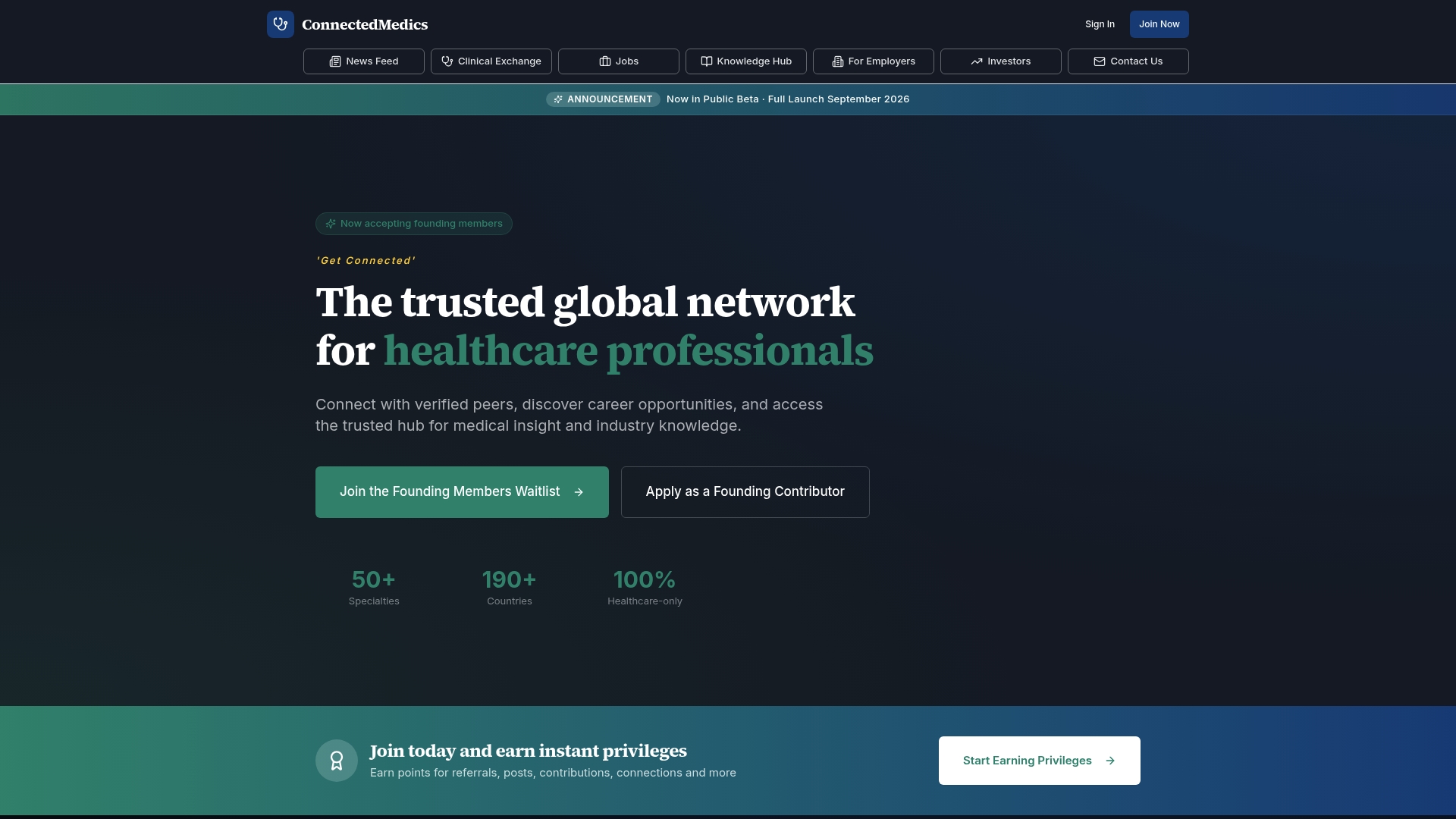
For healthcare assistants exploring specialization, Connectedmedics connects you directly to roles that match your chosen track, whether clinical or administrative. The marketplace lists specialization-focused positions across hospitals, outpatient clinics, and remote administrative settings. If you are ready to move from general assistant work into a defined specialty, Connectedmedics is where that search starts.
FAQ
What are the main healthcare assistant specialization categories?
Healthcare assistant specialization categories divide into two primary tracks: clinical and administrative. Clinical specializations include pediatrics, cardiology, orthopedics, OB-GYN, dermatology, ophthalmology, and outpatient surgery. Administrative specializations include medical billing, coding, and health information management.
How long does it take to specialize as a healthcare assistant?
Training duration varies by specialization. Some administrative certifications, like medical billing or coding credentials, can be completed in six to twelve months. Clinical specializations typically require a medical assistant credential plus additional on-the-job training, which can take one to two years total.
Does specialization increase a healthcare assistant's salary?
Yes. Specialized roles generally command higher pay than general assistant positions. Medical coding and health information management roles, for example, often reach $58,000 or more annually. Certification further improves both salary potential and hiring competitiveness.
What is a stackable certification and how does it help?
A stackable certification is a short credential program that builds on previous training, allowing healthcare assistants to gain specialized skills incrementally. These programs support career advancement without requiring enrollment in a full degree, making them practical for working professionals.
Should healthcare assistants specialize in clinical or administrative roles?
The right choice depends on personal interests, local job demand, and preferred work environment. Clinical roles involve direct patient care and suit assistants who prefer hands-on work. Administrative roles offer more flexibility, including remote options, and suit those who prefer systems and data management.