
Yes. Most healthcare assistants can transition HCA to nursing associate status, and the fastest route is a two-year Level 5 apprenticeship that keeps you employed and paid the whole time. Other paths exist, including a nursing degree apprenticeship or a full nursing degree with a top-up option, but the Nursing Associate apprenticeship is the one most HCAs use because it doesn't require quitting your job. Expect roughly two years of combined study and clinical placement, then registration with the Nursing and Midwifery Council. Start today by asking your manager about upcoming cohorts, confirming your GCSE or functional skills status in English and maths, and searching current apprenticeship postings.
Key Takeaways
Most HCAs can move into a registered Nursing Associate role within two years through an employer-sponsored apprenticeship that keeps them paid throughout.
| Point | Details |
|---|---|
| Apprenticeship is the fastest paid route | The Level 5 Nursing Associate apprenticeship runs over multiple years while you remain an employee. |
| Protected learning time needs negotiating | Ask employers upfront how they'll honor placement study time during busy shifts. |
| Registration changes your accountability | NMC registration as a Nursing Associate gives you your own scope of practice under the professional code. |
| Top-up routes shorten RN training | Prior learning credit varies by university, so confirm policy before committing to a top-up program. |
| Use targeted job search tools | Connectedmedics lists apprenticeship-specific healthcare vacancies to help you find sponsoring employers faster. |
Table of Contents
- What Are the Routes From HCA to Nursing Associate and RN?
- How Does the Nursing Associate Apprenticeship Actually Work?
- What Do You Need to Apply, and How Do You Improve Your Chances?
- What Does a Typical Training Week Look Like?
- How Does This Shorten the Path to RN?
- Frequently Asked Questions
- Sources
What Are the Routes From HCA to Nursing Associate and RN?
Three main paths lead from HCA work into registered nursing, and each fits a different life situation.
The Nursing Associate apprenticeship is the most direct bridge. It runs two years, keeps you on payroll, and your employer sponsors the training. The nursing degree apprenticeship skips the Nursing Associate stage entirely and takes you straight to RN status, usually across four years, still while employed. The full nursing degree, taken as a traditional student, drops your income to student finance levels but can move faster for some people, especially those without long service records. A top-up degree afterward converts Nursing Associate qualifications into RN registration.
- Nursing Associate apprenticeship: 2 years, paid, employer sponsored, ends in Nursing Associate registration
- Nursing degree apprenticeship: about 4 years, paid, ends directly in RN registration
- Full nursing degree: 3 years, typically unpaid or student-funded, more flexible entry criteria
The tradeoff comes down to income tolerance versus speed. If you can't afford a pay cut, the apprenticeship routes are the only realistic options.
How Does the Nursing Associate Apprenticeship Actually Work?
The Nursing Associate programme runs as a two-year Level 5 Foundation degree, splitting roughly evenly between academic study and clinical practice. That structure shapes almost everything about the experience.
- Study split: expect close to 50% classroom or university time and 50% supervised clinical placement, spread across the two years rather than front loaded.
- Placement variety: rotations typically move you through different clinical settings, from acute wards to community care, so you build breadth rather than repeating one skill set.
- Sponsorship mechanics: your employer funds the training through the apprenticeship levy, and you remain a paid staff member throughout, not a student on unpaid leave.
- Registration outcome: on completion, you become eligible to register as a Nursing Associate with the NMC and fall under its professional code of conduct, the same regulatory framework that governs RNs.
That last point matters more than most applicants realize going in. Registration changes your legal accountability. You're no longer working solely under an RN's direct supervision. You carry your own scope of practice, your own professional obligations, and your own line in the NMC register.
What Do You Need to Apply, and How Do You Improve Your Chances?
Entry requirements vary slightly by employer and training provider, but the pattern is consistent across the sector, as explained by the Institute for Functional Nurses on what is a food sensitivity.
- GCSEs in English and maths (grade C/4 or above), or equivalent functional skills qualifications
- Relevant care experience, often a year or more as an HCA or in a similar support role
- A Level 3 qualification such as an NVQ, though some employers waive this if experience is strong
- A clean reference history and a supportive line manager willing to back your application
Employer support is the real gatekeeper here, more than academic paperwork. Apprenticeship places are funded through your employer's levy contribution, which means they're choosing to invest in you specifically. Build your case before you apply: document your clinical hours, gather examples of initiative you've taken beyond your job description, and ask your manager directly whether protected learning time will be honored once training starts. If your workplace runs a Nursing Associate apprenticeship, that internal information often beats anything you'll find in a public job listing.
Pro Tip: Start a simple learning log now, before you even apply. Note dates, tasks, and skills you've picked up on shift. Assessors and interview panels respond well to concrete, dated evidence over vague claims of "years of experience."
What Does a Typical Training Week Look Like?
Training weeks alternate between university or classroom days and clinical placement shifts, and the switching itself is often the hardest part to adjust to.
- Expect two or three academic days some weeks and full clinical rotations in others, rarely an even daily split
- Protected learning time is written into most programmes but isn't always honored on busy wards
- Mentor relationships matter enormously; a mentor who actively teaches during placement accelerates learning far more than one who simply supervises
- The most common pitfall is reverting to HCA-level tasks during understaffed shifts, which erodes the placement hours meant to build associate-level skills
An independent evaluation.pdf) of early Nursing Associate cohorts flagged exactly this problem: protected learning time frequently got squeezed out when wards were short staffed. If that happens to you, raise it early with your practice supervisor rather than absorbing it as normal.
How Does This Shorten the Path to RN?
Once you hold Nursing Associate registration, most top-up degree programmes credit your prior learning, cutting RN training time compared to starting from scratch. The exact reduction depends on the receiving university's own policy on recognizing that credit, so timelines vary between institutions.
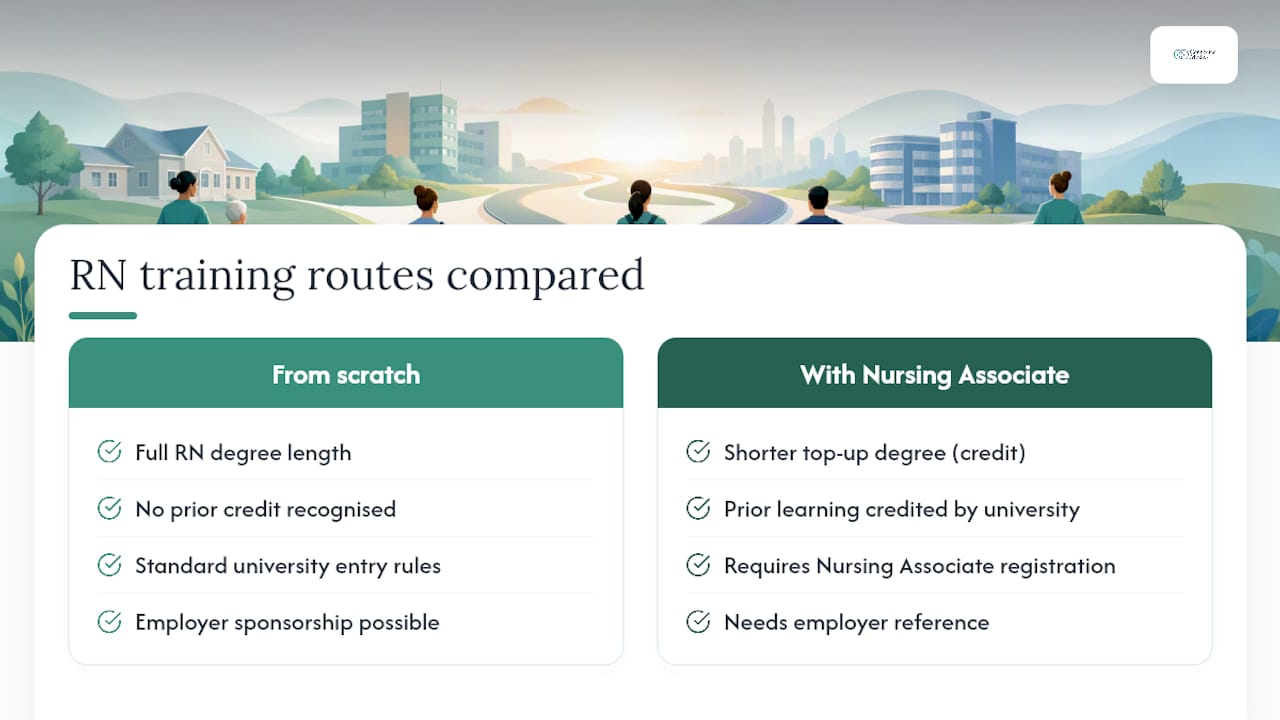
Universities running top-up programmes typically expect current Nursing Associate registration, a reference from your employer, and evidence of ongoing clinical practice. Talk to your employer early about continued sponsorship. Many trusts support the full HCA to RN pipeline, but funding commitments are usually made cohort by cohort, not guaranteed indefinitely. Ask now whether your employer's levy arrangement extends to top-up study, and factor in that you may see a pay banding shift from band 3 to band 4 once you're qualified as a Nursing Associate, before a further shift once you register as RN.
What Sector Data Says About This Transition
The same HEE evaluation found the role genuinely supports career progression and boosts nurse supply, but flagged unclear role parameters as a recurring issue. Practical takeaway: ask employers directly how they define your scope, and keep your own written log of duties assigned versus duties actually performed. Connectedmedics currently lists thousands of healthcare vacancies, including apprenticeship-track roles, on its jobs board.

Priorities for Your First Week of Deciding
Talk to your manager this week, confirm your English and maths qualifications, and start a learning log today. The Nursing Associate role stands on its own as a solid, respected career, not just a stepping stone.
Where to Find Apprenticeship Vacancies and Career Resources
Finding the right cohort often comes down to timing and visibility, since apprenticeship places open on employer schedules rather than a fixed national calendar.
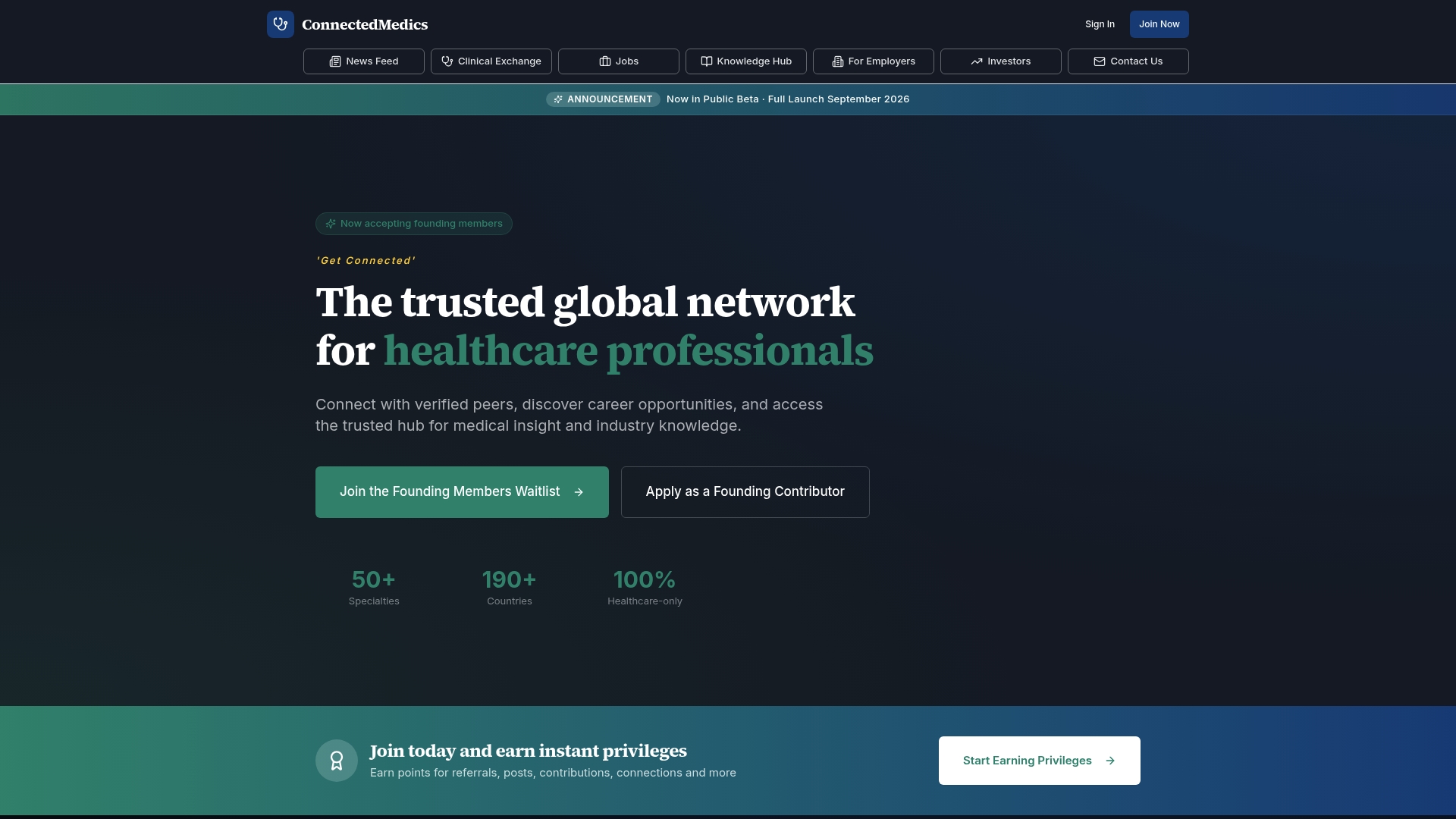
Connectedmedics runs a healthcare-specific jobs board built for exactly this search, filtering by specialty and role type so you're not scrolling through unrelated postings on a generic site. The platform lists apprenticeship and Nursing Associate training roles alongside verified employer profiles, and its knowledge hub carries clinical and career content written for people already working in care settings, not general job seekers. If you're trying to identify which trusts are currently sponsoring apprenticeship cohorts, browsing Connectedmedics's jobs board is a faster way to spot open roles than checking individual employer sites one by one. Create a profile, filter for Nursing Associate and apprenticeship listings in your region, and reach out to employers directly through the platform once you've shortlisted a few.
Frequently Asked Questions
Can any HCA apply for a Nursing Associate apprenticeship? Most employers require GCSEs or functional skills in English and maths plus relevant care experience, though requirements vary by trust and training provider.
Do you keep your salary while training as a Nursing Associate? Yes. Apprenticeship routes keep you employed at your existing band, often band 3, while your employer sponsors the training through the apprenticeship levy.
How long does it take to go from Nursing Associate to RN? Top-up programmes vary by university, since prior learning credit policies differ between institutions, but many are shorter than starting a nursing degree from scratch.
What's the difference between an HCA and a Nursing Associate in daily practice? Nursing Associates hold NMC registration and an independent scope of practice, while HCAs work under direct supervision without regulatory registration of their own.
Where can I find current apprenticeship vacancies? Employer intranets post internal cohorts first, and healthcare-specific job boards like Connectedmedics list external apprenticeship and Nursing Associate roles across multiple trusts.