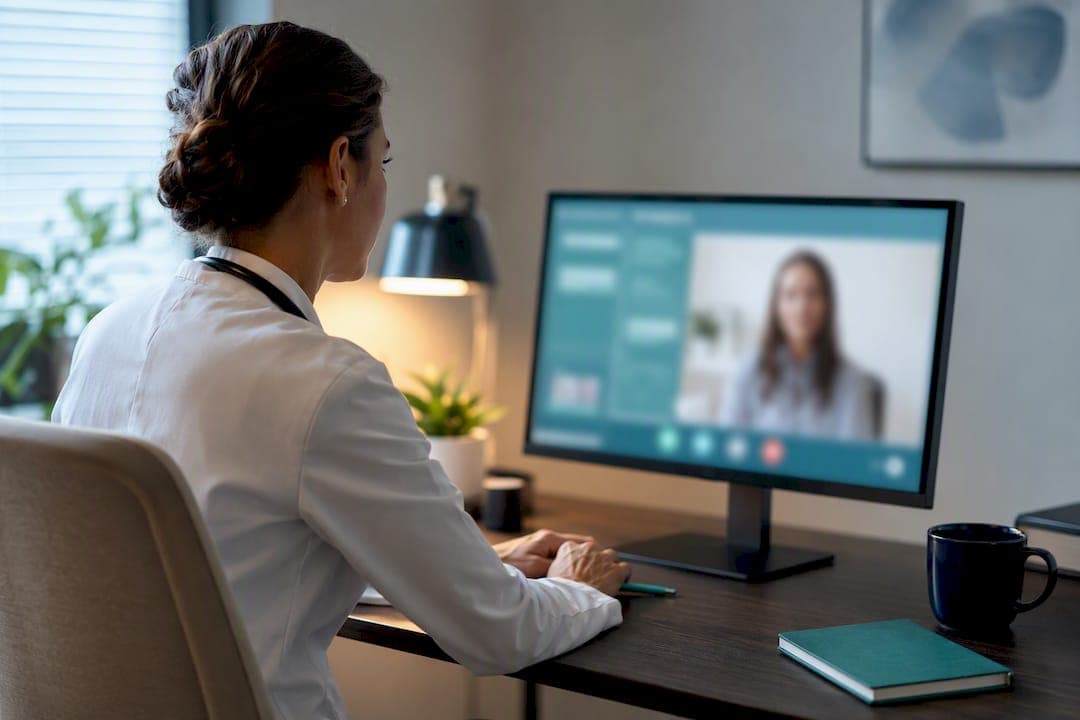
You can start applying to telemedicine roles today, but the search only works if you filter by licensure first and care model second. Most clinicians reverse this order, chase every "remote" listing, and stall out when an employer asks which patient states they can legally cover. Get the licensure map right and the job hunt gets short: pick your role type, list the states you can practice in, and gather your license, NPI, and malpractice documents before you send a single application.
TL;DR:
- Focusing on specialty-specific job boards, employer sites, verified clinician networks, and curated aggregators streamlines the telemedicine job search and improves filtering accuracy.
- Ensure you understand each employer's patient coverage states and verify licensure and malpractice coverage before applying, as telehealth visits are governed by the patient's location, not yours.
- Building a telehealth-ready application requires organizing active licenses, credentials, and platform experience, with tailored resumes that highlight remote practice skills and coverage authorizations.
- Prioritize roles that specify employer handling credentialing and payer enrollment to avoid months of administrative delays and clarify licensing costs and renewal timelines upfront.
- Verify licensure claims directly through official resources and check state-specific telehealth policies regularly, especially for multistate practice through licensure compacts or registration pathways.
Table of Contents
- Telemedicine Jobs Search: Where to Look and How to Filter
- Licensure and Practicing Across State Lines: What Actually Determines Where You Can Work
- Building a Telemedicine-Ready Application and Resume
- Which Telemedicine Care Model Actually Fits Your Skills
- Vetting Employers Before You Sign: Questions and Red Flags
- A Telemedicine Job Search Workflow You Can Run This Week
- How Connectedmedics Supports Your Telemedicine Job Search
- Perspective: What Slows Clinicians Down Most Often
- Start Your Telemedicine Job Search With a Verified Profile
- Primary Sources Worth Checking Directly
- Sources
- FAQ
Telemedicine Jobs Search: Where to Look and How to Filter
A generic job board treats "remote nurse" and "remote radiologist" the same way. That is why a telemedicine jobs search works better on channels built for healthcare, where filters match how virtual care actually gets staffed.
Four channels consistently surface better listings:
- Specialty job boards built for clinicians, which let you filter by license type and specialty instead of scrolling through unrelated remote work.
- Employer and health-system career pages, especially for telehealth-only providers and hospital systems expanding virtual service lines.
- Verified clinician networks, where profiles carry license and credential data so employers can screen faster and you skip redundant paperwork.
- Curated healthcare aggregators, useful for scanning volume but weaker on filtering by patient-state coverage.
Once you pick your channels, filter aggressively: specialty, remote versus hybrid, employment type (W-2 or 1099), and schedule. Set alerts rather than checking manually. That single habit catches listings within hours of posting, which matters because telehealth roles with clear state coverage tend to fill fast.
Read the job description for patient-state language before you apply. A posting that says "must hold or be eligible for licensure in [specific states]" tells you the employer has already mapped its coverage. A posting that just says "remote, nationwide" without naming states is a yellow flag, not necessarily a red one. It might mean the employer wants you to self-report your coverage, or it might mean nobody has thought through the licensure question yet. Ask before you apply if the language is vague.
Prioritize listings that state the employer handles credentialing or payer enrollment. That single sentence in a job posting can save you weeks of unpaid administrative work later.
Licensure and Practicing Across State Lines: What Actually Determines Where You Can Work
A telehealth visit is legally treated as occurring where the patient sits, not where you sit. That single rule decides more of your job search than your resume does. If your patient is in Ohio, Ohio's licensing board governs that visit, regardless of where you are physically located when you take the call, according to Telehealth.

That means every listing you apply to needs one question answered before anything else: which states does this employer need me covered in, and do I already hold licensure there?
Several pathways can get you there faster than a from-scratch state application:
- Full state licensure — the slowest but most universally accepted path, typically required if no compact or reciprocity applies.
- Interstate compacts, which vary by profession. Physicians commonly use the Interstate Medical Licensure Compact, nurses use the Nurse Licensure Compact, and other professions have their own compacts. Participation and specific rules differ by state and by license type, according to HHS's overview of licensure compacts.
- Telehealth-specific registration, a lighter-weight process some states offer for out-of-state providers who only practice virtually.
- Temporary practice authority or reciprocity, narrower exceptions that some states extend under specific conditions.
Behavioral health has its own wrinkle. Behavioral-health clinicians need to check licensing rules in both their own location and the patient's state, plus confirm malpractice coverage and reimbursement terms apply to both, per HHS guidance on behavioral health licensure.
Before you apply anywhere, run this checklist:
- Confirm the target patient state's board rules for your specific license type.
- Verify your malpractice policy actually covers telehealth visits across state lines.
- Check whether DEA registration is required and permissible for the states you would prescribe into.
- Note licensing fees and renewal timelines. Many states charge separately per license and renew on different cycles.
State telehealth policy shifts often, and even employers advertising "nationwide coverage" may be working from outdated assumptions. The Center for Connected Health Policy's fact sheet on out-of-state telehealth provider policies documents how narrow many of these exceptions actually are. Confirm directly with the state board before you count a state as covered. Physicians eyeing multistate work can shortcut some of this using the Interstate Medical Licensure Compact checklist, which lays out the compact's eligibility steps in order.
Building a Telemedicine-Ready Application and Resume
Employers hiring for virtual roles look past your clinical credentials into how you actually practice remotely: your comfort with the technology, your documentation habits, and your communication style on camera or in a messaging thread. That is the core message in HHS's telehealth accreditation guidance, and it changes what belongs on your resume.
Gather these documents before you apply anywhere:
- Active state licenses, plus compact verification if applicable.
- Your NPI number and DEA registration, if your role involves prescribing.
- Current malpractice policy, with confirmation it covers telehealth and cross-state care.
- Board certifications and any state-specific registration on file.
Your resume should name the platforms and EHRs you've worked in, not just list "telehealth experience" as a bullet. Employers want to see remote assessment work, escalation protocols you've used, asynchronous message-based care if you've done it, and a clear statement of documentation quality. Spell out exactly which states or compacts you're authorized to practice in. A resume built around telehealth-specific skills gets through screening faster than a general clinical resume with "remote work" added as an afterthought, and employers increasingly expect that level of telehealth-ready competency up front.
Pro Tip: Before your interview, run a technology test on the exact platform the employer uses, then write one sample tele-visit note in their expected format. Bringing a draft note to the interview signals you already understand their documentation standard, which is a stronger proof point than describing your experience in the abstract.
Line up at least one reference who can specifically speak to your telehealth work, not just your general clinical performance. Generalist references tend to undersell the skills that matter most in virtual care.
Which Telemedicine Care Model Actually Fits Your Skills
Telemedicine jobs are not one category. The care model behind a listing changes your hours, your documentation load, and sometimes your licensure requirements, so search each model on its own terms rather than treating "telehealth job" as a single search query, according to HHS's telehealth accreditation guidance.
- Synchronous video visits function closest to in-person care: real-time conversation, real-time documentation, and immediate escalation if something goes wrong.
- Asynchronous message review lets you work in batches, often with more schedule flexibility, but demands sharper written documentation since there's no live conversation to fill gaps.
- Remote patient monitoring (RPM) centers on reviewing device data streams and flagging anomalies, common in chronic disease management and cardiology support.
- Virtual rounding and care coordination fit clinicians who prefer team-based, ongoing patient relationships over one-off visits.
- Triage and teletriage roles demand fast, decisive assessment and clear escalation protocols, often in high-volume call environments.
Behavioral health, primary care, urgent care, chronic disease management, and RPM nursing are the specialties hiring most actively into these models right now. Match your search terms to the model, not just the specialty. A "remote NP" search returns very different jobs depending on whether you add "asynchronous" or "synchronous visits" to the query.
Vetting Employers Before You Sign: Questions and Red Flags
A telemedicine job offer can look great on paper and still leave you covering costs and licensing gaps the posting never mentioned. Credentialing is often the hidden bottleneck: employers may expect you to arrange state licenses, background checks, payer enrollment, and clinical privileging without spelling out who pays for what, according to HHS's guidance on licensing across state lines.
Ask these questions directly during screening:
- Exactly which patient states does this role cover, and is that list likely to grow?
- Who pays for licensing, compact fees, and renewal costs: you or the employer?
- Does the employer handle payer enrollment, or is that your responsibility?
- What does the malpractice policy cover, and does it extend to every state you'd be seeing patients in?
- Is this position W-2 or 1099, and how does that change your tax and benefits picture?
- What's the expected documentation time per visit, and does compensation account for it?
Watch for vague state coverage language, no clear credentialing timeline, or productivity targets that don't leave room for documentation. Those are the three most common red flags in telemedicine postings.
Compensation numbers can be misleading without context. A high per-visit rate looks worse once you factor in twenty minutes of documentation per encounter. Calculate your effective hourly pay by including admin time, not just visit time, before comparing offers.
A Telemedicine Job Search Workflow You Can Run This Week
- Define your role and care model. Synchronous, asynchronous, RPM, or triage: pick one to start.
- Map your allowable patient states. List where you're already licensed, then note which compacts or registrations could add states quickly.
- Set targeted searches and alerts on specialty boards and clinician networks, filtered by state coverage and schedule.
- Assemble your documents and tailor your resume around platforms used, states covered, and remote-care evidence.
- Apply selectively, and ask credentialing and malpractice questions at the screening stage, not after signing.
- Confirm the onboarding timeline and who pays for any remaining licenses before you accept.
Licensing and credentialing can take anywhere from a few weeks to several months depending on the state and pathway, so build that into your expectations rather than assuming a fast start. Using state-compact pathways and pre-verified professional profiles tends to shorten that timeline meaningfully compared to starting from a blank licensing application. A structured job-search checklist can help you keep the steps in order instead of jumping straight to applications.
How Connectedmedics Supports Your Telemedicine Job Search
Connectedmedics is built around the same problem this guide addresses: matching licensure reality to job listings, rather than making you guess.
- A healthcare-specific jobs board with specialty filters, so you're not sorting through unrelated remote listings.
- Verified clinician profiles, which let employers see your credentials without repeated manual verification.
- Licensing guidance and knowledge-hub resources, including practical breakdowns of faster paths into telehealth work.
- Job alerts you can set by specialty and state coverage, so relevant listings reach you instead of the other way around.
Upload your license documents once, filter for postings that state patient-state coverage or employer-handled credentialing, and let alerts do the daily scanning for you.
Perspective: What Slows Clinicians Down Most Often
The clinicians who stall in telehealth transitions almost always get stuck at the same two points: licensure mapping and credentialing paperwork, not clinical skill. The fix isn't more applications. It's narrowing to one state pathway and one care model, proving you can execute there, and expanding once you have traction. For a deeper walk-through on multistate licensing, see the compact-based licensing guide referenced earlier.
— David
Start Your Telemedicine Job Search With a Verified Profile
Connectedmedics gives clinicians something a general job board can't: specialty filters and verified credentials built specifically for healthcare hiring, so your telemedicine job search surfaces listings that already match your license status instead of forcing you to screen out irrelevant remote postings one by one.
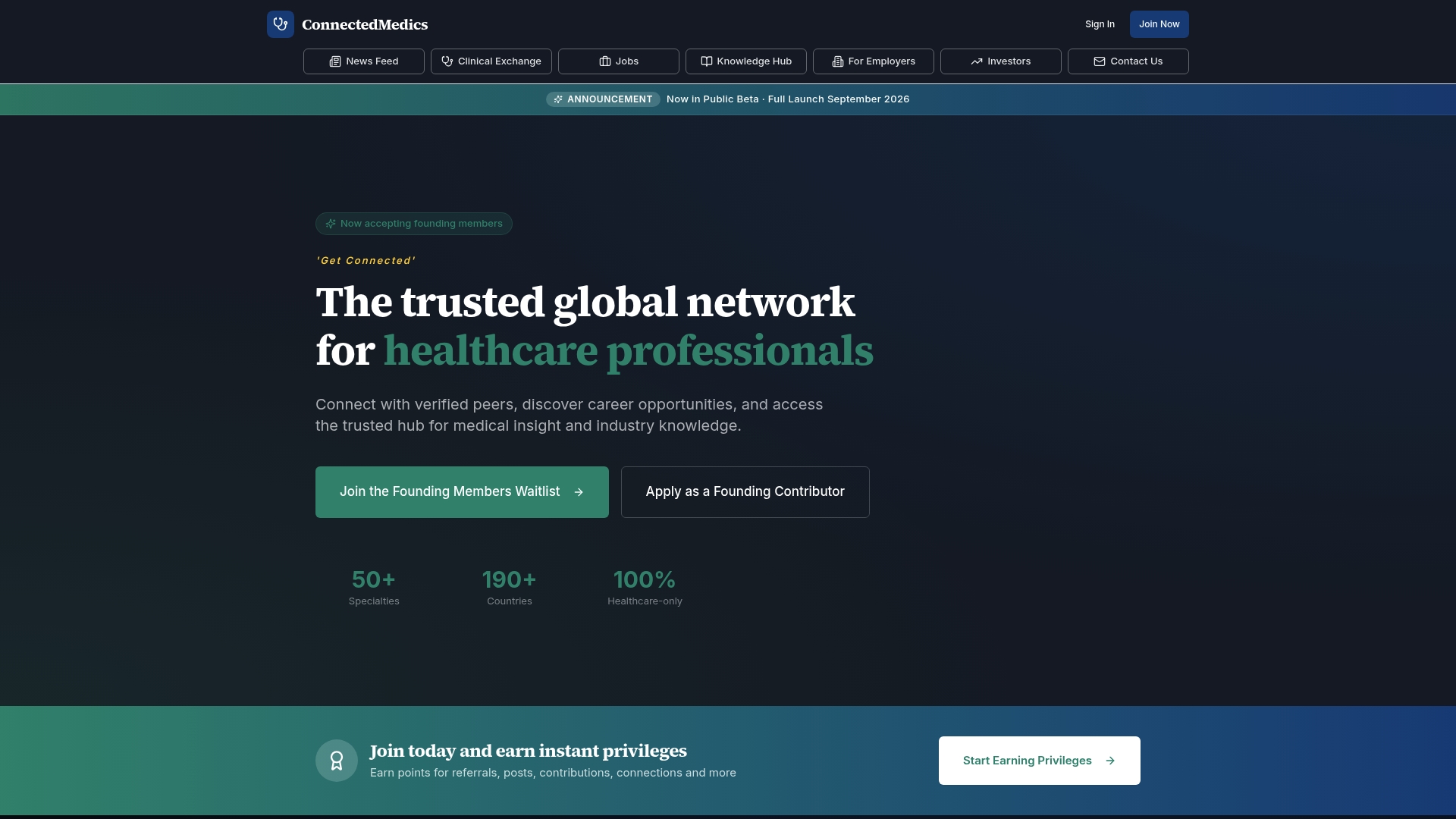
Create your profile, upload your active licenses and NPI, and set job alerts by specialty and state coverage. Employers using Connectedmedics' recruitment tools can see your verified credentials immediately, which tends to speed up screening on both sides. If you're an employer building out a telehealth team rather than searching for a role, the Growth plan starts at $99 per month and includes access to the verified clinician network. Set up your profile today and let the alerts start working while you focus on the applications that actually match your licensure.
Primary Sources Worth Checking Directly
Before accepting any telemedicine offer, verify licensure claims against Telehealth.HHS.gov's licensing guidance and the Center for Connected Health Policy's state telehealth policy fact sheet. State licensing boards remain the final authority, and their rules change more often than most job postings reflect.
Sources
- Telehealth
- Out-of-State telehealth provider policies (Center for Connected Health Policy) — fact sheet
FAQ
Is It Hard to Get a Telemedicine Job?
It's not inherently harder than landing an in-person role, but it front-loads different work: licensure mapping and credentialing paperwork instead of just clinical interviewing. Clinicians who define their care model and target states before applying tend to move through the process faster than those applying broadly and sorting out logistics afterward.
How Can I Make $2,000 a Week Working From Home in Telemedicine?
Reaching that level generally requires either a high-volume synchronous role, a specialty in demand like behavioral health or urgent care, or a combination of a base salary plus per-visit incentives. Actual pay depends heavily on employment type (W-2 versus 1099), documentation time per visit, and how many states you're credentialed to see patients in, so compare offers by effective hourly rate rather than headline pay.
What Telemedicine Jobs Pay Well Without Requiring a New Degree?
Licensed clinicians already holding an active RN, NP, PA, or physician credential typically don't need additional degrees to move into telemedicine. What changes is licensure coverage and platform familiarity, not academic credentials. Behavioral health, chronic disease management, and RPM nursing roles are among the specialties hiring most actively into remote positions right now.
What Is the Best Telehealth Company to Work For?
There's no single best employer since fit depends on your specialty, care model preference, and which states you're licensed in. What matters more than a company's name is whether it clearly states patient-state coverage, handles credentialing on your behalf, and offers malpractice terms that extend across every state you'd be treating patients in. Platforms like Connectedmedics help you filter listings by those exact criteria instead of relying on employer reputation alone.
Do I Need a Compact License to Work in Telemedicine?
Not always. A compact like the Interstate Medical Licensure Compact or the Nurse Licensure Compact can speed up multistate practice, but full state licensure, telehealth registration, or reciprocity agreements can also work depending on the state and your profession, per HHS's overview of licensure compacts. Check the specific pathway available in each state where you plan to see patients.