
The fastest routes to telemedicine work are platform career pages, targeted LinkedIn alerts, and clinician job boards. The single biggest gate is state licensing. Set alerts on all three channels, then audit which states you're already licensed in before applying anywhere.
TL;DR:
- Checking license eligibility before applying prevents wasting time on roles you cannot legally accept in your current states.
- Licensure in high-population states accelerates credentialing and the ability to start work, with some roles requiring more than 40 active licenses.
- Starting the licensing process several months in advance, ideally before receiving an offer, minimizes delays and shortens deployment time.
- Telehealth roles requiring long-term relationships or in specialties like psychiatry and chronic disease management align better with longer visit slots and specific clinical experience.
- Building a verified, centralized credential packet and adopting multi-channel search strategies significantly increases chances of finding suitable telemedicine roles faster.
Table of Contents
- How to Find Telemedicine Jobs: Where to Look First
- Licensing, Credentialing, and Regulatory Checklist
- Application Checklist: Credentials, Resume, and Screening Documents
- Interviewing and Evaluating Telemedicine Job Offers
- Setting Up a HIPAA-Compliant Telemedicine Workspace
- How Long Does It Take to Land a Telemedicine Job?
- Which Telemedicine Specialty Fits You Best?
- What Makes a Candidate Competitive Beyond Clinical Credentials
- Common Telemedicine Job-Hunting Mistakes to Avoid
- Regulations and Reimbursement Trends Shaping Job Availability
- Clinician Pathways Into Telemedicine
- Find Telemedicine Roles Faster With Connectedmedics
- Authoritative Resources for Licensing and Telehealth Policy
- Sources
How to Find Telemedicine Jobs: Where to Look First
Job hunting for remote clinical work means running several channels at once, not picking one and waiting.
Platform career pages. Telehealth companies post openings directly on their own sites before those roles hit third-party boards. Bookmark five to eight target platforms and check weekly. Some national employers, including large health systems, list remote job openings directly on their career pages, though many still require proximity to a physical site or occasional travel, so read the fine print before applying.
LinkedIn. This is not optional anymore. Search terms like "telehealth physician," "virtual care NP," or "remote psychiatry" and save the search to get alerts. Messaging the recruiter listed on a posting directly, rather than just applying through the portal, often moves your resume to the top of the pile.
Staffing and locum-tenens agencies. Many now run dedicated telehealth desks that place clinicians into short-term or contract virtual roles, useful for testing modality fit before committing.
Clinician communities and specialty boards. Specialty association job boards and listservs surface roles that never get advertised broadly, particularly in psychiatry and primary care.
Your weekly routine should include:
- Check saved LinkedIn searches and respond to any recruiter messages.
- Scan bookmarked platform career pages for new postings.
- Review specialty association or listserv job boards.
- Confirm alert settings are still active on every job board you use.
Pro Tip: Set alerts using both broad terms ("telemedicine") and specialty-specific terms ("telepsychiatry," "virtual urgent care") — broad searches catch volume, narrow searches catch relevance.
Licensing, Credentialing, and Regulatory Checklist
Patient location determines which state's medical practice law governs the visit, not where you sit. That means your state license map is the real limit on how many jobs you can even apply for.
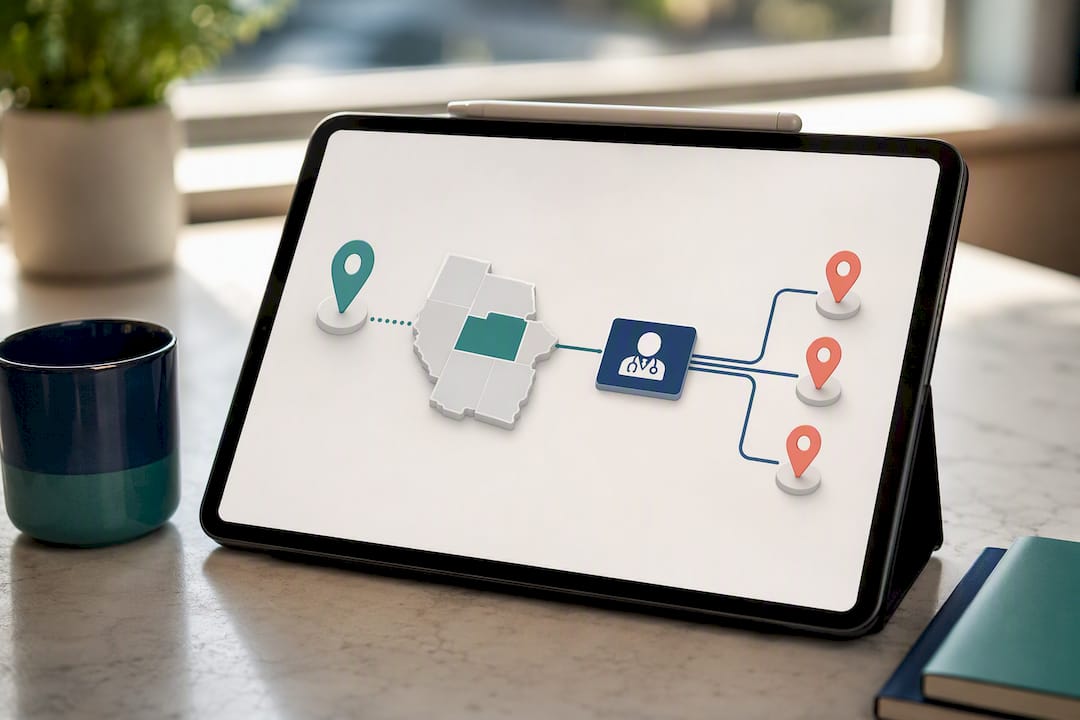
The Interstate Medical Licensure Compact speeds up licensure for eligible physicians across participating states, and platforms increasingly favor candidates already eligible in multiple states. It does not cover every state, and it applies to physicians, not all clinician types. APRNs should check their own state's compact participation separately, since NP licensure portability rules differ from the physician compact entirely.
Other pieces of the checklist:
- Active DEA registration if you'll prescribe controlled substances
- State-specific controlled-substance permits, which some states require on top of DEA registration
- Verified board certification current within your specialty
- Malpractice coverage documentation, sometimes employer-provided, sometimes not
A single new state license typically takes 4 to 12 weeks to process, and platform credentialing runs on a separate timeline on top of that. One national posting requires clinicians to hold more than 40 active state licenses to qualify. Prioritize adding licenses in high-population states first. Volume of eligible patients matters more than the number of states on your wall.
Application Checklist: Credentials, Resume, and Screening Documents
Assemble these documents before you apply, not after a recruiter asks:
- Current CV, reframed to highlight remote-relevant skills: virtual triage, asynchronous documentation, and any telehealth EMR platforms you've used.
- Board certification and license verification letters, digital copies ready to upload.
- Active DEA registration and any state controlled-substance permits.
- Malpractice insurance declarations page.
- Two to three professional references who can speak to remote work reliability, not just clinical skill.
- A credential summary sheet listing every active license, expiration date, and NPI number in one place.
Notarization requirements vary by employer and by document type, so ask before assuming a copy is sufficient. A single centralized credential packet, ready to send the moment a recruiter asks, shortens the gap between first contact and offer considerably.
Pro Tip: Store your credential packet in one shared folder with a consistent file-naming convention (LastName_License_State_ExpDate) so you're not hunting for documents under deadline pressure.
Track every application in a simple spreadsheet: platform, date applied, status, and next follow-up date. Combine that with automated job alerts on LinkedIn and specialty boards so you're not manually re-searching the same sites daily.
Interviewing and Evaluating Telemedicine Job Offers
Telemedicine interviews usually run in two parts: a standard behavioral round and a clinical scenario round where you'll be asked to walk through a remote triage case, an escalation decision, or how you'd handle a patient who needs an in-person referral. Practice narrating your clinical reasoning out loud. Remote interviewers can't observe your bedside manner, so they listen closely to how clearly you think.
Questions worth asking any employer before signing:
- What's the no-show and late-cancellation policy, and does it affect my pay?
- Who provides malpractice coverage, and what are the coverage limits?
- What's the notice period for termination, on either side?
- Is the role synchronous video, asynchronous messaging, or a mix?
Pay models vary widely across the industry:
| Pay model | How it works | Best fit |
|---|---|---|
| Per-visit | Flat fee per completed encounter | High-volume, fast typists |
| Hourly | Fixed rate regardless of visit count | Predictable schedules, lower volume specialties |
| Salaried | Fixed annual pay, set schedule expectations | Full-time roles, benefits included |
| Productivity-based | Base pay plus bonus tied to visit volume or RVUs | Clinicians confident in throughput |
Asynchronous messaging roles often pay differently than synchronous video work, since response windows replace scheduled visit blocks. Red flags include vague no-show liability language and contracts silent on malpractice tail coverage.
Setting Up a HIPAA-Compliant Telemedicine Workspace
Employers expect a working setup before day one, not a promise to figure it out.
Minimum requirements typically include:
- A dedicated, private workspace with a door that closes
- Wired or strong wireless internet, ideally with a backup hotspot for outages
- A HIPAA-compliant computer setup: encrypted storage, password-protected screen lock, no shared family devices
- Headphones for audio privacy, since a laptop speaker in a shared home can leak patient details
Learn whether your platform runs synchronous video visits, asynchronous messaging, or both. The workflow differs. Synchronous work means blocking calendar time; asynchronous work means checking a queue on a rolling basis throughout the day.
Pro Tip: Time-block chart completion immediately after each visit rather than batching it at day's end. Delayed documentation is the most common source of telehealth malpractice exposure.
Build a simple safety-netting habit: end every visit by stating clearly what the patient should do if symptoms worsen, and document that instruction verbatim.
How Long Does It Take to Land a Telemedicine Job?
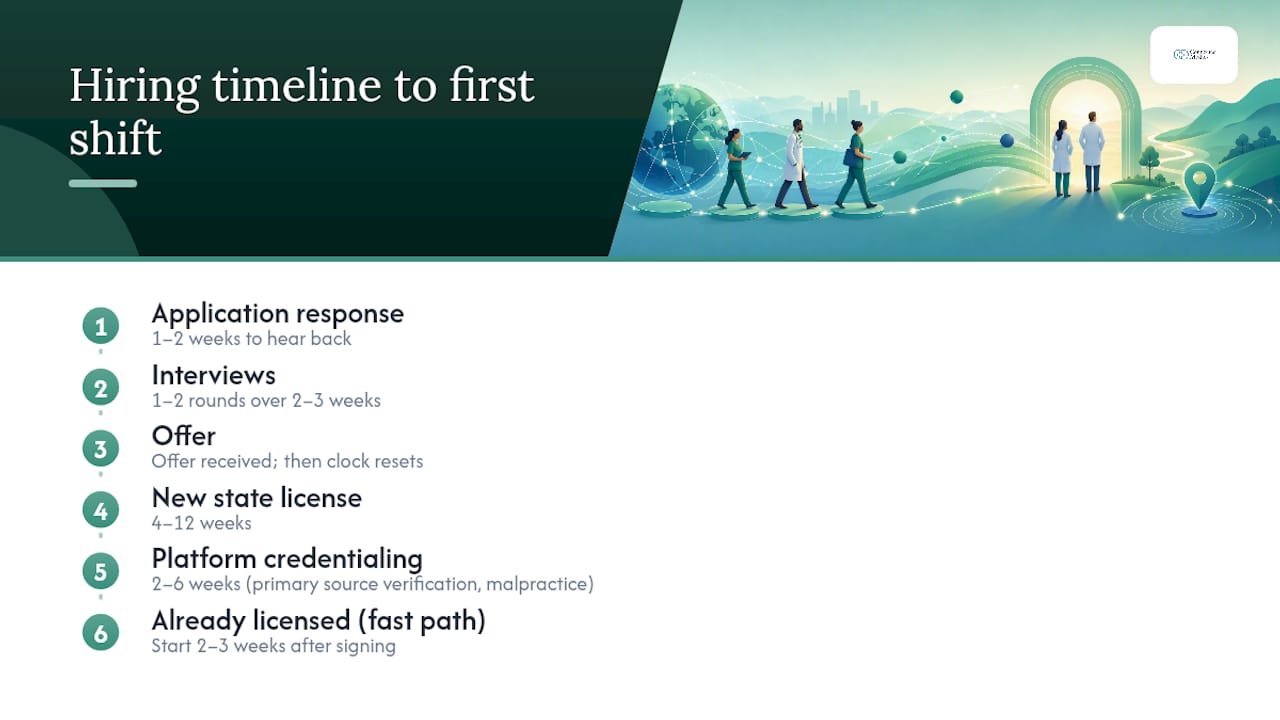
Expect three to six months from first application to first shift, and licensing is almost always the reason it takes that long, not the interview process itself.
A typical sequence: one to two weeks to hear back after applying, one to two rounds of interviews over another two to three weeks, then an offer. After that, the clock resets. A new state license runs 4 to 12 weeks, and platform-side credentialing, including primary source verification and malpractice review, adds another two to six weeks on top. Clinicians who already hold licenses in the employer's target states can start in as little as two to three weeks after signing.
Pay expectations vary by specialty and pay model. Per-visit roles in urgent care and primary care tend to pay based on volume, so income depends heavily on how many patients you can see per hour. Salaried telepsychiatry and chronic disease management roles tend to offer more predictable income with set caseloads. Hourly rates are common for part-time or contract locum telehealth work, often used by clinicians testing a platform before committing to a bigger schedule shift.
The practical lesson: apply to your target roles well before you plan to start. If you want to begin telemedicine work by summer, start the license and credentialing process in late winter. Waiting until you have an offer in hand to begin licensing paperwork is the single most common reason clinicians lose months they didn't expect to lose.
Which Telemedicine Specialty Fits You Best?
Not all telemedicine jobs work the same way, and picking the wrong modality for your clinical style leads to burnout fast.
Urgent care and primary care telehealth tend to run on synchronous video, high patient volume, and tight per-visit time windows. This suits clinicians who thrive on fast pattern recognition and are comfortable making quick, contained decisions without a full physical exam.
Telepsychiatry usually runs longer visit slots, often 30 to 60 minutes, and rewards clinicians who build rapport well over video and manage medication follow-up remotely. Demand here has grown steadily as psychiatric access gaps persist in rural areas.
Chronic disease management roles, think diabetes, hypertension, or weight management programs, often blend synchronous check-ins with asynchronous messaging and remote monitoring data review. These roles suit clinicians who like longitudinal relationships over one-off encounters.
Dermatology and other asynchronous specialties rely heavily on photo review and messaging rather than live video, which favors clinicians comfortable making decisions from images and written history alone.
Match your prior clinical setting to the modality: ER and urgent care experience translates directly to synchronous acute telehealth. Primary care and chronic condition management experience fits longitudinal virtual care programs better than episodic ones. Knowing this before you apply saves you from chasing roles that fight your natural clinical rhythm.
What Makes a Candidate Competitive Beyond Clinical Credentials
Board certification gets you through the door. What gets you hired over an equally qualified candidate is how well you communicate through a screen.
Telehealth communication skills matter more than most clinicians expect. Patients can't read your body language the way they would in an exam room, so your verbal clarity carries the entire interaction. Practicing concise, plain-language explanations, and narrating your reasoning out loud, both help in interviews and on the job.
Digital literacy is now a baseline expectation, not a bonus. Comfort navigating a telehealth EMR, toggling between video and chat, and troubleshooting basic connectivity issues mid-visit signals to employers that you won't need extensive onboarding support.
Documentation speed and accuracy also separate strong candidates from average ones, particularly in per-visit pay models where slow charting directly reduces income. Clinicians who can write a clean, defensible note quickly are more valuable in high-volume telehealth than in traditional in-person settings, where support staff often absorb some of that burden.
Flexibility with scheduling, comfort working independently without in-person backup, and a track record of managing ambiguity are qualities employers screen for even when they aren't listed on the job posting.
Common Telemedicine Job-Hunting Mistakes to Avoid
The most common mistake is applying broadly before checking license eligibility, which wastes time on roles you can't legally accept yet. Confirm the states a posting requires before investing effort in the application.
A second frequent error: treating the credentialing process as something to start after receiving an offer. Primary source verification, malpractice underwriting, and license renewals all take weeks. Clinicians who wait to begin these steps routinely lose out to candidates who were already credentialing-ready.
Underestimating modality mismatch is another pitfall. Accepting a high-volume synchronous urgent care role when you actually prefer longer, relationship-based visits leads to fast burnout and turnover, which then makes the next job search harder because of a thin work history.
Finally, many clinicians rely on a single channel, usually one job board, and miss roles that only surface through recruiter messages or specialty listservs. Running multiple channels in parallel consistently produces more and better-fitting offers than committing to one source and waiting.
Regulations and Reimbursement Trends Shaping Job Availability
Telehealth regulation is still a patchwork, and that patchwork directly shapes which jobs exist and where. The Center for Connected Health Policy tracks state-by-state rules on licensure, prescribing, and reimbursement, and those rules shift often enough that a state's telehealth-friendliness this year isn't guaranteed next year.
Reimbursement policy matters just as much as licensing. Payers, including Medicare and state Medicaid programs, have expanded telehealth coverage significantly in recent years, but coverage rules for specific visit types and modalities still vary. Employers build hiring plans around which services get reimbursed reliably in which states, which is why job postings cluster around certain specialties and state combinations rather than spreading evenly nationwide.
Controlled substance prescribing across state lines remains one of the more restrictive areas, with DEA registration and state-specific permits layered on top of standard licensure. This is part of why psychiatry and chronic pain management telehealth roles often carry more documentation requirements than general primary care postings.
The practical takeaway: regulations aren't static background noise. They actively determine which states have job openings, which specialties are hiring, and how fast a given role can bring you on board.
Clinician Pathways Into Telemedicine
Part-time platform work gets you earning fastest but offers the least control over schedule and patient panel. Locum telehealth sits in the middle, useful for testing specialties. Building a virtual practice takes longest but rewards patience with autonomy. ER and urgent care backgrounds map cleanly onto synchronous acute care roles; primary care experience fits chronic disease programs better. Licensing strategy, not resume polish, decides how fast any of these paths actually opens up.
— David
Find Telemedicine Roles Faster With Connectedmedics
Job boards and LinkedIn alerts work, but they scatter your search across a dozen tabs and require you to re-verify your credentials with every new application. Connectedmedics consolidates that into one place built specifically for clinicians, not general jobseekers competing with every industry on a generic platform. The jobs board carries many active healthcare vacancies with specialty filters built for telemedicine roles, so you're not sifting through unrelated postings to find the handful that fit your license map.
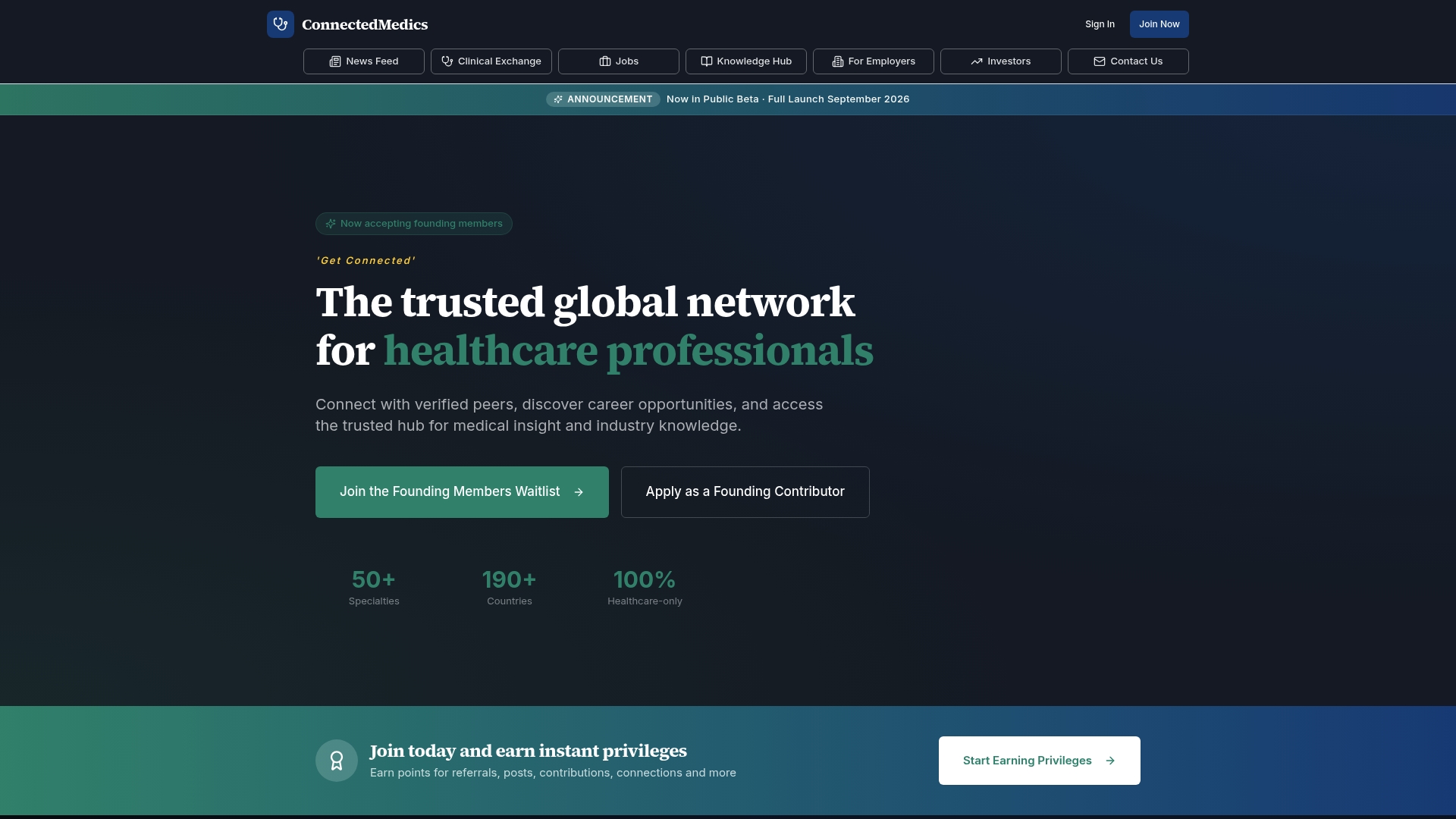
Verified profiles mean recruiters see your credentials upfront instead of waiting for you to attach documents after first contact, which shortens the back and forth that usually slows telehealth hiring down. The knowledge hub adds ongoing clinical context between applications, so the time between job searches isn't wasted. Set up a verified profile on Connectedmedics now, upload your credential packet once, and turn on targeted telemedicine job alerts so new postings in your specialty and licensed states reach you before you have to go looking for them.
Authoritative Resources for Licensing and Telehealth Policy
Before applying anywhere, check the primary sources that govern your eligibility, not secondhand summaries.
- The American Telemedicine Association for compact updates and telehealth policy tracking
- The Center for Connected Health Policy for state-by-state licensure, prescribing, and reimbursement rules
- Your own state medical or nursing board's website, checked directly before submitting any application tied to that state
- Individual employer career pages, since posted requirements often differ from what third-party boards display
Always confirm current licensure requirements directly with your state board. Rules change faster than most job boards update their listings.
Sources
- American Telemedicine Association
- Center for Connected Health Policy (CCHP)
- Remote Full Time Remote Telemedicine Physician – (40+ State Licenses) at Wheel - Jobicy