
The fastest path to useful podcast learning: subscribe to a short list of high-authority, specialty-relevant shows and prioritize episodes with CME credit or case-based structure. Many top shows come from journals or academic medical centers, which keeps content aligned with current research and guidelines. Episodes tend to run short, built for a break between patients or a commute, not a lecture hall.
TL;DR:
- Most targeted medical podcasts come from journals or universities, focusing on current research, guidelines, and specialty-specific teaching in short, accessible episodes.
- When choosing a podcast, verify that it matches your specialty, fits your schedule with shorter episodes, and offers credible, source-backed content with available CME accreditation.
- Critical care and hospital medicine benefit from journal-produced episodes that quickly incorporate new evidence, while narrative shows provide reflective and storytelling content for clinicians.
- Using structured formats with active learning elements, such as pre-episode quizzes and repetition, enhances knowledge retention and practical application.
- Limiting your subscriptions to four or five high-quality shows improves engagement and facilitates sharing insights through peer discussions.
Table of Contents
- 1. Prioritized Shortlist of Podcasts to Subscribe to First
- 2. A Quick Checklist for Choosing the Right Show
- 3. A Specialty Map for Internal Medicine, Critical Care, and More
- 4. Why Some Podcast Formats Help You Retain More
- 5. Making Podcasts Part of a Working Clinical Routine
- Where ConnectedMedics Fits Into Your Listening Routine
- Where to Verify Podcast Credentials and Find Journal Audio
- Sources
- FAQ
1. Prioritized Shortlist of Podcasts to Subscribe to First
A small set of well-produced shows covers most of what a working clinician needs: research updates, case reasoning, and specialty-specific teaching. Journal and university-produced podcasts summarize research highlights and guideline updates in formats built for clinicians, which is why they anchor most curated lists.
- The Curbsiders: an internal medicine podcast built around expert interviews with case emphasis and literature synthesis, best for generalists who want practical, evidence-linked takeaways; episodes typically run 45 to 60 minutes and favor case-based discussion with evidence citations.
- Core IM: known for active-learning design, including pre-podcast quizzes and purposeful pauses that reinforce clinical pearls, well suited to residents and hospitalists studying for boards or shift prep.
- JAMA Network podcasts: journal-backed audio covering new research, editorials, and clinical guidance directly from JAMA's editorial team, useful for clinicians who want research context without reading the full paper first.
- NEJM podcasts: produced alongside the New England Journal of Medicine, these episodes translate major trials and clinical reviews into discussion format, a fit for anyone tracking practice-changing studies.
- Bedside Rounds: a narrative medicine podcast that blends medical history with clinical reasoning, appealing to clinicians who want reflective, story-driven content rather than straight review.
Each of these draws on editorial oversight from a journal, university, or an established clinician-host team, which separates them from general health podcasts aimed at the public. None require a long-term commitment: most support skipping between episodes based on specialty relevance rather than listening in sequence.
2. A Quick Checklist for Choosing the Right Show
Picking a podcast does not need to take longer than a minute once you know what to check.
- Match specialty first. Confirm the show regularly covers your field or subspecialty before subscribing.
- Check episode length against your schedule. Shows running 15 to 30 minutes fit shift breaks better than hour-long formats.
- Decide if you need accredited CME. If the episode counts toward licensure or MOC, confirm the accreditor before listening.
- Weigh depth against breadth. A narrow, deep-dive show suits board review; a broad, varied show suits general staying-current listening.
Quick vetting signals worth checking: host credentials and specialty affiliation, citation of the underlying evidence rather than opinion alone, availability of a transcript, and a visible CME badge or accreditation statement. Vetting content for clinical accuracy applies to audio the same way it applies to any other source. A red flag worth noting: episodes that cite no sources or that repackage press releases without linking the original study.
Pro Tip: Subscribe to no more than four or five shows at a time. A shorter list gets finished; a long one gets ignored.
3. A Specialty Map for Internal Medicine, Critical Care, and More
Different specialties call for different shows, and matching one to the other saves scanning time.
- Internal medicine and primary care: The Curbsiders and Core IM both work well for shift learning and case-based reasoning, with Core IM leaning toward board-style review.
- Critical care: look for journal-produced episodes and institution series that break down trial data relevant to ICU practice, since these tend to move fastest to cover new evidence.
- Narrative and reflective medicine: Bedside Rounds fits clinicians looking for reflective practice rather than pure review, pairing medical history with clinical reasoning.
- Policy and health systems: JAMA Network podcasts frequently cover policy shifts alongside clinical research, useful for anyone tracking regulatory or systems-level change.
Academic library guides and journal podcast hubs group shows by specialty and CME availability, which makes them a practical starting catalog when a specialty is not covered above; for healthcare organizations aiming to increase their content discoverability, leveraging effective Healthcare SEO Services can help surface podcasts to the right clinical audiences.
4. Why Some Podcast Formats Help You Retain More
Passive listening is not the same as learning. Structured formats that use pre-podcast quizzing, intentional repetition, and pearls revisited at the episode's end are built specifically to improve recall over listening without any of those elements. Accredited CME matters most when an episode counts toward licensure renewal or MOC requirements, and the accreditor and assessment window should be confirmed before claiming credit, since not every episode from a given hub carries the same accreditation. Converting a podcast into practice change often comes down to a habit: jotting one pearl per episode and sharing it with a colleague or team turns passive audio into something closer to case review. Physician hosts who connect evidence to bedside care tend to produce the episodes worth taking notes on.

5. Making Podcasts Part of a Working Clinical Routine
Curated listening works best in small batches, tied to specialty, not popularity. Trading episode notes with colleagues turns a solo habit into a shared one, and it pairs naturally with the kind of peer discussion happening in medical forums. Readers are welcome to share favorite episodes or request specialty lists.
— David
Where ConnectedMedics Fits Into Your Listening Routine
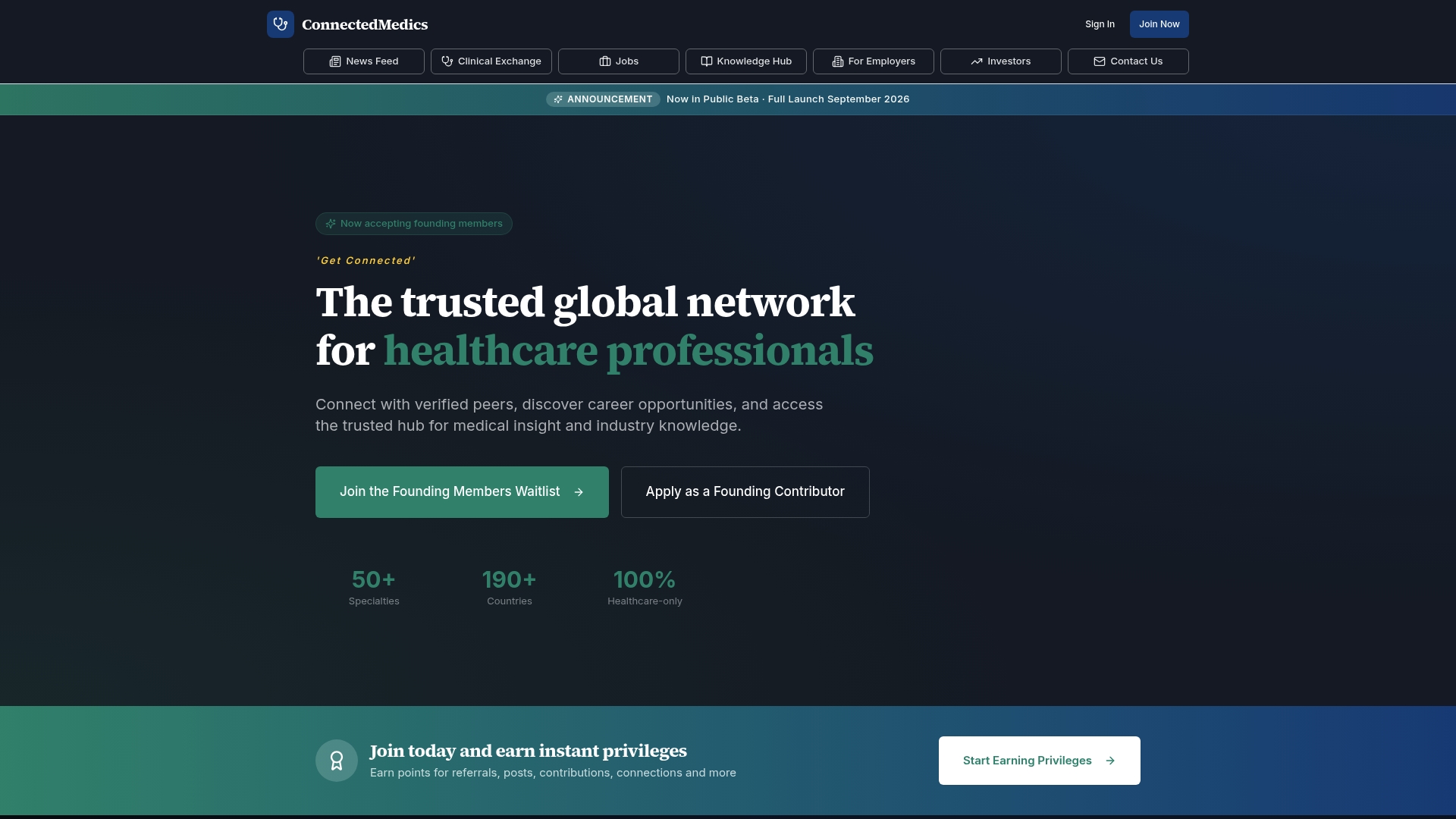
Curated podcast picks are only useful if you can save them, discuss them, and connect them to your specialty community. ConnectedMedics' Knowledge Hub surfaces clinical guides and research summaries alongside the kind of content covered here, organized for clinicians rather than a general audience.
- Save shows and articles to a specialty-organized profile instead of a generic bookmarks list.
- Join specialty conversations with verified clinicians to compare notes on episodes and research.
- Browse job and CME-adjacent resources without leaving the same platform.
Explore the ConnectedMedics network to set up a verified profile and start connecting listening habits to the rest of your professional life.
Where to Verify Podcast Credentials and Find Journal Audio
- MedPod overview (University of Utah Health): summarizes journal and university-produced shows with editorial oversight built in.
- GWU Himmelfarb Library podcast guide: groups shows by specialty and CME availability for quick cross-checking.
- Stanford Medicine 25: offers episode transcripts, useful for scanning relevance before committing time.
This article is general information, not a substitute for advice from a qualified doctor. Consult a qualified healthcare professional about your own circumstances before acting on anything here.
Sources
FAQ
What is the most popular healthcare podcast?
Popularity varies by specialty and audience, but shows like The Curbsiders and JAMA Network podcasts are among the most widely cited in academic and library guides for clinicians. Journal-backed shows tend to draw the broadest clinician audience because of their editorial oversight.
What are the top 5 health podcasts?
For physicians specifically, a commonly recommended set includes The Curbsiders, Core IM, JAMA Network podcasts, NEJM podcasts, and Bedside Rounds, each covering a different mix of case discussion, research translation, and narrative medicine. The right five depend on specialty and whether CME credit is a priority.
What are the top 3 podcasts right now?
Among clinician-focused shows, The Curbsiders, Core IM, and JAMA Network podcasts are frequently grouped together in academic and library recommendations for their combination of case-based teaching and journal-level rigor. Rankings shift by specialty need rather than general popularity.
Is there a podcast about hospital medicine?
Yes. Core IM covers hospital medicine topics with a case-based, board-review style format, and Bedside Rounds offers a narrative angle on hospital-based clinical reasoning. Both are commonly listed in academic podcast guides alongside other internal medicine shows.