
Finding a healthcare professional network that delivers verified peer discussion, clinical case sharing, and career development without general social media noise is an ongoing challenge for clinicians. Most broad platforms allow nonclinical content or lack credential checks, making it hard to trust network quality or use advanced collaboration tools. This comparison maps network focus, verification standards, and education features across five communities so you can choose one that fits your career stage, specialty, and privacy requirements.
Table of Contents
Connected Medics
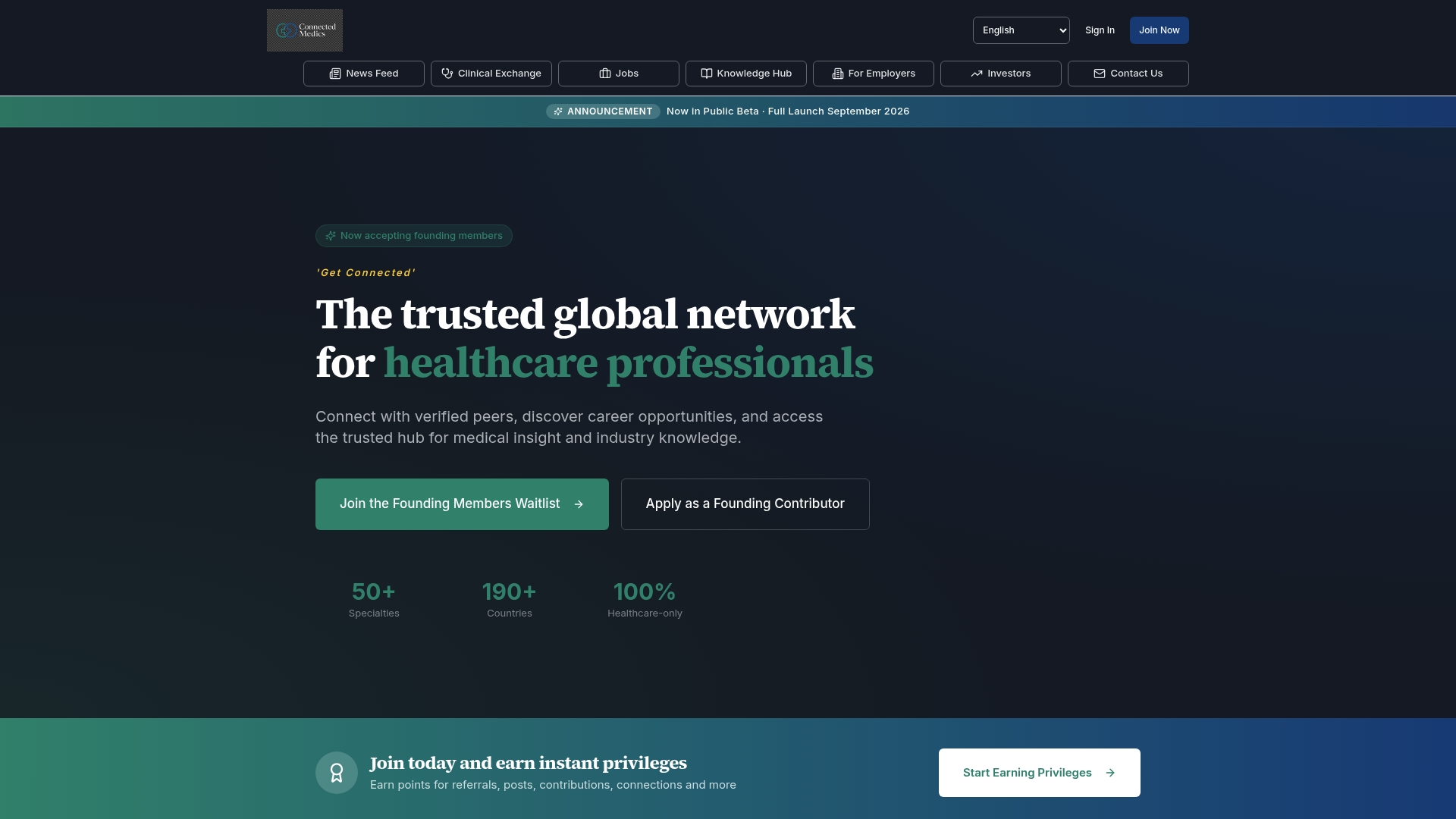
At a Glance
Connectedmedics' marketing materials state the platform lists over 4,600 active healthcare vacancies, and the service is currently in public beta with a full launch scheduled for September 2026.
Founding members get early access to verified profiles, a curated insights hub, and specialty communities while the team refines features.
Core Features
- Verified professional profiles that display credentials and career history, reducing the need to verify candidates manually.
- Global jobs board with targeted filtering by specialty, location, and role level to surface relevant listings faster.
- Curated medical news and research summaries authored by contributors who are identified as medical experts.
- Specialty led community spaces where clinicians, researchers, and industry experts exchange cases, career tips, and commentary.
- Career guidance and industry analysis aimed at helping clinicians plan moves across markets.
Key Differentiator
Connectedmedics is built exclusively for healthcare professionals and ties verified clinician profiles directly to specialty communities and a jobs board focused on healthcare roles.
That single focus reduces noise from nonclinical content and keeps discussions, hiring, and insights strictly relevant to clinical practice and healthcare careers.
Pros
-
Verified profiles cut down recruiter time spent confirming credentials and make outreach more defensible when you cite a listed certification.
-
The jobs board is specialty focused, which helps clinicians surface roles that match clinical training and licensure requirements rather than broad corporate listings.
-
Curated summaries and contributor articles make it easier to scan recent research and industry shifts without filtering general news feeds.
-
Community spaces organized by specialty and location let you build a targeted peer network for referrals, second opinions, or cross-border job scouting.
-
Early access and founding member benefits give active contributors visibility and the opportunity to shape feature priorities during beta.
Cons
- The platform is in public beta with a full launch slated for September 2026, so some community features and employer integrations can be limited or still evolving.
Who It's For
Licensed clinicians, researchers, and healthcare industry recruiters who want a focused professional network rather than a generic social graph. It suits professionals planning cross-border moves, hiring teams that need verified candidates, and clinicians seeking peer discussion within their specialty.
Unique Value Proposition
Early access for founding members combined with verified profiles turns a professional page into a credible hiring signal for recruiters and a reliable contact point for peers.
That dynamic shortens the usual recruiter-to-clinician loop by placing credentialed profiles next to specialty conversations and curated job listings, making outreach and vetting faster.
Real World Use Case
A nurse in Australia uses Connectedmedics to join a specialty community, read weekly research summaries tailored to her field, and apply to international nursing roles posted on the jobs board. Recruiters reach out to her verified profile with interview requests rather than cold messages.
Website: https://connectedmedics.com
Doximity
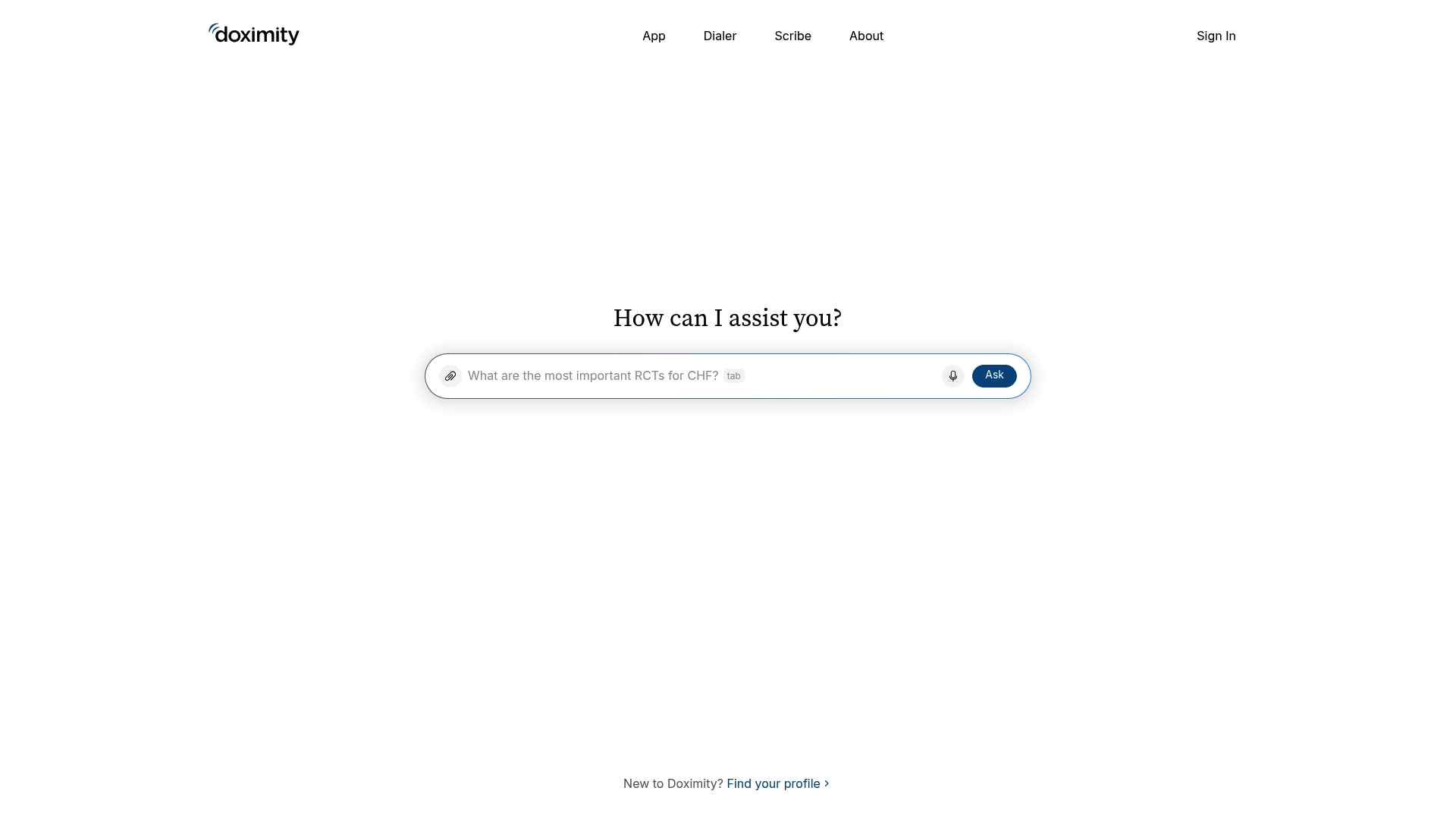
At a Glance
Doximity's marketing materials describe it as the largest verified network of healthcare professionals in the U.S. The app couples secure messaging and HIPAA-compliant faxing with AI features that generate notes and answer clinical questions on mobile devices.
This tight mix makes it a daily workflow tool for clinicians who want communication, documentation, and reference in one place.
Core Features
Doximity bundles clinical communication, documentation, and knowledge retrieval into a mobile-first platform.
- Secure messaging with calling and texting from mobile devices for clinician-to-clinician coordination.
- HIPAA-compliant faxing and document sharing to move records without insecure email.
- Ambient AI for generating structured clinical notes during visits and an AI question feature that pulls from peer-reviewed sources.
- Clinician directory for verified networking and referral discovery.
Key Differentiator
Doximity advertises physician-verified AI tools with full-text access to peer-reviewed literature inside a HIPAA-compliant mobile platform. That combination places reference material next to conversations and notes, reducing context switching when you need evidence in real time.
Pros
- Broad clinician reach. The platform’s verification model draws a large U.S. clinician community, which makes referrals and quick consults easier.
- Mobile apps on iOS and Android let you message, fax, and draft notes between clinic rooms or on call.
- Compliance-first features like HIPAA-compliant faxing reduce friction when sending records across organizations.
- Clinical decision support sits alongside communication, so you can look up peer-reviewed literature without leaving a conversation.
- Built-in networking and referrals reduce the need to maintain separate physician directories and Rolodexes.
Cons
- Verification friction. Several users report unexpected steps during credential verification that delay access.
- Privacy and conduct concerns have been raised about data handling and unprofessional interactions on the platform.
- AI limitations. The platform’s question-answering and note generation can hallucinate or provide unverified details and require clinician oversight.
- Mixed usability and support feedback suggest onboarding can vary by department and site.
When It May Not Fit
Doximity is primarily designed for verified U.S. healthcare professionals; clinicians outside the United States or non-clinician staff will find access limited. Organizations that need global clinician directories or unrestricted public signups should look elsewhere.
Who It's For
Verified U.S. clinicians—physicians, nurse practitioners, physician assistants, and clinical staff—who need secure messaging, on-the-go documentation, and literature access tied to clinical workflows.
Real World Use Case
A physician uses Doximity during clinic: messages a specialist about test results, faxes records to a hospital, and lets Ambient AI draft the visit note. The workflow reduces duplicate charting and speeds up referral conversations, all from a single mobile app.
Pricing
Doximity is free for verified U.S. clinicians. The vendor offers paid enterprise solutions for organizations that want administrative controls, analytics, or broader deployment and support.
Website: https://doximity.com
MedShr
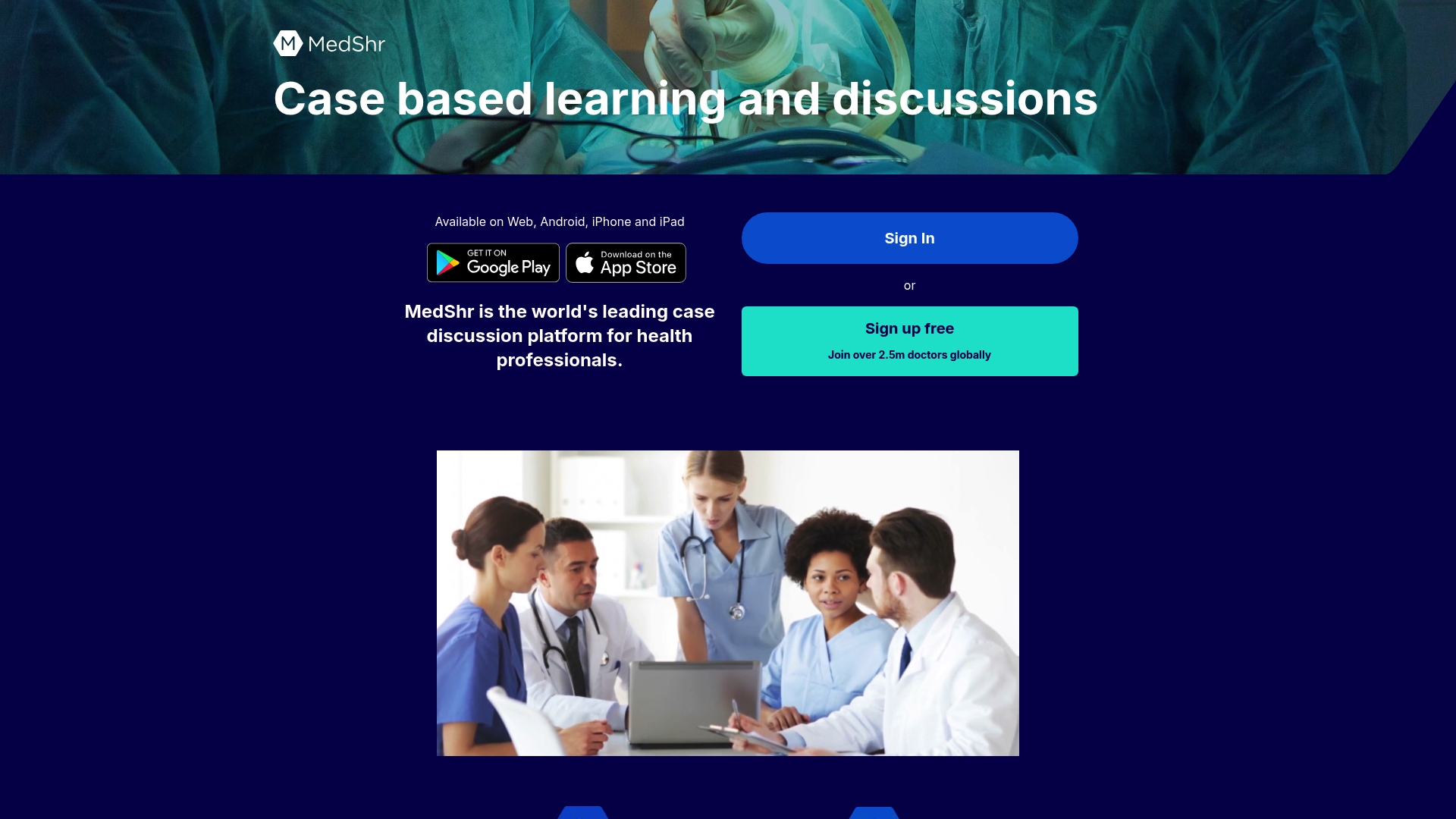
At a Glance
The vendor advertises a community of more than 2.5 million doctors worldwide, and positions privacy as a core feature with HIPAA and GMC compliance. MedShr is available on web and mobile and emphasizes peer case discussion and clinical learning over career services.
Core Features
The vendor reports access to over 50,000 clinical cases and 1,000 learning modules aimed at point of care learning and ongoing education. The platform supports verified clinician accounts, threaded case discussions, image annotation inside cases, and a compact newsfeed for recent clinical posts.
MedShr also highlights device support across web, Android, iPhone, and iPad so clinicians can review cases at the bedside or between clinic sessions.
Key Differentiator
MedShr’s distinctive angle is its combination of strict privacy controls and a large verified clinician base. Where Connectedmedics centers on verified profiles, jobs, and a broader knowledge hub, MedShr narrows the focus to secure, patient approved case sharing and peer review among clinicians.
Pros
-
Secure architecture and compliance posture reduce legal friction for clinicians who share patient images. That privacy focus makes group consultation practical within routine workflows.
-
Free access to a large library of cases and modules lowers the barrier for clinicians who prefer self directed learning during downtime.
-
Verified community limits noise from nonclinical accounts so discussions tend to stay clinically focused rather than speculative.
-
Mobile first access means you can open a case, annotate an image, and get feedback within clinical hours without switching tools.
-
The combination of searchable cases and threaded discussion speeds up knowledge retrieval when you need precedent or a comparable presentation.
Cons
-
Public, independent user reviews and third party performance audits are not prominently available, so outside verification of uptime or moderation quality is limited.
-
Access is restricted to verified healthcare professionals which leaves medical students, researchers outside clinical roles, and some allied health staff with limited entry.
-
The platform concentrates on case discussion and education. If you need hiring tools, broad professional networking, or an integrated jobs board you will look elsewhere.
Who It's For
Clinicians who need a privacy minded place to share challenging cases with peers and to complete short clinical learning modules. Particularly valuable for specialists who want image centric discussion and verified peer feedback on differential diagnosis and management.
Real World Use Case
A hospitalist uploads anonymized imaging and exam notes from a difficult pneumonia case between shifts. Within hours, a pulmonologist across the hospital network comments with an alternate workup and a link to a learning module. The hospitalist saves the thread as a reference for rounds.
Website: https://medshr.net
MedSynapse
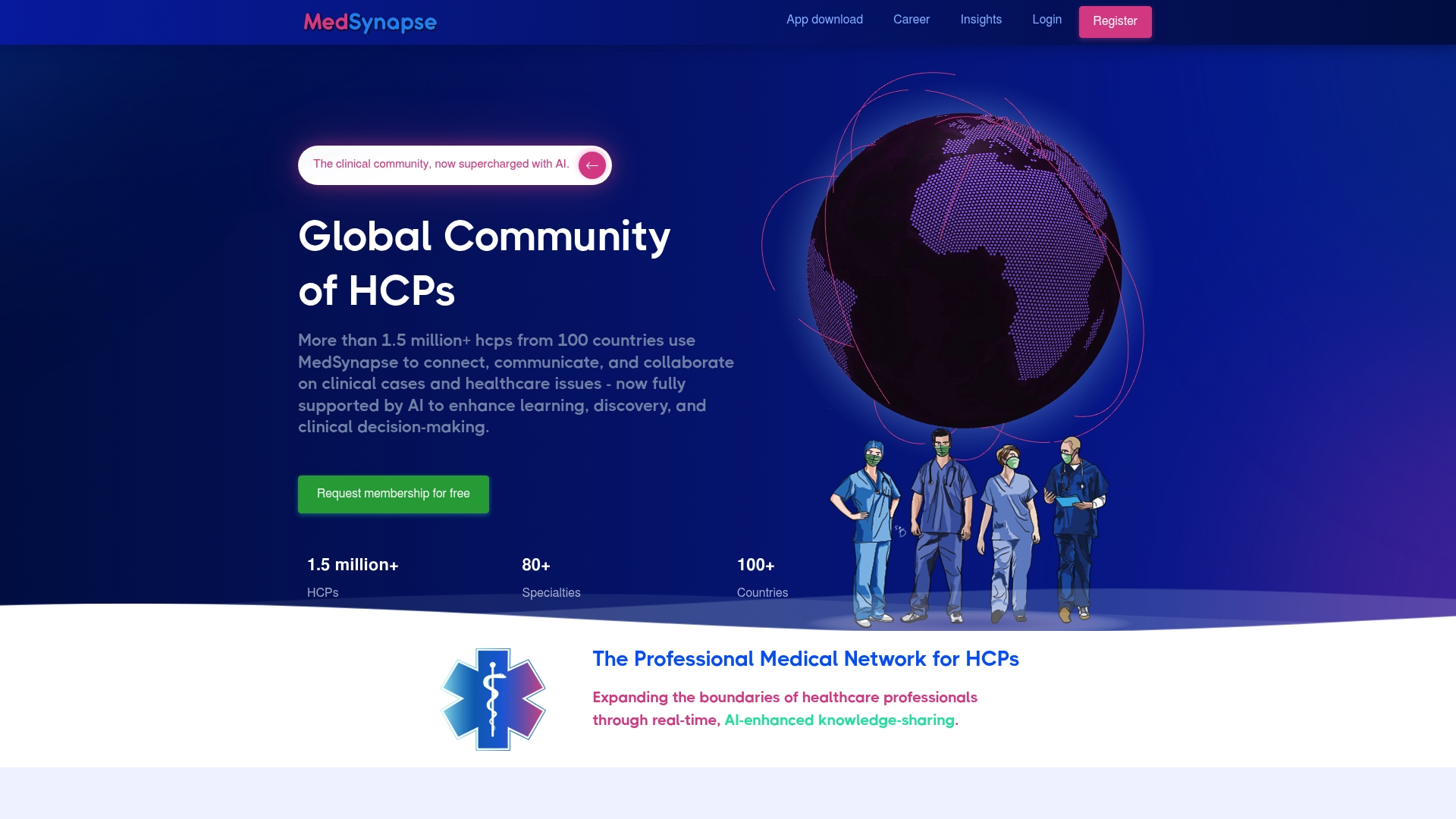
At a Glance
MedSynapse's marketing materials report a community of over 1.5 million healthcare professionals across 100+ countries and advertise HIPAA-compliant messaging alongside AI-supported insights. The platform pairs secure case discussion with curated medical updates and live CME on web and mobile.
Core Features
MedSynapse offers HIPAA-compliant messaging for private clinician-to-clinician conversations, a verification system for practitioner profiles, and AI-supported insights that surface relevant research during case threads. The feed aggregates trial news, drug approvals, and journal links. It also runs live webinars and CME modules that issue certification points for participating clinicians.
Key Differentiator
What separates MedSynapse is the way AI is embedded into clinical collaboration rather than serving only as a discovery layer. AI suggestions appear inside case discussions to highlight recent guidelines, related trials, and relevant journal summaries while participants converse, reducing the work of switching apps and searches.
Pros
- The scale referenced above helps shorten specialist matches; in practice you can find regional colleagues and subspecialists faster than in smaller forums.
- Secure messaging and verified profiles make it practical to exchange protected clinical information inside case threads without resorting to ad hoc channels.
- The platform centralizes continuing education; webinars tie directly to clinical topics discussed in active groups, so learning is immediately applicable.
- Mobile and web parity keeps a consult moving from ward to office without losing context or attachments.
- AI prompts speed literature retrieval during conversations, which reduces time spent hunting for supporting evidence.
Cons
- Public detail about tiered paid features is limited, so budget planning for institutional subscriptions requires direct vendor contact.
- The vendor self-reports community scale and compliance claims; independent third-party reviews or audits are not publicly cited in the product data.
- Heavy reliance on continuous connectivity limits usefulness in low-bandwidth settings or during hospital outages.
- AI suggestions can create false leads; clinical judgment remains necessary when acting on surfaced research.
Who It's For
Verified clinicians, including doctors, dentists, and psychiatrists, who want peer collaboration, timely clinical updates, and integrated CME credits will find MedSynapse aligned with daily workflows. Departments seeking a single app for case discussion and education will see immediate operational value.
Real World Use Case
A hospitalist posts a complex consult with labs and imaging. Colleagues from two specialties join the thread, the AI surfaces a recent guideline and a relevant trial, and a scheduled webinar on the same topic is recommended for CME credit. The team documents consensus and moves to treatment more quickly.
Website: https://medsynapse.app
Docintosh
At a Glance
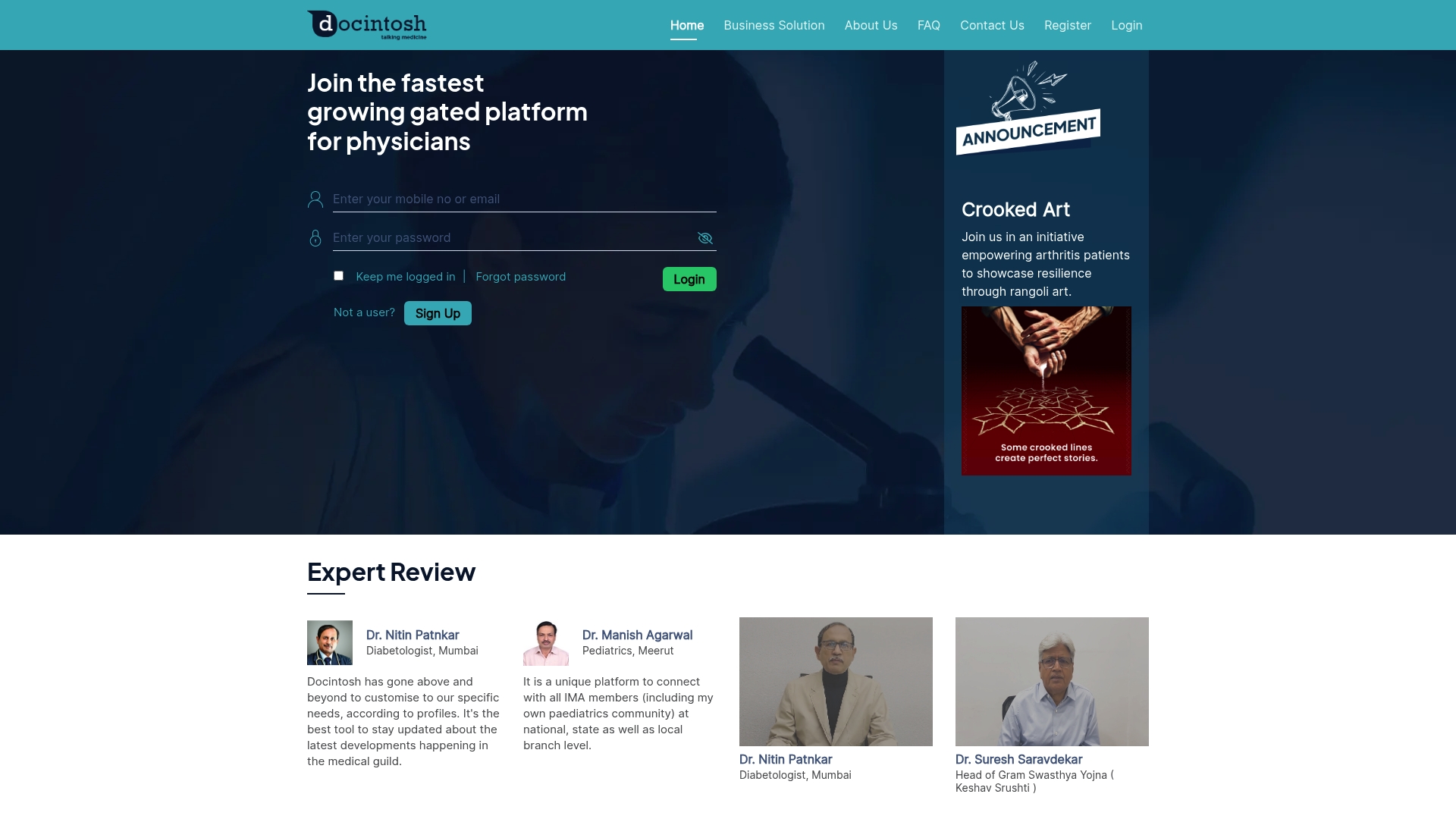
Docintosh runs contests, webinars, mentorship programs, and an internship and ambassador pipeline aimed at medical students and early-career doctors. The platform centers activity around case discussions and structured events rather than general social posting, so learning and credentialed interaction are the visible draws.
Core Features
- Medical discussion forums and communities for specialty threads, case rounds, and moderated Q&A.
- Medical case sharing and research tools that let members post anonymized cases and request peer feedback.
- Participation in medical polls and contests designed to test clinical knowledge and spark discussion.
- Webinars, lectures, and mentorship programs that pair students with practicing clinicians for guidance.
- Internship and ambassador programs for students that advertise short placements and leadership opportunities.
Key Differentiator
Docintosh concentrates event-driven professional development inside a social network built specifically for doctors and medical students. That focus on contests, live education, and mentorship makes it more programmatic than an open forum, which suits users who want scheduled interaction and credential-building opportunities.
Pros
- Specialized community: Members and threads skew toward clinical discussion and case review, reducing noise common on broader networks.
- Engaging learning formats keep members active; live quizzes and webinars create recurring reasons to return rather than one-off posts.
- Internship and ambassador programs give medical students concrete pathways to leadership and short placements inside hospitals or networks.
- Customizable profiles help users display training level, specialties, and mentor or mentee availability.
- Supports professional networking: Forums and events double as recruitment flags for institutions looking to source junior talent.
Cons
- Limited independent feedback: Third-party reviews and independent evaluations are sparse, so outside validation of activity levels and outcomes is minimal.
- The product data lists no technical integrations or advanced collaboration tools, which limits handoffs to institutional systems.
- The focus on clinicians and students means less value for allied health professionals or multidisciplinary teams seeking broader membership.
When It May Not Fit
If your goal is a multiprofessional community that includes nurses, pharmacists, administrators, and allied health staff, Docintosh's medically focused membership will feel narrow. Similarly, institutions needing verified integrations with learning management systems or EHRs will find no evidence of those connections in the product details.
Who It's For
Doctors and medical students who want a programmatic online space for cases, scheduled education, and mentorship. Hospitals and medical schools seeking a recruitment funnel for interns and ambassadors will also find the site aligned with those objectives.
Real World Use Case
A resident posts an unusual case in a specialty thread, schedules a short webinar to review imaging with peers, and connects a third-year medical student to a mentor through the platform's mentorship signup. The student then applies to an ambassador role promoted by a partner hospital.
Website: https://docintosh.com
<markdown section>Healthcare Professional Networks Comparison
Below is a comparative summary of platforms designed to connect and support healthcare professionals, focusing on their unique offerings and applications.
| Platform | Core Feature | Key Differentiator | Best For | Limitations |
|---|---|---|---|---|
| Connectedmedics | Verified profiles, specialty communities | Exclusively for healthcare professionals | Clinicians planning cross-border moves | Still in beta; features in development |
| Doximity | Secure messaging, AI-assisted tools | Physician-verified AI for clinical communication | U.S. clinicians needing secure workflows | Limited to U.S. professionals; onboarding delays |
| MedShr | Case discussions, image sharing | Privacy-centric case sharing and compliance | Specialists seeking secure peer discussions | Lacks hiring tools or broader professional networking |
| MedSynapse | AI-supported insights, continuing medical education | Embedded AI suggestions for clinical collaboration | Clinicians seeking education integration | Limited independent validation; high connectivity needs |
| Docintosh | Medical forums, mentorship programs | Event-driven professional development | Junior doctors and medical students | Narrow to medicine-specific roles; no advanced integrations |
Discover Why Connectedmedics Stands Out Among medcrack.com Alternatives
Finding a professional healthcare network that truly understands your specialty can be tough. The article highlights common challenges like irrelevant content, fragmented connections, and lack of verified profiles that many medcrack.com alternatives fail to address. Connectedmedics solves these pain points by offering verified medical profiles, a global jobs board focused solely on healthcare roles, and a rich knowledge hub with curated clinical insights created by verified experts.
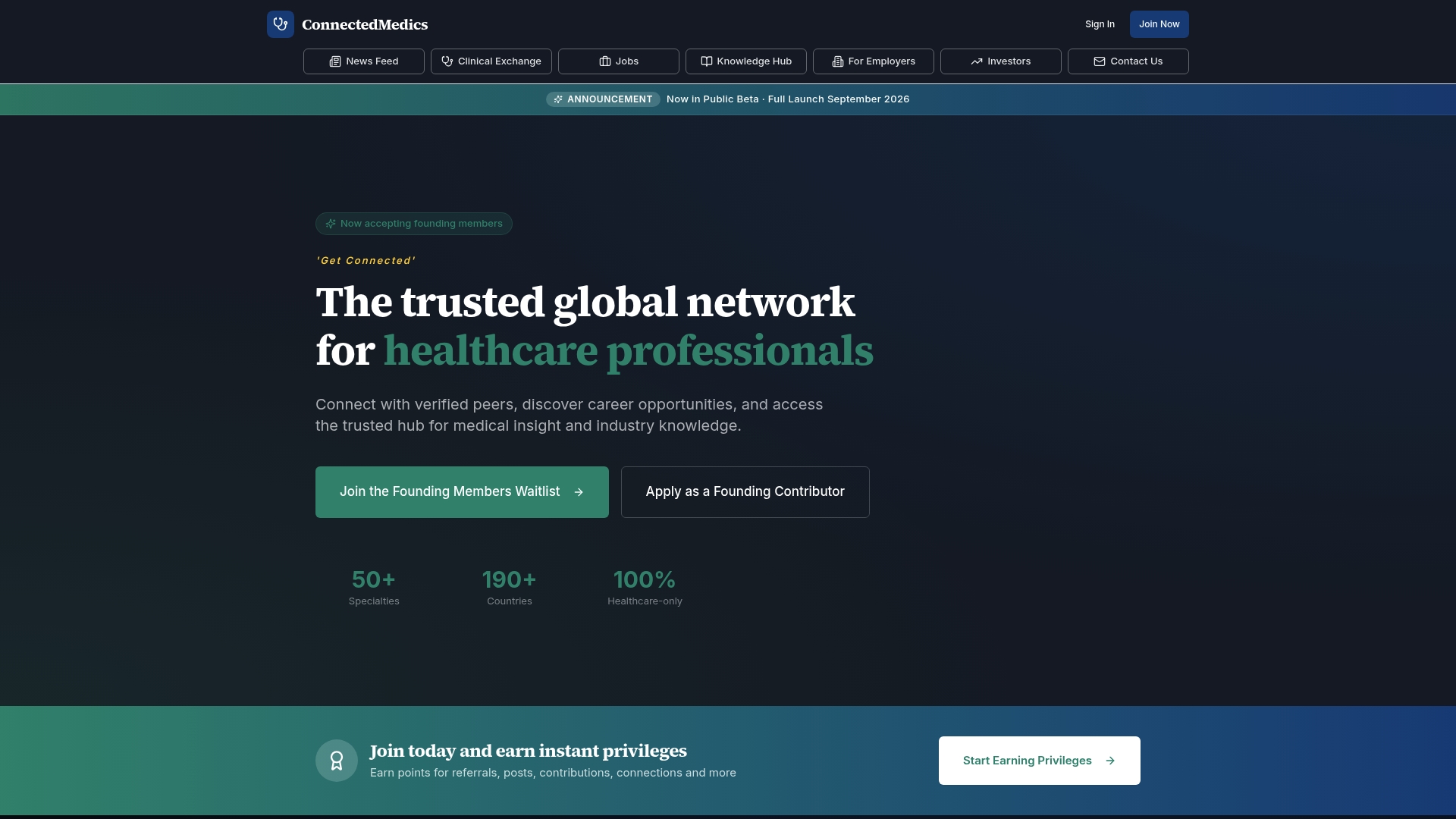
Take control of your professional network and open the door to relevant job opportunities and specialty communities. Don’t let scattered or generic platforms slow you down. Visit Connectedmedics now and apply to hundreds of verified healthcare vacancies while engaging in focused peer discussions tailored just for you.
Frequently Asked Questions
What are the benefits of Verified Professional Profiles in Connectedmedics?
Connectedmedics offers verified professional profiles that display credentials and career history, which significantly reduces the need for recruiters to manually verify candidates. This feature enhances the reliability of outreach for hiring teams, making the recruitment process more streamlined. As a result, users can expect a quicker and more efficient hiring process when connecting with potential candidates.
How does Connectedmedics compare to Doximity in terms of clinician networking?
Doximity boasts the largest verified network of healthcare professionals in the U.S., facilitating easy referrals and quick consults. On the other hand, Connectedmedics has a focused professional network that ties clinician profiles directly to specialized communities and job listings, making it better suited for those specifically looking for healthcare-related career opportunities. Users should evaluate their networking needs to choose the right platform.
Which platform offers a better community for case discussions and education: Connectedmedics or MedShr?
MedShr emphasizes peer case discussions and access to a large library of clinical cases and learning modules, focusing heavily on education. In contrast, Connectedmedics provides a tailored experience with curated insights and specialty communities tailored for healthcare roles. Clinicians seeking an educational focus may find MedShr aligns more with their goals.
Can I expect to interact with established clinicians in Connectedmedics?
Connectedmedics features specialty-led community spaces where clinicians, researchers, and industry experts can exchange cases and career tips. This setup allows users to build a targeted peer network, enhancing the chances of meaningful interactions with established professionals in the healthcare field. Clinicians looking for focused discussions should consider joining these communities.
What is the primary focus of Connectedmedics compared to other platforms?
Connectedmedics is specifically built for healthcare professionals, focusing exclusively on verified clinician profiles, specialty communities, and relevant job listings. Unlike some other platforms that mix nonclinical content, Connectedmedics aims to keep discussions and insights strictly relevant to clinical practice and healthcare careers. Users can expect a more pertinent experience tailored to their professional needs.
Is Connectedmedics accessible for non-clinical professionals?
Connectedmedics primarily serves licensed clinicians, researchers, and healthcare industry recruiters, making it less suitable for non-clinician staff or students. Those who do not have a clinical background may need to explore other communities that offer broader access to varying healthcare professionals and specialties.