
A medical careers hub is a specialized platform that consolidates job listings, credentialing support, networking tools, and industry insights for healthcare professionals. Unlike general job boards, these platforms are built around the specific demands of clinical roles, from verifying licenses to surfacing niche openings in underserved areas. Platforms like Connectedmedics and the NHSC Health Workforce Connector represent this category well. With 98% of hospital CEOs identifying workforce shortages as their top concern in 2026, the demand for purpose-built career resources has never been higher. Whether you are a nursing student choosing a specialty or a seasoned physician exploring academic roles, a dedicated healthcare job portal gives you tools that generic sites simply cannot match.
What does a medical careers hub actually do?
A medical careers hub functions as a centralized resource that serves three core needs: job discovery, credential management, and professional networking. General platforms like LinkedIn were not built with clinical compliance in mind. A specialized hub addresses that gap directly.
The job discovery function goes beyond keyword search. Niche hubs filter by specialty, HPSA designation, license type, and geographic need. That specificity matters when a hospitalist role in a rural area carries different credentialing requirements than the same title in an urban academic center.
Credential management is where specialized hubs separate themselves most clearly. Platforms that integrate with vendor credentialing systems like SEC3URE or Vendormate allow professionals to maintain compliance records in one place. Hospital privileges, DEA registration, and board certifications all have renewal cycles. A hub that tracks those cycles reduces the risk of a lapsed credential blocking a job offer.
Networking within a verified community adds a third layer of value. When profiles are credentialed and specialty-tagged, a connection request from a cardiologist to a cardiac surgery program director carries context that a generic social network cannot provide.
How do medical careers hubs support professionals at different career stages?
The value of a careers hub shifts depending on where a professional sits in their career. Students, early-career graduates, and experienced clinicians each need different tools.
For medical students, specialty selection is the defining early decision. The AMA FREIDA™ Specialty Guide recommends finalizing specialty choices after third-year core clerkships and fourth-year subinternships. A careers hub that surfaces specialty-specific mentors and residency program data accelerates that process. Mentorship connections made through verified networks give students access to guidance that is otherwise invisible to those outside a particular program.
For recent graduates, the transition window is narrow. Professionals entering high-need service areas must initiate transition guidance within 6 months of graduation to meet NHSC service requirements. A hub that flags NHSC-eligible positions and connects graduates with transition advisors removes a significant administrative burden at an already demanding career moment.
For experienced clinicians, the priority shifts to advancement and specialization. Clinical academic roles blend patient care, research, and teaching. These positions require navigating grant processes and mentorship programs that rarely appear on general job boards. A niche hub that catalogs academic appointments and research fellowships gives experienced professionals a path that mega job boards cannot map.
- Students: specialty guidance, mentorship access, residency program data
- Graduates: NHSC-eligible job listings, transition support, service timelines
- Mid-career professionals: credential updates, niche specialty boards, networking
- Senior clinicians: academic appointments, research roles, leadership positions
Pro Tip: Set up specialty-specific job alerts the moment you create your profile. Openings in competitive subspecialties fill quickly, and automated alerts on a specialized hub surface postings before they reach general boards.
What are the key industry trends shaping medical careers hubs in 2026?
Healthcare workforce data in 2026 points to structural shifts that careers hubs must address. The numbers are significant and the implications are direct.
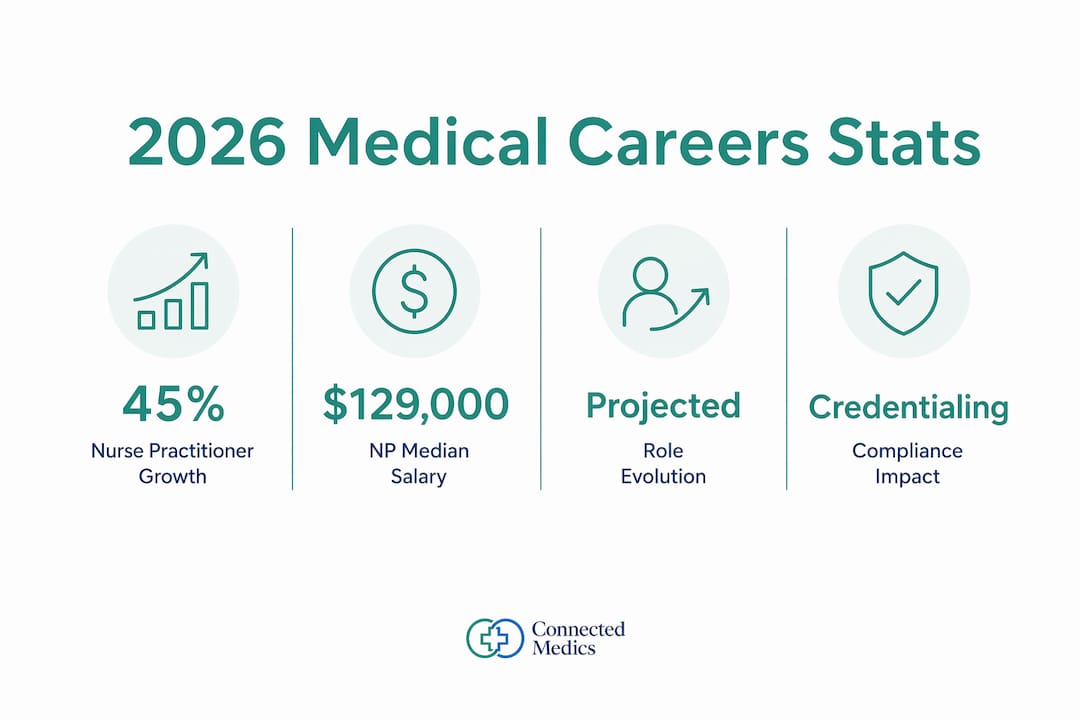
Nurse Practitioners face a 45% projected growth rate through the mid-2020s, with a median salary of $129,000. Physician Assistants follow at 27% projected growth. Registered Nurses show 6% growth, while Psychiatrists sit at 7%. These figures reflect a system under pressure, not a temporary hiring cycle.
| Role | Projected Growth | Median Salary |
|---|---|---|
| Nurse Practitioner | 45% | $129,000 |
| Physician Assistant | 27% | Not publicly listed |
| Psychiatrist | 7% | Not publicly listed |
| Registered Nurse | 6% | Not publicly listed |
The traditional linear career path is evolving in healthcare. Hybrid roles that combine clinical practice with telehealth, mental health services, or health technology are now standard offerings on specialized job boards. A careers hub that only lists inpatient hospital roles misses a growing segment of the workforce.
Credentialing compliance has become a hiring bottleneck. Professionals must maintain credentials aligned with HPSA designations and hospital protocols. Hubs that integrate compliance tracking directly into job applications reduce friction for both the professional and the hiring institution.
The shift away from mega job boards is accelerating. Specialized hubs offer targeted credentialing and job placement support that general platforms cannot replicate. Professionals in advanced clinical or academic roles increasingly rely on niche networks to find positions that match their credential level and specialty focus.
How do medical careers hubs differ from general healthcare job portals?
The core difference between a medical careers hub and a general healthcare job portal is verification. General portals accept self-reported credentials. Specialized hubs verify them.
That distinction has real consequences. A hospital credentialing team reviewing a candidate from a verified hub already has confirmation that the professional's licenses, board certifications, and compliance records are current. That reduces the time from application to offer. On a general portal, the same verification process starts from scratch.
Networking quality also differs. On a general portal, a job listing is a transaction. On a specialized hub, the same listing exists within a community of verified professionals in the same specialty. A Connectedmedics member searching for verified medical professional profiles connects with colleagues whose credentials are confirmed, not just claimed.
- General portals: broad reach, minimal credential verification, generic search filters
- Specialized hubs: verified profiles, specialty-specific filters, compliance integration, niche networking
- Academic career boards: research and teaching roles, grant navigation, mentorship programs
The gap widens for advanced roles. A Chief Medical Officer search or a clinical research fellowship requires vetting that a general job board cannot support. Specialized hubs built for medical employment opportunities at this level integrate directly with credentialing platforms and compliance systems, making them the only practical option for senior clinical hiring.
Pro Tip: When evaluating a careers hub, check whether it integrates with your state medical board's license verification system. Hubs that pull live license data save you from manually uploading documents every time you apply.
What are best practices for maximizing a medical careers hub?
Getting full value from a careers hub requires more than creating a profile and running a keyword search. The professionals who move fastest through the hiring process treat their hub profile as a living credential document.
-
Complete your profile to 100% before applying. Incomplete profiles rank lower in recruiter searches on most platforms. Include your NPI number, board certifications, DEA registration status, and any HPSA-eligible service history.
-
Set automated job alerts by specialty and region. Automated alert systems on specialized hubs surface openings before they reach general boards. A Nurse Practitioner alert filtered by state license and specialty can deliver relevant postings within hours of listing.
-
Engage with the hub's knowledge and networking features. Credentialing compliance is a hidden barrier to employment for many professionals. Hubs that publish compliance guides, renewal calendars, and specialty forums give you the context to stay ahead of those barriers.
-
Connect with mentors and specialty groups. The AMA's guidance on specialty selection emphasizes mentorship as a key factor in long-term career satisfaction. Most specialized hubs have mentorship directories. Use them early and update those connections as your career evolves.
-
Track credentialing renewal cycles proactively. Professionals who let a single credential lapse can lose a job offer at the final stage. Build renewal dates into your hub profile so the platform can flag upcoming deadlines.
The professionals who treat a careers hub as a passive job board miss most of its value. The credential tracking, networking, and compliance tools are where the real career advantage lives.
Key Takeaways
A medical careers hub delivers the most value when professionals use its credentialing, networking, and job alert features together, not as separate tools.
| Point | Details |
|---|---|
| Verification sets hubs apart | Specialized hubs verify credentials; general portals rely on self-reporting, slowing the hiring process. |
| Career stage determines tool priority | Students need specialty guidance; graduates need transition support; experienced clinicians need niche networking. |
| High-growth roles demand niche search | Nurse Practitioners face 45% projected growth, making specialty-filtered job alerts a competitive necessity. |
| Credentialing compliance is a hiring barrier | Lapsed credentials block offers; hubs that track renewal cycles reduce that risk directly. |
| Profile completeness drives recruiter visibility | A complete, verified profile ranks higher in recruiter searches and shortens time from application to offer. |
Why I think most healthcare professionals underuse these platforms
I have watched healthcare professionals at every career stage treat specialized careers hubs the same way they treat LinkedIn: post a profile, run a search, and wait. That approach wastes the most valuable features these platforms offer.
The credentialing integration is where I see the biggest gap. Most professionals upload their credentials once and forget them. Renewal cycles for DEA registration, board certifications, and state licenses run on different timelines. A hub that tracks those cycles and sends alerts is doing work that most professionals are doing manually in a spreadsheet, if they are doing it at all.
The networking layer is equally underused. A verified community of specialty-matched professionals is not just a job board. It is a referral network, a mentorship pipeline, and an early warning system for workforce trends. The professionals I have seen advance fastest in competitive specialties are the ones who treat their hub community as an active resource, not a passive directory.
The workforce data reinforces this. With healthcare workforce planning under pressure from structural shortages across nearly every specialty, the professionals who move quickly and stay credentialed will have the most options. A specialized hub, used fully, is the most direct path to that position.
— David
Connectedmedics: a global hub built for healthcare professionals
Connectedmedics is a verified global network built exclusively for healthcare professionals, with over 4,600 active vacancies across clinical, academic, and allied health roles.
The platform combines verified professional profiles, a specialty-filtered global jobs board, and a knowledge hub with clinical insights contributed by credentialed medical experts. Professionals can search roles by specialty, region, and role type without sorting through listings built for general audiences. Recruiters on the platform reach only verified healthcare professionals, which means every connection request and job match carries credential context from the start. Whether you are searching for your first clinical post or a senior academic appointment, join Connectedmedics to access a network built around the specific demands of medical careers. Founding members gain early access to the full feature set, including credentialing tools and specialty networking, through the founding member program.
FAQ
What is a medical careers hub?
A medical careers hub is a specialized platform that combines job listings, credential verification, networking, and industry resources for healthcare professionals. It differs from general job boards by focusing exclusively on clinical and medical roles with built-in compliance support.
How does a careers hub differ from a general job portal?
Specialized hubs verify professional credentials and offer specialty-specific search filters, while general portals rely on self-reported information and broad keyword search. The verification layer reduces hiring friction for both professionals and employers.
Which healthcare roles benefit most from niche job boards?
Advanced clinical roles, academic appointments, and high-growth specialties like Nurse Practitioner and Physician Assistant benefit most. These roles require credential vetting and specialty matching that general job boards cannot provide.
How do I keep my profile competitive on a medical careers hub?
Keep all credentials current, including board certifications, DEA registration, and state licenses, and set automated job alerts filtered by specialty and region. Profiles with complete, verified credentials rank higher in recruiter searches.
What is the NHSC Health Workforce Connector?
The NHSC Health Workforce Connector is a federal job search tool that lists positions in Health Professional Shortage Areas. Professionals entering NHSC-eligible roles must initiate transition guidance within 6 months of graduation to meet service requirements.