
A medical job board is an online platform built exclusively to connect healthcare professionals with employment opportunities in the medical field. Unlike general job sites, these platforms filter out irrelevant listings and focus on roles for physicians, nurses, allied health workers, and clinical specialists. Platforms like MDdocjobs, JAMA Career Center, and Connectedmedics each serve distinct segments of the healthcare workforce. For any professional navigating a physician job search or exploring nursing job opportunities, a dedicated healthcare careers platform delivers faster, more relevant results than a broad recruitment site.
What makes a medical job board different from general job sites?
A specialized medical job board offers features that generic platforms simply do not provide. The core difference is curation. Every listing targets a clinical or healthcare role, which means no sorting through marketing or finance jobs to find what matters.
Key features that set healthcare-specific platforms apart:
- Verified professional profiles. Platforms built for healthcare require credential confirmation, which builds trust between candidates and employers. Verified medical profiles reduce hiring delays by pre-validating qualifications before an interview is even scheduled.
- Direct employer contact. Hard-to-fill positions are frequently posted on niche boards that allow direct communication with hiring managers, cutting out recruiter commissions entirely.
- Transparent pricing. MDdocjobs lists physician postings at $99 for 30 days, down from $199. That pricing model reflects a deliberate effort to lower the barrier for facilities that want to hire without paying agency fees.
- Specialty-matched job alerts. The talent community feature on platforms like AdventHealth Careers lets professionals set up automated alerts in under a minute, giving early access to roles before they go public.
- Credential and license storage. Storing verified documents on a platform means one profile serves multiple applications, rather than resubmitting paperwork for every new role.
Here is a direct comparison of how specialized and general platforms differ:
| Feature | Medical Job Board | General Job Site |
|---|---|---|
| Role specificity | Healthcare roles only | All industries |
| Credential verification | Built in | Rarely available |
| Direct employer contact | Standard | Limited |
| Recruiter fee reduction | Yes | No |
| Specialty-matched alerts | Yes | Basic keyword only |
Pro Tip: Set up alerts on at least two platforms simultaneously. Listings on niche boards often disappear faster because the candidate pool is smaller and more targeted.
How to use healthcare job listings to advance your career
Using a medical careers portal effectively requires more than browsing open roles. A structured approach produces better results and faster offers.
- Build a complete, verified profile first. Credential storage on job platforms reduces hiring timelines from months to weeks by pre-validating professional history. An incomplete profile signals low engagement to recruiters and hiring managers.
- Define your search parameters before you start. Filter by specialty, location, employment type, and salary range. Broad searches on even the best platforms return noise. A hospitalist in Chicago and a traveling ER physician have very different needs, and the filters should reflect that.
- Join talent communities on every relevant platform. Joining talent communities for early role notifications is a growing trend that gives passive job seekers a real advantage. You receive alerts before a role is publicly posted, which means less competition.
- Use direct contact features. When a board allows you to message a hiring manager directly, use it. A brief, specific message referencing the role and your credentials outperforms a standard application in most cases.
- Tailor your profile to passive discovery. Specialized boards attract passive candidates by focusing exclusively on MD/DO roles. Keeping your profile updated even when you are not actively searching means recruiters find you when the right role opens.
- Track your applications in one place. Use a simple spreadsheet or a tool like Notion to log where you applied, the contact name, and the follow-up date. Most healthcare professionals skip this step and lose track of promising leads.
Pro Tip: Treat your job board profile like a living document. Update your certifications, recent publications, or new clinical skills every 90 days. Platforms with search algorithms surface recently updated profiles more often.
What types of medical job boards exist?
Not every healthcare job listings platform serves the same audience. Choosing the right type of board depends on your specialty, career stage, and geographic preference.

Niche physician and specialist boards
MDdocjobs focuses exclusively on MD and DO roles. The platform targets both active and passive physician candidates, making it useful for specialists who want to be discoverable without actively applying. The low posting fee structure also means smaller practices and rural facilities use it more often than large hospital systems, which creates access to roles that never appear on major sites.
Large-scale clinical and academic career centers
The JAMA Career Center lists over 19,000 active jobs spanning clinical and academic medicine as of mid-2026. That scale makes it the right tool for physicians seeking academic appointments, research roles, or positions at major health systems. Nature Careers serves a similar function for professionals at the intersection of clinical practice and research.
Regional and international boards
Healthjobs.co.uk has connected thousands of professionals with over 500 organizations, including NHS and private providers, since 2008. For U.S.-trained physicians considering international positions, or for international medical graduates seeking roles abroad, regional boards provide context and employer relationships that global platforms lack.
Travel, allied health, and nursing platforms
Nursing job opportunities and allied health roles often appear on platforms built specifically for contract and travel work. These boards prioritize placement speed, license portability, and pay transparency. For a registered nurse considering a 13-week travel assignment, a general job site offers little practical value compared to a platform built around that specific career model.
How to evaluate any platform
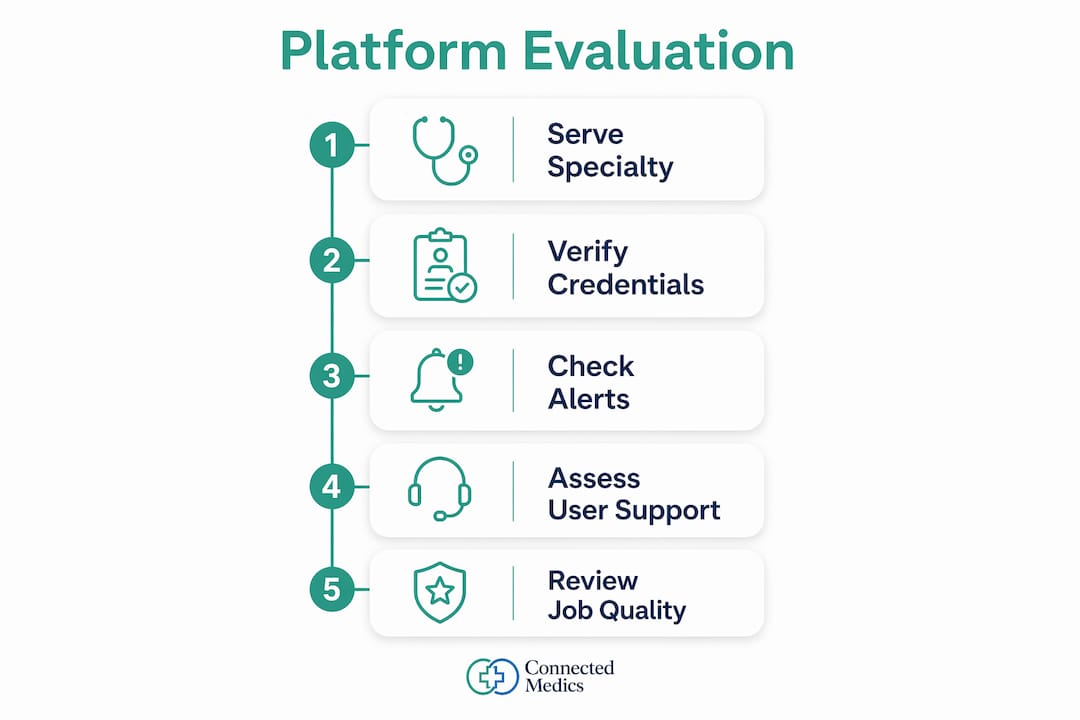
Ask three questions before committing time to a new board. Does it serve your specialty? Does it verify credentials or employer legitimacy? Does it offer direct contact or force all communication through a recruiter layer? A platform that fails two of those three criteria is not worth a full profile build.
What trends are shaping medical job boards right now?
The post-pandemic healthcare workforce has changed what professionals expect from a job search. Post-pandemic candidates now prioritize career opportunities that align with lifestyle and transparent pay over accepting any available role. That shift has pushed platforms to offer more filtering options, clearer compensation data, and lifestyle-aligned search categories.
Several specific trends are worth tracking:
- Healthcare-native credential ecosystems. Platforms like Elvetax use verified credential infrastructure to reduce recruitment friction and improve clinical fit between candidates and employers. The result is faster hiring and fewer credentialing surprises after an offer is made.
- Reduction of recruiter intermediaries. Direct communication tools on specialized boards are becoming standard, not optional. Facilities posting hard-to-fill roles want direct access to qualified candidates without paying 20–30% placement fees.
- Curated career categories. Boards now let professionals filter by work-life balance indicators, telehealth availability, and geographic flexibility. These filters reflect a workforce that treats career fit as a non-negotiable, not a bonus.
- Automated talent community alerts. The talent community model is expanding across platforms. Professionals who join these communities receive role notifications matched to their specialty and location before listings go live to the general public.
"Fragmentation in healthcare recruitment is addressed by industry-specific platforms emphasizing verified credentials and clinical fit." — Elvetax Healthcare Job Portal
The direction is clear. The best medical job websites in 2026 are moving toward verified, curated, and direct-contact models. Platforms that still rely on unverified listings and recruiter-only access are losing ground to those built around the specific needs of clinical professionals.
Key takeaways
A specialized medical job board delivers faster, more relevant results than a general job site because it combines credential verification, direct employer contact, and specialty-matched filtering in one place.
| Point | Details |
|---|---|
| Specialization matters | Niche boards reduce irrelevant listings and surface higher-quality matches for clinical roles. |
| Verified profiles speed hiring | Credential storage cuts hiring timelines from months to weeks by pre-validating professional history. |
| Direct contact reduces fees | Boards with direct employer messaging eliminate recruiter commissions on hard-to-fill positions. |
| Talent communities give early access | Joining alerts on platforms like AdventHealth Careers surfaces roles before public posting. |
| Platform type must match your role | Physicians, nurses, and allied health professionals each need different board types to find the right fit. |
Why most healthcare professionals are using the wrong boards
I have watched colleagues spend weeks on general job sites, frustrated by irrelevant listings and slow recruiter responses. The mistake is consistent. They treat a physician job search the same way they would search for any other job, and the results reflect that.
The professionals who move fastest are the ones who build complete verified profiles on two or three specialized platforms and then stop actively searching. They let the alerts and talent communities do the work. When a relevant role appears, they already have a verified profile ready and can respond within hours, not days.
The other mistake I see regularly is ignoring passive discoverability. A surgeon who updates their profile on a niche board every quarter gets found by facilities they never would have approached directly. That is how the best roles get filled. The hiring manager searches the platform, finds a strong profile, and reaches out. No application, no recruiter, no delay.
My prediction for 2026 and beyond: platforms that combine verified credentials, direct contact, and specialty-specific filtering will consolidate the market. General job sites will remain useful for administrative and support roles, but for clinical professionals, the specialized board model is already the standard. The professionals who recognize that now will have a structural advantage in every job search they run.
— David
Find your next role on Connectedmedics
Connectedmedics is a global medical careers portal built exclusively for healthcare professionals. The platform hosts over 4,600 active healthcare vacancies, verified medical professional profiles, and a knowledge hub with clinical insights contributed by practicing experts.
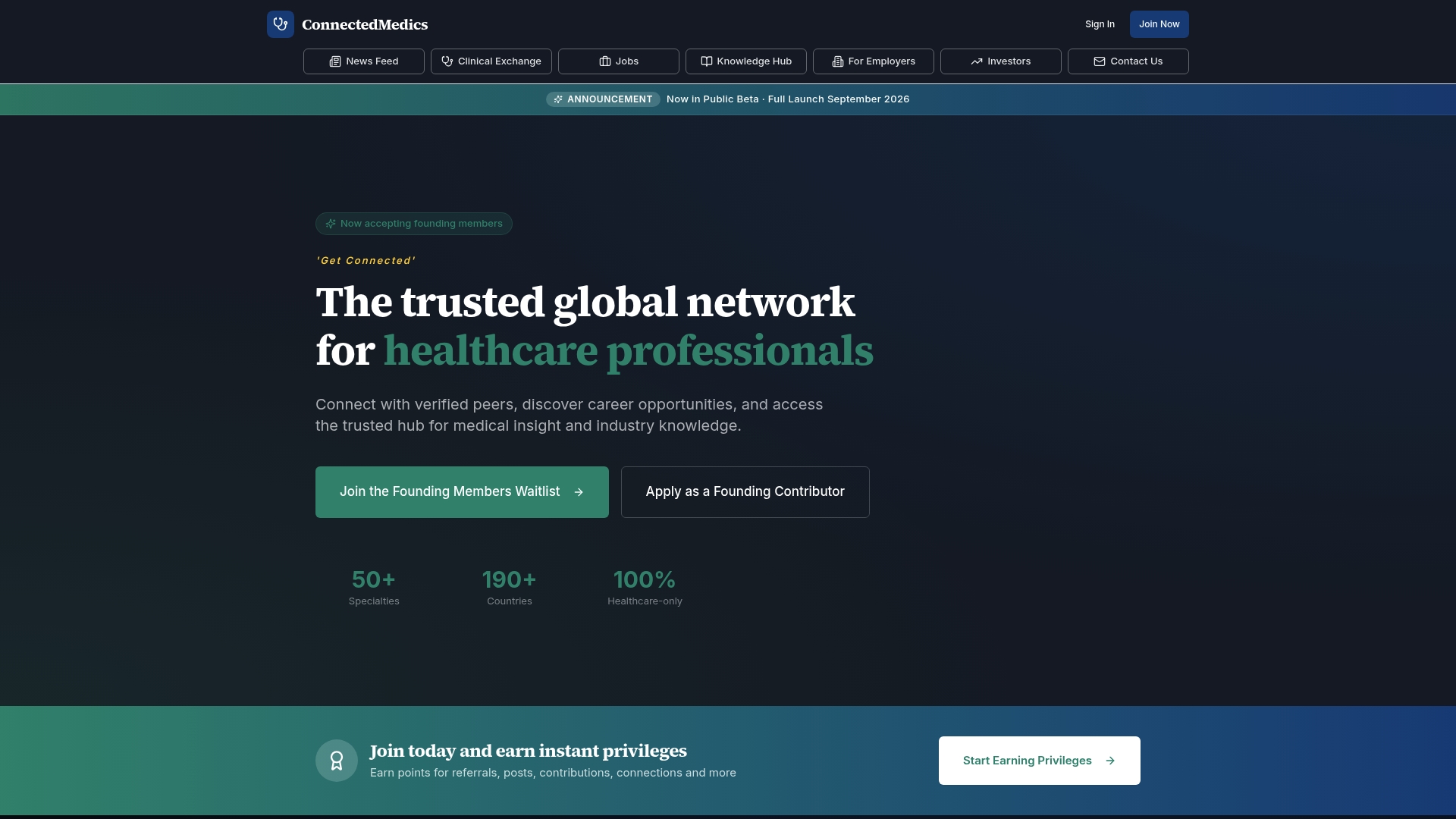
For professionals tired of sorting through irrelevant listings on generic networks, Connectedmedics delivers curated healthcare job listings matched to your specialty and location. Verified profiles mean your credentials are confirmed before an employer ever contacts you, which cuts the time between application and offer. Join the global healthcare network and access roles that match your clinical background, career goals, and preferred work setting.
FAQ
What is a medical job board?
A medical job board is an online platform that lists employment opportunities exclusively for healthcare professionals, including physicians, nurses, and allied health workers. These platforms differ from general job sites by offering credential verification, specialty filters, and direct employer contact tools.
How does a medical job board differ from LinkedIn?
Medical job boards focus entirely on healthcare roles and often include credential verification and specialty-matched alerts that LinkedIn does not provide. Platforms like Connectedmedics address the fragmentation found in generic professional networks by serving only verified medical professionals.
Are niche physician job boards worth using over large general sites?
Niche boards like MDdocjobs attract both active and passive physician candidates and allow direct contact with hiring facilities, which reduces recruiter fees and speeds up hiring. The JAMA Career Center lists over 19,000 active jobs, showing that scale and specialization can coexist on the right platform.
How do job alerts on medical platforms work?
Talent community features on platforms like AdventHealth Careers let professionals set up automated, specialty-matched alerts in under a minute. These alerts deliver role notifications before listings go public, giving early applicants a clear advantage.
Do verified profiles really speed up the hiring process?
Credential and licensing verification on job platforms reduces healthcare hiring timelines from months to weeks by pre-validating professional history. A complete verified profile means employers can move directly to interviews without waiting for document collection.