
A healthcare talent pipeline is a proactive, partnership-based system that reliably supplies qualified candidates for priority roles, built on training partnerships, structured placement agreements, and shared funding. The first action is simple: identify the one or two roles you cannot keep staffed, then call a local community college or training partner about clinical placement capacity this week. Everything below covers models, funding, metrics, and tools to move that call into a working pipeline.
TL;DR:
- Most effective pipelines combine at least two models, such as employer-education joint ventures and apprenticeships, to create sustainable local talent sources.
- Data analysis of vacancy and turnover hotspots should guide the initial role selection for pipeline development to ensure targeted impact.
- Funding should be layered from multiple sources like state grants, federal loans, and employer support to sustain programs through long cycles.
- Rapid program launch can be achieved by prioritizing certificate tracks and securing clinical placements early, even as longer degree pathways are approved.
- Verification tools, specialty job boards, and real-time dashboards streamline candidate matching and credential tracking for scalable pipeline operation.
Table of Contents
- Why Healthcare Talent Pipelines Matter Now
- What Pipeline Models and Partnerships Actually Work
- How to Design and Launch a Pipeline Program
- Funding and Policy Levers That Scale a Pipeline
- How to Measure Whether a Pipeline Is Working
- Case Examples Worth Copying
- Tools That Speed Up Pipeline Operations
- An Editorial Take on What Actually Moves the Needle
- Put Your Pipeline Candidates in Front of Verified Recruiters
- Sources
- FAQ
Why Healthcare Talent Pipelines Matter Now
Retirement is not a future problem. A significant proportion of physicians globally is already near retirement age, and the World Health Organization warns that shortages will deepen without deliberate workforce action. That gap does not close through faster hiring. It closes through supply.
Sign-on bonuses and temp staffing solve a Tuesday problem. They do nothing for the role you will still be short in three years, because the candidates simply do not exist in your region yet. Employers "cannot recruit their way out" of this shortage, according to Clasp's Healthcare Talent Outlook, which calls for data-informed, relationship-driven strategies instead of transactional hiring.
A working pipeline changes the math in three specific ways:
- It shortens time-to-hire because candidates enter with pre-verified competencies rather than starting from zero.
- It improves retention because trainees who complete a structured pathway with mentors tend to stay longer, particularly in apprenticeship models.
- It improves workforce fit because curriculum gets built around your actual vacancy data, not a generic degree track.
Hospitals are already adding digitally fluent roles and using apprenticeships to expand capacity faster than traditional degree pipelines allow, per the American Hospital Association's 2026 Workforce Scan.
What Pipeline Models and Partnerships Actually Work
Four models cover most of what functioning regional pipelines use today. Pick based on your timeline and your existing relationships with local schools.
- Employer-education joint ventures. A hospital system and a college co-design a program, share facilities, and split cost. Health systems that participate directly in curriculum design produce graduates who arrive more practice-ready, according to McKinsey's analysis of health systems and educators.
- Registered apprenticeships. Employers formally sponsor on-the-job training combined with classroom instruction. The AHA's workforce scan notes these programs build reliable, inclusive pipelines for middle-skill roles, with retention rising when mentors and career navigators are part of the design.
- K-12 health academies and dual enrollment. High schoolers earn college credit or certifications before graduation, shortening the path into entry-level clinical roles by a year or more.
- Backbone organizations and regional alliances. A neutral convener, often a workforce board or hospital association, coordinates multiple employers and schools so no single partner carries the administrative load alone.
Most durable pipelines combine at least two of these rather than betting on one.
How to Design and Launch a Pipeline Program
Start with data, not ambition. Pull vacancy and utilization reports to find where turnover and unfilled shifts concentrate. That tells you which one or two roles deserve the first pipeline, rather than trying to fix every department at once.
From there, the build follows a consistent sequence:
- Map the competencies those roles actually require and compare them against nearby program curricula, flagging gaps.
- Secure clinical placement slots and commit staff time as trainers or adjunct faculty; without this step, most partnerships stall at the signing stage.
- Design a hiring commitment, whether a guaranteed interview, a conditional offer, or a full apprenticeship contract, so candidates see a clear payoff for finishing.
- Build learner supports: a career navigator, transportation help, or a small stipend. These retain candidates who would otherwise drop out mid-program.
- Set up light governance, meaning an employer and academic representative who meet regularly to resolve scheduling conflicts.
A common failure point is timing. College curriculum changes can take years to approve, while your vacancy is now. A San Francisco Business Times report on health system and college partnerships found that certificate and community education programs can launch far faster, bridging the gap while longer degree pathways get built in parallel.
Pro Tip: Run the certificate track and the degree track at the same time, not sequentially. The certificate program produces hires in 6 to 12 months while the degree program is still working through academic approval.

Funding and Policy Levers That Scale a Pipeline
A single grant rarely sustains a multi-year program. Most working pipelines blend at least three funding sources from the start.
- State workforce demonstration programs. New York's Career Pathways Training program pairs training funding with employment commitments for Medicaid-serving providers, and similar state programs exist in other markets.
- Federal grants and service-linked loan repayment. Programs that forgive student debt in exchange for a service commitment help attract candidates to underserved specialties and regions.
- Employer financing. Tuition reimbursement and paid apprenticeship wages keep candidates enrolled who otherwise could not afford to train while unpaid.
- Blended funding. Layering a state grant with employer tuition support and a philanthropic contribution spreads risk so the program survives a single funder's budget cycle change.
Governor Hochul's announcement of $646 million to recruit and train health care workers illustrates the scale states are now willing to commit to this kind of workforce development.
How to Measure Whether a Pipeline Is Working
Agree on three to five core metrics before the pilot launches, not after. Retrofitting measurement onto a program that is already six months old is where most tracking efforts fail.
- Placement rate and time-to-fill for the priority roles you targeted.
- Retention at 6, 12, and 24 months, since early attrition data can be misleading.
- Training throughput: how many candidates entered versus completed.
- Cost-per-hire compared against your prior reactive recruiting spend.
- Geographic and demographic diversity of the candidate pool, to confirm the pipeline is not just recycling the same local talent.
One in four physicians globally is nearing retirement age, according to the WHO, which makes retention tracking at the 12 and 24 month marks especially urgent for programs replacing an aging workforce.
Data-sharing agreements between employer and school partners, built around a simple shared dashboard, tend to separate pilots that scale from pilots that quietly stall.
Case Examples Worth Copying
- A county-funded apprenticeship pipeline that paired paid on-the-job training with a local health system exceeded its enrollment target within its first cohort by combining wage support with guaranteed interviews at completion. The lesson: a hiring commitment, not just a training slot, is what pulls candidates through to the end.
- A health system and college partnership that guaranteed clinical rotation seats in exchange for curriculum input saw measurably better new-hire readiness scores, consistent with the practice-ready effect McKinsey documented in employer-education collaborations.
- A common pitfall across both: programs that skip a career navigator role see higher midprogram dropout, particularly among candidates juggling transportation or childcare barriers.
Tools That Speed Up Pipeline Operations
Running a pipeline across multiple partners means tracking candidates, credentials, and placements without losing anyone in a spreadsheet. Three tool categories cover most of what programs need:
- Verified-professional networks that confirm credentials before a candidate ever reaches an interview.
- Specialty job boards that route candidates to the exact department with the vacancy, instead of a generic listing.
- Credential tracking and placement dashboards that show partners, in real time, where each cohort member stands.
For deeper preparation, the guides on healthcare workforce planning and tracking workforce trends walk through the data-gathering steps that should happen before you sign a single partnership agreement.
An Editorial Take on What Actually Moves the Needle
Most pipeline conversations stall on planning documents. The programs that work commit something concrete early: employer-provided clinical training seats and multi-year funding for a single pilot role. Everything else, governance, dashboards, grant applications, follows once that commitment exists. Pick your role, convene your partners, and start.
— David
Put Your Pipeline Candidates in Front of Verified Recruiters
Once your pipeline is producing candidates, the bottleneck often shifts to matching them with the right open role fast enough that they do not walk to a competing system. A specialized healthcare recruitment channel helps employers connect pipeline graduates with verified clinicians and hiring managers rather than generalist job boards covering multiple industries.
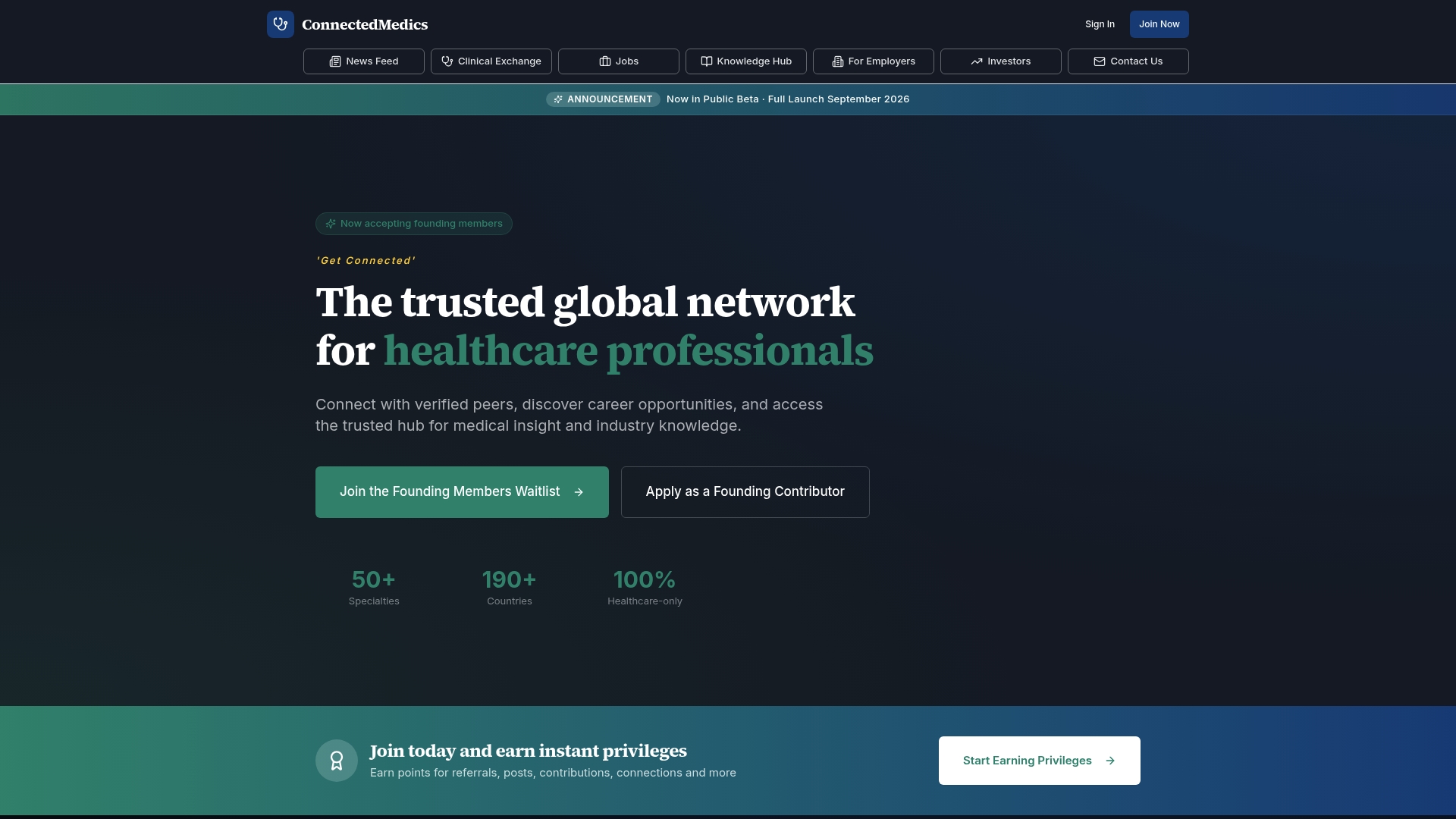
The platform's employer tools let you post pipeline-specific roles, filter by specialty, and reach a credential-checked candidate base across more than 190 countries, whether you are filling one apprenticeship graduate's role or scaling a full cohort. Programs running larger, multi-site pipelines can look at the Premium Employer tier for expanded candidate access as placement volume grows. Whatever tool you choose, match it to your program's data-sharing and privacy requirements before candidates start flowing through it. Visit the employer pages to see current plans and start posting your pipeline's first placement roles.
Sources
The WHO workforce report covers global shortage data. The AHA Workforce Scan details hospital staffing strategy shifts. McKinsey's analysis explains employer-educator collaboration models. Clasp's Talent Outlook frames the strategic case for pipelines, and New York's Career Pathways Training program offers a working state-level example.
- How health systems and educators can work to close the talent gap
- 2026 Health Care Workforce Scan (American Hospital Association)
- One in four doctors nearing retirement age as WHO warns of global health workforce gap
- Clasp Healthcare Talent Outlook | 2026 is the Year of the Talent Pipeline
- Career Pathways Training (CPT) Program (NY State)
FAQ
What Is a Talent Pipeline?
A talent pipeline is a proactive, long-term system that cultivates a steady future supply of qualified candidates through education, training, and employer partnerships, rather than waiting to react once a position opens. In healthcare, that usually means partnerships between employers and colleges paired with structured hiring commitments, similar to the model behind New York's $646 million workforce investment.
Who Is the Largest Healthcare Staffing Agency?
Staffing agency rankings shift regularly and depend on whether you measure by revenue, placements, or specialty focus, so no single agency holds a fixed, universal title. Rather than chasing a staffing agency ranking, most workforce leaders get better long-term results building a talent pipeline through direct employer-education partnerships and verified networks like Connectedmedics.
What Are the 5 Health Career Pathways?
Common frameworks group healthcare careers into five broad pathways: therapeutic services, diagnostic services, health informatics, support services, and biotechnology research. Definitions vary by state and program, so check your regional workforce board for the exact pathway structure used in your area.
What Is a Talent Pipeline in Simple Terms?
In plain terms, it means training your future employees before you need them instead of scrambling after someone quits. You partner with a school or training program, help shape what they teach, and agree in advance to hire the people who finish it.
How Long Does It Take to Build a Healthcare Talent Pipeline?
A certificate-based pipeline can start producing hires in 6 to 12 months, while degree-based pipelines tied to college curriculum approval can take considerably longer. Running both tracks at once, as noted in reporting on health system and college partnerships, lets you fill near-term vacancies while building longer-term supply.