
Precise workforce forecasting, targeted sourcing through schools and referrals, frictionless candidate experience, and retention-linked offers form the core of effective nurse recruitment strategies. The AONL workforce compendium documents a health system cutting its vacancy rate from 20.9% to 8% using exactly this combination. What follows is the operational checklist behind that kind of result.
TL;DR:
- Forecast staffing needs at the unit and shift level using vacancy data, turnover rates, census trends, and local wage benchmarks for accurate targeting.
- Prioritize sourcing channels like school partnerships for new grads and referrals or specialty associations for experienced hires to match candidate pool specifics.
- Implement transparent job postings with clear pay ranges, shift details, and authentic day-in-the-life content to ensure applicant-job fit and reduce early dropouts.
- Reduce hiring friction with mobile apply processes, rapid applicant contact within 24-48 hours, and a structured, candidate-focused interview and offer follow-up protocol.
- Track metrics such as time-to-fill, offer acceptance, and first-year retention segmented by role and unit to continuously optimize recruitment channels and strategies.
Table of Contents
- What are the highest-impact nurse recruitment strategies right now?
- How do you forecast nursing demand by unit and shift?
- Which sourcing channels and school partnerships actually fill roles?
- What should a nurse-specific job posting actually include?
- How can you reduce friction in the nursing hiring process?
- When does pay beat scheduling flexibility for nurse candidates?
- How do residency and mentorship programs reduce first-year turnover?
- Which hiring metrics show whether your nurse recruitment strategy works?
- What should you implement in the first 90 days?
- Where does a verified professional network fit into nurse hiring?
- What's the one lesson nurse leaders keep learning the hard way?
- How ConnectedMedics supports your nurse recruitment strategy
- Sources
What are the highest-impact nurse recruitment strategies right now?
Nurse leaders juggling shortages need a framework, not a wish list. Group every tactic into buckets you can staff, budget, and measure separately, because a scattershot approach wastes both recruiter hours and candidate goodwill.
Here are the priority buckets, roughly in the order they pay off:
- Workforce planning — forecast need by unit, shift, and specialty before sourcing begins.
- Channel mix and partnerships — nursing schools, referrals, specialty associations.
- Job postings and employer brand — transparent pay, honest unit description.
- Candidate experience — mobile apply, fast response, structured interviews.
- Compensation and scheduling — pay bands, self-scheduling, non-pay perks.
- Recruit-for-retention — residency programs, mentorship, preboarding contact.
- Measurement and dashboards — time-to-fill, source quality, offer acceptance.
Quick wins you can launch this week include publishing a real pay range on every posting, setting a 24-hour response service level agreement for applicants, and piloting a referral bonus in one department. Longer investments, like a formal school partnership or a residency cohort, take a full budget cycle to build but drive the retention gains that make recruiting sustainable. Templates for the forecast table and the 30/60/90-day checklist appear later in this guide.
How do you forecast nursing demand by unit and shift?
Generic headcount targets produce generic hiring. Break every staffing gap into role, unit, shift, experience level, and target start date before a single job posting goes live. A "we need eight nurses" goal tells a recruiter nothing; "we need three night-shift medical-surgical RNs with at least one year of experience by March 1" tells them exactly where to source and how to write the ad.
Build forecasts from four data inputs: current vacancy rate by unit, historical turnover by unit (not hospital-wide averages, which hide problem areas), seasonal census trends, and wage benchmarks from the Bureau of Labor Statistics to confirm your pay bands are competitive for the local market. Update this forecast monthly for high-turnover units and quarterly for stable ones.
A simple demand forecast table might look like this:
| Unit | Shift | Open positions | Experience needed | Target fill date |
|---|---|---|---|---|
| Med-Surg | Night | 3 | 1+ year | March 1 |
| ICU | Rotating | 2 | 2+ years | April |
| Labor & Delivery | Day | 1 | New grad OK | May 1 |
Translate each row directly into ATS fields and sourcing campaigns. A hospital that shifted from system-wide targets to unit-level ones typically finds its ICU vacancies need specialty association outreach while its med-surg openings respond better to new-grad pipelines, because the two roles draw from entirely different candidate pools. That distinction only becomes visible once you forecast at the unit level rather than the aggregate.
Which sourcing channels and school partnerships actually fill roles?
Not every channel works for every hire type, and treating them as interchangeable is where most recruiting budgets leak. New-grad roles fill fastest through nursing school partnerships, paid clinical placements, and residency pipelines. Experienced hires, especially in specialty units, respond better to specialty association outreach, state board networking, and referrals from nurses already on staff.
A referral program works when it rewards the right behavior. Set a bonus tied to the referred nurse completing a probationary period, not just accepting an offer, and make sure the payout schedule is visible to every current employee. A nurse ambassador program, where select staff represent the unit at school events and answer candidate questions directly, tends to produce more diverse and better-matched applicants than blind job board postings.
Formalizing a school partnership takes a few concrete steps:
- Sign a written clinical placement agreement specifying cohort size and rotation schedule.
- Set a recurring cadence (typically each semester) for student clinical rotations on your units.
- Build a conversion handoff process so a nurse manager or preceptor flags standout students to recruiting before graduation.
- Track conversion rate from clinical placement to hire as its own metric, separate from general applicant volume.
What should a nurse-specific job posting actually include?
Vague job postings generate mismatched applicants who drop out mid-process. ANA guidance recommends transparent, nurse-specific postings that state pay range, shift pattern, and orientation details up front, which improves applicant fit and reduces early turnover.
Every posting should include:
- A stated pay range, not "competitive salary."
- Shift pattern and rotation expectations, including weekend and holiday frequency.
- Typical patient assignment ratio for the unit.
- Orientation length and preceptor ratio.
- Whether the role qualifies for residency or transition-to-practice support.
Beyond the fields themselves, authentic "day-in-the-life" content beats generic mission statements. A short video or quote from a current unit nurse, sometimes called a buddy nurse, gives candidates a credible answer to "what is this job actually like" before they ever talk to a recruiter. On the technical side, structure salary fields so they're searchable, build a mobile-first application flow with resume autofill, and use specialty-specific keywords (telemetry, PACU, NICU) rather than generic "RN wanted" language that gets buried in search results.
How can you reduce friction in the nursing hiring process?
Every extra step in an application form is a candidate you lose. A mobile-first application with autofill and a limited field count keeps qualified nurses from abandoning the process halfway through, and an internal service level agreement for contacting new applicants (24 to 48 hours, no exceptions) keeps them from accepting a competing offer while you deliberate.
A practical sequence looks like this:
- Candidate applies through a mobile-friendly form with resume autofill.
- Recruiter contacts the candidate within the SLA window, no exceptions for busy weeks.
- A unit-level buddy nurse joins a call or shadow shift to answer specialty-specific questions.
- Screening uses a standardized scorecard and structured interview questions, not open-ended chat.
- For priority candidates, the hiring manager calls within 24 hours of extending an offer.
That last step matters more than it looks. The AONL compendium notes an explicit escalation protocol, hiring managers calling top candidates within a day of an offer, materially reduces rescinded acceptances. Pairing recruiters with clinical buddy nurses for day-in-the-life conversations also increases candidate trust, according to a peer-reviewed review of workforce engagement practices.
Pro Tip: Send a short welcome message and credential checklist the day an offer is signed, not the week before orientation. Silence between acceptance and start date is when most rescinded offers happen.
When does pay beat scheduling flexibility for nurse candidates?
Compensation and schedule design aren't interchangeable levers, and leading with the wrong one wastes negotiating room. Pay bands anchored to BLS wage data matter most for specialty and experienced hires who are comparing offers across systems. Scheduling flexibility or loan repayment often decides the outcome for new grads and parents balancing childcare, where a rigid shift pattern can outweigh a modest pay gap.
Scheduling interventions worth piloting on one unit before rolling out system-wide:
- Self-scheduling, where nurses select shifts within coverage guardrails.
- Split shifts for units with predictable peak census hours.
- Cohort scheduling that groups new hires together for their first several months.
Non-pay supports you can stand up quickly without a full benefits overhaul include tuition assistance tied to specialty certification, childcare subsidies, and access to mental health resources through an employee assistance program. None of these require a system-wide policy change to test on a single unit first.
How do residency and mentorship programs reduce first-year turnover?
Recruitment that stops at the offer letter leaves retention to chance. Advertise the transition-to-practice support a candidate will actually get, and you change who applies and who stays.
Strong residency programs share a few structural traits: a defined length (typically six to twelve months), manageable cohort size, and a clear preceptor ratio so no single preceptor is stretched across too many new hires. Programs accredited through the ANCC Practice Transition Accreditation Program signal a level of rigor that resonates with new grads comparing offers.
- Peer-cohort models, where new hires start together and meet regularly, build belonging faster than one-on-one preceptorships alone.
- Structured interviews, clinical placements, and transition programs are named as evidence-based retention drivers in the THA recruitment and retention toolkit.
- Mention the residency structure, cohort size, and mentorship model directly in job postings and school partnership materials, not just in onboarding paperwork.
Which hiring metrics show whether your nurse recruitment strategy works?
You can't fix a bottleneck you haven't measured. A minimum viable dashboard tracks time-to-fill by role and unit, source-to-hire quality (not just application volume), offer acceptance rate, first-year retention, and where in the process candidates drop off.
- Time-to-fill by unit and specialty flags where sourcing or interview delays are costing you candidates.
- Source quality, meaning which channels produce hires who stay past year one, matters more than raw applicant counts, a distinction one practitioner analysis of recruitment channels emphasizes directly.
- Offer acceptance rate flags compensation or process problems before they show up as vacancies.
- First-year retention connects recruiting decisions to actual staffing stability.
Segment every metric by specialty, shift, and location rather than reporting a single hospital-wide number, and review the dashboard monthly with both talent acquisition and unit nurse leaders in the room. The system that cut its vacancy rate from 20.9% to 8%, cited earlier from the AONL compendium, got there by tracking exactly this kind of segmented data and adjusting channel investment based on what the numbers showed, not on which channel felt most active.
What should you implement in the first 90 days?
A prioritized rollout beats an all-at-once overhaul, because your team can only absorb so much process change at a time.
- Days 1 to 30: Define pay bands using current BLS benchmarks, set a response SLA for new applicants, and pilot a referral incentive on one unit.
- Days 31 to 60: Launch a school partnership pilot with a defined clinical placement cadence, and configure your ATS for mobile apply and candidate staging.
- Days 61 to 90: Start a residency cohort, build a recruitment dashboard tracking time-to-fill and offer acceptance, and set a monthly review rhythm with unit leaders.
Assign an owner to each item before day one. A checklist with no named owner tends to stall by week three.
Where does a verified professional network fit into nurse hiring?
A specialty networking platform closes gaps a generic ATS can't reach on its own. ConnectedMedics offers verified clinician profiles, a jobs board with specialty-specific filters, and AI-assisted matching that surfaces candidates by unit type rather than generic keyword search.
For a health system already running school partnerships and an ATS, the platform functions as an additional sourcing channel for experienced and specialty hires, particularly nurses who are passively browsing rather than actively applying elsewhere. Verified profiles reduce the credential-screening burden on recruiters, since identity and licensure checks happen before a candidate ever reaches your inbox.
What's the one lesson nurse leaders keep learning the hard way?
Most vacancy problems aren't sourcing problems. They're contact problems. A nurse who accepts an offer and hears nothing for three weeks before orientation is a nurse still checking other job boards, and that silence undoes weeks of good recruiting work in a single unanswered message.
Pick one metric today, either time-to-fill or offer acceptance rate, and track it for 90 days before adding a second. Leaders who try to fix everything at once usually end up measuring nothing well.
— David
How ConnectedMedics supports your nurse recruitment strategy
Job boards flood you with unqualified applicants. Staffing agencies charge per placement and disappear once the contract ends. ConnectedMedics gives you direct access to verified clinicians, screened before they ever apply, so your recruiters spend time interviewing instead of credential-checking.
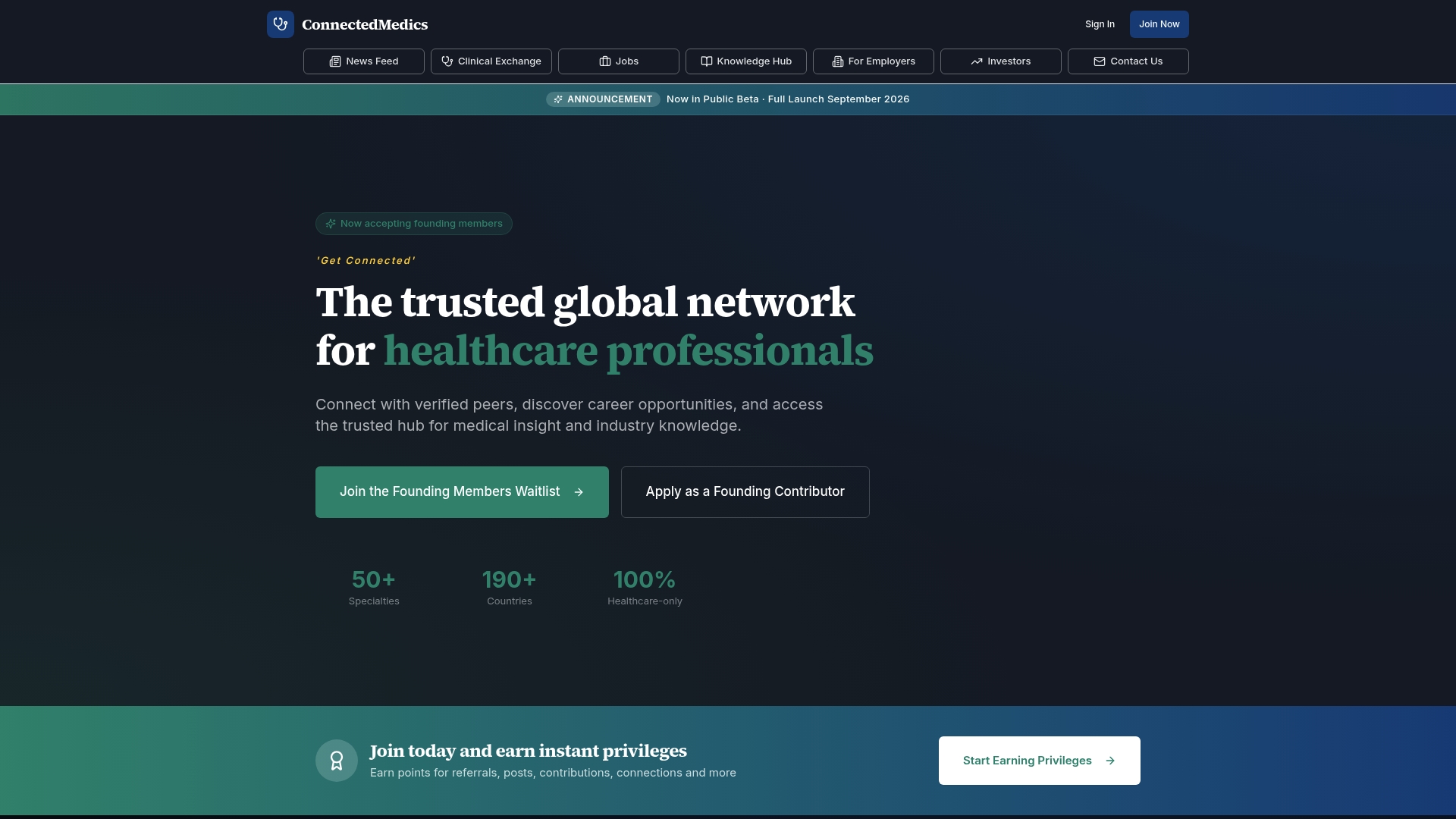
The platform gives employers specialty-specific filters, AI-assisted candidate matching, and a jobs board built exclusively for healthcare roles. It features a recruiter-facing dashboard that puts control directly in your hands. It works alongside your existing ATS and school partnerships rather than replacing them, filling the specialty and passive-candidate gap those channels tend to miss. If your ICU or specialty units have sat open for months, post one role as a pilot and compare the candidate quality against your current channels before committing further.
Sources
- Attracting and Recruiting Nursing Talent in a Competitive Market | AONL workforce compendium
- Recruitment and Retention Toolkit for Registered Nurses in Acute Care Settings | THA
- Peer-reviewed study on workforce/recruitment practices (PMC)
- Registered nurses | Occupational Outlook Handbook | BLS