
Budget $300 to $1,000 for a single flat-fee posting on a specialty healthcare board, $500 to $2,500 or more for a 30-day sponsored campaign at healthcare click prices, and $299 to $700 per job on a multi-job subscription plan. Physician roles and hard-to-fill specialties push toward the top of every range. Check the pricing-at-a-glance table below, then compare that sticker price against ConnectedMedics before committing a budget.
TL;DR:
- Healthcare job postings cost between $299 and $1,025 on specialty boards, with higher prices for physician or shortage-role listings.
- CPC campaigns often reach $1.20 to over $5.00 per click, requiring careful budget management for competitive roles.
- The true cost of filling a clinical role typically ranges from $5,000 to over $12,000 due to screening, licensure, and overtime expenses.
- Using multiple pricing models simultaneously can optimize visibility and control spend, especially for hard-to-fill or urgent roles.
- ConnectedMedics offers verified, specialty-filtered candidate profiles, reducing wasted spend compared to general boards and lowering cost per hire.
Table of Contents
- What Does a Healthcare Job Posting Cost, at a Glance?
- How Do Healthcare Job Posting Pricing Models Actually Work?
- What Do Postings Cost by Role and Board Type?
- What Hidden Costs Push the True Cost-to-Fill Higher?
- How Do You Forecast Total Hiring Spend?
- What Should You Ask Before You Buy a Posting?
- Why ConnectedMedics Cuts Wasted Spend on Healthcare Postings
- A Recruiter's Take on Buying Postings vs. Managed Hiring
- Sources
What Does a Healthcare Job Posting Cost, at a Glance?
Four pricing models cover almost every option on the market: flat fee, subscription/multi-job plans, cost-per-click (CPC) or sponsored, and pay-per-application or resume-database access. Each one shifts the cost and the risk differently, and picking the wrong one for your urgency level is the fastest way to overspend.
A flat fee buys a fixed listing for a set number of days, typically 30 to 60, with no guarantee on reach. A subscription bundles multiple job slots into a monthly rate, which pays off once you're hiring more than two or three roles at a time. CPC and sponsored placements charge per click, so cost scales directly with how competitive your role and geography are. Pay-per-application models charge only when a candidate actually applies or when you unlock a resume from a database, shifting risk toward the platform rather than the employer.
| Pricing model | Typical 30-day cost | Best for |
|---|---|---|
| Flat fee (healthcare-specific board) | $299–$1,025 per posting | Single vacancies, specialty or society boards |
| Subscription / multi-job plan | $299–$700 per job, per month | High-volume hiring, multiple open roles |
| CPC / sponsored | $150–$2,500+ depending on bids | Urgent vacancies needing faster visibility |
| Pay-per-application / resume credits | Varies by platform, billed per unlock | Low-volume hiring, passive sourcing |
A few things worth flagging before you pick a lane:
- Specialized healthcare boards and society listings commonly run $299 to $1,025 per posting, with featured or premium placement priced above that baseline.
- General job boards often let you post for free but charge for sponsored boosts and subscription upgrades that start in the low hundreds per month.
- CPC campaigns for competitive healthcare roles frequently land between $1.20 and $5.00 or more per click, so daily budget caps matter more than the listed "starting" price.
How Do Healthcare Job Posting Pricing Models Actually Work?
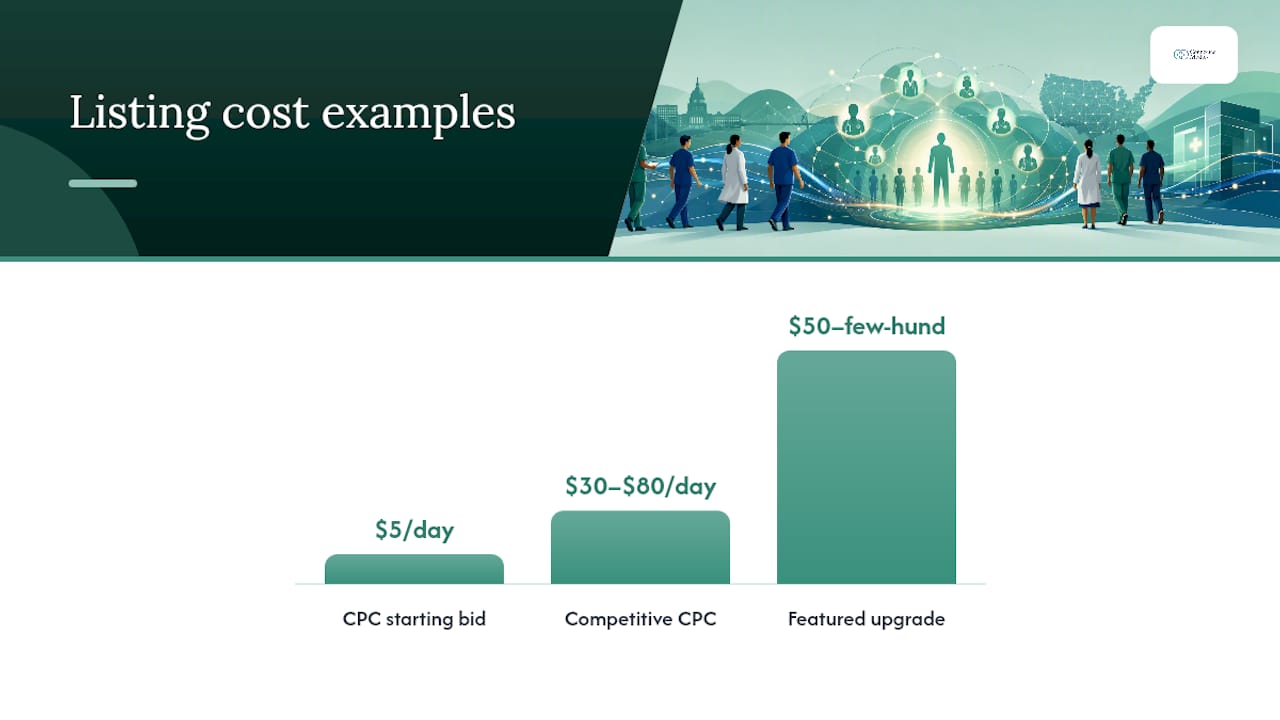
Flat fee and featured upgrades buy predictability. You pay once, the listing runs for a fixed window, and the price doesn't move no matter how many people see it. The tradeoff is control: you can't throttle spend toward a hotter market or pull back if applications are weak. Featured upgrades, which push your listing above organic results, typically add anywhere from $50 to a few hundred dollars on top of the base fee.
CPC and sponsored placements work like a live auction. You set a daily budget, bid against other employers for the same candidate pool, and pay only when someone clicks. Healthcare CPCs run higher than most industries because demand for clinical talent consistently outstrips supply in shortage specialties. A $5-a-day starting bid rarely moves a physician search; competitive roles often need $30 to $80 a day sustained over several weeks to generate real volume.
Subscriptions and multi-job plans make sense once you're managing more than a couple of open reqs. The per-job cost drops as volume rises, and most plans include some reporting dashboard for applicant tracking.
Pay-per-application and resume database access shift cost to outcomes. You're not paying for eyeballs, you're paying for a submitted application or an unlocked candidate profile, which can lower waste for low-volume hiring but rarely scales well for shortage specialties.
- Flat fee: predictable cost, low targeting control.
- CPC/sponsored: high control, variable and often higher total spend.
- Subscription: best cost-per-job at volume, wasted spend if hiring slows.
- Pay-per-application: low risk per unit, weak fit for urgent or niche roles.
Pro Tip: Run CPC and flat-fee postings simultaneously for a hard-to-fill role. The flat fee gives you baseline visibility while the CPC campaign lets you throttle spend up the moment the applicant pool gets thin.
What Do Postings Cost by Role and Board Type?
Board type and role seniority move healthcare job posting cost more than almost any other variable. A staff RN listing on a general board behaves nothing like a cardiothoracic surgeon listing on a specialty society site, and budgeting the two the same way guarantees you'll overspend on one and underfund the other.
General job boards (sponsored) cost the least per posting but deliver the least targeted pool. Expect $0 to $50 for a basic 30-day listing, with sponsored boosts pushing total spend to $150 to $600 depending on competition in your metro area.
Healthcare-specific boards sit in the middle. A 30-day flat-fee listing for an RN or allied health role typically runs $299 to $600. Add a featured upgrade and you're looking at $600 to $900.
Specialty society and physician-focused boards carry the highest sticker price, and for good reason: the applicant pool is smaller and far more qualified. Physician postings on society boards commonly land between $600 and $1,025, with priority or "featured employer" upgrades adding another $200 to $400 on top.
Specialized boards charge a premium, but they routinely deliver higher-qualified applicants per posting, which can actually lower your effective cost per hire for a niche clinical role compared to a cheaper, less-targeted listing.
A few benchmarks worth keeping in your back pocket:
- RN and allied health CPC campaigns generally run $1.20 to $2.50 per click.
- Nurse practitioner and physician assistant roles often push CPCs to $2.50 to $4.00.
- Physician and specialist CPCs frequently exceed $4.00 to $5.00+ per click in shortage markets.
Professional and state medical society resources, including the Massachusetts Medical Society, can offer local benchmarking for physician and specialist compensation and recruiting norms if you're trying to sanity-check a regional bid.
What Hidden Costs Push the True Cost-to-Fill Higher?
The invoice from a job board is rarely the real number. The actual cost of a hire is defined far more by how long the role stays open and how much internal staff time gets burned chasing it than by the posting fee itself.
Here's what stacks on top of a single listing:
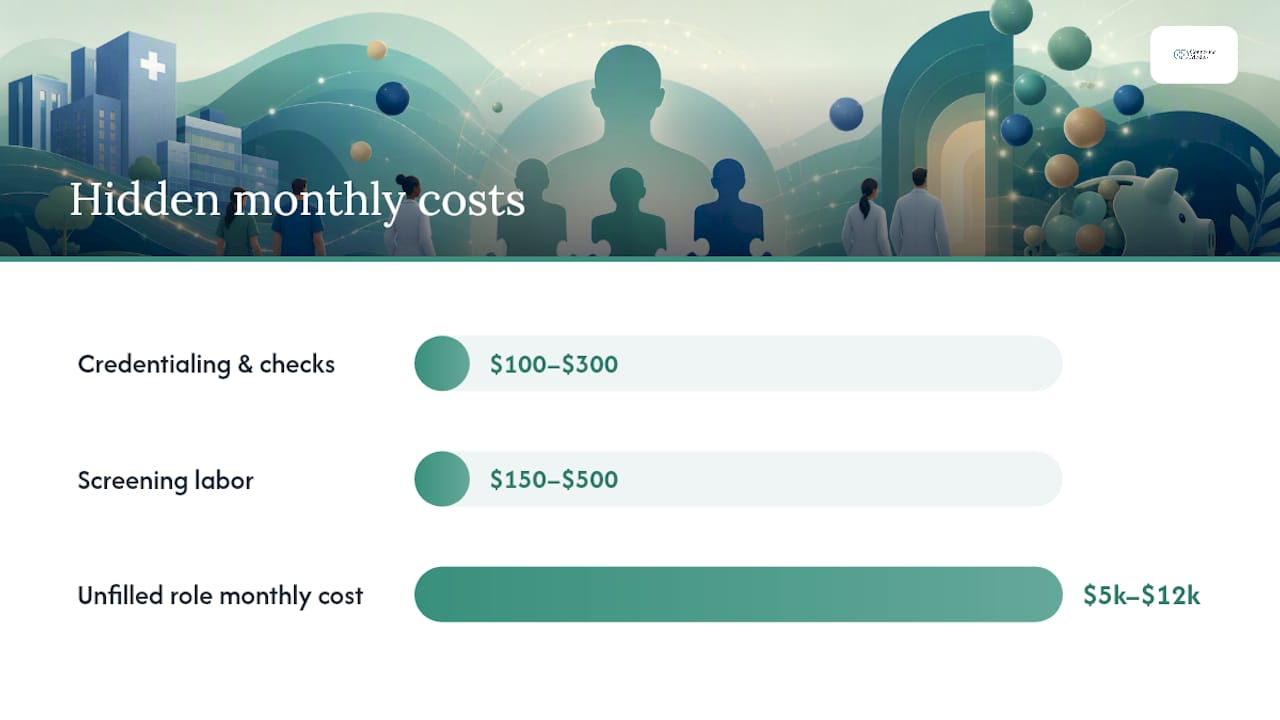
- Credentialing and licensure verification. Primary-source verification, background checks, and license confirmation typically run $100 to $300 per candidate.
- Screening labor. A recruiter or hiring manager spending 5 to 10 hours reviewing resumes and conducting phone screens, at a blended internal rate of $30 to $50 an hour, adds $150 to $500 per candidate cycle.
- Reposting. A role that doesn't fill in 30 days often gets reposted, which can double or triple the original posting spend before a hire ever happens.
- Overtime and coverage. Existing staff covering an open shift routinely costs 1.5x base pay, and that adds up fast over a multi-month vacancy.
- Agency or locum backfill. Bringing in temporary or contract coverage while a permanent role stays open can cost multiples of what a direct hire would have cost.
Add it up and a single unfilled clinical role commonly costs $5,000 to $12,000 a month once posting, overtime, and lost-capacity costs are combined. That's the number that should actually drive your budgeting decisions, not the sticker price on the job board.
How Do You Forecast Total Hiring Spend?
Two quick scenarios show how differently this plays out by role:
- Med/surg RN, moderate urgency. $25/day CPC over 4 weeks ($700), one repost at $400, 6 hours of screening at $40/hour ($240). Total: roughly $1,340 before contingency.
- Specialty physician, high urgency. $60/day CPC over 8 weeks ($3,360), a $900 society board listing, 15 hours of screening and credentialing coordination at $45/hour ($675). Total: roughly $4,935 before contingency, before factoring in overtime coverage.
Once a specialty search stretches past 60 to 90 days with no viable candidates, it's usually cheaper to shift part of that budget toward an agency or locum arrangement rather than keep inflating CPC bids on a role the market simply isn't going to fill quickly. Tools that cut down screening hours, like AI-assisted resume review, can trim that labor line meaningfully over a multi-month search.
Bid inflation from competing employers is the single most common reason healthcare recruiters blow through a planned posting budget.*
What Should You Ask Before You Buy a Posting?
Before committing budget to any platform, get straight answers on reach, targeting, and reporting, or you're buying a black box.
Ask the vendor directly:
- What's the average CPC for this specific role and zip code, not just the platform's national average?
- What reporting do I get on applicant conversion, not just impressions or clicks?
- Which distribution partners does this listing actually syndicate to?
- Do I get resume database access, and is it included or billed separately?
Selection rules that keep spend proportional to urgency:
- Choose flat fee for a single, non-urgent vacancy with a predictable applicant pool.
- Choose sponsored/CPC when time-to-fill pressure justifies variable spend.
- Choose a subscription once you're managing three or more concurrent openings.
Walk away from any platform that can't show conversion data beyond raw views, has a vague or unverifiable audience claim, or has no refund or credit policy for a listing that underperforms.
Why ConnectedMedics Cuts Wasted Spend on Healthcare Postings
ConnectedMedics is a direct alternative to generic job boards for employers who are tired of paying healthcare CPC prices for a mostly non-clinical applicant pool. Because every profile on the platform is verified and specialty-filtered, your listing reaches clinicians already sorted by credential and specialty instead of a general audience that has to be screened down after the fact.
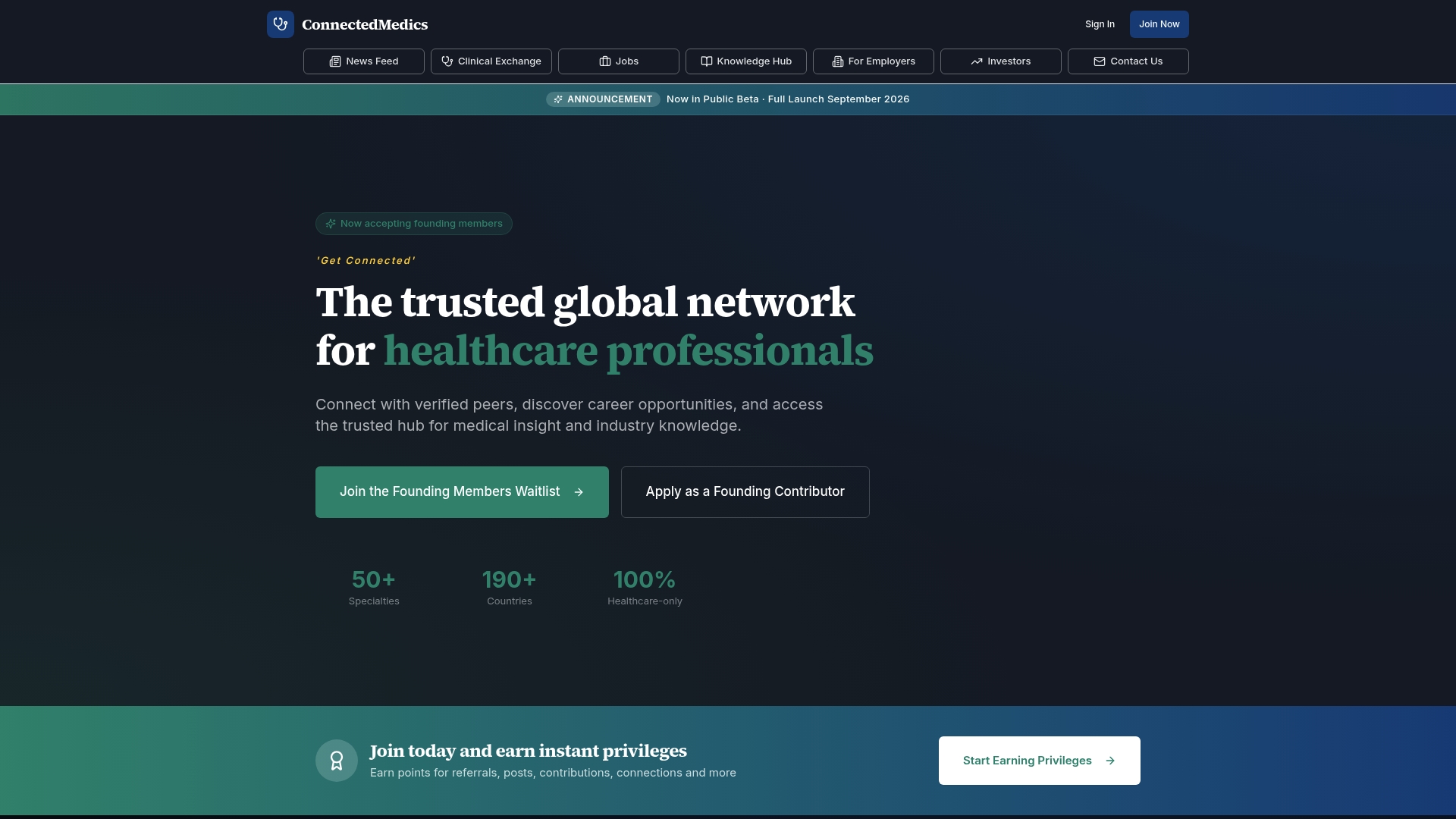
That targeting matters most for the exact roles that cost the most to advertise elsewhere. A physician or specialist search that would otherwise run $600 to $1,025 on a generic specialty board, plus $4 to $5 CPCs to reach qualified clicks, benefits from a jobs board already built around verified healthcare professionals. Less wasted spend on unqualified applicants translates into a lower effective cost-to-fill, even when the sticker price per posting looks comparable. The platform's knowledge hub also gives employers visibility into clinical trends and workforce data most general boards never surface.
If you're budgeting a specialty search this quarter, start with ConnectedMedics for recruiters to see current vacancy volume and posting options, or go straight to the employer page to compare it against whatever you're paying now.
A Recruiter's Take on Buying Postings vs. Managed Hiring
Buying postings makes sense as long as your internal team has the bandwidth to screen, follow up, and track conversion. The moment a search passes 60 days with no serious candidates, that math flips. You're no longer paying for a listing, you're paying overtime and lost capacity while a recruiter keeps refreshing a dashboard that isn't converting.
Picture a mid-size hospital system running a med/surg RN search on a general board for six weeks with minimal traction, then moving the same req to a specialty-filtered platform and filling it within three. The posting cost barely changed. What changed was who saw the listing.
My advice: run a 30-day sponsored test with a hard daily cap, track applicant-to-hire conversion, not just clicks, and only escalate to agency or locum spend once you've got real data showing the direct-posting route isn't converting.
— David
Job postings and related recruiting costs are generally treated as ordinary business expenses, though employers should confirm exact classification with their tax adviser before assuming full deductibility. For healthcare systems building out a broader talent pipeline beyond direct postings, resources like Pounds Health Insurance's guide to supplemental healthcare careers can also help map alternative sourcing channels worth budgeting for alongside standard job board spend.
Sources
- What Does It Cost to Post a Job on a Job Board? | DISHER Talent Solutions
- The Real Cost of a Job Advertisement: Platform Pricing and Hidden Hiring Costs | WorkRocket
- How Much Does It Cost To Post A Job On Indeed In 2026