
Effective channels to advertise to healthcare professionals include physician-only networks, medical journals and endemic publications, conference-based education, and coordinated sales rep plus digital sequences. These win because they combine identity-verified reach with clinical credibility and fit into a physician's actual workflow. Pick your mix based on the specialty, role, and specific behavior you're trying to change, not a generic media plan.
TL;DR:
- Physician-only networks and CME sponsorships are the most credible channels, as they verify clinician identities and align with clinical workflows.
- Content that emphasizes peer-reviewed evidence, concise formats, and immediate clinical relevance is most likely to capture physicians' attention.
- Advertising must adhere to fair balance rules by pairing benefit claims with clearly legible safety information, using compliant formats and review processes.
- ROI measurement should focus on engagement metrics for awareness channels and on meetings, prescriptions, or samples for high-impact outreach, with integrated attribution models.
- Verified physician targeting platforms like Connectedmedics ensure campaigns reach actual licensed healthcare professionals and allow measurable, specialty-specific pilot tests.
Table of Contents
- Which Channels Actually Reach Healthcare Professionals?
- What Content Formats Earn Physician Attention?
- What Compliance Rules Apply to HCP-Targeted Ads?
- How Do You Measure ROI on HCP Campaigns?
- What Does the Research Say About Reaching Physicians?
- Why Integration Beats Isolated Campaigns
- Reach Verified Clinicians Without Guessing at Audience Match
- Sources
- FAQ
Which Channels Actually Reach Healthcare Professionals?
Different channels solve different problems. Matching the channel to the goal, rather than defaulting to whatever budget is easiest to spend, is what separates campaigns that move prescribing behavior from ones that just generate impressions.
- Medical journals and endemic publications work best for evidence-led positioning. A physician reading a specialty journal is already in a clinical mindset, which makes peer-reviewed context land harder than a banner ad ever could.
- Physician-only networks and verified platforms matter when you need identity-resolved impressions, meaning you know the audience is actually licensed clinicians, not a marketer's best guess based on browsing behavior. Medical forums for doctors show where these professional communities already gather and discuss cases.
- Conferences, CME, and speaker programs concentrate attention during adoption moments, when a clinician is actively evaluating a new therapy or device.
- Sales rep detailing and peer-to-peer programs still produce the highest impact on immediate prescribing decisions, especially when paired with digital touchpoints that reinforce the message between visits, according to Improvado's tactics analysis.
- Email and opt-in newsletters deliver strong ROI for nurture campaigns, but only when the list is genuinely opt-in and the content stays clinical rather than promotional.
- Programmatic NPI and specialty targeting scales reach efficiently, though match rates vary by vendor. Ask for transparency on how National Provider Identifier data gets matched and whether suppression lists exist before you commit spend.
Industry guidance consistently points to physician-only networks and CME sponsorships as core channels, precisely because they pair verification with clinical credibility, something generic professional networks or broad programmatic buys can't replicate.
What Content Formats Earn Physician Attention?
Physicians see a lot of patients and read almost nothing that isn't directly useful. A survey on physician content preferences found that 76% cite time constraints as their primary challenge when consuming professional content, and 82% identify peer-reviewed articles as the most influential resource for treatment decisions. Build for that reality, not around it.
- Prioritize peer-reviewed evidence over brand messaging. Clinical summaries, not sales copy, are what get read and shared.
- Use short formats that fit between patient visits. Two-minute summaries, infographics, and clinical decision flowcharts outperform anything requiring more than a few minutes.
- Lead with clinical relevance in the first lines. Name the specialty, the care setting, and the exact workflow problem before anything else. A hospitalist and a primary care physician don't share the same friction points, so don't write to them identically.
- Prefer peer voice over brand voice. Content authored or reviewed by a recognized clinician in the field carries more weight than the same claim from a marketing team, and small asks (a one-question survey, a 10-minute call) convert far better than long-form requests.
Pro Tip: Test your headline on a clinician before launch. If they can't tell within five seconds whether it applies to their specialty and setting, rewrite it.
What Compliance Rules Apply to HCP-Targeted Ads?
Fair balance means risk information has to appear with comparable prominence and readability to any benefit claim you're making. Regulators don't grade each sentence in isolation. They assess the net impression the entire ad creates, so a bold claim paired with a barely legible risk footnote fails even if every individual line is technically accurate.
Build these checks into your workflow before creative goes live:
- If an ad unit is too small to carry the Important Safety Information, change the format or trim the claim, not the safety language.
- Route every asset through medical, legal, and regulatory review with a documented audit trail, not an informal email thread.
- Maintain pre-approved language libraries by channel so compliance is built into templates rather than retrofitted after the fact.
- Treat any health-related targeting signal, including pixel data tied to conditions or prescriptions, as sensitive data requiring extra safeguards.
Physicians already see an average patient volume that leaves little room for distraction, based on industry data on patient visit frequency, which is exactly why compliant, concise formats matter more in this category than almost any other advertising vertical.
How Do You Measure ROI on HCP Campaigns?
Set KPIs that match the channel's actual job. Content and awareness channels should be judged on engagement and downloads. High-touch channels like rep visits and conferences should be judged on meetings booked, samples requested, and eventual prescription or referral signals.
- Implement closed-loop measurement that connects CRM data, rep activity logs, event attendance, and content engagement into one view.
- Use a weighted multi-touch attribution model that credits both educational content and rep interactions, since HCP purchase decisions rarely trace to a single touchpoint.
- Allocate a larger share of budget to high-precision channels during active adoption windows, when a specialty is actively evaluating a new option.
- Reserve a separate portion of budget for long-term education that builds trust before there's any product ask, since that groundwork pays off across future launches.
Getting attribution right here is harder than in consumer marketing because the sales cycle often runs through both digital nurture and human relationships simultaneously.
What Does the Research Say About Reaching Physicians?
Physician-targeted promotion consistently outperforms consumer-facing advertising. A study comparing physician-focused tactics against direct-to-consumer campaigns found that detailing, clinical samples, and journal advertising produce stronger effects on new prescriptions, including spillover effects on competing brands in the same class.
That finding, drawn from a comparison of physician and marketer attitudes, should reframe how most teams brief their agencies. Platforms built specifically for verified clinician reach exist precisely because generic ad networks can't guarantee the audience is actually licensed practitioners. Start narrow: pick one specialty, run a brief pilot pairing a placement with rep follow-up, and measure meetings and downloads before scaling spend.

Why Integration Beats Isolated Campaigns
Most HCP advertising fails not because the creative is weak, but because it treats clinicians as a media audience instead of collaborators in the content itself. The strongest programs invest in evidence-led assets from the start, build compliance into creative templates rather than bolting it on at the end, and coordinate channels instead of running them in isolation. HCP outreach performs better as an integrated operating model, where rep conversations, journal placements, and digital nurture reinforce one message, than as a series of disconnected campaigns competing for the same physician's attention.
— David
Reach Verified Clinicians Without Guessing at Audience Match
Connectedmedics gives marketers something generic ad platforms can't: a network built entirely from verified healthcare professionals, with specialty-level targeting instead of inferred interest categories.
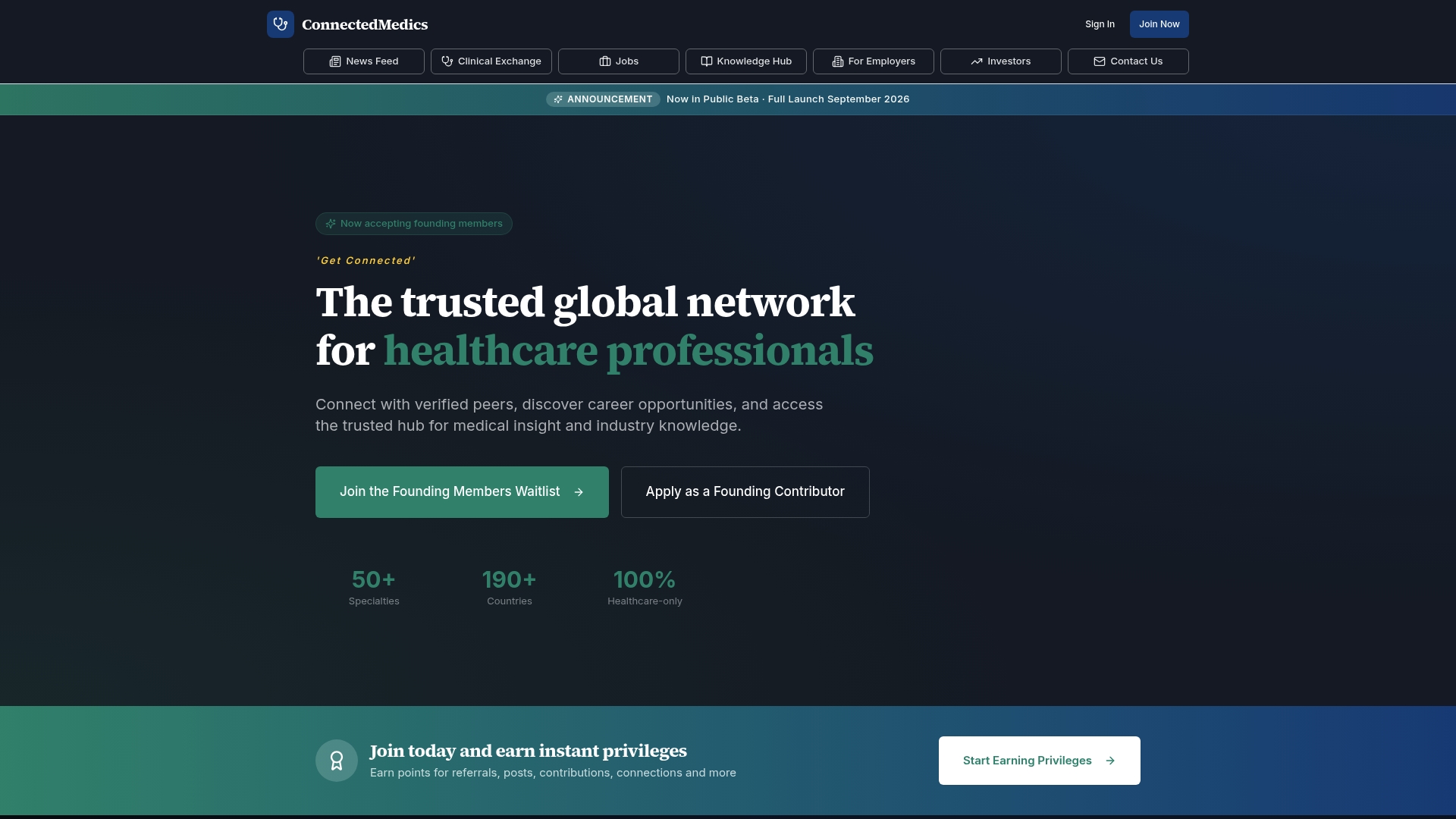
That distinction matters most when your budget depends on reaching an actual cardiologist or ICU nurse, not someone who merely searched a medical term once. The platform combines verified profiles, a knowledge hub of clinical content, and employer tools built specifically for healthcare recruitment and sponsored placements, which means your campaign runs against an audience you can actually confirm. If you're a recruiter or employer, the employer plans range from a free tier up to the Growth plan at $99 per month, with Enterprise and Premium Employer options for teams needing deeper targeting tools. Run a short pilot listing or content placement through the employer dashboard and measure engagement before committing to a larger campaign.
Sources
- Physician content preferences and digital access (survey findings)
- Attitudes toward direct-to-consumer healthcare service advertising and perceptions of information features: comparison of physicians and marketers
- Fair balance in pharma advertising: rules and examples
FAQ
Can You Provide Examples of Healthcare Advertising That Works?
Effective examples include journal advertising paired with peer-reviewed reprints, CME-sponsored education sessions, and sales rep detailing reinforced by short digital follow-ups. Physician-only network placements on platforms like Connectedmedics also work because they guarantee the audience is verified clinicians rather than general professionals.
What Is the 3-3-3 Rule for Marketing?
The 3-3-3 rule generally refers to testing three audiences, three messages, and three channels before scaling a campaign, a framework more common in digital marketing strategies than healthcare specifically. In HCP advertising, the practical equivalent is running a narrow pilot across one specialty, one message, and one to two channels before expanding budget.
How Do You Attract Healthcare Professionals to a Clinic or Product?
Lead with clinical relevance and access, not promotion. Physicians respond better to content that solves a specific workflow problem and comes from a peer voice, and a 2026 survey found 82% trust peer-reviewed articles most when evaluating new information.
What Are the 5 P's of Healthcare Marketing?
Definitions vary across sources, but a common version includes product, price, place, promotion, and people, adapted from general marketing frameworks to account for patients and clinical stakeholders. In HCP advertising specifically, "people" typically expands to include both the prescriber and the care team involved in adoption decisions.
How Much Does Connectedmedics Cost for Employers?
Connectedmedics offers a Free plan and a Growth plan priced at $99 per month, with Enterprise and Premium Employer options available for advanced targeting. Exact pricing for Enterprise and Premium Employer tiers is available directly on the employer pricing page.