
The fastest way to reduce time to fill nurse roles combines three moves: a clear role brief with a named decision owner, a proactive pipeline that exists before the requisition opens, and preboarding that starts the day an offer is signed. The NSI Recruitment Difficulty Index puts average RN time to fill at 78 days, and AONL guidance ties much of that delay to unclear process ownership. A version of this approach can be applied across employer tools as a useful reference point for the tactics below.
TL;DR:
- Building pre-existing nurse pipelines through partnerships with schools and community organizations can significantly reduce sourcing delays that often extend overall time-to-fill.
- Implementing role briefs and assigning decision owners before posting jobs quickly accelerates every subsequent step in the hiring process.
- Standardizing interview scoring and setting clear offer response time rules can cut down decision and offer acceptance delays, improving cycle time.
- Starting preboarding immediately after an offer minimizes start delay and helps retain candidates before their first shift.
- Focusing on retention actions alongside speed initiatives, such as mentoring and early engagement, prevents quick hires from leaving within six months.
Table of Contents
- Top 9 tactics to cut nurse time to fill
- Find out where your hiring funnel actually slows down
- Build recurring pipelines before the vacancy opens
- Standardize interviews to cut decision time without cutting standards
- Stop losing candidates between offer and start date
- Why faster hiring only works when retention comes with it
- Which recruiting technology actually saves time
- ConnectedMedics' playbook for faster nurse hiring
- Practical trade-offs when pushing for speed
- How ConnectedMedics can help with nurse hiring
- Sources
- FAQ
Top 9 tactics to cut nurse time to fill
Some fixes matter more than others. Role clarity and decision ownership come first because they touch every stage downstream. Pipeline work comes next because it removes the biggest single delay: waiting for candidates to exist in the first place.
- Write a role brief before posting. List shift pattern, unit culture, required credentials, and pay band. Owner: hiring manager. Metric: time from requisition open to first qualified applicant.
- Name one decision owner per requisition. One person approves each stage move. Owner: recruiter or TA lead. Metric: stage-to-stage handoff time.
- Build extern and residency pipelines year-round. Partner with nursing schools before a vacancy exists. Owner: TA partnerships lead. Metric: percentage of hires sourced from pipeline versus cold outreach.
- Form unit-level partnerships with nurse leaders. A buddy nurse or unit liaison screens for culture fit early, a practice AONL recommends cutting mismatched hires. Owner: nurse manager. Metric: offer acceptance rate by unit.
- Offer scheduling flexibility as a stated recruitment lever. Publish shift options in the posting rather than after an offer. Owner: hiring manager. Metric: application-to-interview conversion rate.
- Reserve fixed interview blocks each week. Do not schedule interviews ad hoc. Owner: recruiter. Metric: days between application and first interview.
- Standardize interview scoring against named competencies. Score sheets replace open discussion. Owner: hiring panel lead. Metric: interview-to-offer time.
- Set an offer escalation rule. Hiring managers contact top candidates within 24 hours of an offer decision, a step AONL links to fewer rescinded acceptances. Owner: hiring manager. Metric: offer acceptance rate.
- Start preboarding the day the offer is signed. Paperwork, mentor assignment, and a welcome message all happen before day one. Owner: HR coordinator. Metric: acceptance-to-start window.
Pro Tip: Pick two tactics from this list to pilot for 90 days rather than trying all nine at once. Role brief plus offer escalation is the combination with the fastest visible effect on cycle time.
Find out where your hiring funnel actually slows down
Most teams assume sourcing is the bottleneck. Often it is not. A short audit using data already sitting in your ATS or HRIS shows where candidates actually stall.
Pull these stage-level numbers for your last 10 to 20 nurse hires:
- Days from requisition open to first qualified applicant.
- Days from application to first interview.
- Days from final interview to offer decision.
- Days from offer extended to offer accepted.
- Days from acceptance to start date.
The national RN vacancy rate sits at 8.6%, with an average time to fill of 78 days. (NSI) Compare your own stage numbers against that total. If sourcing alone eats 50 of your 78 days, the fix is pipeline work. If interview-to-offer stretches past two weeks, the fix is decision ownership and scheduling. If offer-to-start drags, the leak is usually communication, not candidate interest.
A pattern worth watching: long sourcing time paired with a short interview-to-offer window usually points to a channel problem, not a process problem. Short sourcing time paired with a long offer-to-start window usually points to candidates fielding competing offers while your team stays quiet.
Build recurring pipelines before the vacancy opens
Reactive hiring means starting the clock at zero every time a nurse resigns. A pipeline built in advance means candidates already exist when the requisition opens.
- Set up extern and new-graduate programs with local nursing schools, treating them as a year-round pipeline rather than a seasonal hire.
- Partner with community organizations and minority-serving institutions to widen the candidate pool beyond a single school relationship, a step the Campaign for Action RN Recruitment and Retention Toolkit recommends.
- Balance inbound applications with outbound outreach to passive candidates in specialty communities, since high-demand units rarely fill from inbound alone.
- Run an employee referral program with a clear bonus structure, since referred candidates typically move through screening faster because a colleague has already vetted culture fit.
- Keep pipelines warm with quarterly check-ins, not just an annual campus visit, so candidates remain engaged between hiring cycles.
HRSA workforce projections point to persistent nursing shortages through 2038, with larger shortfalls in nonmetro areas, which is the case for building pipelines rather than waiting for open requisitions to force action. Measure pipeline yield by tracking what share of your hires each quarter came from a pre-existing pipeline versus a cold posting. A rising share means the pipeline work is paying off. Guidance on building these partnerships in more detail is available in this talent pipeline playbook.
Standardize interviews to cut decision time without cutting standards
Unstructured interviews take longer to score and are harder to defend when two candidates look similar on paper. Structured formats fix both problems.
- Build a score sheet tied to named competencies: clinical judgment, communication under pressure, and teamwork on a specific unit type.
- Combine interviews where possible, pairing a nurse manager and a peer nurse in one session instead of two separate rounds.
- Reserve fixed weekly interview blocks so candidates are not waiting for calendar availability.
- Set a decision SLA: interviewers submit scores within 48 hours of the interview, a rule that keeps momentum without rushing judgment.
- Run background checks and reference calls in parallel with the interview stage rather than after it, a practice the Campaign for Action toolkit flags as a safe way to shorten credentialing time.
Pro Tip: Score sheets should take less than five minutes to complete. If interviewers are writing paragraphs, the form is too complicated and will slow down the exact step you are trying to speed up.
Stop losing candidates between offer and start date
The offer stage is where strong candidates disappear quietly. A slow or silent employer loses them to a faster one, even after a successful interview.
- Contact top candidates within 24 hours of an offer decision. AONL links this window to fewer rescinded acceptances and less ghosting.
- Send the offer letter same day, automated where possible. A delay of even a few days invites a competing offer to land first.
- Schedule two human follow-ups between offer and start date. One at the one-week mark, one the week before start, so no candidate goes silent for more than a few days.
- Pair each new hire with a mentor before day one. Introductions happen during preboarding, not on the first shift.
- Complete paperwork before the start date, not on it. Credentialing documents, badge access, and scheduling confirmations move faster when handled in the two weeks before start.
Pro Tip: A short welcome message from the unit manager, sent the same week the offer is accepted, costs nothing and measurably reduces the odds of a candidate going quiet before their first shift.
Why faster hiring only works when retention comes with it
Speeding up hiring without addressing early turnover just means refilling the same role again in six months. The two problems have to be solved together.
A 2025 BMC Health Services Research umbrella review grouped effective retention interventions into onboarding and early-career support, leadership, work environment, individual support, and technology, and found that these interventions reduce repeat vacancies. That means the same 90-day window used to pilot faster hiring should also carry retention actions.
- Assign a mentor or preceptor to every new nurse hire for the first 90 days.
- Schedule check-ins at 30, 60, and 90 days rather than waiting for a formal annual review.
- Track 90-day turnover as a companion metric to time-to-fill, not a separate report reviewed months later.
- Monitor engagement through short pulse surveys rather than a single annual survey.
- Involve unit leadership in onboarding, not just HR, since day-to-day support from a direct manager shapes whether a new hire stays.
Recruiters who treat speed and retention as one project, rather than two separate initiatives, avoid the trap of a fast fill that turns into another vacancy within the year.
Which recruiting technology actually saves time
Not every ATS feature moves the needle. Some are genuinely useful. Others are marketing.
- Auto-fill application forms that pull candidate data from a resume or profile, cutting drop-off during application.
- Centralized document storage for credentials and licenses, avoiding repeated requests for the same paperwork.
- Automated offer letters generated from templates, with human review before sending.
- Timestamped stage tracking, so bottleneck audits do not depend on manual spreadsheets.
- Automated interview scheduling and reminder follow-ups, removing the back-and-forth of finding a shared time slot.
AI tools speed up sourcing and outreach, but decision making still needs a named human owner at every stage. (AONL) Use automation for repetitive tasks like scheduling and follow-up messages, and keep interview scoring and offer decisions in human hands. Before adding a new tool, check that it integrates with your existing ATS and HRIS rather than creating a second system to check daily.
ConnectedMedics' playbook for faster nurse hiring
The model targets recruitment specifically for clinical roles rather than treating nursing postings the same as any other job category, which is the gap the platform's positioning is built around.
An employer could pilot the tactics above using this kind of structure across three lanes: sourcing through specialty-filtered candidate pools, matching through AI-assisted candidate suggestions, and early engagement through direct messaging to verified nurse profiles before a role is even posted publicly. A 90-day hiring playbook maps these steps to a measurable pilot.
For a 90-day internal test, assign three owners: a sourcing owner who manages the specialty candidate pool, a matching owner who reviews AI-suggested candidates weekly, and an engagement owner who handles first outreach and follow-up messaging. Track two KPIs: time from posting to first qualified applicant, and applicant response rate to initial outreach. Recruiters exploring this path can review the recruiter-facing tools before committing a full requisition to the test.

Practical trade-offs when pushing for speed
Speed initiatives run into trouble the moment they skip a verification step to save two days. That trade rarely pays off. A rescinded license check or a skipped reference call costs far more time later than it saves now.

A simple rule: pause a speed initiative any time a shortcut touches licensing, background checks, or clinical competency verification. Four governance steps keep a speed pilot safe: name a single owner per stage, set a maximum shortcut list in writing before the pilot starts, require sign-off from compliance or credentialing on any process change, and review outcomes at 30 and 90 days rather than only at the end.
One line worth repeating in every recruiting meeting: a fast hire that leaves within six months was never actually fast. Measure post-hire retention alongside time-to-fill, every time.
— David
How ConnectedMedics can help with nurse hiring
Posting a nursing role on a generalist job board means competing with every other industry for attention. ConnectedMedics keeps the pool healthcare-only, with verified profiles and specialty filters built for clinical roles rather than adapted from a general template.
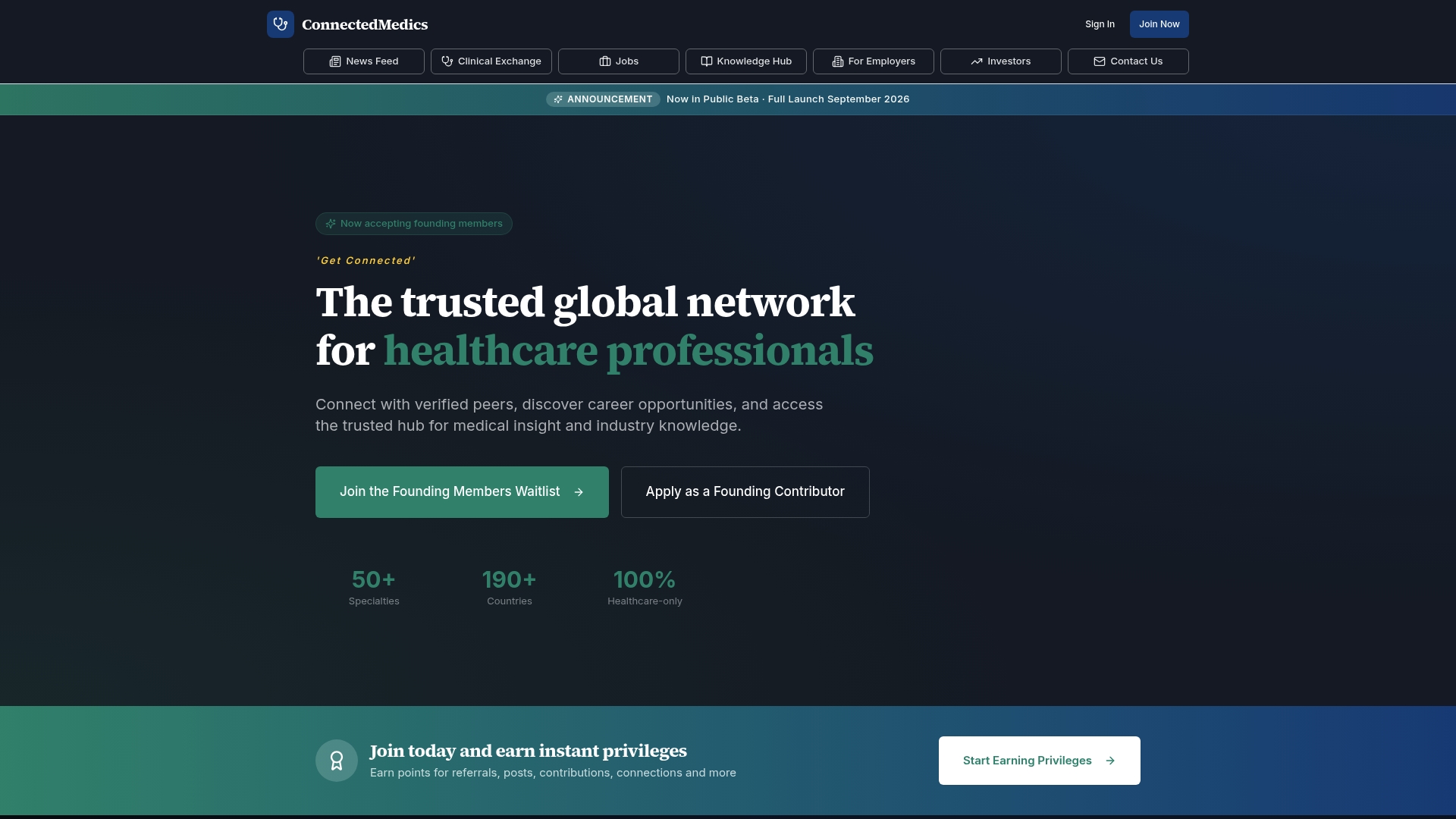
Employers can start with the Free, Growth, or Enterprise plans, with Growth priced at £99 per month for teams that want posting and recruitment tools beyond the free tier. Employers with higher hiring volume can look at the Premium Employer plan for expanded posting and matching features. A practical way to test the approach: post one priority nursing role, apply the 90-day playbook described above, and track applicant response time against your current baseline. Visit the employer overview to compare plans and get started.
Sources
The NSI report supplies the 78-day time-to-fill benchmark used throughout this article. AONL supports the process ownership and offer escalation guidance. The BMC umbrella review backs the retention recommendations. HRSA projections support the case for recurring pipelines. The Campaign for Action toolkit informs the interview and credentialing recommendations. The Harvard Kennedy School megastudy shapes the note on outreach messaging. A broader look at recruiting strategy frameworks is available from Electus.
- NSI National Health Care Retention & RN Staffing Report
- AONL Workforce Compendium: Attracting and Recruiting
- RN Recruitment and Retention Toolkit (AARP Foundation / Campaign for Action)
- Umbrella review on retention interventions (BMC Health Services Research, 2025)
- Nurse Workforce Projections, 2023-2038 (Bureau of Health Workforce)
FAQ
How to reduce time to fill in recruitment?
Reduce time to fill by naming a single decision owner per stage, building candidate pipelines before roles open, and setting a 24-hour contact rule after an offer decision. The NSI benchmark of 78 days for RN roles gives a starting point to measure against your own funnel.
How to make $200,000 a year as a nurse?
Reaching that income level typically requires advanced practice credentials, leadership roles, or high-demand specialties and locations, and figures vary widely by role and region. This article focuses on recruitment and hiring speed rather than individual nurse compensation, so check current salary data through your state board or a dedicated compensation resource.
What is the Q word for nurse?
There is no standard or widely recognized industry term for a nurse that starts with the letter Q. This appears to be a wordplay or trivia question rather than a recruitment or clinical term.
Is there still a nursing shortage?
Persistent shortages are projected to continue, with HRSA workforce projections showing shortfalls through 2038, particularly in nonmetro areas. The NSI report also cites a national RN shortage estimate, reinforcing the case for proactive pipeline building rather than reactive hiring.