
A proactive pipeline, relationship-first outreach, and competitive total rewards together form the most effective approach to passive physician recruiting. The AAMC projects a physician shortfall in the coming years, and MGMA data shows that 38% of medical groups reported longer time-to-fill in the past year. A healthcare-only network can shorten that search.
TL;DR:
- Building a pipeline early through residency partnerships and specialty engagement yields a pool of around 50 warm contacts per open position, outperforming reactive job posts.
- Relationship-first outreach, such as peer introductions and sharing valuable clinical content, significantly improves response rates over mass messaging.
- Competitive total rewards should include both rising compensation and non-financial factors like clinical autonomy, workload, and scheduling flexibility to attract passive physicians.
- Speed in the interview and offer process, ideally within two weeks, reduces candidate drop-off and supports faster placement.
- Using verified, healthcare-only networks accelerates sourcing, engagement, and conversion by eliminating manual credential checks and enhancing personalized outreach.
Table of Contents
- Why passive physician recruiting matters now and which metrics to watch
- Build a proactive pipeline: the long-game framework for physicians
- Relationship-first outreach: effective multi-touch sequences for passive physicians
- Employer value proposition: compensation and non-financial levers that attract passive candidates
- Candidate experience and speed: convert interest into accepted offers faster
- Measure and iterate: KPIs and quick experiments to improve passive sourcing
- How a healthcare-only, credential-checked network can speed passive sourcing
- Author perspective: three priority actions for recruiters this quarter
- How ConnectedMedics helps implement these tactics
- FAQ
- Sources
Why passive physician recruiting matters now and which metrics to watch
Supply is tightening. The AAMC projects a shortfall of 13,500 to 86,000 physicians by 2036, with primary care alone facing a gap of 20,200 to 40,400. Most qualified physicians already hold a job. Waiting for an active jobseeker to apply means competing for a shrinking slice of the market.
More than a third of medical groups now report slower hiring. MGMA data found that a significant portion of practices experienced longer time-to-fill, naming specialties like endocrinology, gastroenterology, dermatology, and cardiology as among the hardest to staff.
Three metrics matter most. Time-to-fill tracks days from opening to accepted offer. Pipeline velocity tracks how fast a prospect moves from first contact to interview. Offer acceptance rate tracks what share of extended offers get signed. Track these three and you know whether sourcing or closing is the weak link.

Build a proactive pipeline: the long-game framework for physicians
Passive sourcing works as a five-stage pipeline, not a single campaign.
- Identify candidates through residency rosters, specialty society directories, and conference attendee lists.
- Engage with low-pressure, personalized contact tied to a shared interest, not a job pitch.
- Nurture the relationship over months with relevant updates, invitations, and check-ins.
- Attract with a tailored opportunity once timing and fit align.
- Convert through a fast, well-structured interview and offer process.
MGMA recommends seeding this pipeline through residency and fellowship partnerships, specialty society engagement, and targeted shortlists built well before a vacancy opens. Assign one recruiter per specialty cluster, set a quarterly touchpoint cadence, and capture training program, clinical interests, referral source, and last-engaged date in your CRM. A pipeline with 50 warm contacts per open specialty beats a reactive job post every time.
Relationship-first outreach: effective multi-touch sequences for passive physicians
Generic cold email and LinkedIn blasts rarely move a physician who is not actively looking. A peer introduction, paired with credential-verified context, carries far more weight than an unsolicited recruiter message.
- Peer intro: a mutual connection or residency alum makes the first contact.
- Value message: share something genuinely useful, like a clinical insight or practice update, with no ask attached.
- Invite: suggest a low-commitment conversation framed as a career exploration, not an interview.
- Follow-up: check in weeks later, referencing the specific details from the first conversation.
Frame every touchpoint as a career advance rather than a job change. Specialty forums, conference hallways, verified professional networks, and direct physician referrals consistently outperform mass outreach because they preserve context and trust.
Employer value proposition: compensation and non-financial levers that attract passive candidates
Pay matters, but it is not the only lever. MGMA's 2024 to 2025 compensation data indicates trends of rising guaranteed compensation and signing bonuses, alongside increasingly blended pay plans including salary, productivity, and quality incentives. Benchmark against these figures before setting an offer range so you stay competitive without overshooting budget.
Non-financial factors close deals that compensation alone cannot.
- Clinical autonomy and reasonable patient panel sizes.
- Reduced administrative burden through scribe support technology or support staff.
- Defined leadership or teaching tracks.
- Flexible or predictable scheduling.
AMA survey data on residents and fellows shows that higher compensation, consistent staffing, and improved workflow efficiency are among key factors influencing their decision to stay. Loan repayment and relocation assistance work best when offered early in the nurture stage, not bolted on at the final offer.
Pro Tip: Lead with workflow and autonomy in early conversations, then introduce compensation once the physician has already pictured the role.
Candidate experience and speed: convert interest into accepted offers faster
A slow process loses passive candidates who were never desperate to leave their current role. Speed and polish signal respect for their time.
- Offer a concierge point of contact who manages scheduling, travel, and questions.
- Use virtual site visits before committing to a full in-person interview day.
- Curate interview days around the specialty's actual workflow, not a generic tour.
- Set decision SLAs: pre-approved compensation ranges and a committed offer timeline, often within one to two weeks of a final interview.
Start retention before the offer is even signed. Clear expectations about call schedules, support staff, and growth paths during recruitment reduce early turnover once the physician starts.
Measure and iterate: KPIs and quick experiments to improve passive sourcing
Three dashboards cover most of what you need to manage.
- Time-to-fill and pipeline-to-hire conversion, tracked by specialty.
- Offer acceptance rate, segmented by sourcing channel.
- Quality-of-hire signals, like one-year retention and early performance reviews.
Run small experiments before scaling anything: A/B test outreach messaging, pilot a signing bonus with one specialty, or shorten the interview track from four rounds to two. Scale whatever moves acceptance rate or shortens time-to-fill, and use those results to justify further investment in sourcing tools.
How a healthcare-only, credential-checked network can speed passive sourcing
Generic professional networks force recruiters to verify credentials manually before a conversation even starts. A healthcare-only platform removes that friction because every profile is pre-verified, which tends to raise response rates for first contact.
On a healthcare-only network, the same five-stage pipeline can map directly onto platform features.
- Identify candidates using specialty filters across a global pool of verified clinicians.
- Engage through direct messaging that opens with shared specialty context, not a cold pitch.
- Nurture by sharing relevant knowledge hub content tied to the physician's clinical interests.
- Convert faster using employer tools built for healthcare roles rather than generic job functions.
For a deeper implementation checklist, our relationship-first outreach guide and talent pipeline playbook walk through templates for each stage.
Author perspective: three priority actions for recruiters this quarter

Three moves matter most right now. First, start residency outreach a full year before any anticipated opening, not after a resignation letter arrives. Second, rebuild outreach around peer introductions instead of mass messaging. Third, cut offer timelines to under two weeks.
Two mistakes keep showing up: recruiters chase compensation as the only lever, and they let pipelines go cold between openings. A pipeline nurtured only when there is a vacancy is not a pipeline.
— David
How ConnectedMedics helps implement these tactics
We built ConnectedMedics around the exact friction points this guide describes: unverified profiles, generic job boards, and outreach that gets ignored because it has no context.
- Credential-checked profiles cut the manual verification step out of every first contact.
- Specialty filters let you build a targeted shortlist instead of sorting through unrelated applicants.
- Employer tools support outreach, messaging, and tracking across the entire pipeline, from identify through convert.
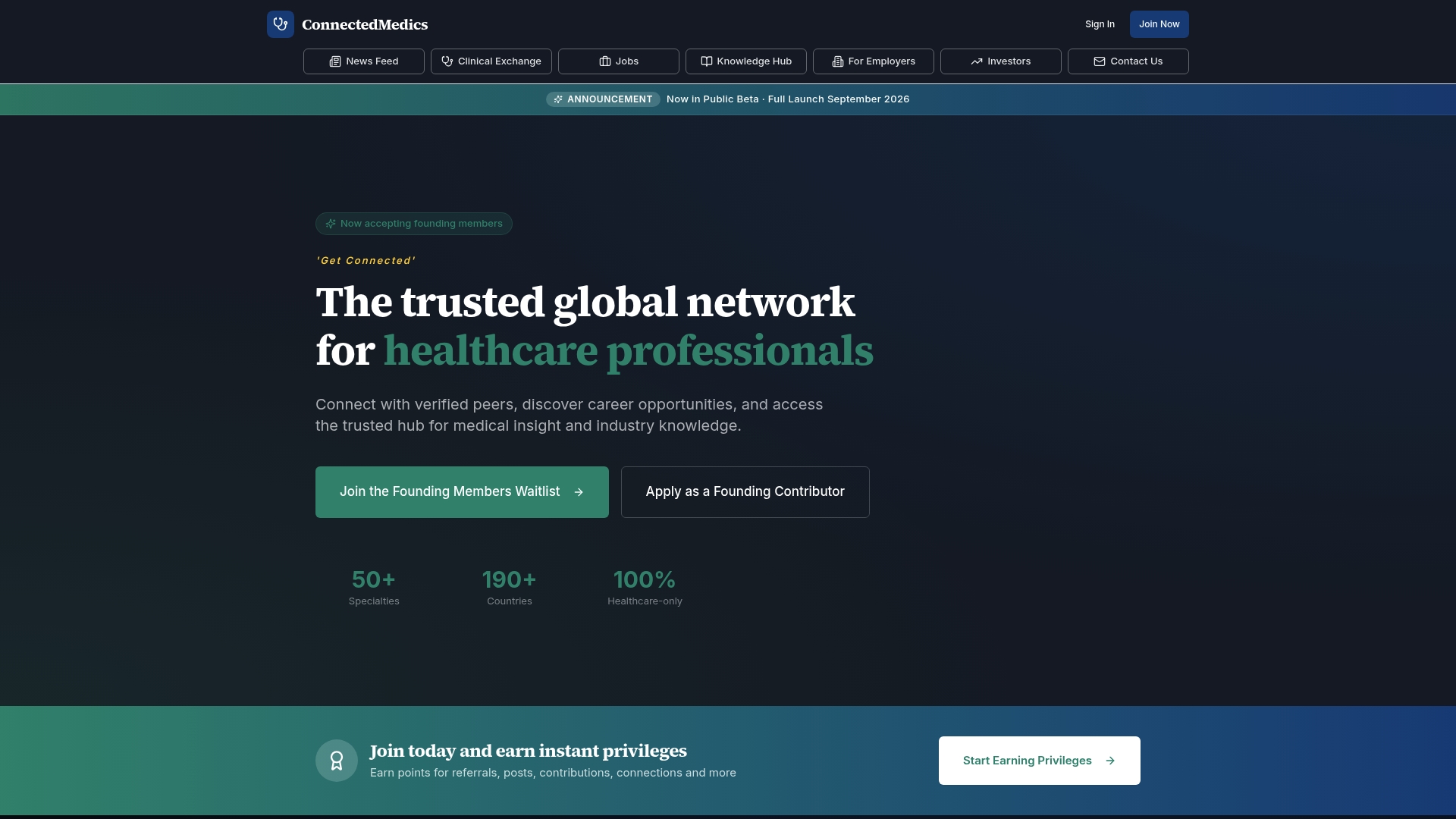
We offer employer plans at Connectedmedics, including Free and Growth tiers, with Growth priced at £99 per month, plus Enterprise for larger teams. For recruiters managing high-volume specialty hiring, our Premium Employer plan adds advanced recruitment features. Visit our employer page for recruiters to see how verified profiles and specialty filters fit into your current pipeline.
FAQ
What is the most effective way to recruit physicians?
The most effective approach combines a proactive, long-term pipeline with relationship-first outreach and a competitive total rewards package. MGMA recommends sourcing through residency partnerships and specialty channels well before a role opens, since reactive hiring after a vacancy consistently takes longer.
What is the difference between active and passive hiring?
Active hiring responds to candidates who are already searching and applying to open roles. Passive hiring targets physicians who are currently employed and not actively looking, which requires longer nurture cycles and relationship-based outreach rather than job postings alone.
How much do physician recruiters charge?
Recruiter fees vary widely by firm, specialty, and placement structure, and no single published rate applies across the industry. Platforms like ConnectedMedics instead offer employer plans, with the Growth plan priced at £99 per month, alongside per-hire options for successful placements.
What is the best passive income source for doctors?
This question falls outside physician recruiting and relates to personal finance for practicing physicians rather than hiring strategy. Recruiters should instead focus on structuring compensation and total rewards packages that compete on the criteria physicians actually weigh, including workflow and staffing consistency alongside salary.
Sources
- New AAMC report shows continuing projected physician shortage | AAMC
- Staying put after training? Here’s what residents, fellows look for | AMA