
For most U.S. nurses seeking safe, high-relevance clinical discussion and career resources, a verified, specialty-focused professional network is the right choice. Generic social platforms and open public boards carry real privacy and moderation risks that a verified network avoids by design. Specialty-focused networks that verify professional identity tend to deliver higher-relevance discussion and better career matching than broad social platforms.
Who benefits most: Nurse practitioners in specialty practice, clinical leaders managing protocol questions, and travel nurses who need vetted peer input gain the clearest advantage from a verified network.
TL;DR:
- Verified profiles and active moderation separate safe, high-quality communities from risky open boards.
- An evidence-based practice (EBP) framing for clinical questions, combined with strict de-identification, protects patients and professional standing.
Table of Contents
- What do specialty nursing forums actually do for your practice?
- Which forum type fits your goal?
- How to pick a reputable nursing-specialty forum
- How to ask clinical questions and participate safely
- Community rules, moderation, and legal/ethical cautions
- Where to find specialty forums and verify them quickly
- Why Connectedmedics meets the checklist for U.S. nurses
- Key Takeaways
- Why verified communities outperform open boards in practice
- Connectedmedics: verified specialty network for U.S. nurses
- Useful sources and further reading
What do specialty nursing forums actually do for your practice?
Community discussion boards expose nurses to perspectives outside their local system and support validation of clinical reasoning. That alone makes them worth the time for most specialty nurses. The practical return on participation is concrete.
Direct benefits:
- Peer validation for clinical reasoning on unusual presentations or edge-case protocols
- Specialty mentoring from experienced clinicians in the same practice area
- Focused job leads through integrated jobs boards and employer participation
- Curated CE and resources linked directly to specialty threads
- Peer support after difficult shifts, with context that general colleagues may not share
Use-cases that map to common nursing needs:
- Validating an unusual treatment choice before escalating to a physician
- Finding protocol examples from other facilities for a rare condition
- Career networking for niche roles (CRNA, NICU, oncology, flight nursing)
- Accessing evidence-based medicine resources linked by verified peers
Trust signals that indicate a mature community include active moderation, verified member profiles, a knowledge hub with curated clinical content, and a jobs board with employer participation. When all four are present, the community has infrastructure, not just activity.

Which forum type fits your goal?
Nursing specialty forums fall into five broad categories. Each has a primary use-case, a clear advantage, and a common drawback.

| Forum Type | Best For | Chief Advantage | Common Drawback |
|---|---|---|---|
| Professional association communities (e.g., ANA, AACN) | EBP discussion, CE, peer mentoring | Moderated by clinical specialists; credible | Access often requires paid membership |
| Verified specialty networks (e.g., Connectedmedics) | Clinical peer input, career matching, jobs | Verified profiles; curated knowledge hub | Smaller initial community than open platforms |
| Employer/hospital-hosted groups | Policy questions, internal protocol clarification | Directly relevant to your facility | Scope limited to one system; employer visibility |
| Closed listservs and email groups | Niche specialty discussion, low noise | High signal-to-noise ratio; tight community | Hard to find; slow response time |
| Public social boards and open forums | Broad perspectives, general peer support | High activity; easy access | Privacy and moderation risks; anecdote-heavy answers |
AACN clinical communities offer mobile access and are moderated by clinical practice specialists, which improves both engagement and response quality. That combination of mobile accessibility and named moderators is a useful benchmark when evaluating any forum type.
Public social boards are valuable for broad perspectives but frequently include venting, anecdote-heavy answers, and privacy missteps. They work for general peer support. They are not the right venue for clinical question validation.
How to pick a reputable nursing-specialty forum
Use this checklist before joining or posting. Each item can be verified in under two minutes on any platform.
Step-by-step verification checklist:
- Moderation policy is visible. Look for a published community guidelines page or a "rules" link in the forum header. If it is not findable in one click, the policy may not exist.
- Professional account verification is required. Check whether the platform asks for a license number, employer verification, or credential upload at signup.
- Recent posting activity in your specialty. Scan the last 10 posts in your specialty thread. If the most recent is more than two weeks old, the community may be inactive.
- Explicit HIPAA and privacy guidance is published. Look for a dedicated privacy policy and a specific statement about patient data in posts.
- Evidence-based discussion signals are present. Check whether moderators reference guidelines, whether members cite sources, and whether the rules prohibit definitive medical orders in replies.
- Community guidelines are transparent. Rules should cover posting conduct, prohibited content, and what happens when a rule is broken.
- A knowledge hub or CE links are present. This signals that the platform invests in clinical content, not just social activity.
- A jobs board or employer participation exists. Employer presence is a maturity signal: it means the platform has been vetted by organizations with compliance requirements.
On membership costs: Paid membership is worth it when the platform offers verified peer access, curated clinical content, and a jobs board. Free tiers on verified networks often provide enough value to assess fit before upgrading. Open public boards are free but carry the moderation and privacy trade-offs noted above.
How to ask clinical questions and participate safely
The single most effective way to get useful forum input is to frame your question using EBP principles. EBP integrates external evidence, clinical expertise, and patient values; evidence levels range from Level A (randomized controlled trials) to Level C (consensus or expert opinion). A well-framed forum post signals that you want Level A or B input, not anecdote.
How to frame a clinical question (EBP format):
- State the clinical question concisely (PICO format works well: Patient/Population, Intervention, Comparison, Outcome).
- Include relevant non-identifying context: patient age range, setting type, relevant comorbidities in general terms.
- Note what evidence or guideline you already checked and why it did not fully answer your question.
- Specify the type of answer you need (see Pro Tip below).
Post template — validating a treatment choice:
Post template — requesting protocol examples:
Privacy and escalation rules:
- Remove all patient identifiers: no names, dates of birth, admission dates, facility names, or geographic details specific enough to identify a patient.
- Never post about an active, ongoing case where a decision is still pending. Forum input is for reflection and learning, not real-time clinical decision support.
- When a peer reply raises a serious safety concern, escalate through your facility's official reporting pathway, not through the forum thread.
- Forum consensus is Level C evidence at best. Confirm any practice change with peer-reviewed literature or institutional protocols before implementing it.
Pro Tip: Flag the type of answer you need at the end of your post. "Looking for quick practical tips" and "looking for published references" attract very different responses. Specifying saves time for you and for the nurses who reply.
Community rules, moderation, and legal/ethical cautions
Moderation and documented guidelines separate useful communities from potentially harmful ones. A forum without both is a liability, not a resource. Documented rules and escalation paths protect both members and patients when complex clinical queries arise.
Policy elements every reputable forum should publish:
- Clear posting rules covering prohibited content (no patient identifiers, no prescriptive medical orders)
- Explicit HIPAA guidance and a privacy policy specific to clinical posts
- A named moderator or moderator team with an escalation path for sensitive queries
- Reporting tools members can use to flag rule violations
- Account verification requirements with accurate professional title disclosure
Red flags that indicate weak moderation or unsafe practice:
- No visible privacy policy or HIPAA statement
- Frequent anecdote-only answers with no references or caveats
- Visible patient identifiers in existing posts (dates, facility names, patient descriptions)
- Solicitation or advertising embedded in clinical threads
- No stated rule against giving definitive medical orders in replies
On employer policy: never post about a current employer or use an employer network while on the clock. For any serious patient safety concern, follow your facility's official reporting pathway. A forum thread is not a substitute for a formal incident report.
Where to find specialty forums and verify them quickly
High-yield places to search for specialty nursing communities:
- Professional association member communities: ANA's member community and AACN's specialty boards are moderated and credentialed.
- Specialty society websites: Most national specialty nursing organizations host member forums or link to vetted communities.
- Verified professional networks: Connectedmedics provides specialty-led communities with verified profiles and a curated knowledge hub.
- Curated nursing career and community roundups: Sites like nurse.org and nursing career platforms aggregate vetted community options.
Quick verification checklist for any forum you find:
- Active moderation is visible (named moderators, recent moderator posts)
- Membership requires professional credential verification
- Clinical moderators are identified by specialty
- Citations or guideline references appear in existing threads
- External endorsements exist (association links, CE offerings, employer participation)
On social platforms: closed, private groups on social media carry lower risk than public boards, but they still require the same de-identification discipline. Before joining any social-media nursing group, check whether the group is set to private, whether an admin reviews join requests, and whether the pinned rules address patient privacy. Networking in nursing careers is most effective when the community has structure, not just size.
Why Connectedmedics meets the checklist for U.S. nurses
Connectedmedics best matches the checklist for nurses who want verified, specialty-relevant clinical and career engagement. The platform was built specifically for healthcare professionals, which means the features map directly to what the checklist requires.
How Connectedmedics maps to the checklist:
- Verified professional profiles: Members are verified healthcare professionals, reducing the anecdote-and-anonymity problem common on open boards.
- Specialty-led communities: Discussion is organized by specialty, so oncology nurses are not reading threads aimed at school nurses.
- Knowledge hub: Curated clinical content and research summaries are accessible directly on the platform, supporting EBP framing for posts.
- Jobs board: Over 4,600 active healthcare vacancies with specialty-specific filters, signaling employer participation and platform maturity.
- AI-powered career matching: Connects clinicians with roles and peers relevant to their specialty and experience level.
- Moderation and content curation: Content contributed by verified medical experts, with curation that keeps clinical discussion at a professional standard.
Who benefits most from Connectedmedics:
- NPs in specialty practice who need verified peer input on clinical questions
- Clinicians actively searching for specialty roles and wanting job leads alongside peer discussion
- Clinical leaders who want a knowledge hub with curated research summaries, not just social threads
Specialty-focused networks that combine verified identity, curated content, and a jobs board deliver more career and clinical value than platforms built around social activity alone. Connectedmedics combines all three in one place, which is why it aligns with the checklist items that matter most for U.S. nurses.
Key Takeaways
Verified, specialty-focused networks with active moderation, EBP-framed discussion, and strict de-identification practices give U.S. nurses the safest and most clinically useful forum experience.
| Point | Details |
|---|---|
| Choose verified networks | Platforms with verified profiles and named moderators reduce privacy risk and improve answer quality. |
| Frame questions with EBP | Use PICO format, cite what you already checked, and specify the type of answer you need. |
| De-identify every post | Remove all patient identifiers before posting; treat forum consensus as Level C evidence only. |
| Check the checklist first | Confirm moderation policy, HIPAA guidance, and active specialty threads before joining any forum. |
| Connectedmedics fits the checklist | Verified profiles, specialty-led communities, a knowledge hub, and 4,600+ active job listings align with every major checklist item. |
Why verified communities outperform open boards in practice
The conventional wisdom says more members equals more value. For nursing specialty forums, that logic breaks down quickly. A large open board with thousands of members and no moderation produces high noise and real privacy risk. A smaller verified community with named moderators and a documented escalation path produces better clinical input and fewer compliance problems.
The deeper issue is that nurses often underestimate how much the quality of a reply depends on the identity of the person giving it. On an open board, you cannot tell whether the reply came from a 20-year ICU nurse or someone who left practice five years ago. Verified profiles solve that problem directly. Peer networking for nurses works best when the peers are identifiable and credentialed.
There is also a career dimension that most forum guides ignore. A community that combines clinical discussion with a jobs board and employer participation is not just a place to ask questions. It is a place where being a thoughtful, well-framed contributor builds a visible professional reputation. That is a return on time that open social boards cannot offer.
Connectedmedics: verified specialty network for U.S. nurses
Connectedmedics gives nurses a single platform for verified peer discussion, curated clinical content, and specialty job leads — without the privacy risks of open social boards. The platform's verified profiles and specialty-led communities match the checklist items that matter most: moderation, professional verification, a knowledge hub, and an active jobs board with over 4,600 healthcare vacancies.
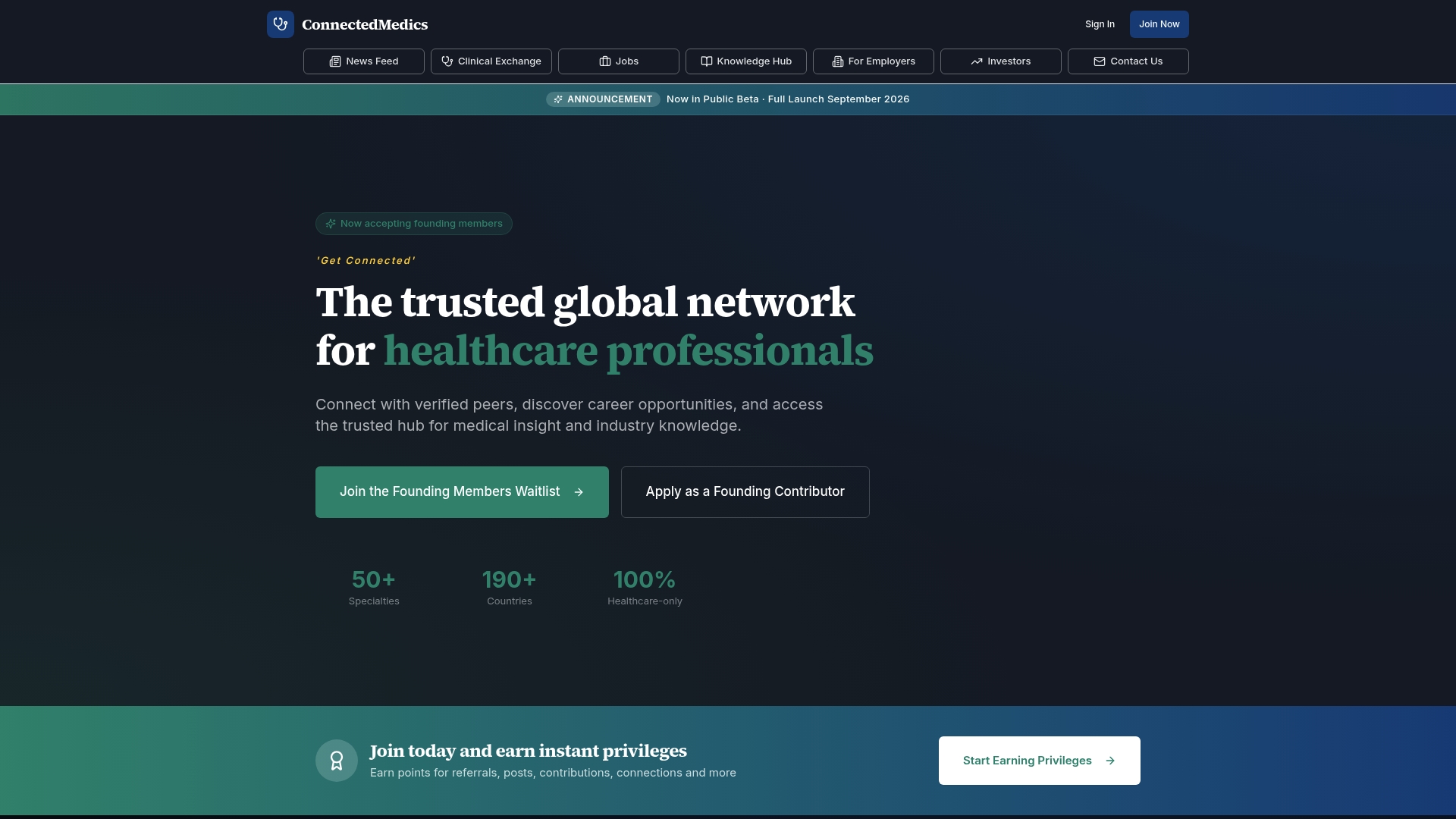
For nurses ready to move beyond open forums, the next step is straightforward. Browse the knowledge hub for curated clinical content, then create a verified profile on Connectedmedics to access specialty-led communities and job leads matched to your practice area.
Useful sources and further reading
- What Is Evidence-Based Practice in Nursing? | ANA — Defines EBP levels (A through C) and explains how to apply EBP framing to clinical questions; directly supports the post templates in this guide.
- Community Discussion Boards Can Enhance Your Practice | AACN — Explains the clinical and professional development benefits of moderated specialty boards; covers mobile access and moderator expertise.
- HIPAA Information | HHS.gov — Primary U.S. government source for HIPAA rules; the authoritative reference for de-identification requirements before any clinical post.
- Guidance for Forum Moderators | RCN — Covers documented rules and escalation paths for forum moderators; useful benchmark for evaluating any community's moderation structure.
- Forum Rules and Guidelines | Nurse Advisor Magazine — Concrete example of community rules prohibiting prescriptive medical orders and requiring accurate professional titles.
- Top 5 Nurse Forums and How to Use Them | Incredible Health — Practical overview of forum types with privacy and de-identification guidance for each.
- Connectedmedics Knowledge Hub — Curated clinical guides and research summaries contributed by verified medical experts; supports EBP-framed discussion on the platform.
- Connectedmedics Platform — Publisher landing page; verified profiles, specialty-led communities, jobs board, and AI-powered career matching for U.S. nurses.
This article provides general information for educational purposes. Confirm current HIPAA requirements, employer policies, and clinical guidelines with the relevant primary sources or a qualified professional for your specific situation.