
Use a verification-first hiring route or an NCQA-accredited Credentials Verification Organization. Insist on documented primary source verification of state licensure and NPI before any interview stage. Add board-certification checks when the role requires them. Skip vendors that cannot show a verification paper trail.
TL;DR:
- Verifying clinicians through primary source checks against official bodies ensures credential accuracy and reduces hiring risks.
- Specialty verification methods, like board certification and memberships, narrow the candidate pool to already vetted clinicians.
- Vendors must provide documented verification reports, clear reverification schedules, and demonstrate data security to avoid red flags.
- Using verified clinician platforms like ConnectedMedics streamlines sourcing, offers specialty filters, and confirms credential checks before listing profiles.
- Costs vary based on verification depth, with comprehensive checks-lasting longer and costing more, especially for clinical roles with higher liability.
Table of Contents
- How clinician verification actually works
- Where to find verified clinicians fast
- Vetting the vendor: questions and red flags
- What hiring verified clinicians costs
- Balancing speed and verification depth
- ConnectedMedics helps you hire verified clinicians
- Where to check the standards yourself
- Sources
- FAQ
How clinician verification actually works
Primary source verification, or PSV, means checking credentials directly with the issuing body. Not a copy of a license. Not a resume claim. The Joint Commission defines PSV as verification obtained from the original source or an approved agent. This standard applies across accredited healthcare settings and forms the baseline for any credible hiring process.
Credentials to verify before an offer:
- State medical or nursing license, checked against the issuing board
- National Provider Identifier (NPI), confirmed active and matched to the individual
- Board certification, when the role specifies a specialty requirement
- DEA registration, for prescribing roles
- Training and education records, where the job description requires them
Identity checks matter too. The Joint Commission's guidance on verifying practitioner identification recommends against storing scanned government-issued photo IDs. A remote visual check with a documented attestation date satisfies the standard and limits identity-theft exposure.
NCQA credentialing programs distinguish accreditation for full-scope credentialing from certification for verification-only work. NCQA's credentialing guidance gives employers a way to judge whether a vendor's process meets a recognized bar or just claims to.
Where to find verified clinicians fast
Specialty society career centers hold smaller but tightly verified audiences. A cardiology board or nursing specialty group tends to check membership credentials before listing a member, which narrows the pool to people already vetted for that field.
Verification-first job platforms work differently. They surface NPI-checked profiles and let employers claim a page rather than post blind. That claimed page becomes the anchor for everything else: job posts, compensation ranges, credential filters.
Steps to take today:
- Claim your employer page on a verification-first platform.
- Add transparent compensation ranges to each posting.
- Turn on credential filters so only license-verified or NPI-matched profiles surface.
- Cross-post niche roles to a specialty society career center.
- Reserve broad general job boards for high-volume, lower-specialty roles where verification depth matters less.
A broad board still has a place for administrative or support hires. For clinical roles, a verified channel cuts screening time before the first call.
Vetting the vendor: questions and red flags
Ask any platform or staffing vendor three questions before signing anything. Do they perform primary source verification, or do they collect documents and call it done? Which primary sources do they check against: state boards, NPI registry, certifying boards? How often do they recheck credentials after initial hire?
Watch for these red flags:
- Vague language like "we verify credentials" with no named sources
- Retention of scanned photo IDs in candidate files
- No stated recredentialing schedule
- No answer on data security or storage practices
- No documentation trail available for payer enrollment
Pro Tip: Ask a vendor for a sample verification report before signing a contract. A real PSV process produces paperwork, not just a checkmark on a dashboard.
Operational checks matter as much as the sales pitch. Ask for a typical timeline-to-verify, since payer enrollment often depends on it. Ask whether their process generates an audit trail, since delegation agreements with health plans usually require one. NCQA's credentialing and CVO guidance points to outsourced, accredited CVOs as the practical route for organizations with high hiring volume or existing payer delegation agreements. Below that volume, in-house verification with a clear checklist can work fine.
What hiring verified clinicians costs
Pricing varies by model. Job platforms often charge per post, per connection, or through subscription tiers. Staffing vendors typically charge a per-hire placement fee. Larger health systems negotiate enterprise contracts that bundle volume discounts with dedicated support.
Verification depth changes the price and the timeline. Full PSV, background checks, and a recredentialing schedule cost more and take longer than a basic license lookup. That tradeoff is worth it for clinical roles where a bad hire carries licensing and liability exposure.
Watch for costs that show up after signing:
- Payer enrollment support, often billed separately
- Credentialing administration fees for ongoing maintenance
- Placement guarantees that only apply under narrow conditions
Ask vendors directly about bulk discounts for multiple openings, response-time assurances, and whether onboarding support is included or billed as an add-on.
Balancing speed and verification depth
Recruiters face a constant tradeoff between filling a role fast and verifying it thoroughly. Speed matters, but a shortcut on licensure verification creates liability that outlasts any hiring deadline. The practical move is to compress the parts of the process that do not touch credentials: scheduling, initial screening calls, reference outreach. Never the license or NPI check itself.

Quick wins compound fast. Claiming an employer page, publishing a transparent pay range, and requiring NPI on first contact all filter out unqualified applicants before a recruiter spends time on them. That single step reduces the screening burden more than any interview technique.
Verification is not paperwork for its own sake. It is a filter that surfaces the clinicians already qualified for the role, which means less time on candidates who never should have applied.
— David
ConnectedMedics helps you hire verified clinicians
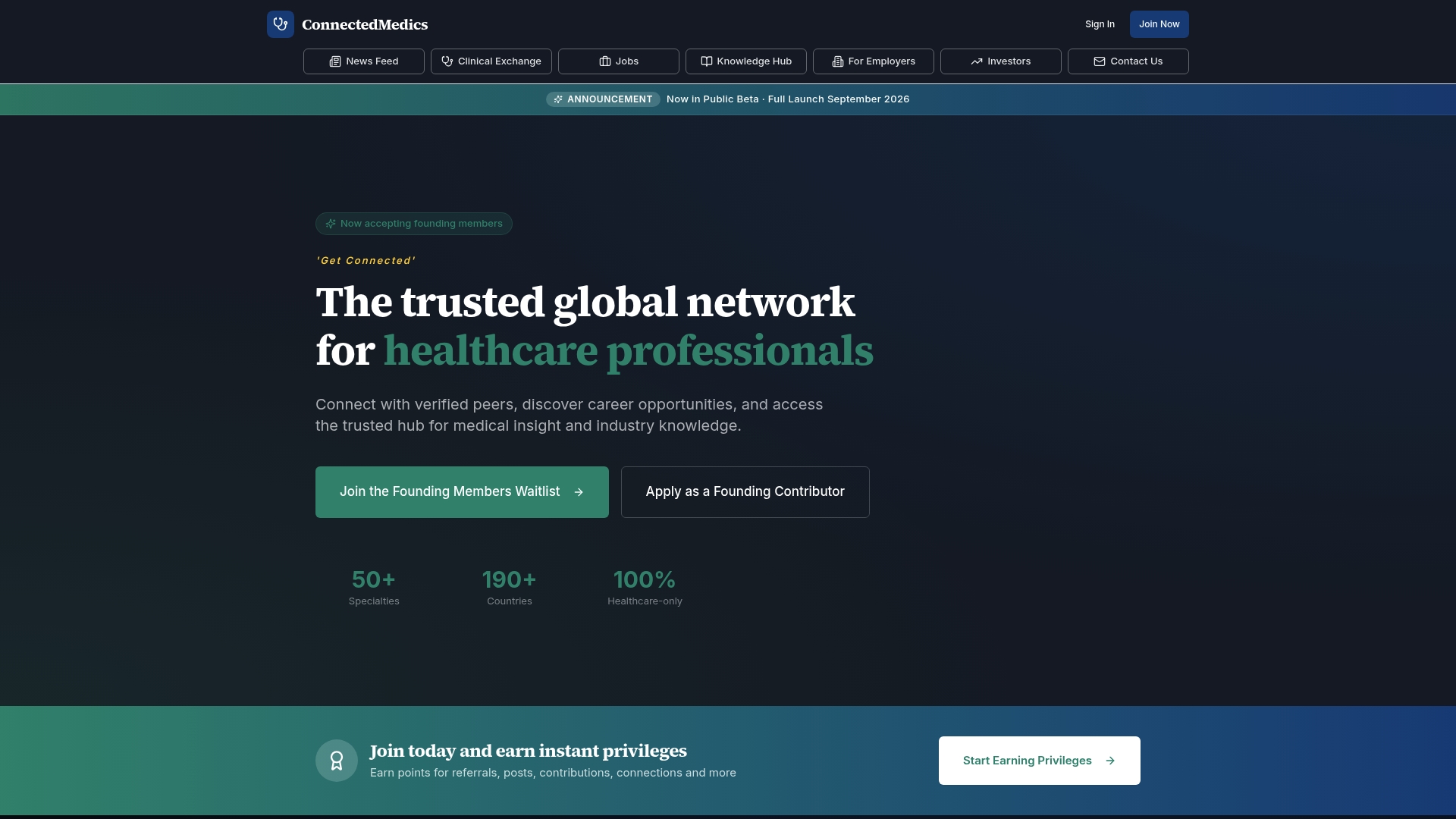
ConnectedMedics gives employers a healthcare-only network built around verified clinician profiles, not a generalist platform where credentials go unchecked. The employer tools include specialty filters, a documented license and credential verification process, and a jobs board with over 22,000 active vacancies across specialties.
What employers get on ConnectedMedics:
- Verified clinician profiles built on a documented credential-check workflow
- Specialty-specific filters to reach clinicians in a given field directly
- An employer claim page to post roles and set transparent compensation
- Access to a global network spanning 190+ countries, per ConnectedMedics' own positioning
Employers can start with the Free, Growth, or Enterprise plans, or explore the Premium Employer tier for higher-volume hiring. Claiming a page takes minutes and puts open roles in front of credential-verified clinicians the same day.
Where to check the standards yourself
For the accreditation-grade definition of PSV, see the Joint Commission's PSV guidance. For credentialing program structure, see NCQA's accreditation and certification programs. For recruiter certification, see NAHCR's CHCR credential. Recruiters comparing broader institutional standards can also review the Veteran's Nexus Institute resources on credentialing frameworks.
Sources
- NCQA – Accelerate provider credentialing
- Credentialing and Privileging - Verifying Practitioner Identification | Joint Commission
- CHCR credential | NAHCR
FAQ
What is primary source verification for clinicians?
Primary source verification means checking a credential directly with the body that issued it, such as a state licensing board or the NPI registry, rather than trusting a copy or a self-reported claim. The Joint Commission's PSV standard sets the accreditation-grade definition employers should expect from any vendor.
How do I know if a hiring vendor's verification is accredited?
Ask whether the vendor holds NCQA credentialing accreditation or certification, which distinguishes full-scope credentialing organizations from those handling verification only. NCQA's credentialing guidance describes both program types and what each one covers.
Should I store copies of a clinician's photo ID during verification?
No. The Joint Commission recommends against retaining scanned government-issued photo IDs and instead advises documenting the verification event and date. This limits identity-theft exposure while still satisfying identity-check requirements.
Is a recruiter certification like CHCR worth requiring on my team?
A CHCR credential from NAHCR signals a recruiter has demonstrated competence in healthcare talent acquisition specifically, which can ease sourcing and screening of verified clinicians. Review NAHCR's CHCR credential details to see the requirements and benefits before deciding whether to require it internally.
What does ConnectedMedics check before listing a clinician as verified?
ConnectedMedics runs a documented license and credential verification process before marking a clinician profile as verified, detailed on its verification workflow page. Employers can review verified profiles directly through the employer tools before posting a role.