
Clinician personal branding means deliberately communicating your expertise, values, and patient-facing approach so referrers, patients, and employers understand what you stand for before they meet you. The first move is tactical, not creative: write a one-sentence unique value proposition (USP) and pick a single primary platform. Guidance from the American Medical Association and a verified profile on a clinician-focused network both start from that same narrow focus.
TL;DR:
- Choosing one primary platform tailored to your target audience maximizes visibility for referrers and patients rather than spreading efforts thin across multiple channels.
- Publishing consistent, repurposed content through batching saves time and strengthens your professional identity by highlighting your expertise and values.
- Maintaining ethical standards by anonymizing patient details and avoiding outcome promises is essential for legal compliance and reputation management.
- Tracking direct inquiries, referral mentions, engagement quality, and search visibility offers a clearer picture of branding success than follower counts.
- Building a verified clinician profile on niche networks enhances discoverability and reinforces your expertise within your specific medical field.
Table of Contents
- Why Clinician Personal Branding Matters for Career and Trust
- How Do You Define Your Professional Identity and USP?
- Which Platforms Should Clinicians Prioritize?
- How Do You Build a Sustainable Content Production System?
- What Ethics and Reputation Rules Should Clinicians Follow?
- Which Metrics Actually Show Your Branding Is Working?
- What Do Clinician Success Stories Reveal About Branding?
- A Closing Note on Sustainable Branding
- Sources
Why Clinician Personal Branding Matters for Career and Trust
A Sermo survey found that 60% of doctors say personal branding has had a positive effect on their careers. That number reflects something specific: referrers choose known quantities, and patients research providers before booking. A clinician with a clear, visible identity gets asked to speak at conferences, consult for industry, or join advisory boards that never surface for someone with no public footprint.
60% of doctors report that personal branding has positively shaped their careers, according to Sermo's survey of practicing physicians.
The "self-promotion" objection misreads the goal. London Business School's research frames branding as professional self-knowledge, a structured way to understand your own strengths and communicate them clearly. Clinicians who skip this step do not become humbler. They just become harder to find and easier to overlook when opportunities come up.
How Do You Define Your Professional Identity and USP?
Start with a template: [Audience] trust me for [expertise] because [tone/approach]. A pediatric hospitalist might write, "Parents of NICU graduates trust me for developmental follow-up because I explain milestones without jargon or alarm." A vascular surgeon might land on, "Referring PCPs send me complex limb-salvage cases because I give same-week answers, not queues."
Once the USP exists, pick three to five content pillars that map directly to what your audience and referrers actually ask you. Run this quick exercise:
- List the five questions patients or colleagues ask you most often.
- Group them into three to five recurring themes.
- Test each theme against your USP. If it does not reinforce your expertise or tone, cut it.
Confirm alignment with a short checklist: does the USP describe a real audience, a specific expertise, and a distinct tone (not "compassionate and knowledgeable," which every provider claims)?
Pro Tip: Write your USP, then hand it to a colleague with no context. If they can't repeat back who you serve and why you're different, rewrite it.
The Knowledge Hub on Connectedmedics has practical examples of clinicians translating identity work into content pillars worth reviewing before you finalize yours.
Which Platforms Should Clinicians Prioritize?
Platform choice depends on who you are trying to reach, not which app is trending. LinkedIn reaches referring physicians, hospital administrators, and industry recruiters. Instagram and short-form video reach patients directly, especially for aesthetic, pediatric, or wellness-adjacent specialties. YouTube rewards clinicians willing to go deeper on explainer content. A personal website anchors everything else and controls the narrative you don't own on rented platforms.
- LinkedIn: two to three posts weekly, professional milestones, referral-relevant clinical commentary.
- Instagram or short-form video: three to five short clips weekly, patient education, myth-busting, day-in-the-life content.
- YouTube: one long-form video monthly, deeper explainers that convert into shorter clips elsewhere.
- Personal website: updated quarterly, hosting your bio, USP, and published work.
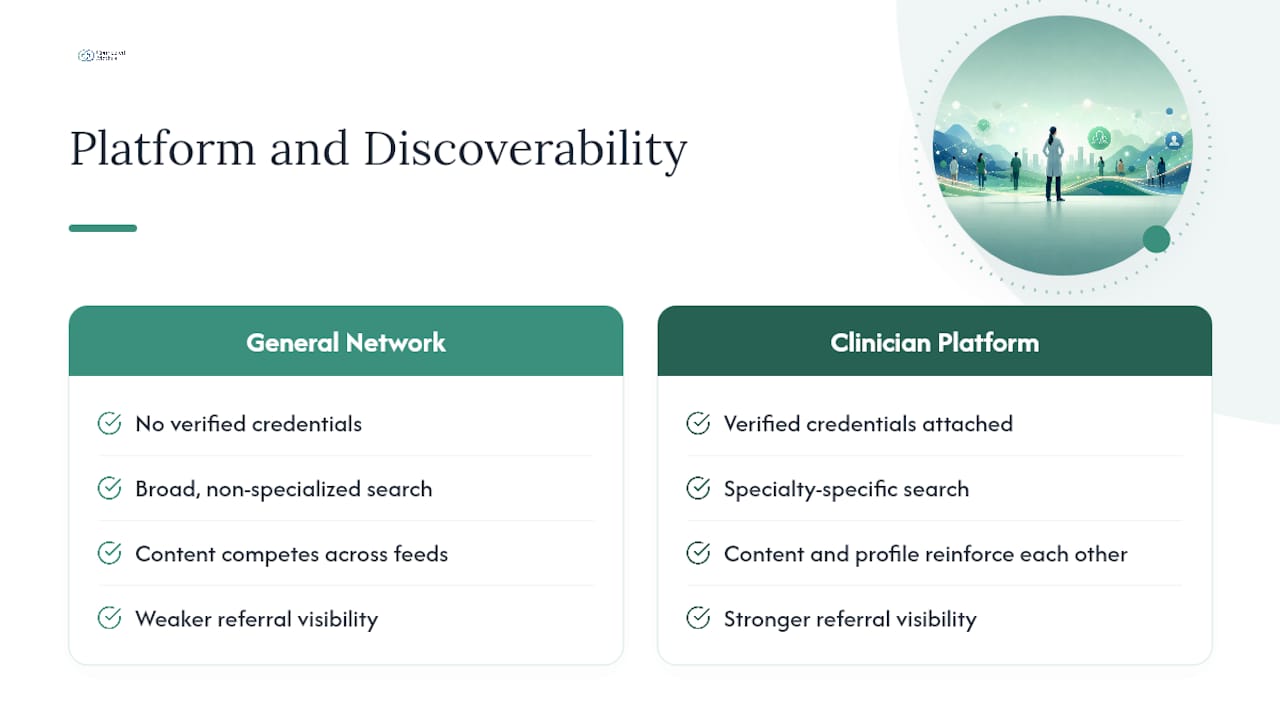
- Clinician-specific networks: an active, verified profile that surfaces in specialty-specific searches referrers actually use.
A systematic review of personal branding literature notes that platform-specific behavior matters more than platform count. AI-driven discovery and short-form video are reshaping how patients find providers heading into 2026, which makes picking the right one or two channels more valuable than spreading thin across five.
How Do You Build a Sustainable Content Production System?
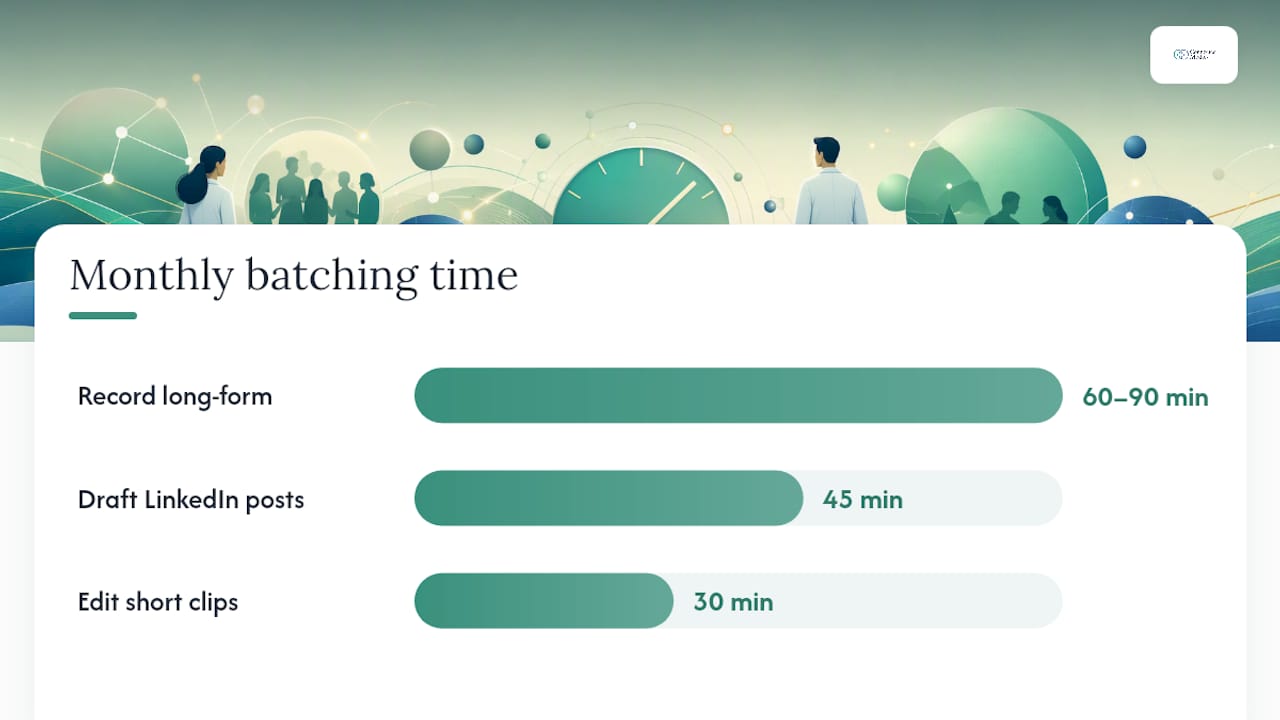
Most clinicians abandon branding not from lack of ideas but from lack of time. The fix is batching, not more hours. A practical rule from clinician-focused branding guides recommends one half-day monthly to produce four to eight short-form clips, one or two long-form pieces, and drafts for four to six LinkedIn posts.
- Week 1: Record one long-form video or article (60 to 90 minutes).
- Week 1, same session: Cut that recording into four to eight short clips (30 minutes with basic editing help).
- Week 2: Draft four to six LinkedIn posts from the same source material (45 minutes).
- Weeks 2 through 4: Schedule posts across the month using any free scheduling tool.
Repurposing turns one recording into a month of content across formats: long-form becomes clips, clips become captions, captions become a newsletter recap.
Pro Tip: *Brief a virtual assistant or editor once, in writing, with your three to five content pillars and tone guidelines.
What Ethics and Reputation Rules Should Clinicians Follow?
Every piece of content needs a quick ethical filter before it publishes. AMA guidance and its companion ethics guidance on advertising limits both stress the same boundary: education is acceptable, outcome guarantees are not.
- Anonymize every case detail, including timing and identifying combinations of facts.
- Never promise specific outcomes tied to your care.
- Route promotional claims through your institution's compliance team before posting.
- Respond to negative reviews with a general, HIPAA-compliant statement, never with patient specifics, even to correct the record.
Many patients read online reviews before choosing a provider, based on industry research cited across healthcare marketing literature, which raises the stakes on how clinicians respond publicly to criticism.
When in doubt, treat your employer's communications team as a resource, not an obstacle. A five-minute check before posting prevents a much longer conversation afterward.
Which Metrics Actually Show Your Branding Is Working?
Skip vanity metrics like follower counts. Track outcomes instead:
- Direct inquiries or bookings traceable to a specific post or platform.
- Referral mentions, meaning colleagues who cite your content when sending a patient.
- Engagement quality, comments and shares from people in your target audience, not just volume.
- Search visibility, whether your name and specialty surface when someone searches for care in your area.
Check these once monthly. If a content pillar produces zero inquiries after three months, pivot it. If one format consistently drives referral mentions, double the time you spend on it.
What Do Clinician Success Stories Reveal About Branding?
One family medicine physician built a habit of posting three short explainer videos weekly on chronic disease management. Within two quarters, colleagues began citing those videos when referring complex patients, a pattern consistent with the referral-visibility link documented in personal branding research.
A verified profile on a platform built for clinicians, rather than a general network, changes how discoverable that work becomes. A specialized clinician network pairs verified credentials with specialty-specific search, so content and profile reinforce each other instead of competing for attention across disconnected platforms.
Author note: David covers healthcare workforce trends and clinician career strategy for Connectedmedics, drawing on published research and platform data to guide practical, time-efficient recommendations.
A Closing Note on Sustainable Branding
Branding built on integrity outlasts branding built on trends. Skip the algorithm-chasing. Finalize your USP this week, then block one half-day next month for your first batching session. Small, repeatable steps beat sporadic bursts every time.
— David
Ready to put a verified, specialty-specific profile behind your content? Connectedmedics connects your clinical identity to referrers, employers, and peers who are already searching for someone exactly like you, while the Knowledge Hub gives you a running source of clinical insights to draw from when you sit down to batch your next month of content. Pair that visibility with authentic communication practices and the groundwork from this guide, and your branding effort stops competing with clinical work and starts supporting it.
Sources
- Why personal branding matters in medical careers — London Business School
- Create a personal online physician brand that works — AMA