
On a healthcare networking and jobs platform, "trust" means verified credentials, provenance metadata, and continuous exclusion monitoring — not just a badge. Every clinician profile and employer listing needs primary-source verification (PSV), OIG LEIE and SAM exclusion screening, and traceable assertions to be hire-safe and audit-ready.
Immediate recruiter actions:
- Run OIG LEIE and SAM exclusion checks before any offer
- Confirm PSV for state license and board certification
- Require provenance assertions or ORCID linkage on every credential claim
Key Takeaways
Audit-ready clinician hiring requires PSV, continuous OIG and SAM exclusion monitoring, and provenance-linked assertions on every credential — badges alone are not sufficient.
| Point | Details |
|---|---|
| PSV is the baseline | Confirm licenses and certifications directly with issuing authorities, not from candidate uploads. |
| OIG and SAM screening | Run exclusion checks before every offer and re-screen active staff at least monthly. |
| Provenance over badges | Surface who asserted each credential, when, and from which source — badges without metadata do not change recruiter confidence. |
| ORCID integration speeds credentialing | Authenticated, provenance-linked assertions reduce manual document chasing and create an auditable record. |
| Connectedmedics | The platform provides PSV workflows, exclusion monitoring, and ORCID-style assertions for hire-safe recruiting. |
Table of Contents
- Why verification and auditability are non-negotiable for U.S. healthcare platforms
- Which trust signals belong on clinician profiles?
- What mandatory checks must U.S. employers run before hiring?
- How to build an audit-ready verification workflow
- How community and UX features sustain professional trust
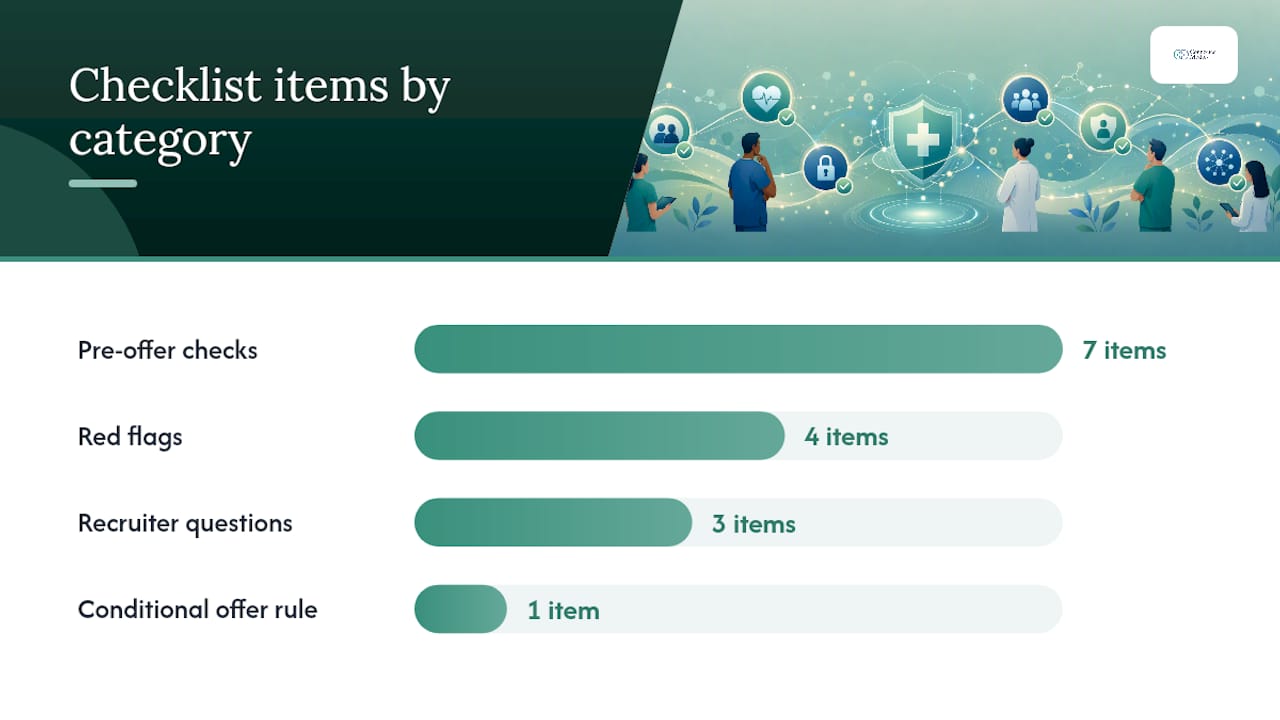
- Recruiter checklist: 7 checks before issuing an offer
- Connectedmedics delivers verified hiring from day one
- Primary sources and further reading
- Why provenance matters more than a checkmark
- Sources
Why verification and auditability are non-negotiable for U.S. healthcare platforms
Hiring an excluded individual exposes any organization billing Medicare or Medicaid to civil monetary penalties and potential loss of reimbursement. The OIG exclusions database is the authoritative federal source, and continuous monitoring is a compliance requirement, not a best practice.
Beyond legal exposure, the operational risks are direct:
- Fraud and misrepresentation — self-uploaded PDFs are easy to falsify; PSV closes that gap
- Delayed onboarding — manual credential chasing adds weeks to time-to-hire
- Patient safety — an unverified clinician in a billable role creates downstream liability
Integrated identity verification, PSV, and automated monitoring reduce both delay and fraud risk. Platforms that automate these checks help organizations hire faster while staying compliant.
Which trust signals belong on clinician profiles?
Verified medical professional profiles need more than a checkmark. Research shows verification badges alone do not reliably change users' perceptions of information accuracy, so platforms must surface provenance and professional metadata as the primary trust layer.
Core profile signals to display:
- State medical license (PSV-confirmed, with issuing board and expiration date)
- Board certification (PSV-confirmed, with certifying body and date)
- Hospital or health system affiliation (third-party assertion)
- DEA registration and NPI where clinically relevant
- Verified email and employer verification badge
- ORCID iD linkage for authenticated institutional assertions
Each signal should carry provenance metadata: who asserted it, when, and from which source. A timestamp from the issuing board carries more weight than a self-reported upload date.
| Verification Tier | How It Works | Recruiter Confidence | Audit Trail |
|---|---|---|---|
| Self-reported | Candidate uploads document | Low | None |
| PSV-verified | Platform confirms with issuing authority | High | Timestamp + source |
| Third-party assertion | Institution or ORCID asserts directly | Highest | Provenance record |
The MedTrust trust model identifies role, reputation, and similarity as the core factors in healthcare community trust. Displaying verified role and institutional affiliation addresses all three dimensions at once.
What mandatory checks must U.S. employers run before hiring?
Compliance requires specific checks at specific intervals. Running them once at hire is not enough.
- OIG LEIE exclusion screening — check every candidate against the federal exclusions list before offer; re-screen monthly for active employees
- SAM exclusion check — required for federally funded positions; run at hire and on a recurring basis
- State licensing board verification — confirm active, unrestricted license directly with the issuing board
- DEA registration — verify for any role involving controlled substances
- Board certification PSV — confirm directly with the certifying body (ABMS, AOA, or specialty board)
- Education and training verification — medical school, residency, and fellowship confirmed with the institution
- Continuous monitoring — real-time alerts for exclusion additions, license suspensions, or certification lapses
Missing any of these checks creates exposure. Employing an excluded individual in a Medicare- or Medicaid-billable role can trigger civil monetary penalties under federal law. The OIG guidance is explicit: organizations must screen before hire and monitor continuously.
Recommended cadence:
- Initial PSV at offer stage
- OIG/SAM re-screen at least monthly for all active clinical staff
- Real-time alerts for license status changes
How to build an audit-ready verification workflow
A structured workflow removes the manual bottleneck and creates the audit trail regulators expect. Embedding verification into hiring workflows improves PSV completion rates and reduces manual follow-up.
- Candidate onboarding — collect consent, NPI, state license number, ORCID iD, and DEA number at registration
- Identity proofing — verify identity at IAL2 level using a government-issued ID and liveness check
- PSV calls and API checks — query state licensing board APIs, ABMS, and DEA directly; log each response with timestamp
- Third-party assertions — pull ORCID trust markers and institutional assertions; store provenance record for each
- Audit trail storage — write each verification result to an immutable log with source, date, and outcome
- Pre-offer re-check — re-run OIG LEIE and SAM before issuing an offer; confirm license is still active
- Continuous monitoring — subscribe to OIG and SAM feeds; trigger alerts on any status change
PhysioNet and ORCID as a working example: PhysioNet integrated ORCID iDs and used authenticated assertions to speed credentialed access to sensitive datasets. After integration, the platform saw sustained growth in linked ORCID connections and measurably faster identity and credential checks. The same pattern applies to clinician hiring: authenticated, provenance-linked assertions shift the workflow from document chasing to structured, auditable confirmation.
Technical integrations to plan for:
- ORCID API for trust markers and institutional assertions
- State licensing board APIs (many states offer direct query endpoints)
- OIG LEIE and SAM data feeds for continuous monitoring
- IAM or identity-proofing provider for IAL2 verification
- Encrypted document storage with immutable timestamps
Pro Tip: Set a KPI for time-to-verified (target: under five business days for a full PSV cycle) and track it per specialty. Credentialing delays in high-demand specialties like emergency medicine and anesthesiology directly affect fill rates.
Security basics: apply least-privilege data access, encrypt credentials at rest and in transit, define retention policies per state law, and log every access event.
How community and UX features sustain professional trust

Platform trust is not only about backend checks. The social layer matters too. A cross-specialty analysis found that authored content and peer feedback shape trust, but the relationship is complex — some credentials and titles produce unexpected effects, which argues for nuanced provenance display rather than simple title badges.
Best-practice community features:
- Real names and verified roles required for all accounts
- Moderated specialty forums with verification gating for posting
- Peer endorsements with provenance (who endorsed, in what context)
- Non-anonymous expert Q&A with credential display
- Clinician-authored content tagged with verified role and institution
Moderation checklist:
- Require PSV-verified status before posting in specialty channels
- Flag unverified claims for review within 24 hours
- Escalate clinical disputes to credentialed moderators
- Log all moderation actions with timestamp and moderator ID
UI patterns that work: a verified badge with a provenance hover showing the source record, drill-down links to the issuing authority, and verification-tier labels on each credential. Specialty forum best practices show that clear role labeling and moderated discussion reduce misinformation without silencing clinical debate.
Recruiter checklist: 7 checks before issuing an offer
- PSV license confirmed — active, unrestricted, correct state
- Board certification PSV confirmed — certifying body verified directly
- OIG LEIE and SAM clear — no exclusions at time of offer
- Identity proofed — IAL2 verification completed, no mismatches
- ORCID or third-party assertions present — at least one institutional assertion with provenance
- Employment history verified — prior employers confirmed, gaps explained
- Audit trail complete — all documents stored with timestamps and source records
Red flags to watch for:
- Credentials uploaded by the candidate with no PSV confirmation
- Identity attributes that don't match across documents
- Unexplained employment gaps longer than 90 days
- Conflicting employer affiliations on the same date range
Sample verification questions for recruiter outreach:
- "Can you provide your NPI and the state board where your license is currently active?"
- "Which certifying body issued your board certification, and when does it expire?"
- "Do you have an ORCID iD linked to your institutional affiliation?"
For conditional offers: issue the offer contingent on PSV completion and a clean OIG/SAM result. Do not start onboarding until both are confirmed in writing.
Connectedmedics delivers verified hiring from day one
Connectedmedics maps directly to the verification requirements in this guide. The platform provides verified clinician profiles with PSV workflows, ORCID-style provenance assertions, OIG and SAM exclusion monitoring, and employer verification badges built into the recruiter dashboard.
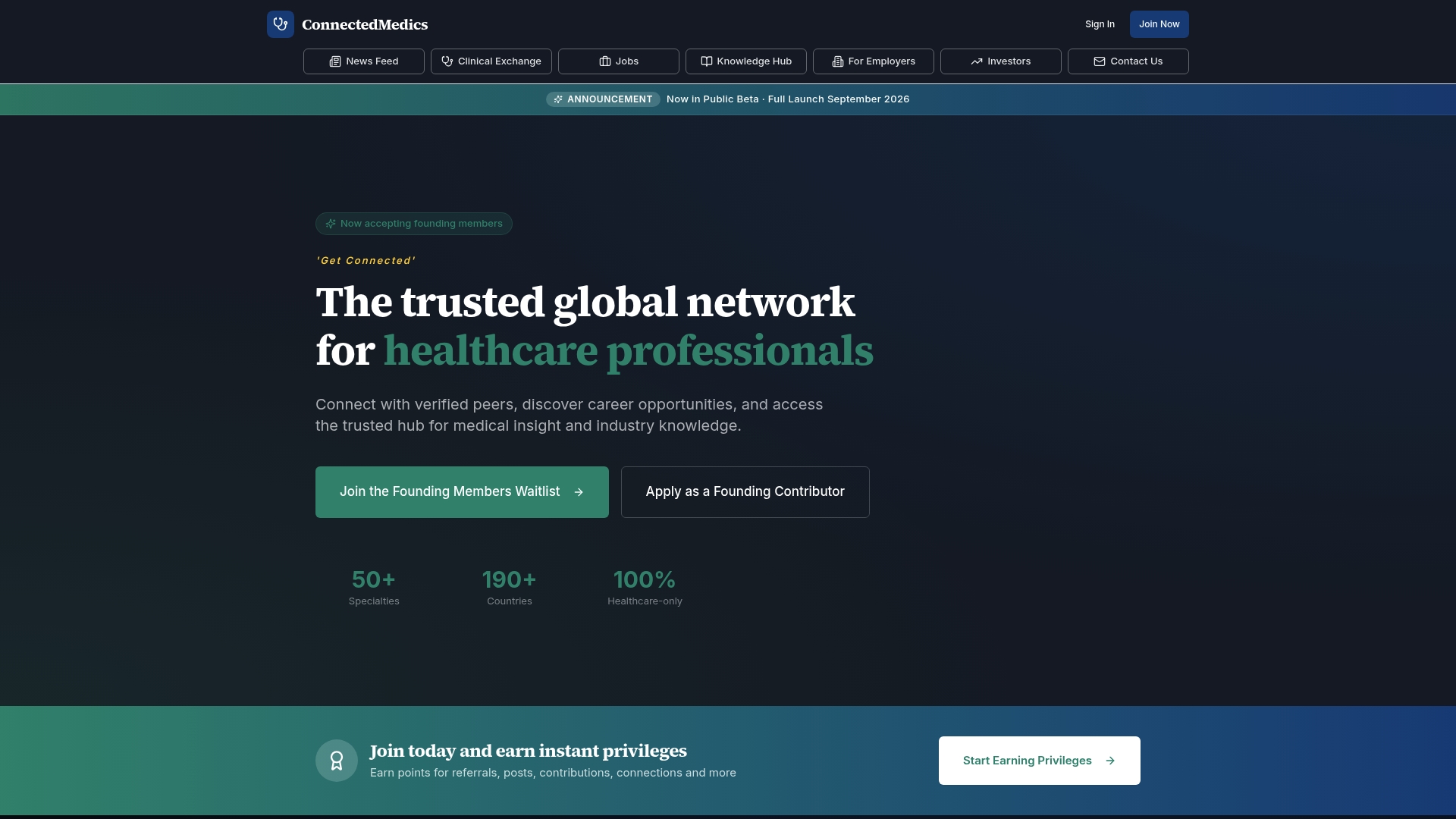
Employers get a pre-screened talent pool with specialty-specific filters, over 4,600 active healthcare vacancies, and audit-ready credential records. Onboarding for new employer accounts includes a guided setup for PSV preferences and monitoring cadence. Time-to-verified targets are built into the platform SLA.
To see how the verification workflow fits your hiring process, visit Connectedmedics and request a recruiter demo.
Primary sources and further reading
- OIG Exclusions (LEIE) — the authoritative federal database for exclusion screening; required for any Medicare/Medicaid-billing organization
- Sam — federal debarment and exclusion records for federally funded roles
- ORCID trust markers use case (PhysioNet) — concrete implementation example showing how authenticated assertions speed credentialing
- PMC verification badges study — experimental evidence that badges alone do not change accuracy perceptions; supports provenance-first design
- MedTrust trust model (Li et al., NDSU) — structured trust model for healthcare communities using role, reputation, and similarity
- Trust dynamics in online health communities — multi-specialty analysis of how clinician attributes and peer feedback shape platform trust
- First Advantage healthcare hiring trends — industry guidance on integrated PSV, identity proofing, and continuous monitoring
Why provenance matters more than a checkmark
The standard advice in healthcare hiring is to verify credentials. That part is not wrong. What most guides miss is the difference between a binary "verified" label and a provenance record that shows exactly who confirmed what, from which source, and when.
A badge tells a recruiter that something was checked. A provenance record tells them it was checked by the state medical board, on a specific date, and that the license was active and unrestricted at that moment. Those are not the same thing, and the gap between them is where compliance risk lives.
Platforms that treat verification as a checkbox are building on a weak foundation. The ones that store source, timestamp, and asserting party for every credential claim are the ones that hold up under a CMS audit or a malpractice review. That is the standard Connectedmedics is built to meet, and it is the standard every hospital recruiter should demand from any platform they use to source clinical staff.
This article is general information, not a substitute for advice from a qualified lawyer. Consult a qualified legal professional about your own circumstances before acting on anything here.
Sources
- OIG — Exclusions (List of Excluded Individuals/Entities)
- Social media authentication and users’ assessments of health information: Random assignment survey experiment
- A use case for trust markers in ORCID records: Streamlining the credentialing process - ORCID
- MedTrust: a semantics-enhanced fuzzy-based trust model for online healthcare communities (Li et al.)
- Navigating trust dynamics in online health communities: the impact of doctors’ attributes and patient feedback
- Healthcare hiring trends: 6 ways employee screening is reshaping the industry | First Advantage