
Clinical medical case studies are defined as structured, in-depth analyses of individual patients or clinical events that generate knowledge not accessible through randomized controlled trials alone. They are the primary vehicle for documenting rare presentations, atypical disease courses, and unexpected treatment responses. The NIH recognizes case reports as foundational to clinical knowledge sharing, particularly where trial enrollment is impractical. Platforms like Connectedmedics aggregate these reports into a searchable knowledge hub, giving verified clinicians direct access to peer-contributed insights. For medical professionals and researchers, understanding how to read, apply, and produce case studies is a core competency in evidence-based practice.
1. What are the main types of clinical case studies?
Clinical case studies fall into six recognized categories, each serving a distinct research function. Explanatory case studies examine causation in complex clinical events. Exploratory case studies test the feasibility of a research question before a full trial. Descriptive case studies document a condition or intervention in detail. Intrinsic case studies focus on a single patient of inherent interest. Instrumental case studies use a patient's situation to illuminate a broader clinical question. Collective case studies analyze multiple cases together to identify patterns.
| Type | Primary Use | Clinical Example |
|---|---|---|
| Explanatory | Causation analysis | Adverse drug reaction investigation |
| Exploratory | Hypothesis generation | Rare autoimmune presentation |
| Descriptive | Condition documentation | Novel pathogen case report |
| Intrinsic | Single-patient focus | Unique genetic disorder |
| Instrumental | Broader question insight | Atypical sepsis management |
| Collective | Pattern identification | Multi-site rare disease series |

Selecting the right type determines the quality of the clinical question you can answer. Misclassifying a case study type leads to weak conclusions and limits its contribution to the literature.
2. How case studies enhance diagnostic reasoning
Case reports are essential for building pattern recognition, particularly in rare conditions where randomized trial data does not exist. A clinician who has read 20 documented presentations of hemophagocytic lymphohistiocytosis will recognize the 21st faster than one who has not. That pattern recognition directly reduces time to diagnosis and prevents unnecessary testing.
High-value care principles promote continuous reassessment using objective data rather than anchoring on an initial impression. Premature diagnostic closure is one of the most documented sources of clinical error. Case study analysis trains clinicians to hold multiple diagnoses open simultaneously and test each against temporal relationships and absolute cell counts.
Structured frameworks from 2026 clinical reasoning literature address diagnostic uncertainty directly. These frameworks require clinicians to map symptom onset, lab trajectory, and treatment response before committing to a diagnosis. The result is a more disciplined approach to differential diagnosis.
Pro Tip: Use a formal diagnostic time-out when your working diagnosis does not explain all the data. Diagnostic time-outs prompt structured reassessment and prevent unnecessary escalation, including premature bone marrow biopsy in cases of unexplained cytopenias.
3. Supporting innovative research and new treatment strategies
Case studies generate hypotheses that formal trials later test, particularly for rare or atypical presentations where recruiting trial participants is not feasible. A single well-documented case of an unexpected treatment response can redirect an entire research program. This is not anecdote. It is structured observation that meets a specific evidentiary standard.
The REIMAGINE 1 trial in type 2 diabetes and the phase 1 HIV-1 antibody trial both illustrate how early-phase clinical data builds on prior case documentation. The HIV-1 bispecific antibody study enrolled 54 participants and recorded fatigue in 33.3% and rash in 33% of the HIV-positive subset. Those adverse event profiles were first flagged in individual case reports before the trial began.
Case studies also validate emerging treatment protocols after trial completion. When a new therapy moves from phase 3 into clinical practice, individual case reports track real-world outcomes that trial conditions cannot replicate. This feedback loop between case documentation and trial design is how treatment protocols get refined over time.
- Document atypical treatment responses immediately, even when the mechanism is unclear.
- Link case findings to existing trial data to strengthen the research contribution.
- Submit case reports to specialty journals indexed by PubMed for maximum reach.
- Review diabetes treatment trials and HIV-1 antibody research to understand how case data feeds into phase 1 and 3a designs.
4. The role of AI in clinical case analysis
AI models like DeepSeek and ChatGPT-5 show high concordance with multidisciplinary team decisions in simulated case analysis. In a documented case of cholangitis with septic shock, AI-assisted decision support aligned with the MDT on primary intervention strategy. That level of concordance is clinically meaningful for foundational diagnostic logic.
The limitation is equally clear. AI-assisted decision models struggle with non-textual clinical factors, including bedside safety assessments, patient tolerance, and real-time procedure feasibility. A model cannot assess whether a patient is too hemodynamically unstable for an intervention it recommends. Human contextual adaptation remains the non-negotiable layer in any AI-supported workflow.
AI is best positioned as a decision-support tool that supplements, not replaces, clinical expertise. The most effective use cases involve AI processing large volumes of case literature to surface relevant precedents, while the clinician applies judgment to the individual patient. Connectedmedics' knowledge hub supports this model by curating AI-supported diagnostic insights contributed by verified medical experts.
Pro Tip: When using AI tools for case analysis, always cross-reference the AI output against the patient's current hemodynamic status and procedural risk. AI models excel in foundational diagnostic logic but may miss bedside clinical safety nuances that change the entire management plan.
5. Case studies in rare disease diagnosis
Rare disease diagnosis depends on case study literature more than any other clinical domain. Randomized trials require sufficient patient numbers to reach statistical power. Rare diseases, by definition, cannot meet that threshold. Case studies document atypical presentations and share experiential knowledge that advances research where trials are impractical.
Genomic reanalysis is one area where case study methodology has proven particularly productive. When a patient's initial genetic workup returns negative, a subsequent case report documenting a novel variant in a similar phenotype can prompt automated reanalysis of genomic data that yields a diagnosis years later. That process has changed the standard of care for several rare metabolic disorders.
The collective case study format is the most powerful tool for rare disease research. Aggregating 10 to 20 well-documented cases across multiple centers creates a dataset large enough to identify phenotypic patterns, treatment responses, and prognostic markers. This is how rare disease natural history studies begin.
6. How to write a clinical case study that gets cited
A well-structured case report follows the CARE (Case Report) guidelines, which require a title, abstract, introduction, patient information, clinical findings, timeline, diagnostic assessment, therapeutic intervention, follow-up, and discussion. Journals indexed in PubMed expect CARE-compliant submissions. Deviating from this structure reduces acceptance rates and limits the report's utility to other clinicians.
The discussion section carries the most weight. It must place the case in the context of existing literature, explain what is new or unexpected, and state the clinical lesson explicitly. Vague discussions produce case reports that are read once and never cited. Specific, well-argued discussions produce reports that anchor future research.
Patient consent and de-identification are non-negotiable requirements. Most journals require written informed consent documentation before peer review begins. Institutional review board requirements vary by country, but the ethical standard is consistent: the patient's privacy and autonomy take precedence over the publication's value.
- Follow CARE guidelines for every submission.
- State the clinical lesson in one clear sentence in the abstract.
- Include a timeline graphic to clarify the sequence of clinical events.
- Cite at least five related case reports to position your contribution accurately.
7. Using case studies in medical education
Combining case-based learning with concept mapping produces measurably better outcomes than traditional lecture formats. Students scored significantly higher with integrated CBL-CM versus traditional instruction (p < 0.05). That result holds across biochemistry, pharmacology, and clinical medicine curricula.
Concept mapping reveals complex interactions between clinical variables that linear reading misses. When a student maps the relationship between a patient's renal function, drug dosing, and electrolyte balance, the connections become visual and memorable. That cognitive structure transfers directly to clinical decision-making.
90% of students indicated intent to apply CBL and concept mapping in professional practice after completing an integrated curriculum. That adoption rate is unusually high for an educational intervention. It reflects how naturally case-based reasoning aligns with the way clinicians actually think.
| Educational Framework | Core Method | Measured Outcome |
|---|---|---|
| Case-Based Learning (CBL) | Real patient scenarios | Improved clinical reasoning |
| Concept Mapping (CM) | Visual knowledge organization | Better theory-to-practice transfer |
| CBL + CM Integration | Combined approach | Highest logical thinking scores |
| Traditional Lecture | Didactic instruction | Lower retention and application |
8. Applying case studies to multidisciplinary team decisions
Multidisciplinary team (MDT) meetings are the primary venue where case study knowledge gets applied in real time. A hematologist presenting an atypical lymphoma case draws on published case series to justify a non-standard biopsy approach. That published precedent gives the team a shared evidentiary basis for the decision.
Case study literature also prepares individual team members for scenarios they have not personally encountered. A radiologist who has reviewed 15 published cases of IgG4-related disease will contribute more to an MDT discussion than one who has not. The knowledge transfer from published case to clinical team is direct and measurable.
Connectedmedics structures this knowledge transfer through its clinical knowledge hub, where verified clinicians contribute case summaries and research digests accessible to the full healthcare professional network.
9. Evaluating the quality of a clinical case study
Not all case reports carry equal evidentiary weight. Quality assessment focuses on four criteria: completeness of clinical data, accuracy of the timeline, rigor of the differential diagnosis discussion, and transparency about limitations. A case report that omits laboratory trends or fails to address alternative diagnoses is not reliable evidence.
The CARE checklist provides a standardized quality framework. Journals like the Journal of General Internal Medicine and Nature Medicine apply CARE criteria during peer review. Clinicians reading case reports outside of peer-reviewed journals should apply the same checklist independently.
Bias is the most common quality problem in case reports. Selection bias occurs when only favorable outcomes get published. Reporting bias occurs when adverse events are underreported. Both distort the clinical picture. Reading case reports critically, with attention to what is absent, is as important as reading what is present.
10. Connecting case study knowledge to clinical trial design
Case studies are the earliest stage of the clinical evidence hierarchy. A single case report documents an observation. A case series tests whether the observation repeats. A cohort study examines it prospectively. A randomized trial confirms it under controlled conditions. Each stage depends on the quality of the stage before it.
Academic clinical cancer trials illustrate this progression clearly. Early case reports of unexpected tumor responses to immunotherapy agents preceded the trial designs that eventually produced approved therapies. Without those initial case observations, the trial hypotheses would not have existed.
The practical implication for clinicians is clear. Every unusual case you document and publish contributes to the evidence base that future trials will draw on. The gap between clinical observation and trial design is bridged by case study methodology, not by waiting for someone else to notice the same pattern.
Key takeaways
Clinical case studies are the foundational mechanism for translating individual patient observations into generalizable medical knowledge, and their value increases when clinicians apply structured methodology to both reading and writing them.
| Point | Details |
|---|---|
| Case study types matter | Selecting the correct type (explanatory, exploratory, collective) determines the quality of the clinical question answered. |
| Diagnostic reasoning improves | High-value care frameworks and diagnostic time-outs reduce premature closure and unnecessary testing. |
| AI supplements, not replaces | AI models align with MDT decisions on logic but miss bedside feasibility and real-time safety assessments. |
| CBL plus concept mapping works | Integrated educational approaches produce significantly higher logical reasoning scores than traditional lectures (p < 0.05). |
| Publication drives research | Individual case reports feed directly into hypothesis generation and early-phase trial design. |
Why case studies still matter more than most clinicians realize
Most clinicians treat case reports as the bottom of the evidence hierarchy. That framing is wrong, and it costs the profession real knowledge.
Randomized trials answer narrow questions under controlled conditions. Case studies answer the questions trials cannot ask: What happens when a patient has three comorbidities the trial excluded? What does the disease look like before it meets diagnostic criteria? What went wrong when the guideline-recommended treatment failed?
I have seen clinicians dismiss a case report because it was "only one patient." That same clinician later encountered the exact presentation documented in that report and had no framework for managing it. The case report was not weak evidence. It was the only evidence available, and ignoring it was a clinical mistake.
The integration of AI into case analysis is genuinely useful, but it reinforces a tendency I find concerning: the preference for algorithmic outputs over careful reading of the primary literature. AI can surface relevant cases faster than a manual search. It cannot tell you which details in those cases are actually analogous to your patient. That judgment requires clinical experience and careful reading, not a confidence score.
The future of case study methodology is collective and digital. Platforms that aggregate verified case contributions from global clinicians will produce the kind of cross-institutional pattern recognition that individual case reports cannot. Connectedmedics is building exactly that infrastructure. The clinicians who contribute to it are not just sharing knowledge. They are building the dataset that the next generation of clinical AI will train on.
Publish your unusual cases. Write them up carefully. The patient in front of you today may be the case report that saves the next patient.
— David
Connectedmedics and clinical knowledge for healthcare professionals
Connectedmedics gives verified medical professionals direct access to a curated knowledge hub built around clinical case reports, research summaries, and expert-contributed insights.
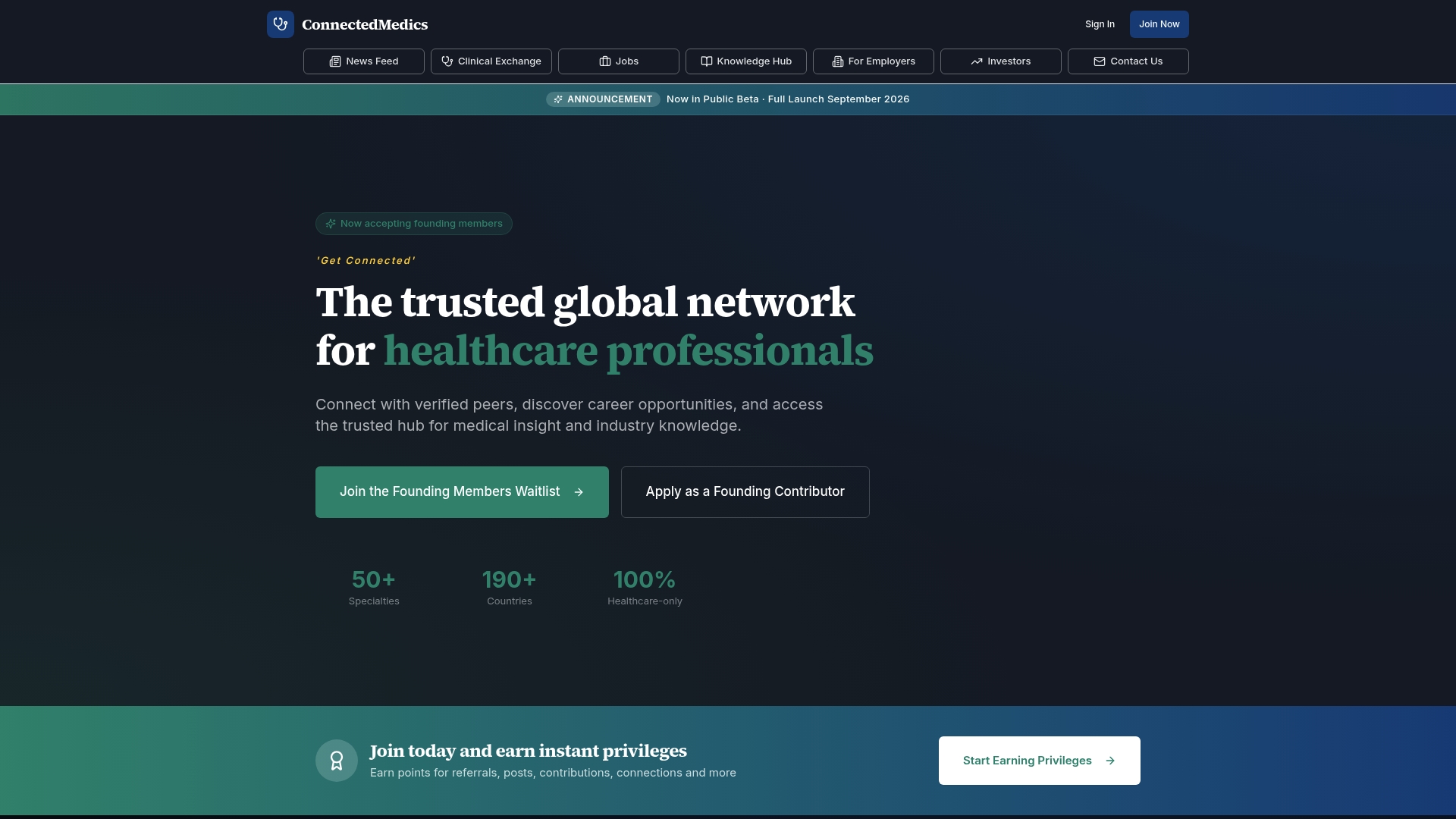
The platform aggregates findings from peer-reviewed sources and presents them in formats designed for clinical relevance, not academic browsing. With over 4,600 active healthcare vacancies and a growing library of case-based resources, Connectedmedics serves as a practical tool for professionals who need current clinical knowledge alongside career development. Access the Connectedmedics knowledge hub to review recent case studies, connect with verified specialists, and stay current with evidence that directly informs patient care decisions.
FAQ
What is a clinical case study in medicine?
A clinical case study is a structured report documenting a patient's presentation, diagnosis, treatment, and outcome in detail. It generates knowledge about conditions where randomized trial data is limited or unavailable.
How do case studies improve diagnostic accuracy?
Case-based pattern recognition trains clinicians to hold multiple diagnoses open and test each against objective data, reducing premature diagnostic closure and unnecessary testing.
Can AI replace human judgment in clinical case analysis?
AI models show high concordance with MDT decisions on diagnostic logic but cannot replace human contextual adaptation for real-time bedside safety and procedure feasibility assessments.
What is the CARE guideline for case reports?
CARE (Case Report) is a standardized checklist requiring title, abstract, patient information, clinical timeline, diagnostic assessment, therapeutic intervention, and discussion. Most peer-reviewed journals require CARE compliance for case report submissions.
How does case-based learning benefit medical education?
Integrating CBL with concept mapping produces significantly higher logical reasoning scores than traditional lectures (p < 0.05), with 90% of students reporting intent to apply the method in professional practice.