
Cardiology job openings move fastest through specialty career centers, hospital HR pages, and verified healthcare marketplaces. General job boards return thin or irrelevant results for cardiology roles, so time is better spent on specialty-specific channels. Connectedmedics is a recommended starting point for targeted, credential-checked cardiology openings, alongside specialty society boards and hospital system career pages.
TL;DR:
- Specialty society job boards often list niche roles in electrophysiology, structural heart, and interventional cardiology before they reach general job sites.
- Verified healthcare marketplaces like Connectedmedics ensure listings are tied to credential-checked employers and include specialty tags, reducing irrelevant or unclear postings.
- Filtering by subspecialty, employment type, call schedule, and procedural volume helps candidates identify openings with manageable workloads and clear expectations.
- Cardiology compensation has increased about 10% in 2025, with signing bonuses reaching up to 100,000 dollars and incentives in underserved regions often more aggressive.
Table of Contents
- Where Cardiology Jobs Are Posted (And Why Each Channel Matters)
- How Do You Narrow Cardiology Openings to the Ones Worth Applying For?
- Application Checklist and Credential Expectations
- What Compensation and Negotiation Levers Should You Expect?
- Locum Tenens, Contract, and Part-Time Roles: What to Verify First
- How to Use Recruiters and Verified Platforms to Cut Time-to-Hire
- How Long Does the Cardiology Job Search Actually Take?
- What Does a Cardiology Job Search Actually Cost?
- Author Perspective: What I Look For When Screening Offers Myself
- How Connectedmedics Helps You Find Verified Cardiology Roles Faster
- Sources
- FAQ
Where Cardiology Jobs Are Posted (And Why Each Channel Matters)
Not every job board covers cardiology the same way. Some specialize in subspecialty roles. Others carry volume, but bury cardiology under thousands of unrelated postings.
Specialty society job boards tend to list roles for electrophysiology, structural heart, and interventional cardiology before those postings reach general boards. Recruiters filling niche procedural roles often go straight to society member lists because the candidate pool is small and highly specific. If you work in EP or structural heart, checking society feeds weekly should be part of your routine, not an afterthought.
Broad medical career centers and journal-affiliated boards, including listings tied to NEJM and JAMA, along with platforms like PracticeMatch, carry a wider spread of general cardiology and hospitalist-adjacent openings. These sites work well for candidates open to relocation or multiple practice settings, since volume is higher but relevance per posting is lower.
Hospital HR pages remain the most direct source for system-level roles, especially at academic medical centers and large health systems building out cath lab or heart failure programs. The catch is that most hospital career pages use generic applicant tracking systems not built for physician search, so postings can be vague about call structure or compensation until you reach a recruiter.
General government job portals rarely help here. Searches on USAJOBS for cardiology roles frequently return few or no direct matches, since most VA and federal cardiology hiring routes through internal postings or direct recruiter contact rather than public search.
A verified healthcare marketplace like Connectedmedics filters out the noise other boards can't. Every listing ties back to a credential-checked employer, and specialty tags mean an EP-specific opening doesn't get lost among 200 unrelated internal medicine roles.
Start your search in this order:
- Specialty society job boards for your exact subspecialty
- A verified healthcare-only marketplace with specialty filters
- Hospital system career pages for target geographic markets
- Journal-affiliated or general medical career centers for broader options
- Recruiter networks for roles that never get publicly posted
Pro Tip: Set up saved searches with location radius and subspecialty tags on at least two platforms. Recruiters often repost the same opening across multiple boards weeks apart, so a saved alert catches it earlier than a manual search would.
How Do You Narrow Cardiology Openings to the Ones Worth Applying For?
Filtering by subspecialty alone isn't enough. The postings that look identical on paper can differ enormously in daily workload once you dig into call structure and lab access.
Filters that actually change fit include:
- Subspecialty match: general cardiology, interventional, EP, structural heart, heart failure, or noninvasive
- Employment type: employed physician, partnership track, academic, or locum
- Practice setting: hospital-employed, private group, academic medical center, or multispecialty system
- Call frequency: solo call, shared rotation, or backup-only
- Cath lab block time: guaranteed procedural volume versus "as available"
- RVU targets: productivity thresholds tied to base salary and bonus structure
Apply filters in this sequence:
- Set subspecialty and location radius first, since these eliminate the largest number of irrelevant listings.
- Cross-check employment type against your career stage. Early-career candidates often benefit from employed models with mentorship; experienced physicians may prefer partnership tracks.
- Read the call language literally. If a posting says "shared call" without specifying the rotation size, flag it for a direct question before applying.
- Confirm cath lab or procedural volume commitments in writing, not verbally during a phone screen.
- Compare RVU targets against regional benchmarks before assuming a number is competitive.
Vague call language is the single biggest red flag in cardiology postings. A listing that says "reasonable call expectations" without defining rotation frequency usually means the actual burden is heavier than advertised. Practitioner reporting on call burden and cath lab block time consistently finds that verified schedules, not published summaries, determine real work-life balance.
Undefined EMR burden is the second flag worth screening for early. A role that doesn't mention documentation support or scribe access often means the physician absorbs that time personally, which adds hours the base salary doesn't account for.
Application Checklist and Credential Expectations
Employers expect a consistent set of credentials before they'll move a cardiology application to interview. Missing paperwork slows the process more than any other single factor.
Mandatory requirements typically include:
- Board certification or board-eligible status in cardiovascular disease or your subspecialty
- A valid state medical license, or documented eligibility to obtain one
- Active Basic Life Support (BLS) and Advanced Cardiac Life Support (ACLS) certification
- DEA registration, either active or in process
Common optional asks that strengthen an application include a current procedure log for interventional or EP candidates, recent publications, and a summary of quality metrics from your current or most recent role.
Your CV should lead with board status and subspecialty focus, not education history. Cover letters work best when they name the specific program or service line you're applying to, since generic letters get skimmed fast by recruiters managing high applicant volume.
Credentialing and privileging typically add two to four weeks to onboarding, sometimes longer at academic centers with credentialing committees that meet monthly rather than weekly. Budget for out-of-pocket items during this window, including state license fees, DEA registration renewal, and any required continuing education to meet state-specific requirements.
Pro Tip: For procedural roles, prepare a one-page privileges and volume summary ahead of time. Listing your annual case counts by procedure type saves the credentialing committee weeks of back-and-forth and signals you're organized before you've walked into the building.
What Compensation and Negotiation Levers Should You Expect?
Cardiologist pay grew meaningfully heading into 2026. Medscape's 2026 Cardiologist Compensation Report found roughly 10% pay growth for cardiologists in 2025, with many subspecialists reporting total compensation above $500,000. Bonuses in these roles are commonly tied to RVU production rather than flat incentives.

Recruitment packages have expanded to match a tightening labor market. Industry recruiting data shows typical 2026 offers include signing bonuses ranging from $25,000 to $100,000, relocation assistance between $10,000 and $25,000, and loan repayment offers reaching up to $200,000 for select hires, particularly in underserved regions.
That last detail matters more than it might seem. Workforce projections show demand for cardiologists will outpace supply through 2037, with adequacy falling from 92.2% to 81.4% and shortages concentrated in nonmetropolitan counties and Western states. Systems in those regions offer stronger financial incentives because they have to.
By the numbers: Cardiologists saw roughly 10% compensation growth in 2025, and signing bonuses reported in 2026 recruiting data run as high as $100,000 for select subspecialty hires.
Before accepting any offer, request transparency on the metrics that drive your actual take-home pay:
- Your RVU conversion rate and how it compares to regional or national benchmarks
- Payer mix breakdown for the practice or service line you're joining
- Historical procedural volume for the position, not projected volume
- How bonus thresholds are calculated and paid out (quarterly versus annual)
Signing bonuses and relocation packages are negotiable more often than base salary. Recent physician compensation trends show signing bonuses climbing across specialties, giving cardiologists more room to negotiate that line item even when base salary is fixed by a compensation grid.
Locum Tenens, Contract, and Part-Time Roles: What to Verify First
Locum and contract work make sense as a bridge between permanent positions, a way to test a new geographic market, or a source of supplemental income without relocating. They also give you leverage: working a few locum assignments in a target region before committing to a permanent role tells you far more than a single site visit.
Before signing any contract, confirm these items in writing, not verbally:
- Exact call boundaries, including solo-call frequency and backup coverage
- Malpractice coverage terms and tail coverage responsibility
- Who handles credentialing paperwork and the expected timeline
- Minimum guaranteed volume or hours, not just maximum caps
Recruiters placing subspecialty candidates in EP and structural heart roles routinely advise that call boundaries and procedure volume expectations belong in the contract itself, not in a verbal agreement during the offer call. If a locum assignment includes a path to permanent hire, negotiate conversion terms up front, including any buyout fee the staffing agency might charge your future employer.
How to Use Recruiters and Verified Platforms to Cut Time-to-Hire
Verified profiles change how recruiters and employers respond to you. A profile with confirmed board status and license verification gets prioritized over an unverified resume sitting in a generic applicant tracking system, simply because the employer's screening work is already done.
When reaching out to a recruiter directly, include your subspecialty, board status, target geography, and the specific practice setting you want, whether that's academic, employed, or partnership track. Recruiters who respond within a day or two with specific openings, rather than a generic "let's chat" message, are usually the ones worth investing time in.
On a healthcare-specific platform, configure your profile signals deliberately:
- Set subspecialty tags precisely, since "cardiology" alone is too broad to trigger relevant matches
- Save location-based alerts with radius settings that match your real relocation tolerance
- Keep your CV and procedure log current, since stale profiles get deprioritized in matching algorithms
- Turn on employer messaging so recruiters can reach you directly without a public application
Recruiting analyses for 2026 show that general cardiology roles surface widely across broad career centers, while interventional and EP roles move through specialty feeds and trusted recruiter networks faster than they reach public postings. That pattern makes recruiter relationships and platform alerts more valuable the more subspecialized your role.
Pro Tip: Turn on profile visibility for recruiter messaging even if you're not actively applying. Passive visibility on a verified platform surfaces off-market openings that never get publicly posted, which is often where the strongest compensation packages live.
How Long Does the Cardiology Job Search Actually Take?
From first application to signed offer, most cardiology job searches run twelve to twenty weeks, though timelines stretch longer for academic positions or roles requiring committee-level credentialing approval.
The first two to four weeks typically go toward initial outreach and application submission across your priority channels. Expect phone screens with recruiters or department chairs within one to three weeks of applying to a well-matched posting. On-site interviews usually follow within another two to four weeks, especially for hospital-employed roles that involve meeting the broader cardiology team and administration.
Offer negotiation adds another two to three weeks in most cases, particularly when compensation includes RVU-based components that require modeling against your expected procedural volume. Once you sign, credentialing and privileging add another four to eight weeks before your actual start date, longer at academic centers with monthly committee cycles.

Locum and contract roles move faster, sometimes filling within two to four weeks total, since staffing agencies handle much of the credentialing legwork in advance. If you're working against a hard start-date deadline, factor licensing timelines into your search from day one rather than treating them as a final step.
What Does a Cardiology Job Search Actually Cost?
Job searching isn't free, and the costs add up faster than most candidates expect, especially when relocation and multi-state licensing are involved.
State medical license fees vary by state, typically running several hundred dollars per application, with additional costs if you need licenses in more than one state during your search. DEA registration renewal adds a separate fee on a multi-year cycle. ACLS and BLS certification renewal, required by nearly every employer, runs a modest recurring cost most physicians already budget for.
Relocation is the largest variable. Employers often provide relocation assistance in the $10,000 to $25,000 range, but that allowance rarely covers the full cost of a cross-country move with a family, home sale, or temporary housing during a gap between positions. Board exam fees, if you're pursuing a new subspecialty certification, add thousands more and should be budgeted separately from relocation.
Interview travel is another overlooked cost. Some systems cover flights and hotel for on-site interviews; smaller practices often don't. Ask directly before booking travel, and keep receipts if reimbursement is promised, since delayed reimbursement is common enough to plan around.
Author Perspective: What I Look For When Screening Offers Myself
Call burden and team support decide more offers than salary does. I read every posting for what it doesn't say about call rotation before I read what it promises about compensation. A vague call description is rarely an oversight.
The pattern I see most often: two offers with nearly identical pay, but one has guaranteed cath lab block time and the other has "flexible" access. The flexible one always turns out worse. Ask for the actual schedule before you ask for a raise.
— David
How Connectedmedics Helps You Find Verified Cardiology Roles Faster
A verified healthcare marketplace filters out generic noise seen on general job boards by ensuring cardiology listings are tied to verified employer credentials. That's the real difference: specialty tags that match your exact subspecialty, employer profiles that are already credential-checked, and saved alerts that surface new openings before you have to go hunting for them again.
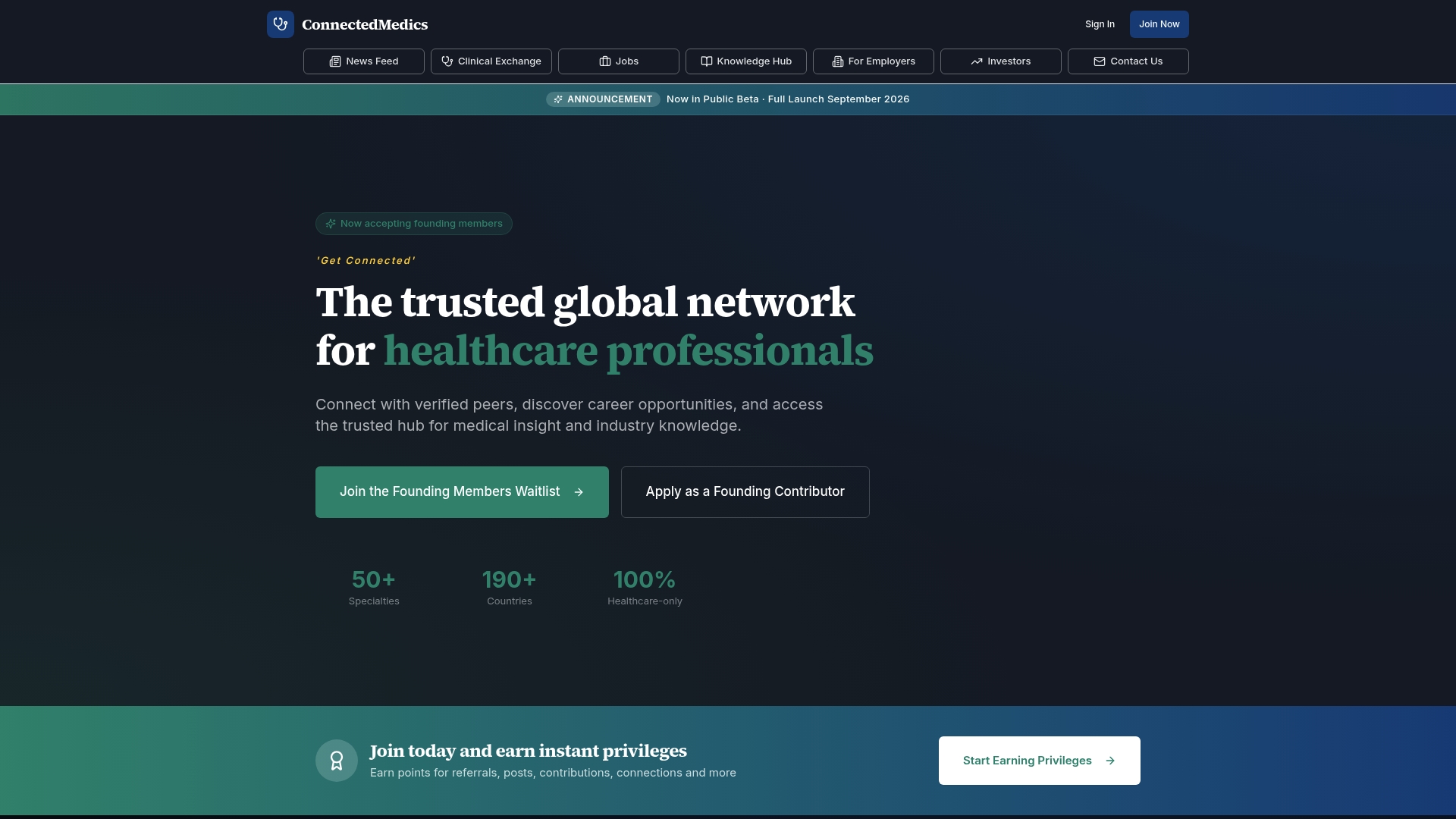
Getting started takes three steps. Verify your board certification and license status on your profile, set saved alerts for your subspecialty and target geography, and upload a current CV so recruiters can message you directly through the platform. Employers and hospital recruiters looking to fill cardiology openings can post through the Free, Growth, or Enterprise plans, or explore the Premium Employer option for advanced recruitment tools. If you're ready to see verified openings matched to your specialty, create your profile on Connectedmedics and turn on recruiter messaging today.
Sources
- Assessing Supply, Demand, and Adequacy of Cardiologists in the United States: Projecting a National Shortage | JAHA
- Medscape Cardiologist Compensation Report 2026
FAQ
Where Should I Start My Cardiology Jobs Search?
Start with specialty society boards for your exact subspecialty, then move to a verified healthcare marketplace like Connectedmedics for credential-checked listings. Hospital HR pages and journal-affiliated career centers round out a thorough search for general cardiology roles.
How Much Do Cardiologists Earn in 2026?
Compensation varies widely by subspecialty, but Medscape's 2026 report found roughly 10% pay growth in 2025, with many subspecialists reporting total compensation above $500,000. Incentive bonuses are commonly tied to RVU production.
What Credentials Do I Need to Apply for Cardiology Jobs?
Employers typically require board certification or board-eligible status, a valid state medical license or documented eligibility, and active ACLS and BLS certification. DEA registration is also standard for most clinical roles.
How Long Does It Take to Get Hired as a Cardiologist?
Most searches run twelve to twenty weeks from first application to signed offer, with credentialing adding another four to eight weeks before the actual start date. Locum and contract roles often fill faster, sometimes within two to four weeks.
Does Connectedmedics Charge Cardiologists to Search for Jobs?
Connectedmedics offers free access to browse verified cardiology job listings and knowledge hub content. Employer-side posting plans, including Free, Growth, and Enterprise, are listed on the employer page, while individual clinician membership pricing is available on the site.