
Clinician-only cardiology forums are verified, moderated communities where cardiologists, fellows, and advanced practice providers discuss cases, join subspecialty groups, and find job leads. The right approach is to join platforms that check credentials at the door, enforce active moderation, and handle case discussion with HIPAA-aware posting tools. Connectedmedics fits this model, pairing verified profiles with a jobs board and clinical knowledge hub built for this exact purpose.
TL;DR:
- Verified clinical communities ensure that members' credentials and licenses are confirmed, which enhances trust in case discussions and advice.
- Active moderation by named specialists and clear confidentiality practices, including de-identification, are essential for maintaining professional standards and HIPAA compliance.
- Use specific filters on job boards, such as verified employer contact details and transparent salary ranges, to distinguish genuine opportunities from vague listings.
- When posting cases, remove all direct identifiers and consider institutional guidelines to prevent patient re-identification, especially in rare or sensitive cases.
- Building a reputation through consistent, evidence-based contributions can increase visibility to recruiters and foster valuable mentorship within verified cardiology forums.
Table of Contents
- What Cardiology Forums Actually Do (And Who's On Them)
- How to Evaluate a Cardiology Forum (Use This Checklist)
- Posting Clinical Cases Without Creating a Problem
- Finding Real Job Leads and Building Your Network
- Why a Verified Network Changes the Job Search
- A Cardiologist's View From Inside These Threads
- Join a Verified Cardiology Network Built for Clinicians
- Sources
- FAQ
What Cardiology Forums Actually Do (And Who's On Them)
A clinician-only cardiology forum is not a comment section. It's a gated professional space built around three functions: case discussion, subspecialty channels, and career tools. Electrophysiology threads, interventional case reviews, and heart failure management groups run separately from general cardiology chatter, which keeps signal-to-noise ratios workable for busy clinicians.
Membership is restricted to cardiologists, cardiology fellows, and verified advanced practice providers. That gate matters more than it sounds. The ACC DocMatter Community built its entire model around this principle: secure, membership-verified discussion produces better clinical dialogue than open platforms ever will.
The functional breakdown looks like this:
- Case discussion threads for diagnostic dilemmas, imaging interpretation, and management questions
- Subspecialty channels covering EP, interventional cardiology, heart failure, and structural disease
- Practice-management forums for billing, staffing, and workflow questions specific to cardiology
- Job boards filtered by specialty, geography, and practice setting
Public health forums and patient-facing communities serve a different purpose entirely. They're built for accessibility, not clinical precision. A verified clinician space trades that reach for something more useful to a practicing physician: peers who can actually evaluate the ECG you're posting.
How to Evaluate a Cardiology Forum (Use This Checklist)
Not every platform calling itself a "clinician community" earns that label. Before committing time to one, run it through five checks.
- Verification depth. Does the platform confirm license status and NPI numbers, or just ask users to check a box claiming they're a doctor? Real vetting matters because it determines whether the person answering your question actually has the training to answer it.
- Moderation and governance. Look for named specialty moderators, not just terms-of-service boilerplate. Platforms with rotating expert "case leads" and clear conflict-of-interest disclosure rules keep discussions clinically focused instead of drifting into promotional noise.
- Privacy and security infrastructure. Case-sharing features should support de-identification by default, with private channels for sensitive discussions and no indexing of clinical content by search engines.
- Content quality signals. Are contributors labeled with verified credentials? Do responses cite sources rather than offer unsupported opinions?
- Community activity. Check for active case threads, scheduled CME events, and a jobs board with real specialty filters rather than a generic listings dump.
Pro Tip: Before joining, search the platform for a recent controversial case (a borderline STEMI call, a contested EF measurement) and read how moderators handled the disagreement. That single thread tells you more about governance quality than any "About Us" page.
This matters because the research backs it up directly. Physician-led platforms tend to align better with actual clinical workflow than generalist networks retrofitted for medicine. Verification isn't a nice-to-have feature bolted onto a forum. It's the mechanism that makes the entire discussion trustworthy.
Posting Clinical Cases Without Creating a Problem
Sharing a tricky case for peer input is one of the most valuable things a cardiology forum offers. It's also where clinicians get careless.
Start with de-identification. Direct identifiers (name, medical record number, exact date of birth) obviously need to go. Less obvious: exact dates of service, specific facility names, and unredacted image metadata can all narrow a patient's identity down to one person in a small community. The ACC's guidance on secure case discussion recommends checking institutional policy whenever a case involves any ambiguity about what counts as identifiable.

Some cases shouldn't go up at all, at least not yet. If consent is unresolved, or if the patient's condition is rare enough that even a de-identified summary could point back to them within your local medical community, wait.
When you do post, structure the case for fast, useful replies:
- Concise history (comorbidities, presenting symptoms, timeline)
- Key vitals and lab values relevant to the question
- Imaging summary rather than raw, unredacted files where avoidable
- One clear question, stated up front, not buried in paragraph four
Readers who respond should cite sources and flag the limits of remote assessment. Nobody on a forum thread has physical access to the patient, and the best responses say so explicitly rather than issuing confident-sounding advice from partial information.
Pro Tip: If a thread response ignores the stated clinical question and pivots into unsolicited advice about unrelated aspects of care, that's a moderation flag, not just an annoying reply. Report it. Good platforms want to know.
Most credible forums have a reporting mechanism for posts that cross professional lines, whether that's unprofessional conduct, unverifiable claims, or content that reads more like sales pitch than case discussion.
Finding Real Job Leads and Building Your Network
Cardiology forums double as functional career infrastructure, but only if you know which signals to trust.
Verified employer postings look different from generic listings. They include specific role descriptions, named contacts that match institutional websites, and transparent compensation ranges rather than vague "competitive salary" language. Watch for red flags: employers who won't provide verifiable contact details, recruiters asking for payment to "unlock" a listing, or job descriptions so vague they could apply to five different specialties.
Networking on these platforms works less like cold outreach and more like organic visibility. A few tactics actually move the needle:
- Ask specific, well-framed mentorship questions rather than generic "any advice?" posts
- Introduce yourself through case-based contributions, not a standalone bio post
- Offer concise expert commentary on threads in your subspecialty rather than lengthy essays
Consistency compounds. A cardiologist who reliably posts sharp, evidence-based responses in EP or structural heart threads becomes visible to recruiters browsing the same specialty groups, even without actively job hunting.
Why a Verified Network Changes the Job Search
Connectedmedics builds its entire structure around the checklist above rather than treating verification as an afterthought. Every profile goes through credential confirmation, which directly answers the verification criterion that matters most when you're deciding whether a platform's case discussions are worth your time.
The jobs board carries over 4,600 active healthcare vacancies, filterable by specialty, so a cardiology fellow can isolate interventional openings without wading through unrelated postings. The knowledge hub adds another layer: content authored by verified medical experts rather than anonymous contributors, which is exactly the content-quality signal the research on trusted clinical platforms points to as a trust driver.
Getting started takes a few concrete steps:
- Create a verified profile using license and NPI details
- Set specialty tags for cardiology and any subspecialty focus
- Join relevant cardiology discussion groups
- Enable job alerts filtered by role type and location
A Cardiologist's View From Inside These Threads
The value of a clinician forum shows up in specific moments: a baffling ECG pattern gets a same-day read from three interventionalists in different time zones, a referral network forms out of a heart failure thread, a fellow finds a mentor through a well-argued case comment rather than a cold email.
Verification is what makes those exchanges trustworthy. When you know the person responding actually holds a cardiology license, you weigh their opinion differently than an anonymous internet comment. That's not a small distinction. It's the entire reason these platforms work when open forums don't.
The trade-off worth naming honestly: forum time competes with clinical time. The clinicians who get the most out of these communities check in with intention, not as constant background scrolling.
— David
Join a Verified Cardiology Network Built for Clinicians
A verified network only works if the verification is real, and that's the gap Connectedmedics closes for cardiologists comparing platforms against the checklist above. License and NPI checks happen at signup, not as an afterthought, which means the case discussions and specialty groups you join are actually populated by credentialed peers.
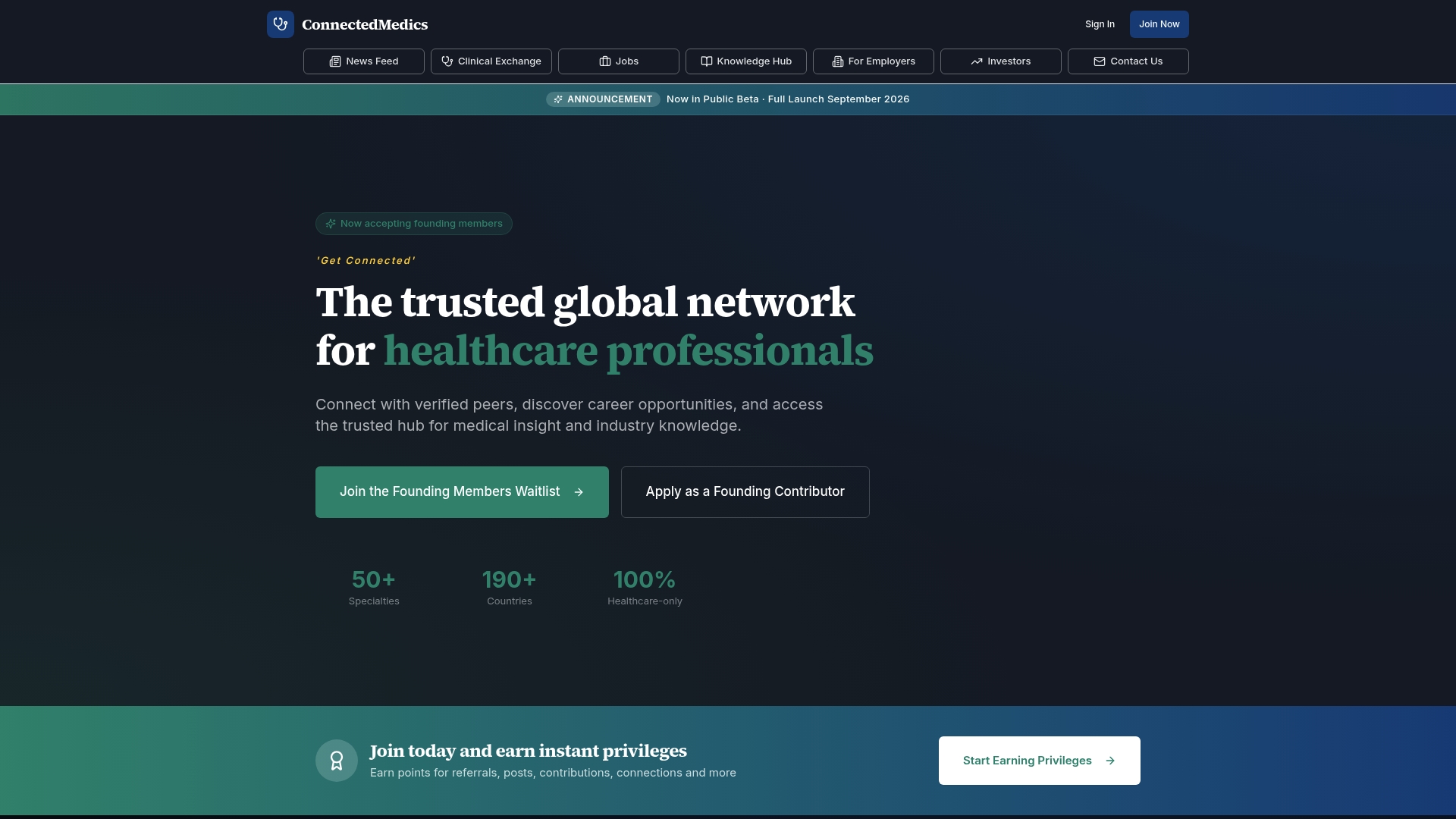
Getting set up takes a few minutes: verify your credentials, select cardiology and subspecialty tags, join the relevant discussion groups, and turn on job alerts filtered to your specialty and location. Employers and hospital recruiters looking to post verified cardiology roles can explore the employer plans, including the Growth plan at $99 per month, or check the Premium Employer tier for expanded reach into verified clinical talent. For clinicians ready to see what a verified specialty community looks like from the inside, create a profile on Connectedmedics and start with your cardiology group of choice.
Sources
- ACC DocMatter Community - American College of Cardiology
- The case for cardiovascular collaboration: Why platform partnerships drive greater practice impact – Health Technology Net
This article is general information, not a substitute for advice from a qualified doctor. Consult a qualified healthcare professional about your own circumstances before acting on anything here.
FAQ
What Makes a Cardiology Forum "Clinician-Only"?
A clinician-only forum verifies license and NPI status before granting access, restricting participation to cardiologists, fellows, and verified advanced practice providers. This filters out non-professional participation and keeps case discussion at a clinical level, unlike open patient forums or general social media.
Are Cardiology Forums HIPAA-Compliant?
Compliance depends on the platform's design, not the topic itself. Look for secure case-sharing tools, de-identification support, and private channels rather than public indexing, since these features determine whether case discussion meets HIPAA-aware standards.
How Do I Find Legitimate Cardiology Job Postings on These Platforms?
Legitimate postings include verifiable employer contact details, specific role descriptions, and transparent compensation information. Connectedmedics filters its jobs board by specialty tags, which helps surface verified cardiology openings without generic listing noise.
Can I Post a De-Identified Case for Peer Feedback?
Yes, provided direct identifiers, exact dates, and identifying imaging metadata are removed first. When ambiguity exists about what counts as identifiable, checking institutional policy before posting is the safer route, as ACC DocMatter's guidance recommends.
How Much Does Connectedmedics Cost for Clinicians?
Connectedmedics offers employer plans including a Growth tier at $99 per month, with Free and Enterprise options available; current pricing details for individual clinician membership are listed on the Connectedmedics site.