
AI speeds up sourcing, early resume screening, outreach, scheduling, and structured clinical triage in healthcare recruiting, but none of it replaces human judgment. Every workflow needs guardrails: name-based checks against the OIG LEIE exclusion list, EEOC/ADA limits on pre-offer questions, and a relevant talent source such as ConnectedMedics to anchor the pipeline.
TL;DR:
- Treat OIG LEIE and SAM.gov name matches as flags, then verify identity against date of birth and license number before making decisions.
- Require active, applicable licenses as hard filters, but keep medical or disability questions out of every interaction before a conditional offer.
- Pilot one or two roles for 30 days, compare similar roles through cohort or A/B testing, and require human review of every shortlist.
- Track time to fill, time to first interview, recruiter hours, shortlist quality, and cost per hire; audit bias regularly and review scoring rationales.
- For clinician outreach, use SMS first, obtain explicit consent, honor STOP requests, cap message frequency, and require human approval for messages drafted by AI.
Table of Contents
- How AI improves sourcing and early screening for healthcare roles
- Candidate engagement and scheduling: mobile-first outreach with SMS and AI assistants
- Compliance and credential checks you should build into any AI workflow
- Using AI for structured clinical evaluation: scenario-based interviews and scorecards
- Bias, fairness, and legal risks: what recruiters must check before trusting AI
- Implementation best practices: pilots, human oversight, and ATS integration
- Measuring impact: metrics to track and realistic outcomes
- Quick start checklist and 30-day pilot template
- Customization of AI models for different healthcare specialties
- Integration challenges with healthcare credentialing databases
- Data privacy and security standards specific to healthcare recruiting AI
- Author perspective: a recruiter's view on balancing speed with clinical safety
- How ConnectedMedics supports recruiters adopting these practices
- FAQ
- Sources
How AI improves sourcing and early screening for healthcare roles
License-aware sourcing matches candidates to roles by specialty, unit, and seniority, not just keywords. A generic applicant tracking search returns anyone with "nurse" in a resume; license-aware matching filters for active RN status, ICU experience, and the right state or compact licensure before a recruiter ever opens a profile.
Pre-screening against federal exclusion databases adds a safety layer early. Checking a candidate's name against the OIG LEIE and SAM.gov exclusion lists flags potential issues before a recruiter invests time, though final confirmation still happens downstream with full identity verification.
Continuous sourcing, sometimes called a living registry, keeps a warm pool of pre-screened candidates refreshed daily. When a unit opens a position, recruiters start with a shortlist instead of a blank search.
- License-aware matching filters by specialty, unit, and seniority, not keywords alone.
- Exclusion-list prechecks flag risk early; full verification happens later in the process.
- Warm, daily-refreshed candidate pools cut the time between job posting and first outreach.
Pro Tip: Run exclusion checks before outreach, not after an interview is scheduled. It saves recruiter hours on candidates who won't clear compliance anyway.
Candidate engagement and scheduling: mobile-first outreach with SMS and AI assistants
Shift-based clinicians rarely check email between patients, which makes SMS a more reliable first contact than a recruiting inbox. AI can draft outreach messages for recruiter approval, keeping tone consistent while a human still signs off before anything sends.
Reply triage is where AI assistants earn their keep: routing "interested, what shifts" to fast scheduling and "not right now" to a nurture list, then proposing interview times that respect a candidate's existing shift pattern instead of assuming a nine-to-five.
Consent matters as much as speed. Build in explicit opt-in language, a working STOP keyword, and frequency caps so candidates are not pinged daily.
- Lead with SMS for shift workers; reserve email for formal documents.
- Keep a human approval step on AI-drafted messages before they go out.
- Configure STOP/opt-out handling and message caps to avoid candidate fatigue.
Compliance and credential checks you should build into any AI workflow
Every AI-assisted workflow needs non-negotiable checkpoints before a candidate advances. Name-based OIG LEIE and SAM.gov prechecks belong at the top of the funnel, functioning as flags for closer review rather than final determinations, since name matches require human confirmation against date of birth and license number.
License and certification filters should reject, not just deprioritize, candidates who lack active, applicable credentials. For nursing roles, understand how a candidate's license behaves under the Nurse Licensure Compact (eNLC) before assuming multistate eligibility.
ADA and EEOC rules apply regardless of who or what is asking the questions. EEOC guidance is explicit that disability-related or medical questions cannot occur before a conditional offer, which means AI screening scripts and chatbots must be built the same way a human interviewer would be trained.
- Treat exclusion-list hits as flags requiring manual verification, not automatic rejections.
- Make active license and certification status a hard filter, not a scoring factor.
- Keep all disability-related or medical questions out of pre-offer AI interactions.
Automated hiring tools can screen out qualified candidates with disabilities when not designed carefully, according to EEOC guidance on AI and disability discrimination, which also outlines accommodation steps for both applicants and employers.
Using AI for structured clinical evaluation: scenario-based interviews and scorecards
Scenario-based AI interviews present candidates with realistic clinical situations, such as a deteriorating patient or a medication discrepancy, and score responses against a defined rubric. The output includes a transcript and a scorecard, giving hiring managers an auditable record instead of a recruiter's paraphrased notes.
Explainability matters here more than almost anywhere else in the funnel. A clinical director reviewing an AI-generated score needs a plain-English rationale, not a confidence percentage, to trust and act on it.
Calibration loops close the gap between automated scoring and clinical reality: hiring managers review a sample of scored interviews each month, flag disagreements, and feed that back into rubric adjustments.
- Scenario-based interviews simulate real clinical tasks and generate transcripts plus scorecards.
- Require a plain-English rationale alongside every automated score.
- Run monthly calibration reviews between hiring managers and the scoring rubric.
Bias, fairness, and legal risks: what recruiters must check before trusting AI
Bias in AI hiring tools is documented, not theoretical. Large-scale experimental research found that several widely used large language models produced gender and racial biases when scoring resumes, resulting in measurable differences in hiring probability across groups. Separate research on algorithmic bias in healthcare AI warns that tools trained on historical data can mirror or amplify existing inequities in clinical and hiring decisions alike.
Mitigation is achievable but requires ongoing work, not a one-time setup. Regular bias audits, transparent scoring rationales, and oversight that includes legal and equity, diversity, and inclusion stakeholders are the baseline, and interdisciplinary review is the recommendation experts converge on even when they disagree on specific methods.
- Schedule recurring bias audits rather than a single pre-launch check.
- Require transparent, reviewable scoring rationales for every AI-assisted decision.
- Include legal and EDI stakeholders in AI vendor selection and ongoing oversight.
Pro Tip: Ask any AI vendor how their model performed in an independent bias audit, and ask to see the methodology, not just a summary claim.
Implementation best practices: pilots, human oversight, and ATS integration
The safest way to adopt AI in healthcare recruiting is a timeboxed pilot, not a full rollout. Run each pilot for 30 days against one role cluster with metrics defined up front.
- Choose one or two roles with high volume and clear, non-negotiable licensing requirements.
- Let AI handle triage, screening, outreach, and scheduling while humans make every shortlisting and hiring decision.
- Document each AI-influenced decision, set a recurring audit cadence, and loop in compliance and legal before expanding scope.
A practical 30-day pilot framework keeps the rollout structured instead of ad hoc, and a resume-screening playbook built for healthcare covers the screening-specific setup in more depth.
Pro Tip: Keep the pilot small enough that a single recruiter can manually spot-check every AI decision during the initial pilot period.
Measuring impact: metrics to track and realistic outcomes
Track a small set of KPIs rather than everything the vendor dashboard offers: time-to-fill, time-to-first-interview, recruiter admin hours saved, qualified shortlists per role, and cost-per-hire. These numbers tell you whether AI is actually changing outcomes or just adding activity.
Isolate AI's real contribution with a cohort or A/B structure, comparing roles run through the AI-assisted workflow against similar roles run the old way during the same period, since process changes made at the same time can otherwise get credited to the wrong cause.
Expect faster early-stage processing, not faster everything. Human verification at the credential and offer stage should stay exactly as rigorous as before, which is what keeps quality intact while speed improves upstream. A deeper look at healthcare recruitment benchmarks helps set realistic baselines before a pilot starts.
- Core metrics: time-to-fill, time-to-first-interview, admin hours saved, shortlist quality, cost-per-hire.
- Use cohort or A/B comparisons to separate AI impact from other process changes.
- Keep human credential verification unchanged even as early-stage speed improves.
AI tools built for resume evaluation can replicate historical hiring biases found in their training data, per peer-reviewed research on algorithmic bias, which is why speed metrics alone never tell the full story.
Quick start checklist and 30-day pilot template
A controlled pilot answers the "does this work for us" question without betting the whole recruiting function on it.
- Pick two or three high-volume roles and lock in non-negotiables: required licenses, certifications, and specialty fit.
- Set baseline metrics and target KPIs, map the integration with your ATS and credentialing sources, and configure OIG/SAM prechecks before launch.
- Run the pilot with human review on every shortlist, collect metrics weekly, and run a bias spot-check at day 15 and again at day 30.
Customization of AI models for different healthcare specialties
A screening model tuned for emergency department nursing will miss what matters for a pediatric oncology pharmacist. Specialty customization means adjusting the scoring rubric, the scenario bank for structured interviews, and the license/certification filters to match each clinical area, not running one generic model across every req.
For bedside nursing roles, customization centers on unit type, acuity level, and shift pattern fit. For allied health and diagnostic roles, it shifts toward specific certifications and equipment familiarity. For physician and advanced practice roles, scenario banks need to reflect the clinical decision-making actually expected at that level of practice, reviewed by someone who has done the job.
Workforce assessment design benefits from aligning scenario content with recognized frameworks rather than inventing criteria from scratch. A guide to matching assessment questions to recognized workforce frameworks is a useful reference point when building or buying specialty-specific scoring tools.
Customization is ongoing, not a one-time configuration. New certifications emerge, scope-of-practice rules shift by state, and a rubric built for a nurse practitioner role may already be out of date. Build a review cadence into the AI governance process so specialty models get revisited at least annually, with input from the clinical leaders who actually supervise that specialty.

Integration challenges with healthcare credentialing databases
Credentialing data lives in fragmented systems: state licensing boards, specialty certification bodies, the Nurse Licensure Compact database, hospital-specific credentialing software, and federal exclusion lists like OIG LEIE and SAM.gov. None of these systems were built to talk to each other, let alone to an applicant tracking system or an AI screening layer.
The practical challenge shows up as latency and format mismatch. A license status pulled from one state board might be out of date, while another updates in real time, and matching a candidate's name across systems with different formatting conventions (middle initials, maiden names, suffixes) creates false negatives that can wrongly exclude a qualified candidate.
Recruiters should expect to combine automated pulls with periodic manual verification rather than trusting any single integration as authoritative. Building a clear escalation path for mismatches, where a flagged discrepancy goes to a human for resolution within a set timeframe, keeps the funnel moving without letting data gaps become hiring delays or compliance gaps.
Partner organizations that manage ongoing credential verification in specialized care settings offer a useful model here. Background-check practices for home care nursing roles illustrate how continuity-focused staffing models handle credential and background verification for medically complex care, which is a useful reference point even outside the home care setting.
Data privacy and security standards specific to healthcare recruiting AI
Candidate data in healthcare recruiting often brushes up against protected health information, especially when scenario-based clinical assessments touch on how a candidate would handle a patient case. That overlap means AI recruiting tools need data handling practices closer to clinical software standards than to generic HR tech.
HHS guidance on AI deployment calls for high risk-management rigor and transparency about how predictive systems are designed, trained, and evaluated, a standard that extends naturally to AI tools making or influencing hiring decisions in clinical settings.
Practical steps include encrypting candidate data in transit and at rest, limiting AI vendor access to only the data fields needed for the specific function, and maintaining clear data retention and deletion policies for candidates who do not move forward. Vendor contracts should specify where data is stored, who can access it, and how long it persists after a pilot or hiring cycle ends.
Recruiters should also confirm that any AI vendor's data practices hold up under the specific state and federal rules that apply to the employer's own operations, since requirements vary and a vendor's general compliance claim is not the same as a verified fit for a specific healthcare system's obligations.
Author perspective: a recruiter's view on balancing speed with clinical safety
AI works best as an assistive funnel tool: faster sourcing, faster first-pass screening, faster scheduling. It should never make the final call on a clinical hire. Explainability and compliance checks come first, speed is the byproduct. Pairing that approach with a verified network and AI career-matching built specifically for healthcare, rather than generic hiring tools, makes the guardrails easier to hold.
— David
How ConnectedMedics supports recruiters adopting these practices
We built ConnectedMedics around verified healthcare profiles and specialty targeting, so the sourcing practices in this article start from a cleaner base than a generalist job board. Our AI-powered career matching and employer tools give recruiters a healthcare-only pipeline to pilot against, paired with a global jobs board for posting roles directly to verified candidates.
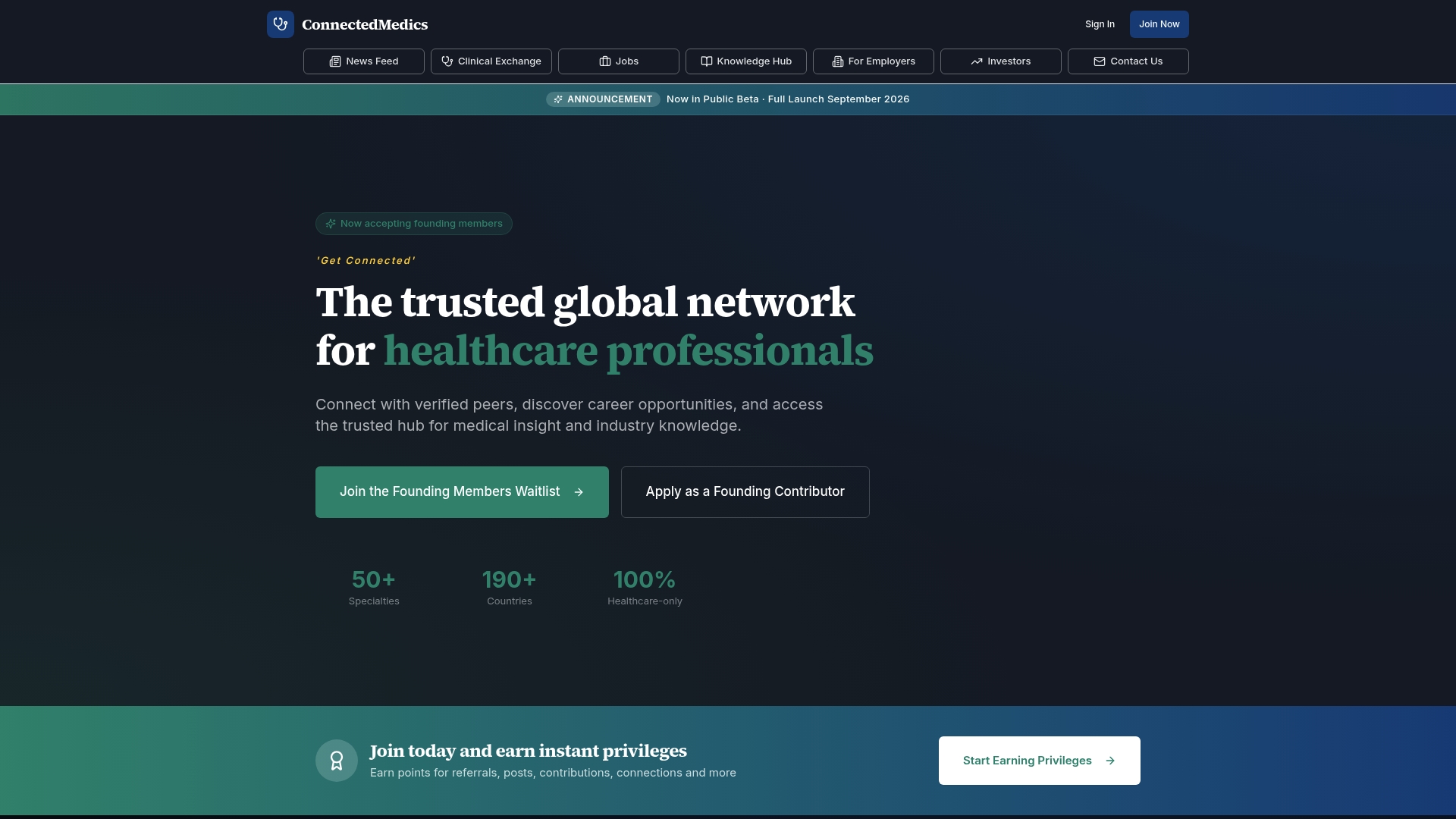
- Verified clinician profiles across specialties, giving recruiters a way to identify candidates who may fit their roles.
- AI career-matching built for healthcare roles, not adapted from generic recruiting software.
- Employer plans, with current prices on our employer plans page, for teams scaling their hiring workflow.
Our employer plans page has current plan details, and you can explore Premium Employer features for access to our verified talent network.
FAQ
Which healthcare jobs will survive AI?
Roles requiring direct patient contact, clinical judgment under uncertainty, and hands-on procedures remain firmly human, including bedside nursing, physician diagnosis and treatment, and most allied health care delivery. AI in recruiting and in clinical support tends to handle triage, documentation assistance, and screening rather than replacing the clinical role itself.
How is AI being used in recruiting?
AI handles sourcing and specialty matching, early resume screening, SMS-based candidate engagement, interview scheduling, and structured scenario-based clinical interviews that produce scorecards for hiring managers to review. Final shortlisting and hiring decisions stay with human recruiters and clinical leaders.
What are the top AI applications in healthcare?
Beyond recruiting, commonly cited applications include clinical decision support, diagnostic imaging analysis, administrative documentation, and patient triage tools. Documented bias in large language models used in clinical decision simulations is a reason these applications, including recruiting, require human oversight rather than full automation.
Is it legal to use AI in healthcare recruiting?
Using AI in recruiting is legal, but it must operate within existing employment law, meaning no disability-related or medical questions before a conditional job offer under ADA and EEOC guidance. Selection tools must also meet validity standards under the Uniform Guidelines on Employee Selection Procedures when they affect protected groups.