
Medics Connect is a verified digital platform that connects healthcare professionals across specialties for peer collaboration, clinical knowledge exchange, and career development. Generic professional networks were not built for the nuances of medical practice. They lack credential verification, specialty-specific communities, and the clinical governance that serious professionals require. Platforms built specifically for medical professionals connection solve these problems by combining verified identities, specialty-focused communities, and intelligent job matching. Connectedmedics is one such platform, offering over 4,600 active healthcare vacancies alongside a knowledge hub contributed by verified medical experts.
How does medics connect work for specialty-focused collaboration?
Physician collaboration on a verified network operates through structured specialty communities rather than open feeds. Each community is organized around a clinical discipline, whether cardiology, oncology, emergency medicine, or nursing. This structure means a cardiologist sees case discussions, peer feedback threads, and job leads relevant to cardiology, not a general stream of unrelated posts.
Verified membership is the foundation of this model. Professionals submit credentials during registration, and the platform cross-references board certifications and licensure before granting full access. This process mirrors the manual audit approach used by exclusive regional networks, where access is limited to consultants and senior clinicians who demonstrate appropriate training tiers. The result is a community where every participant has earned their seat.
Collaboration formats within specialty communities include:
- Case discussions: Clinicians present anonymized patient scenarios and receive structured peer input.
- Peer feedback: Manuscript drafts and clinical protocols circulate for expert review before submission or implementation.
- Knowledge exchange: Summarized research findings and clinical trend updates are posted by verified contributors.
- Referral networks: Professionals connect across institutions for second opinions and cross-specialty consultations.
AI-native platforms go further by surfacing clinically relevant peers and content based on a professional's specialty, career stage, and stated interests. This personalized content discovery removes the manual effort of searching for relevant discussions. A newly qualified oncologist, for example, gets matched with senior oncologists open to mentorship rather than sifting through thousands of unrelated profiles.
Pro Tip: Complete every section of your specialty profile, including subspecialty interests and clinical focus areas, before engaging in community discussions. Platforms use this data to match you with the most relevant peers and job opportunities.

How does a specialized healthcare network compare to general platforms?
The differences between a specialty-focused healthcare network and a general professional platform are significant in practice, not just in theory.
General professional networks were built for broad career visibility. They work well for recruiters scanning resumes and professionals sharing career milestones. They were not built for nuanced clinical debate, peer-moderated case review, or specialty-specific job matching. Public social media platforms present additional problems. Transitioning from public social media to curated, identity-verified medical communities involves a cultural shift toward clinical nuance and peer-led moderation. Open platforms reward engagement volume, not clinical accuracy.
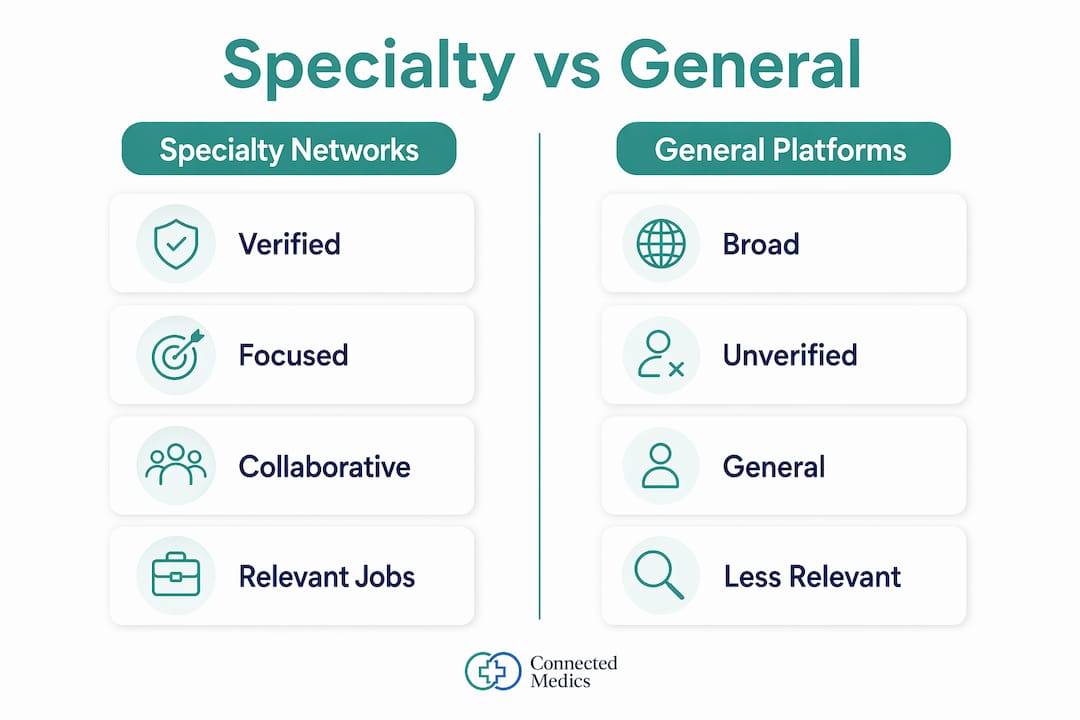
The table below compares network types across four dimensions that matter most to healthcare professionals.
| Network type | Trust and verification | Specialty focus | Collaboration quality | Job relevance |
|---|---|---|---|---|
| General professional networks | Low to moderate | None | Low | Low |
| Public social media | None | None | Very low | None |
| Entry-level medical forums | Low | Partial | Moderate | Low |
| Verified specialty platforms | High | Full | High | High |
Verified specialty platforms, including Connectedmedics, sit at the top of this comparison on every dimension that affects clinical professionals. The medical connectivity approach that prioritizes verified expert collaboration over engagement metrics directly supports faster adoption of evidence-based clinical practice. That is a measurable difference in professional value, not a marketing claim.
For professionals weighing their options, a medical job board vs general recruitment comparison shows the same pattern: specialty-specific platforms consistently deliver more relevant opportunities with less noise.
How to connect with medics and maximize your professional profile
Getting the most from a digital health platform requires more than creating an account. The professionals who build the strongest networks follow a clear sequence of steps.
- Verify credentials first. Submit your medical license, board certifications, and any subspecialty qualifications during registration. Incomplete profiles delay access and reduce your visibility in AI-driven matching systems.
- Complete your specialty profile in full. List your clinical focus areas, years of experience, practice setting, and any research interests. Platforms use this data to surface you in relevant peer searches and job recommendations.
- Join two or three specialty communities. Start with your primary specialty and one adjacent area. Active participation in a focused community builds credibility faster than passive membership across many groups.
- Contribute before you ask. Post a case summary, share a research finding, or offer feedback on a peer's manuscript. Professionals who contribute first build reputations that attract inbound connection requests.
- Use AI matchmaking for job leads. Platforms with intelligent matching, like Connectedmedics with its healthcare recruitment platform features, surface relevant vacancies based on your specialty, location preferences, and career stage. Review these recommendations weekly.
- Maintain a consistent presence. Log in regularly, respond to peer questions, and update your profile when your credentials or interests change. Visibility on specialty platforms compounds over time.
Data-driven medical staffing platforms reduce administrative complexity by automating credentialing and billing workflows. This means clinicians spend less time managing paperwork and more time building the professional relationships that advance their careers.
Regional and specialty niche adaptations of medical professional networks
Not all healthcare networks operate at the same global scale. Regional adaptations serve specific geographic markets and specialty groups with tailored governance models.
Gulf Cooperation Council (GCC) healthcare networks, for example, apply strict gatekeeping for clinicians relocating to the region. Membership in these networks is limited to consultants and senior nurses who demonstrate Tier-1 or Tier-2 Western training through their professional profiles. Manual audits verify credentials before access is granted. This level of rigor reflects the regulatory environment in GCC countries, where clinical governance standards are enforced at the institutional level.
Specialty niche networks follow similar principles. A network focused on pediatric surgery operates differently from one serving general practitioners. Key characteristics of well-governed niche networks include:
- Credential tiers: Membership levels reflect seniority and subspecialty qualification.
- Regional compliance: Governance models align with local licensing bodies and regulatory frameworks.
- Moderated discussions: Peer moderators with relevant clinical backgrounds oversee community content.
- Exclusive job access: Vacancies are visible only to members who meet the specialty and credential requirements.
Incomplete professional profiles are the most common reason for membership delays in manually audited networks. Missing board certifications or unclear training histories trigger review holds that can delay access by weeks.
Pro Tip: Before applying to any regional specialty network, update your online professional profile to explicitly display your board certifications, training tier, and any regional licensure. Auditors check these details first.
Key Takeaways
Verified, specialty-focused medical networks deliver higher-quality collaboration, more relevant job access, and stronger clinical governance than general professional platforms.
| Point | Details |
|---|---|
| Verification is the foundation | Credential checks before access protect community quality and clinical credibility. |
| Specialty communities outperform general feeds | Focused groups produce more relevant case discussions, peer feedback, and job leads. |
| Profile completeness drives visibility | AI matchmaking relies on complete specialty data to surface relevant peers and vacancies. |
| Regional networks require extra preparation | Manual audits in GCC and similar markets delay access when profiles are incomplete. |
| Active contribution builds reputation | Professionals who contribute content attract more inbound connections and opportunities. |
Why I think general professional networks have had their time in medicine
The shift from public social media to verified specialty networks is not a trend. It is a correction. General platforms were never designed for clinical exchange. They reward volume and virality, which are the opposite of what medicine requires.
Dr. Mandy Cohen has pointed to the need to move beyond viral social media toward private, peer-verified knowledge exchanges as a way to restore trust and advance clinical care. That observation reflects what many clinicians already feel but rarely articulate: the tools they use for professional networking do not match the standards they apply to their clinical work.
The professionals I see thriving on specialty networks share one habit. They treat their digital profile with the same rigor they apply to a CV submitted for a consultant post. Every credential listed, every community contribution made, and every peer connection accepted reflects on their professional standing. That discipline is what separates a useful network from a noisy one.
The future of physician collaboration runs through verified, AI-assisted specialty communities. Platforms that combine credential verification, intelligent matching, and peer-moderated clinical exchange will define how medical professionals build careers and advance knowledge in the years ahead. The professionals who adopt these platforms now will have a measurable head start.
— David
Connectedmedics: a verified network built for healthcare professionals
Connectedmedics is a global platform built exclusively for healthcare professionals, addressing the fragmentation that generic networks create. It offers verified professional profiles, a knowledge hub with clinical insights from verified medical experts, and a jobs board with over 4,600 active healthcare vacancies.
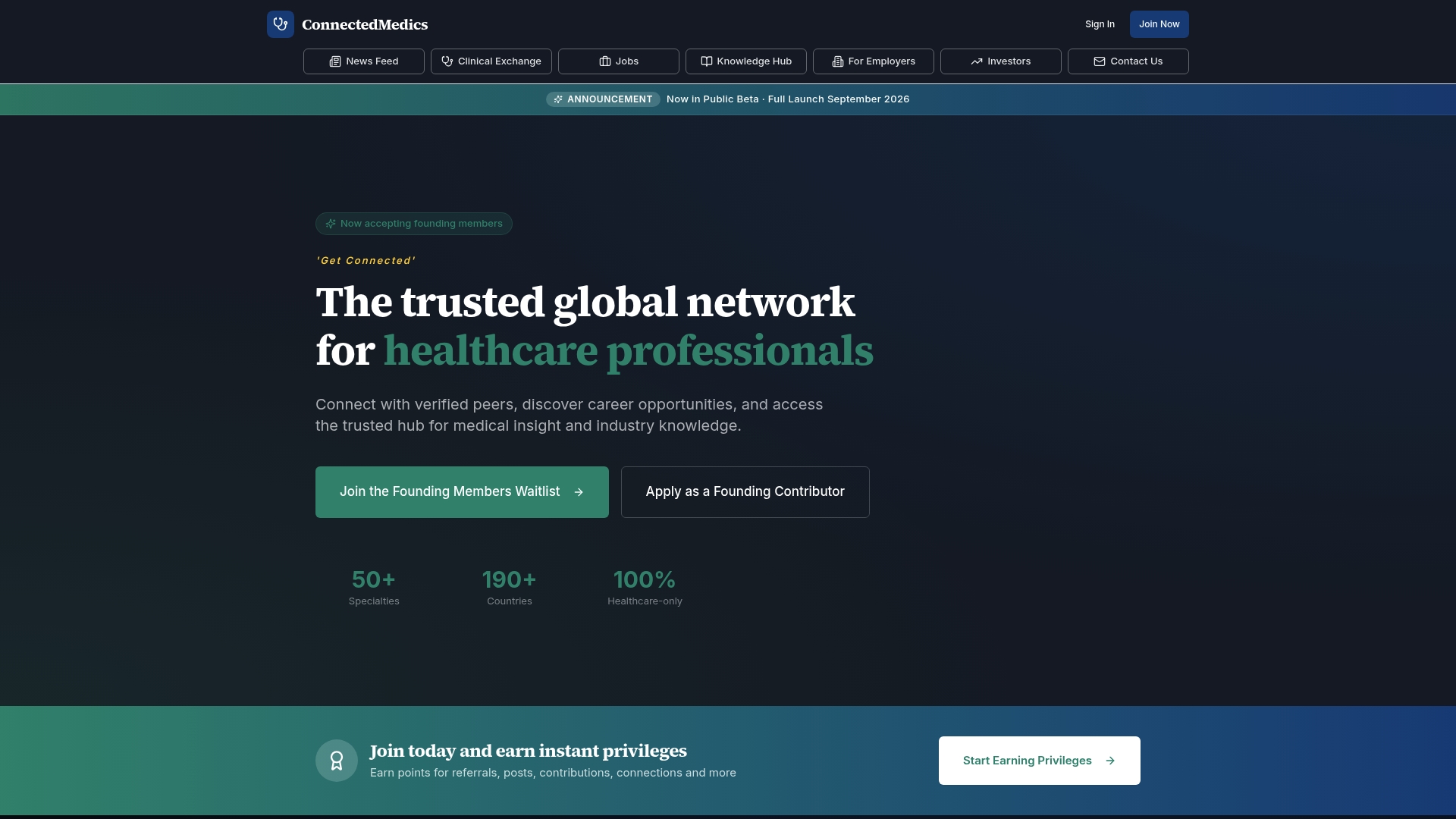
For professionals seeking peer networking opportunities or specialty-specific job leads, Connectedmedics provides the infrastructure that general platforms cannot. Verified membership, specialty-focused communities, and intelligent job matching are available in one place. Visit Connectedmedics to create a verified profile and access the healthcare network built around your specialty.
FAQ
What is medics connect?
Medics connect refers to verified digital platforms that connect healthcare professionals within specific specialties for peer collaboration, clinical knowledge exchange, and career development. Connectedmedics is a leading example, offering verified profiles, specialty communities, and over 4,600 active job vacancies.
How does credential verification work on specialty medical networks?
Professionals submit their medical license, board certifications, and training records during registration. The platform cross-references these against recognized credentialing standards before granting full community access.
Why are specialty networks better than general platforms for physicians?
General platforms lack clinical governance, credential verification, and specialty-focused communities. Verified specialty platforms prioritize peer-moderated clinical exchange over engagement metrics, producing higher-quality professional interactions.
How does AI matchmaking help clinicians find jobs?
AI matchmaking analyzes a clinician's specialty, credentials, location preferences, and career stage to surface relevant vacancies automatically. Data-driven staffing platforms reduce administrative burden and improve the speed and accuracy of job matching.
What causes delays when joining regional healthcare networks?
Incomplete professional profiles are the primary cause. Manual audit processes in regional networks, particularly in GCC markets, require explicit display of board certifications and training tiers before membership is approved.