
Credentialing is your organization's formal decision about a clinician's fitness to practice here. Verification, especially primary source verification, is the documented evidence you use to make that decision. Credentialing is the broader process, governed by standards from NCQA, NAMSS, and the Joint Commission, and it doesn't end at hire. Because re-credentialing typically occurs on a recurring cycle, credentialing is ongoing work, not a one-time file.
TL;DR:
- Primary source verification requires confirming credentials directly with issuing sources using methods like official letters, secure electronic queries, verified phone calls, or trusted verification organizations.
- Audit-ready credentialing files depend on documenting verifier identity, contact date, and specific verified items, with missing details risking failure.
- Organizations must comply with standards from NCQA, NAMSS, the Joint Commission, CMS, and federal exclusion databases, with non-compliance exposing them to accreditation and funding risks.
- Credentialing involves organizational decisions on practice privileges and enrollment, extending beyond simple license checks and requiring ongoing re-credentialing every two to three years.
- Verified profiles that document baseline credentials can streamline onboarding and reduce repeat verification work, but do not replace the need for primary source confirmation and committee review.
Table of Contents
- Healthcare Credentialing vs. Verification: What's the Real Difference?
- What Counts as Primary Source Verification?
- Which Standards and Regulators Actually Govern This?
- How the Credentialing Workflow Actually Runs
- Why Do Credentialing Files Fail Audits?
- How Verified Profiles Reduce Onboarding Friction
- An Editorial Take on Operational Priorities
- Get Verified Profiles Built for Faster Credentialing
- Sources
- FAQ
Healthcare Credentialing vs. Verification: What's the Real Difference?
Credentialing is the organizational act of deciding whether a clinician can practice within a specific facility or health plan. A credentialing committee reviews an application, weighs verified evidence, and issues a decision, sometimes tied to privileging (what procedures a physician may perform) or payer enrollment (whether a provider can bill a specific insurer). That decision carries legal and financial weight, so it involves medical staff leadership, compliance officers, and often legal counsel.
Verification is narrower. It's the act of confirming a single fact, such as a license number, board certification, or malpractice history, directly against its original source. A credentialing overview from academic clinical governance literature makes the distinction clear: credentialing extends well past licensing checks into privileging and ongoing performance review, while verification supplies the raw facts that process runs on.
The practical line falls out quickly once you separate confirmation from judgment:
- Verification tasks: confirming an active medical license, checking board certification status, pulling a malpractice history report, confirming DEA registration.
- Credentialing decisions: approving hospital privileges, granting payer network enrollment, deciding whether a gap in employment history warrants further review, setting the scope of procedures a clinician may perform.
A license check alone answers "is this real?" Credentialing answers "should we let this person practice here, and under what conditions?" Confuse the two, and you either under-document a low-risk task or over-formalize a simple lookup. Neither serves your credentialing timeline in healthcare settings where speed and accuracy both matter.
What Counts as Primary Source Verification?
Primary source verification, or PSV, means confirming credentials directly with the entity that issued them rather than trusting a copy the applicant hands you. A Symplr analysis of provider credentialing states plainly that a provider's own copy of a license is not sufficient evidence on its own.
Pro Tip: Never accept a scanned license as your final artifact. Contact the issuing board directly, even when the document looks legitimate. Forged and outdated credentials pass visual inspection more often than administrators expect.
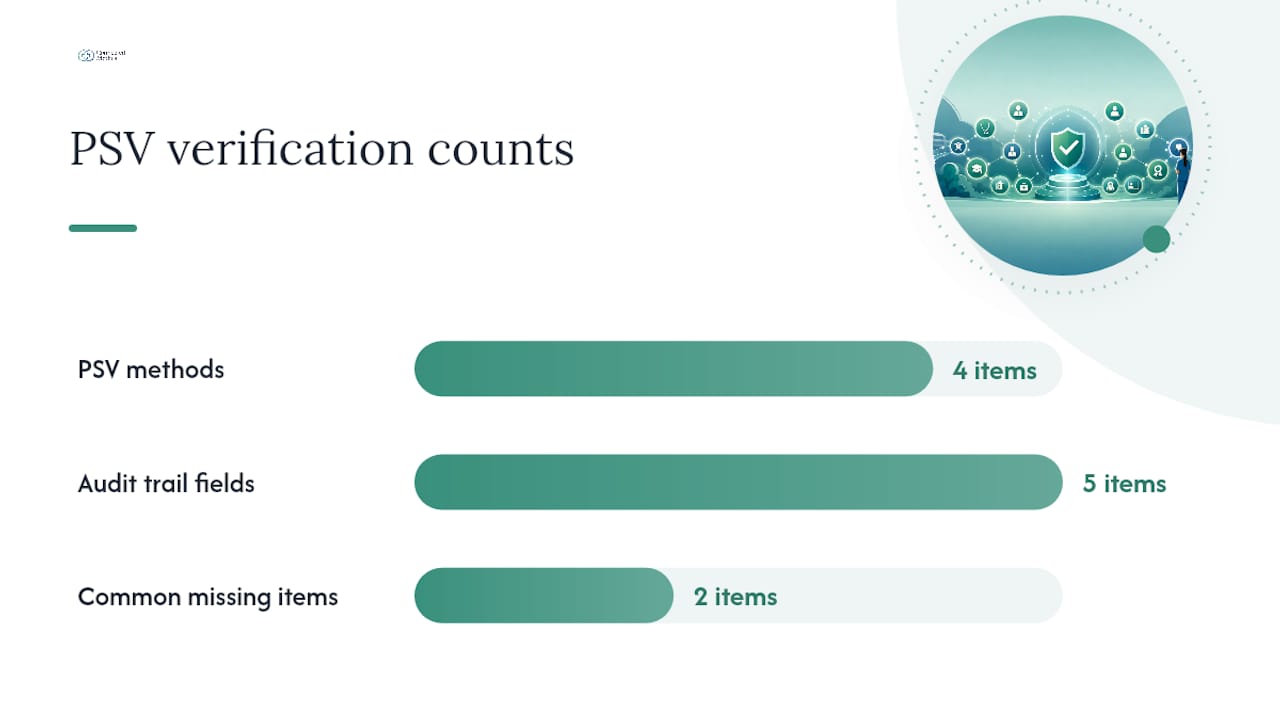
Four methods generally satisfy PSV requirements:
- Direct written confirmation from the licensing board, medical school, or residency program, delivered on official letterhead or through a verified digital channel.
- Secure electronic queries run through licensing board databases or verification services built for healthcare use.
- Documented phone verification, where the caller logs the date, the name and role of the person contacted, and the exact result given.
- Qualified credentialing verification organization (CVO) reports, produced by an NCQA-certified CVO and accepted as primary source evidence under most payer contracts.
Every one of those methods needs to produce an audit trail with five fields: the date of contact, the verifier's name and role, the source contacted, the specific item verified, and the result, plus a retained artifact proving the interaction happened. A compliance guide from DISA points to missing verifier identity or a missing date as the most common reasons files fail review.
A copied license with no confirmation call behind it fails immediately. So does an email with no date stamp, or a phone log with no name attached to the person who answered. Auditors don't ask whether the credential is probably valid. They ask whether you can prove, in writing, exactly how you confirmed it.
Which Standards and Regulators Actually Govern This?
Several organizations shape what "acceptable" verification and credentialing look like, and each one covers different ground.
- NCQA sets accreditation standards for health plans and credentialing organizations, distinguishing credentialing (the organizational decision) from certification (a provider's individual specialty recognition). Its standards guidance also anchors the re-credentialing cadence most organizations follow.
- NAMSS publishes the Ideal Credentialing Standards, which identify 13 essential data elements that should be primary-source verified, with a recommendation to complete that verification within 180 days of a credentialing decision.
- The Joint Commission and CMS tie credentialing quality directly to accreditation and to Medicare/Medicaid participation. A gap identified in a Joint Commission survey or a CMS audit can put funding and accreditation status at risk, not just a single provider's file.
- NPDB, OIG's LEIE, and SAM.gov are the exclusion and sanction databases you query at intake and again on a recurring basis. The National Practitioner Data Bank tracks malpractice payments and adverse actions; OIG and SAM track federal program exclusions that make a provider ineligible for reimbursement.
Skipping any one of these doesn't just create a paperwork gap. It creates exposure the moment a claim gets audited or a sentinel event triggers a records review.
How the Credentialing Workflow Actually Runs
A working credentialing process in healthcare follows a fairly consistent sequence, even though the specific forms and software vary by organization.
- Intake and application. The provider submits education history, license numbers, work history, and references.
- Primary source verification. Each of the NAMSS-identified elements gets confirmed against its original source, with the audit trail captured at the same time, not reconstructed later.
- Committee review. A credentialing committee evaluates the verified file against bylaws, payer requirements, and any red flags surfaced during PSV.
- Privileging decision. For hospital-based clinicians, the committee defines exactly which procedures the provider may perform.
- Enrollment, where applicable, links the credentialing decision to payer billing eligibility.
- Monitoring and re-credentialing. Exclusion databases get checked continuously, and the full file gets refreshed on a two-to-three-year cycle.
Timing matters as much as sequence. High-performing teams verify before an offer goes out, recheck immediately before the provider's start date, and confirm day-one file completeness rather than treating credentialing as background paperwork that catches up later. Continuous exclusion monitoring, rather than a single point-in-time check, closes the gap between hire date and first shift.
Pro Tip: Build a file checklist that lists the minimum evidence item for each of the 13 NAMSS elements, plus a retention note for how long that artifact stays on file. It turns a scramble at audit time into a five-minute pull. A workflow like the one outlined in ConnectedMedics' physician onboarding checklist maps closely to this sequence and can serve as a starting template.
Why Do Credentialing Files Fail Audits?
Most audit failures trace back to a small set of repeated mistakes, and nearly all of them are fixable with a policy change rather than new software.
- Accepting provider-submitted copies as final evidence instead of contacting the issuing source directly.
- Missing verifier details. A phone log with no name, role, or date attached is functionally unverifiable, even if the call actually happened.
- Incomplete practice-history PSV, where gaps in employment go unexplained or unconfirmed.
- Skipping exclusion checks at intake, or worse, never rerunning them after the initial hire.
Some findings deserve faster escalation than others: a recent license sanction, a pattern of malpractice payments, or an identity mismatch between application documents and verification sources all warrant an immediate hold on the credentialing decision rather than a note for next cycle.
Fixing this starts with a written PSV policy, a named owner for each file, a service-level agreement for how fast verification gets completed, and a monthly exclusion scan against NPDB and OIG's LEIE rather than an annual one.
How Verified Profiles Reduce Onboarding Friction
Connectedmedics builds verified profiles for healthcare professionals using documented checks against license and credential sources, detailed in how Connectedmedics verifies doctor licenses and credentials. The platform's approach to trust signals is covered further in verified medical professional profiles explained.
For recruiters and credentialing teams, that translates into practical time savings:
- Less duplicated verification work when a candidate's core credentials are already documented.
- A clearer starting point for an audit trail rather than a blank file.
- Faster recruiter access to clinicians who have already cleared baseline checks.
None of that replaces an accredited organization's own PSV obligations. A verified profile is a head start on documentation, not a substitute for the credentialing committee's decision or the facility's own primary source confirmation.
An Editorial Take on Operational Priorities
Automation speeds up verification, but it shouldn't replace the human checkpoint where someone actually reads the file and asks whether it makes sense. The teams that pass audits consistently are the ones that own a file the day it lands, not the day before committee review. Set a real service-level agreement for PSV completion, run exclusion monitoring monthly instead of annually, and treat audit-trail discipline (dates, names, sources, results) as a daily habit rather than a pre-audit scramble. That discipline, more than any single tool, is what separates a defensible file from a vulnerable one.
— David
Get Verified Profiles Built for Faster Credentialing
The platform gives recruiters and credentialing teams a documented starting point instead of a blank intake form. Verified profiles carry license and credential checks already on record, which cuts down duplicated primary source work and gives the committee a cleaner file to review from day one.

For hospital recruiters and credentialing teams managing high applicant volume, that head start matters most when timelines are tight and audit exposure is real. Learn how teleradiology for hospitals provides night, ED and rural cover that depends on thorough credentialing and privileging processes. The platform's jobs and recruiter tools connect employers directly to clinicians whose baseline credentials are already documented, which shortens the distance between application and committee-ready file. If your team is evaluating how to reduce onboarding friction without cutting corners on documentation, visit Connectedmedics to see how verified profiles fit into your existing credentialing workflow.
Sources
- NCQA blog — NCQA’s credentialing standards ensure safety and integrity of practitioner networks
- NAMSS Ideal Credentialing Standards (ICS) — NAMSS
- National Practitioner Data Bank (NPDB)
- Credentialing overview — NCBI / academic chapter
FAQ
What are the two types of credentialing?
Credentialing generally splits into initial credentialing, which reviews a provider's full file before granting privileges or enrollment, and re-credentialing, which repeats that review on a recurring cycle, typically every two to three years.
Can you see patients without being credentialed?
In most accredited hospitals and health plans, no. Credentialing and privileging decisions determine whether and how a clinician may practice at a given facility, and skipping that step creates both patient safety and liability exposure.
What does credential verification mean?
Credential verification means confirming a specific qualification, such as a license or board certification, directly with the original issuing source rather than relying on a copy the provider supplies.
What is the difference between credentialing and certification?
Certification is an individual credential a provider earns from a specialty board, while credentialing is the organizational process a hospital or health plan uses to decide whether that provider, certifications included, may practice within its network.
How often does re-credentialing need to happen?
Most organizations follow a two-to-three-year re-credentialing cycle, though ongoing exclusion monitoring should run continuously between formal reviews rather than waiting for the next cycle.