
Start with specialty career centers and a verified healthcare jobs network like ConnectedMedics, then set alerts. Filter by subspecialty and work arrangement, teleradiology, per diem, or permanent, before typing a single keyword. This order matters because generic boards flood results with irrelevant postings, while subspecialty filters surface roles that match your training and license situation immediately.
TL;DR:
- Specialty society career centers are most reliable for vetted, subspecialty-specific listings with clear employer credibility signals.
- Filtering by exact subspecialty, employment type, and location early in your search drastically improves relevance and reduces wasted effort.
- Remote and contract radiology jobs often involve licensure in the patient's state, with reputable employers covering licensing costs and malpractice.
- Salary transparency has increased due to pay-disclosure laws, providing a clearer starting point for negotiations, especially on verified job boards.
- Using a verified healthcare network like ConnectedMedics enhances visibility and targeted alerts, complementing society boards and recruiters in your job search.
Table of Contents
- Where to Find Radiology Job Listings
- How Do You Filter a Radiology Job Search by Subspecialty and Location?
- Teleradiology and Remote Work: What to Expect
- Checklist: Evaluating a Radiology Job Posting Before You Apply
- Application, Interview, and Negotiation Tips for Radiologists
- Working With Recruiters and Professional Networks
- What Hiring Managers Actually Look For
- Build Your Profile on a Network Built for Radiology
- Sources
Where to Find Radiology Job Listings
Radiology job openings live in a handful of channels, and each one serves a different purpose.
Specialty society career centers are the strongest starting point. The ACR Career Center lists thousands of positions across practice settings and now flags salary-range disclosure on many postings, a direct result of pay-transparency laws spreading state by state. For interventional radiology specifically, the SIR Career HQ narrows the field to procedural roles that rarely surface on general medical job boards.
Hospital and academic career pages fill in the detail society boards often skip. These postings tend to include call schedules, partnership tracks, and named departmental contacts, information you need before a first phone screen.
Niche radiology job boards and teleradiology-specific postings are where most remote and contract roles show up. Recruiter and travel-staffing channels, such as Aya Healthcare, regularly list per diem and travel assignments that never reach a society board at all.
A healthcare-specific network like ConnectedMedics ties these threads together by combining verified clinician profiles with a jobs board built for medical specialties rather than general employment.
- Society career centers: best for vetted, subspecialty listings with employer credibility signals.
- Hospital career pages: best for full job detail and institutional benefits.
- Niche and teleradiology boards: best for remote and contract volume.
- Recruiters: best for roles not publicly posted.
- Verified healthcare networks: best for combining all four with targeted alerts.
Relying on one channel alone means missing entire categories of radiology career opportunities.
How Do You Filter a Radiology Job Search by Subspecialty and Location?
Precision beats volume in every radiology employment search. A search returning 400 results wastes more time than one returning 12 relevant ones.
- Tag the exact subspecialty and fellowship keywords you trained in. "Neuroradiology" and "MSK" pull different results than "diagnostic radiology," and fellowship-specific terms often unlock listings general searches miss entirely.
- Filter by employment type before anything else. Permanent, travel, per diem, and remote postings carry different licensing and benefit implications, so sorting by type first prevents wasted applications.
- Weigh geography against practical trade-offs. A larger metro market usually means more openings but tighter competition and higher licensing costs across state lines; a rural or underserved market often means faster hiring and loan-repayment incentives.
- Set saved searches with narrow alert rules. Broad alerts bury the roles worth pursuing. Refine by subspecialty tag and schedule type, then adjust weekly based on what actually lands in your inbox.
This sequence, subspecialty first, schedule second, geography third, cuts through noise faster than any single keyword ever will.
Teleradiology and Remote Work: What to Expect
Remote radiology jobs fall into a few distinct models, and each one shapes your schedule and paycheck differently. Overnight-read arrangements pay a premium for off-hours coverage. Hybrid roles mix in-person and remote days. Contracted group arrangements often function like an independent practice, with variable volume and productivity-based pay.
Licensure is the detail candidates underestimate most. Reading studies across state lines typically requires licensure in the state where the patient is located, and reputable employers cover those costs along with malpractice coverage. Compensation usually combines a guaranteed base with productivity incentives, and sign-on bonuses are common for harder-to-fill overnight shifts.
Watch for these red flags before signing anything:
- Requests for upfront payment or licensing fees from the candidate.
- Vague or unverifiable credentialing processes.
- No named employer contact or physical practice address.
- Compensation structures that only mention productivity with no guaranteed floor.
Pro Tip: Ask any teleradiology recruiter for the name of the credentialing coordinator and the state licenses the group currently holds. A legitimate operation answers both questions in under a day.
Checklist: Evaluating a Radiology Job Posting Before You Apply
A posting that looks appealing on the surface can hide real problems in workload or support structure. Run through this before submitting an application.
- Certification and licensure: Confirm board certification requirements and whether the employer supports visa or immigration sponsorship if relevant.
- Compensation transparency: Look for a stated salary range, bonus structure, benefits summary, and call expectations. The ACR Career Center increasingly requires this disclosure on postings, which gives you real negotiation footing.
- Workload reality: Ask about modality mix, call frequency, partnership timeline, and any academic or teaching component.
- Operational support: Confirm PACS systems, IT support structure, and how long credentialing and HR onboarding typically takes.
Salary-range disclosure isn't just a compliance checkbox. When ACR's own career center notes that employers must comply with pay-transparency rules, it hands you a documented starting point for negotiation instead of a guess.
Resources like ASER's practice tools can help you benchmark clinical quality standards against what a given employer describes in its posting.
Application, Interview, and Negotiation Tips for Radiologists
Your CV packet needs to do more than list positions. It needs to make your subspecialty training obvious on the first page.
- Lead with fellowship training and subspecialty focus, not chronological work history alone.
- Prepare for both clinical and administrative interview questions. Expect questions about turnaround-time expectations and call coverage, not just imaging cases.
- Test remote-work technology in advance if the role involves teleradiology. A failed PACS demo during an interview undermines an otherwise strong candidacy.
- Negotiate beyond base salary. Call frequency, sign-on bonus, relocation support, CME allowance, and malpractice coverage are all negotiable line items, not fixed terms.
- Manage multiple offers with clear timelines. Tell each employer your decision date upfront rather than letting deadlines collide.
Pro Tip: Negotiate call frequency before salary. A lower base with lighter call often beats a higher base with a punishing rotation, and most employers have more flexibility on schedule than on the number itself.
Working With Recruiters and Professional Networks
Recruiters earn their fee when they surface roles that never get publicly posted, particularly senior placements, travel assignments, and fellowship-track openings that hospitals fill quietly, as explained in this practical guide to external recruitment. They're especially useful when you're moving between a permanent role and travel or per diem work, since that transition rarely shows up on a standard job board.
Before working with any recruiter, ask direct questions:
- Which health systems or groups do they currently place for?
- Can they name recent placements in your subspecialty?
- How is their fee structured, and who pays it?
- Can they provide a candidate reference from a past placement?
A verified healthcare network like ConnectedMedics works differently. It amplifies your visibility to employers and peers directly, rather than routing every lead through a single recruiter's client list. A guide to using medical job boards effectively walks through how to combine both approaches without duplicating effort. Follow up with any recruiter every two weeks, not daily. Persistence without pressure keeps you top of mind.
What Hiring Managers Actually Look For
Hiring managers notice candidates who filter before they apply. The biggest pitfall isn't weak credentials, it's a scattershot approach: fifteen applications to mismatched roles instead of five to well-targeted ones.

A recent placement I reviewed involved a fellowship-trained neuroradiologist who ignored general boards entirely, set subspecialty alerts on a verified network, and had two qualified interviews within three weeks. That's the pattern worth copying, not volume, precision.
Over the next seven days: build one strong CV packet, set three saved searches by subspecialty and schedule, and verify licensure requirements for any state you're targeting.
— David
Build Your Profile on a Network Built for Radiology
Connectedmedics gives you something a general job board can't: a jobs feed where every posting is filtered for healthcare, not mixed in with unrelated openings from a dozen other industries. The platform currently lists over 4,600 active healthcare vacancies, searchable by specialty rather than buried under generic keyword matches.
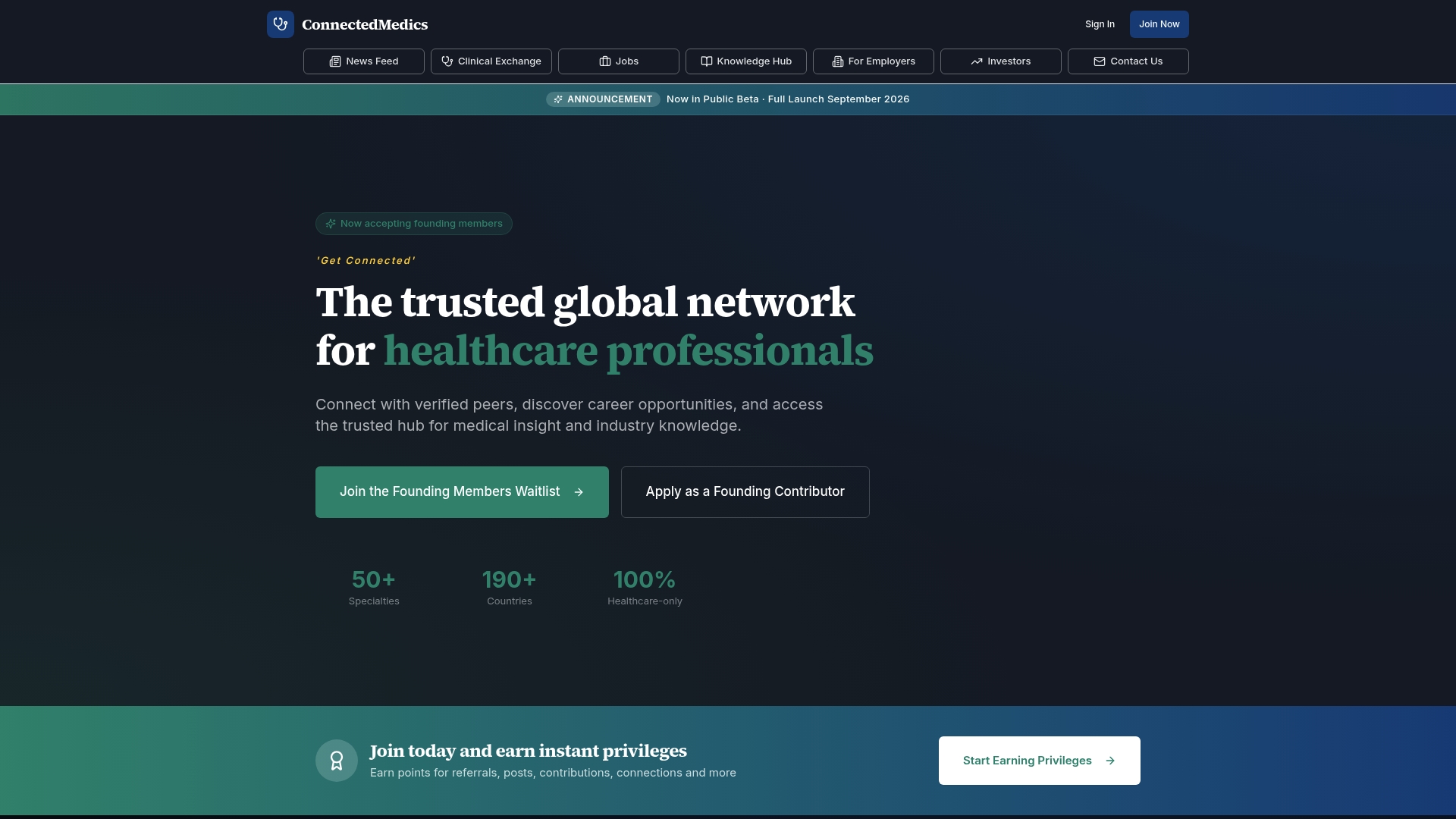
A verified clinician profile means employers and peers see your credentials up front, not a resume attachment they may never open. The Knowledge Hub adds clinical context and salary-trend data, including a breakdown of 2026 healthcare salary trends, so you walk into negotiations with real benchmarks instead of guesswork. This complements, rather than replaces, society career centers and recruiters. Use it alongside them, and set targeted subspecialty alerts.
Create your profile on ConnectedMedics and set your subspecialty alerts today.
Sources
- Recent Jobs - American College of Radiology Career Center
- Radiology Jobs - Society of Interventional Radiology's Career HQ
- Radiology Jobs | Imaging Jobs | Aya Healthcare
- ASER — Ed Imaging Guidelines & Practice Tools