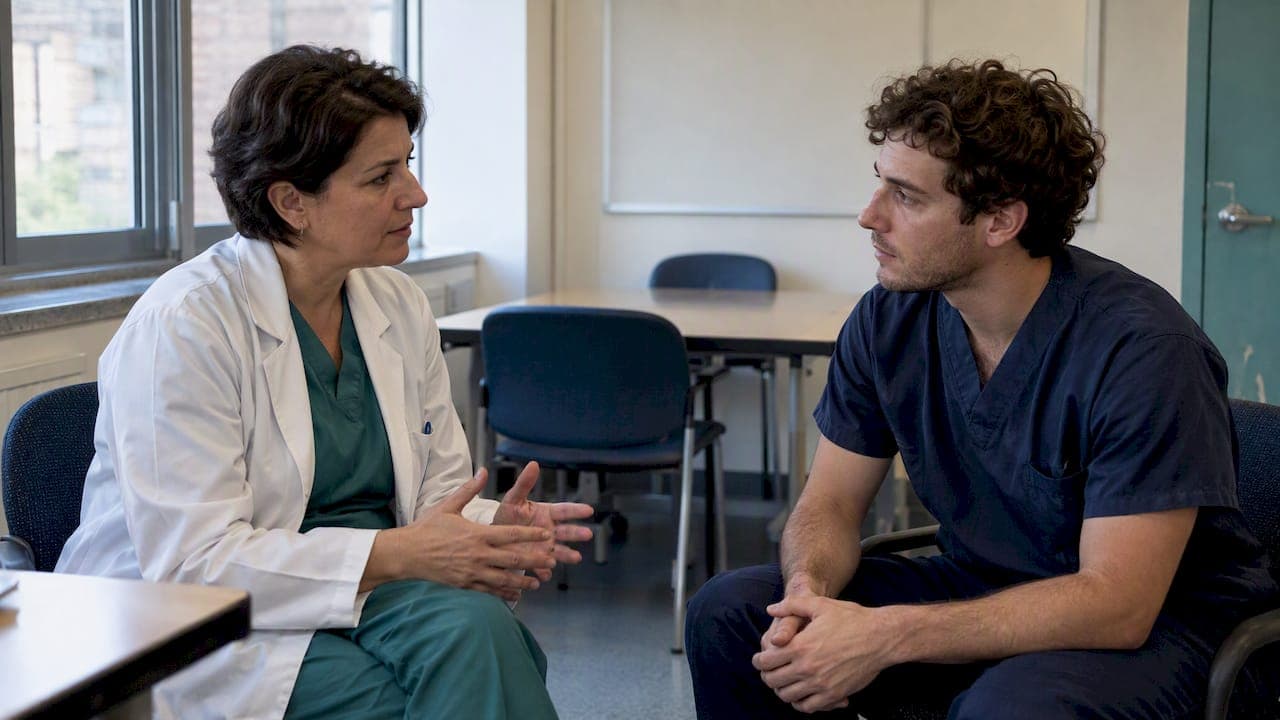
Structured peer mentoring builds clinical confidence, professional growth, and well-being when it includes confidentiality rules, trained supporters, and a clear escalation path. The immediate step: join an existing program or pilot a near-peer module in one department. This guide covers program models, a setup checklist, training basics, matching, metrics, and working examples.
TL;DR:
- Most successful programs incorporate confidentiality, voluntary participation, empathetic listening, and a clear escalation process from the outset.
- Matching pairs based on clinical context or shared experience yields more durable relationships than matching solely by seniority.
- Training supporters in empathetic listening, red-flag recognition, and escalation language is essential for safety and effectiveness.
- Regular measurement of utilization, confidence, and well-being helps refine programs and prevent supporter burnout.
- Programs need governance, protected time, and clear boundaries to sustain participation and avoid quiet failures.
Table of Contents
- Models of peer mentoring for clinicians
- Core design principles every clinician peer mentoring program should include
- Step-by-step checklist to set up a peer mentoring program
- Training, governance, and safety: what to teach supporters and how to run oversight
- Matching and recruitment: creating trusted, relatable mentor-mentee pairs
- Measuring success: metrics, evaluation cadence, and common outcomes
- Short examples and case studies: templates to adapt
- How verified, specialty-focused networks can support peer mentoring
- Integration of peer mentoring with other clinician support services
- What most programs get wrong about peer mentoring
- A verified network as one more tool for mentoring programs
- FAQ
- Sources
Models of peer mentoring for clinicians
Three formats cover most clinician needs. Mentoring pairs a less experienced clinician with a more senior one for skills and career development. Peer support connects clinicians at similar levels for emotional processing, often after a difficult case or adverse event. Near-peer teaching uses slightly more advanced trainees, such as chief residents, to coach students or junior residents on specific skills.
Each format fits a different purpose. Trainee skills training works well as near-peer teaching: a chief resident demonstrating a procedure carries credibility a faculty member sometimes lacks. Career development favors traditional mentoring, where a senior clinician offers specialty-specific guidance over months or years. Post-adverse-event support calls for peer support, ideally delivered by someone trained to listen rather than advise.
The trade-off is depth against reach. One-to-one mentoring goes deep but serves few people and needs sustained commitment. Group peer-support sessions reach more clinicians at once but offer less individual attention. Near-peer models scale across cohorts, such as student-run clinics, but require more supervision than casual pairings. Programs that mix formats tend to cover more ground than those that pick one and stop.

Core design principles every clinician peer mentoring program should include
A scoping review of peer support programs for physicians and health care providers identified recurring design principles across the programs it examined: confidentiality, informality, voluntary participation, empathetic listening, and a defined escalation pathway. Programs missing any of these tend to lose trust quickly.
- State confidentiality upfront with an opening script: what stays private, what triggers disclosure, and how notes are handled.
- Keep participation voluntary and make roles clear: supporter or mentor, not supervisor or evaluator.
- Build an escalation pathway to occupational health, an employee assistance program, or mental health services before the first session happens.
- Train supporters in empathetic listening and protect their time so the role does not become unpaid overtime.
- Assign administrative ownership to one person or committee, with a minimal evaluation plan from day one.
Pro Tip: Write the escalation script before recruiting a single supporter. Retrofitting safety procedures after a program is live erodes trust fast.
Step-by-step checklist to set up a peer mentoring program
A pilot can launch in one department within a few months. The sequence matters more than the scale.
- Define the objective: skills training, career development, or peer support after difficult events.
- Choose the model that matches the objective: near-peer, one-to-one mentoring, or group peer support.
- Set commitments: session frequency, typical duration, and protected time for supporters.
- Recruit supporters through nomination or appointment, then collect standard profiles covering specialty, role, and availability.
- Build a short training session with simulated conversations, including confidentiality and escalation scripts.
- Match pairs using shared context such as specialty, role, or lived experience.
- Operationalize referrals and scheduling, promote the program internally, and set an evaluation cadence.
Keep the launch list short enough that one person can own it:
- Confirm departmental sign-off and a budget line for protected time.
- Draft the confidentiality and escalation language with input from legal or risk management.
- Pick a referral method: self-referral, supervisor referral, or automatic outreach after flagged events.
- Schedule the first cohort's training before announcing the program broadly.
Training, governance, and safety: what to teach supporters and how to run oversight
A physician-focused peer support program trained 59 peer supporters across 11 departments and recorded 306 successful peer-support interactions over three years, with recipients reporting improved well-being and reduced stigma. That scale came from consistent training and governance, not improvisation.
Core modules, per the American College of Surgeons peer support playbook, should cover:
- Empathetic listening: inviting sharing, reflecting, and reframing emotions without rushing to solutions.
- Red-flag recognition: signs that a conversation needs to move beyond peer support.
- Escalation language: specific wording for when danger to self or others overrides ordinary confidentiality.
- Boundaries: what a supporter can and cannot promise, including limits on availability.
A near-peer trainee support program trained 36 chief residents using a two-hour interactive workshop combining lecture, vignettes, and simulation, a format short enough to fit into onboarding. Governance needs a steering committee, early legal or risk consultation on confidentiality language, and recordkeeping rules that balance privacy with mandated reporting obligations.
Matching and recruitment: creating trusted, relatable mentor-mentee pairs
Recruitment through nomination or appointment, paired with a short profile form covering specialty, role, and interests, tends to produce more durable matches than open sign-up alone. Matching on shared clinical context, such as the same specialty or similar lived experience, outperforms matching by seniority alone.
- Use a coordinator to review profiles and propose pairs rather than leaving matching to chance.
- Offer trial pairings with an easy opt-out if the fit is wrong.
- Protect supporter time explicitly and get departmental endorsement in writing.
- Reaffirm confidentiality commitments at the start of every new pairing.
Measuring success: metrics, evaluation cadence, and common outcomes
Utilization numbers, referral counts, and satisfaction surveys form the backbone of most evaluations. In the physician-focused program above, 48.5% of survey respondents reported having had a peer-support interaction, a figure worth tracking as a baseline for comparable programs.
Utilization matters, but it is not the whole picture. Self-reported confidence and well-being are common endpoints in this field, and rigorous trial-quality evidence remains limited, so treat survey gains as directional rather than definitive.
- Track referrals, completed interactions, and departmental reach monthly.
- Survey participants at 3, 6, and 12 months on confidence, stress, and willingness to recommend the program.
- Adjust training content or matching criteria based on what the surveys show, rather than waiting for an annual review.
- Flag any drop in supporter participation early: it usually signals unprotected time, not lack of interest.
Short examples and case studies: templates to adapt
A few working templates show how the pieces fit together.
- POST (physician-focused peer outreach): department-level matching, structured referral routes, and the robust training described above.
- MICReW: a peer-only research and career group built around a stated mission, guiding principles, and virtual meetings, useful as a retention-focused model.
- Near-peer clinical-skills modules: standardized training in student-run clinics that produced large confidence gains in vital signs, history-taking, and physical exam skills, with some gains persisting at two months.
Pick the department-level matching from POST if trust is the bottleneck, the virtual meeting structure from MICReW if geography is the obstacle, or the standardized skills modules if the goal is measurable learner confidence.
How verified, specialty-focused networks can support peer mentoring
Verified profiles and specialty communities on a platform like ConnectedMedics can speed up trusted matching, since supporters and mentees can confirm credentials before a first conversation. A knowledge hub format works well for hosting training modules, sample vignettes, and escalation scripts so new cohorts do not start from a blank page. Job and employer tools can also tie mentoring participation to retention and career pathway planning within a department.
Integration of peer mentoring with other clinician support services
Peer mentoring works best as one layer in a broader support system, not a replacement for counseling or clinical supervision. Mentoring addresses skills and career development; peer support addresses emotional processing after a hard case; counseling and occupational health address diagnosable conditions or crisis situations. Programs that blur these lines tend to either overextend untrained supporters or underuse the professional services available.

The clearest programs state which service they provide and build explicit handoffs between them. A supporter trained to recognize red flags refers out rather than attempting to manage a mental health crisis, a boundary the ACS peer support playbook treats as a training priority. A clinician peer support program launched after adverse events at one institution referred 165 clinicians over several years, with 16 (10.8%) requiring referral to higher-level care, a pattern that shows proactive outreach reaches people who would not otherwise self-refer, provided the referral pathway to specialized care is clear from the start.
Supervision for supporters themselves matters as much as the mentee-facing structure. A supporter fielding difficult conversations without debrief or backup burns out quickly, and the program loses capacity exactly when demand rises. Linking peer mentoring explicitly to existing wellness and burnout prevention resources gives supporters somewhere to turn and gives program leads a natural partner for escalation. Treating peer mentoring, counseling, and supervision as separate but connected services, rather than overlapping or competing ones, is what keeps all three functioning.
What most programs get wrong about peer mentoring
Most peer mentoring programs fail quietly, not dramatically. They launch with enthusiasm, skip the training budget, and lose supporters within a year because nobody protected their time. The research backs this up: programs with governance, training, and recordkeeping sustain participation; programs built on goodwill alone do not.
The bigger misconception is that peer mentoring and peer support are interchangeable. They solve different problems, and conflating them leaves mentees without the career guidance they wanted or without the emotional support they needed. Pilot small, measure at three months, and protect supporter time before adding more pairs.
— David
A verified network as one more tool for mentoring programs
ConnectedMedics offers verified profiles, specialty-led communities, and a knowledge hub, built specifically for healthcare rather than general professional networking. A program lead looking to recruit supporters, confirm credentials quickly, or host training vignettes in one place can use these features alongside the setup steps above, not instead of them.
- Verified profiles speed up trust-building between mentors and mentees before a first meeting.
- Specialty communities help match pairs on shared clinical context rather than availability alone.
- The knowledge hub can host training scripts, vignettes, and escalation language for new cohorts.
Organizations building out a mentoring or recruitment structure can review employer plans and tools to see what fits a department's needs.
This article is general information, not a substitute for advice from a qualified doctor. Consult a qualified healthcare professional about your own circumstances before acting on anything here.
FAQ
What are the 5 C's of mentoring?
Definitions vary across organizations and specialties, so there is no single agreed list specific to clinician mentoring. Programs described in the peer support scoping review emphasize confidentiality, informality, voluntary participation, empathetic listening, and escalation as the design principles that matter most in practice.
How much do peer mentors get paid?
Pay structures are not standardized and vary by institution, role, and whether the position is formally compensated or treated as protected time within existing duties. Many programs, including the physician-focused peer support model described above, rely on protected time rather than direct stipends for supporters.
What are good questions to ask a mentor?
Useful questions focus on specific decisions rather than general advice: what the mentor would do differently in a similar career stage, how they handled a particular clinical or career challenge, and what skills they wish they had built earlier. Questions about day-to-day workflow, specialty choice, and work-life balance tend to produce more actionable answers than broad questions about success.
Can I use ChatGPT as a mentor?
An AI tool can help clinicians think through questions or rehearse conversations, but it cannot replace the credentialed judgment, lived experience, or escalation pathway a trained human peer supporter provides. For emotional processing after a difficult case or any safety concern, a structured peer support program with a defined escalation route is the appropriate resource.
How long does a typical peer mentoring program commitment last?
Commitment length depends on the model: near-peer workshops may run a single two-hour session, while one-to-one mentoring relationships in programs like those described by the American Academy of Pediatrics often span an academic year. Shorter "flash" mentoring options also exist for clinicians who want a single conversation rather than an ongoing relationship.
Sources
- Peer Support Programs for Physicians and Health Care Providers: A Scoping Review
- Implementation and effectiveness of a physician-focused peer support program
- Surgeon well-being resources and peer support playbook