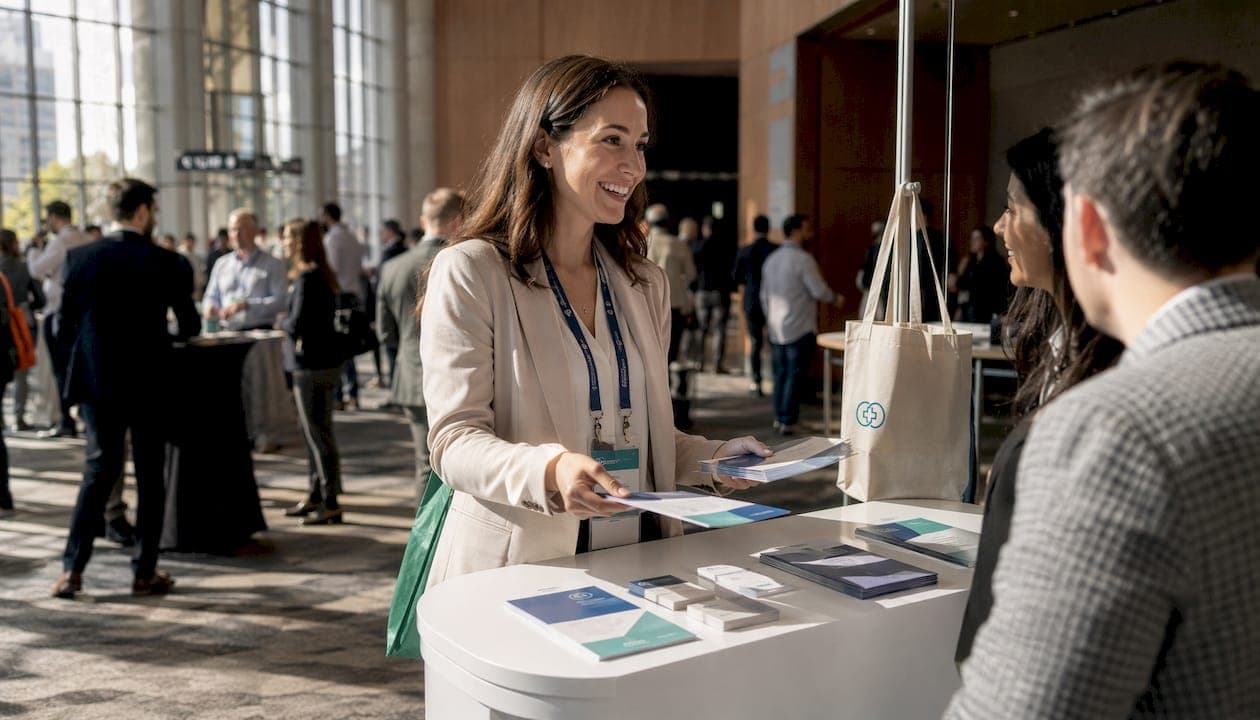
The most important medical conferences in 2026 span cardiology, oncology, health IT, nursing leadership, pharma, and executive strategy. Whether you are a physician chasing CME credits, a healthcare executive tracking industry shifts, or a medical student building your network, the right event can define your year. Here is a fast-reference list of the major US medical conferences in 2026, followed by a full comparison and selection guide.
Key 2026 US medical conferences at a glance:
- J.P. Morgan Healthcare Conference 2026 — January 12–15, San Francisco, CA. Healthcare investment and strategy. Target: executives and investors.
- HIMSS Global Health Conference and Exhibition 2026 — spring 2026, Las Vegas, NV. Health IT and digital health. Target: health IT professionals and clinicians.
- ViVE 2026 — spring 2026, Nashville, TN. Health innovation and technology. Target: innovators and cross-sector professionals.
- ACHE Congress on Healthcare Leadership 2026 — spring 2026, Chicago, IL. Executive leadership development. Target: hospital and health system leaders.
- HFMA Annual Conference 2026 — june 2026, Denver, CO. Healthcare financial management. Target: financial executives and analysts.
- AHA Leadership Summit 2026 — july 2026, Dallas, TX. Cardiovascular care leadership. Target: cardiology professionals.
- AONL 2026 Annual Conference — spring 2026. Nursing leadership. Target: nurse leaders and administrators.
- American Society of Clinical Oncology (ASCO) Annual Meeting 2026 — may/june 2026, Chicago, IL. Oncology research and clinical care. Target: oncologists and cancer researchers.
- Becker's Healthcare Annual Meeting — april/may 2026, Chicago, IL. Healthcare business and management. Target: healthcare managers and executives.
- MCE Conferences — multiple dates and locations across the US. Specialty CME events. Target: physicians seeking accredited CME.
- Lifestyle Medicine Conference 2026 — november 8–11, Orlando, FL (and online). Lifestyle and preventive medicine. Target: clinicians in behavior change and prevention.
- HLTH 2026 — november 15–18, Las Vegas, NV. Healthcare innovation and leadership. Target: healthcare executives and innovators.
- Forbes Healthcare Summit 2026 — fall 2026, New York, NY. Healthcare thought leadership. Target: executives and entrepreneurs.
- Fierce Pharma Week 2026 — fall 2026. Pharmaceutical industry. Target: pharma professionals and industry partners.
- AHA Rural Health Leadership Conference — 2026, location varies. Rural healthcare delivery. Target: professionals serving rural populations.
- ACHE Congress on Healthcare Leadership 2026 — spring 2026, Chicago, IL. Leadership development. Target: health system leaders.
- Health 2.0 Conference — fall 2026. Digital health startups and technology. Target: entrepreneurs and digital health professionals.
- Boston MEDevice Conference — 2026, Boston, MA. Medical device innovation. Target: medtech professionals and developers.
- Rise West 2026 — 2026, western US. Healthcare workforce and innovation. Target: workforce developers and innovators.
Registration costs vary widely, from free or low-cost virtual access to multi-day in-person packages exceeding $2,000 for major events like HIMSS or ASCO. Early registration consistently delivers the best rates and secures preferred hotel blocks near the venue.
1. Side-by-side comparison of major 2026 US medical conferences
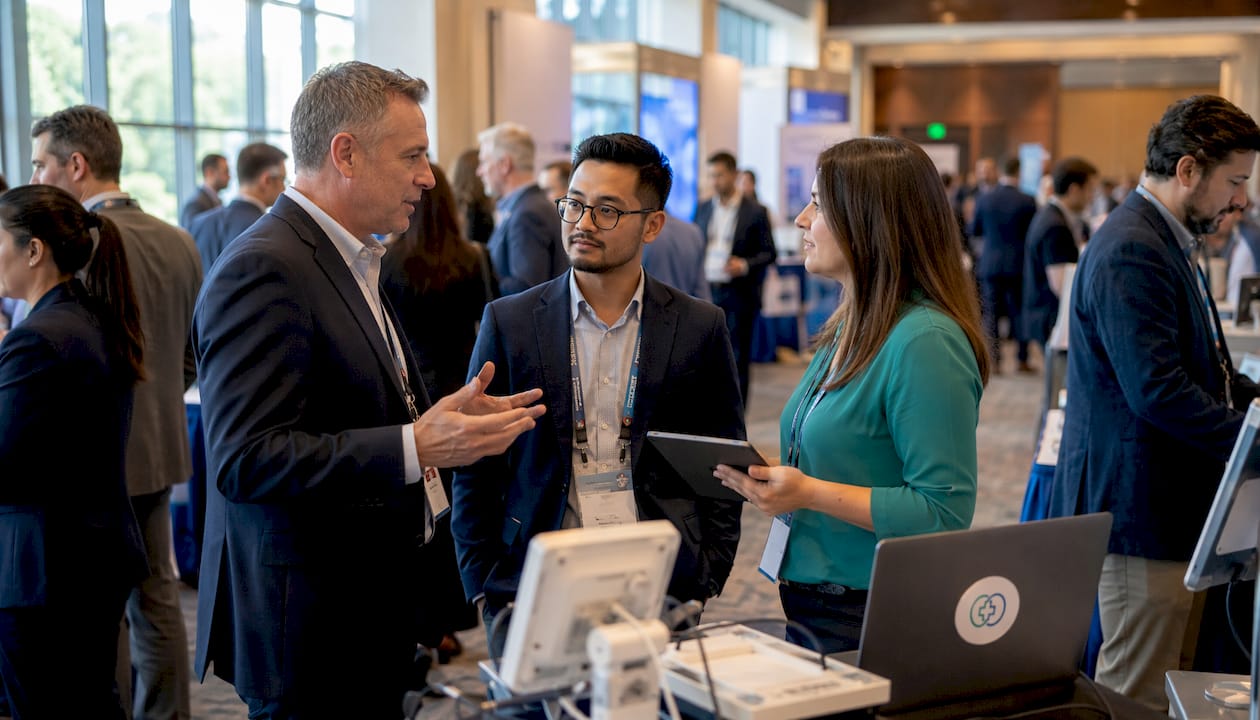
The 18 conferences below cover the full spectrum of US medical events in 2026, from oncology science to health finance to rural care delivery.
| Conference | Dates | Location | Focus Areas | Target Audience | Registration Pricing |
|---|---|---|---|---|---|
| MCE Conferences | Multiple 2026 dates | Various US cities | Multi-specialty CME | Physicians | Varies by event |
| HLTH 2026 | Nov 15–18 | Las Vegas, NV | Health innovation, leadership | Executives, innovators | $2,000+ |
| Lifestyle Medicine Conference 2026 | Nov 8–11 | Orlando, FL + online | Lifestyle, preventive medicine | Clinicians | Tiered; virtual available |
| J.P. Morgan Healthcare Conference 2026 | Jan 12–15 | San Francisco, CA | Investment, strategy | Executives, investors | Invitation-based |
| HIMSS Global Health Conference and Exhibition 2026 | Spring 2026 | Las Vegas, NV | Health IT, digital health | IT professionals, clinicians | $1,500–$2,000+ |
| ViVE 2026 | Spring 2026 | Nashville, TN | Innovation, health IT, business | Innovators, cross-sector pros | $1,500–$2,000 |
| AHA Leadership Summit 2026 | July 2026 | Dallas, TX | Cardiovascular leadership | Cardiology professionals | — |
| HFMA Annual Conference 2026 | June 2026 | Denver, CO | Healthcare finance | Financial executives | $1,500–$2,000 |
| AONL 2026 Annual Conference | Spring 2026 | TBD | Nursing leadership | Nurse leaders | — |
| Forbes Healthcare Summit 2026 | Fall 2026 | New York, NY | Thought leadership, innovation | Executives, entrepreneurs | Invitation/tiered |
| Fierce Pharma Week 2026 | Fall 2026 | TBD | Pharma innovation, networking | Pharma professionals | $1,500–$2,000 |
| AHA Rural Health Leadership Conference | 2026 | TBD | Rural healthcare delivery | Rural health professionals | — |
| ACHE Congress on Healthcare Leadership 2026 | Spring 2026 | Chicago, IL | Executive leadership | Hospital/health system leaders | — |
| Health 2.0 Conference | Fall 2026 | TBD | Digital health startups | Entrepreneurs, digital health pros | — |
| Becker's Healthcare Annual Meeting | April/May 2026 | Chicago, IL | Healthcare business, management | Managers, executives | $1,500–$2,000 |
| Boston MEDevice Conference | 2026 | Boston, MA | Medical device innovation | Medtech professionals | $500–$1,000 |
| Rise West 2026 | 2026 | Western US | Workforce, innovation | Workforce developers | — |
| ASCO Annual Meeting 2026 | May/June 2026 | Chicago, IL | Oncology research, clinical care | Oncologists, researchers | $500–$1,000 |
Format breakdown across 2026 US medical events:
- In-person only: J.P. Morgan Healthcare Conference, ACHE Congress, Becker's Healthcare Annual Meeting, Boston MEDevice Conference
- Hybrid (in-person + virtual): Lifestyle Medicine Conference, HIMSS, ASCO Annual Meeting, HLTH, ViVE
- Virtual options available: Lifestyle Medicine Conference, ASCO, HIMSS
The ASCO Annual Meeting is the premier global oncology scientific gathering, drawing tens of thousands of oncologists and researchers to Chicago each year. Its scientific program covers late-breaking trial data, tumor-specific sessions, and clinical practice updates that directly shape cancer care protocols. ASCO also offers CME credits and a robust abstract submission program, with deadlines typically falling several months before the meeting.
HIMSS Global Health Conference and Exhibition is the largest health IT event in the US, combining a massive exhibition floor with education tracks on interoperability, cybersecurity, AI in clinical settings, and population health. Clinicians attending HIMSS gain exposure to medical AI capabilities that are moving from pilot programs into routine practice.

The J.P. Morgan Healthcare Conference runs on an invitation-based model, making it the most selective event on this list. It draws CEOs, CFOs, and investors from across the health sector for four days of company presentations and deal-making. Attendance is not open to the general public, but the conference's published presentations and coverage are widely followed across the industry.
MCE Conferences fills a distinct gap by running multiple specialty-focused CME events throughout the year across different US cities. For physicians who need accredited continuing education in a specific subspecialty, MCE's calendar offers more scheduling flexibility than a single annual meeting.
Key conference themes for 2026:
- AI integration in clinical workflows and diagnostics
- Healthcare workforce challenges and retention strategies
- Rural health access and delivery models
- Oncology precision medicine and early detection
- Healthcare finance and value-based care models
- Digital health startup ecosystems and regulation
2. How to choose the right medical conference for your 2026 goals
Choosing a conference starts with a clear statement of what you need from it. A hospitalist seeking cardiology CME credits has different priorities than a health system CFO evaluating revenue cycle vendors. Getting that clarity first saves time and registration fees.
Criteria to evaluate before registering:
- Learning goals: Define whether you need clinical updates, leadership skills, research exposure, or hands-on procedural workshops. Platforms like eMedEvents and the AAFP's event portal let you filter by subspecialty and CME type, which narrows the field quickly.
- CME accreditation: Confirm the conference is accredited by the ACCME or a recognized specialty board body. Check the credit type (AMA PRA Category 1, MOC points, ANCC contact hours for nurses) against your specific board requirements before registering.
- Format preference: In-person attendance maximizes networking but adds travel and accommodation costs. Hybrid events like the Lifestyle Medicine Conference and ASCO offer virtual tracks at lower price points, useful for medical students or early-career physicians with tighter budgets.
- Specialty alignment: Attending a conference outside your core specialty can be valuable, but your primary event each year should match your clinical focus. An oncologist gets more from ASCO than from a general health IT event.
- Registration and abstract deadlines: Early registration for major congresses avoids fee increases of 20–40% and secures hotel availability near the venue. Abstract submission windows close months before the event, often in late winter for spring meetings.
- Total cost: Registration is only one line item. Budget for flights, hotel, ground transport, and conference materials. Attendees often underestimate additional expenses beyond the registration fee, particularly for multi-day events in high-cost cities like San Francisco or New York.
- Visa requirements: For international attendees, major societies provide visa letter request tools on their registration pages. Apply immediately after booking, since consulate processing times vary widely and can run several weeks.
Pro Tip: Build a shortlist of three conferences at the start of each year, ranked by specialty fit and CME value. Register for your top choice during the early-bird window, then evaluate the others based on budget remaining. This approach prevents the common mistake of committing to too many events and attending none of them well.
Matching format to your schedule matters as much as matching content to your specialty. A physician with limited travel flexibility gets more value from a hybrid event with strong virtual programming than from an in-person-only conference that requires five days away from practice. The right CME conference is the one you can attend fully, not just register for.
3. What you actually gain from attending medical conferences in 2026
The professional return from a well-chosen conference is concrete and measurable. CME credits are the most obvious output, but they are far from the only one.
Documented benefits of conference attendance:
- CME credit acquisition: Most major US conferences offer AMA PRA Category 1 credits. Credits must be claimed through official portals within a specific post-event window, typically within 30–60 days of the meeting. Missing that window invalidates the credits entirely.
- Exposure to current research: ASCO's annual meeting presents late-breaking trial data that reshapes oncology practice within months of publication. HIMSS showcases health IT deployments that are already live in major health systems.
- Hands-on skill building: Workshops at events like the ACHE Congress and AONL Annual Conference offer structured leadership and management skill development that is difficult to replicate through online modules.
- Networking and career growth: Conference networking creates professional connections that drive career advancement, referral relationships, and collaborative research opportunities.
- AI and technology exposure: The 2026 conference calendar reflects a clear shift toward practical AI applications in clinical settings. HIMSS, ViVE, and Health 2.0 all feature sessions on AI in diagnostics and workflow integration, moving well past theoretical discussions into deployment case studies.
Hidden costs to plan for:
- Hotel rates near major convention centers in Las Vegas, Chicago, and San Francisco can exceed $250–$400 per night during peak conference weeks.
- Conference materials, printed proceedings, and optional workshop fees add to the total.
- Lost clinical revenue during multi-day absences is a real cost for physicians in private practice.
The career value of medical conference networking compounds over time. A single conversation at ASCO or HIMSS can lead to a co-authorship, a job referral, or a research collaboration that shapes the next several years of a career. That return does not show up on a CME transcript, but it is often the most durable outcome of attendance.
2026 conferences also reflect a broader shift in what healthcare employers want from professionals. Events like Rise West and the ACHE Congress address skills healthcare employers prioritize in leadership, workforce management, and technology adoption, making attendance directly relevant to career advancement beyond clinical practice.
4. Connectedmedics' perspective on maximizing conference value
Conferences deliver the most value when professionals arrive with a plan and follow through after the event ends. Showing up without a clear agenda, collecting business cards, and returning to routine is the most common way to waste a $1,500 registration fee.
Before the conference:
- Review the full program and mark sessions aligned with your CME goals and clinical interests.
- Use the attendee directory or app to identify specific people you want to meet.
- Update your profile on Connectedmedics so new connections can find your verified credentials and specialty after the event.
During the conference:
- Prioritize workshops and small-group sessions over large plenary lectures for networking density.
- Ask speakers specific questions after sessions rather than generic ones. A pointed clinical question is a better conversation starter than a compliment.
- Connect with exhibitors selectively. Focus on vendors whose products are directly relevant to your practice or research.
After the conference:
- Claim CME credits through the official portal within the required window. Missing the deadline invalidates credits regardless of attendance.
- Follow up with new contacts within 48 hours while the conversation is still fresh.
- Review clinical research updates covered at the event and share relevant findings with your team.
Connectedmedics supports healthcare professionals at every stage of this cycle. The platform's verified professional profiles make post-conference follow-up more credible than a LinkedIn connection request, and its clinical knowledge hub helps professionals stay current between events. For medical students and early-career physicians, the platform's global jobs board with over 4,600 active healthcare vacancies turns conference networking into concrete career opportunities.
The conferences that generate the most career return are not always the largest ones. A focused specialty meeting with 500 attendees often produces more meaningful connections than a 30,000-person expo where every conversation competes with noise and exhibit hall distractions.
Connectedmedics: a different approach to professional growth between conferences
The conferences listed above are the best in-person options for US healthcare professionals in 2026. Each delivers real value in its category. But the professional development work that happens between events, maintaining connections, tracking clinical research, and finding career opportunities, is where most professionals lose momentum.
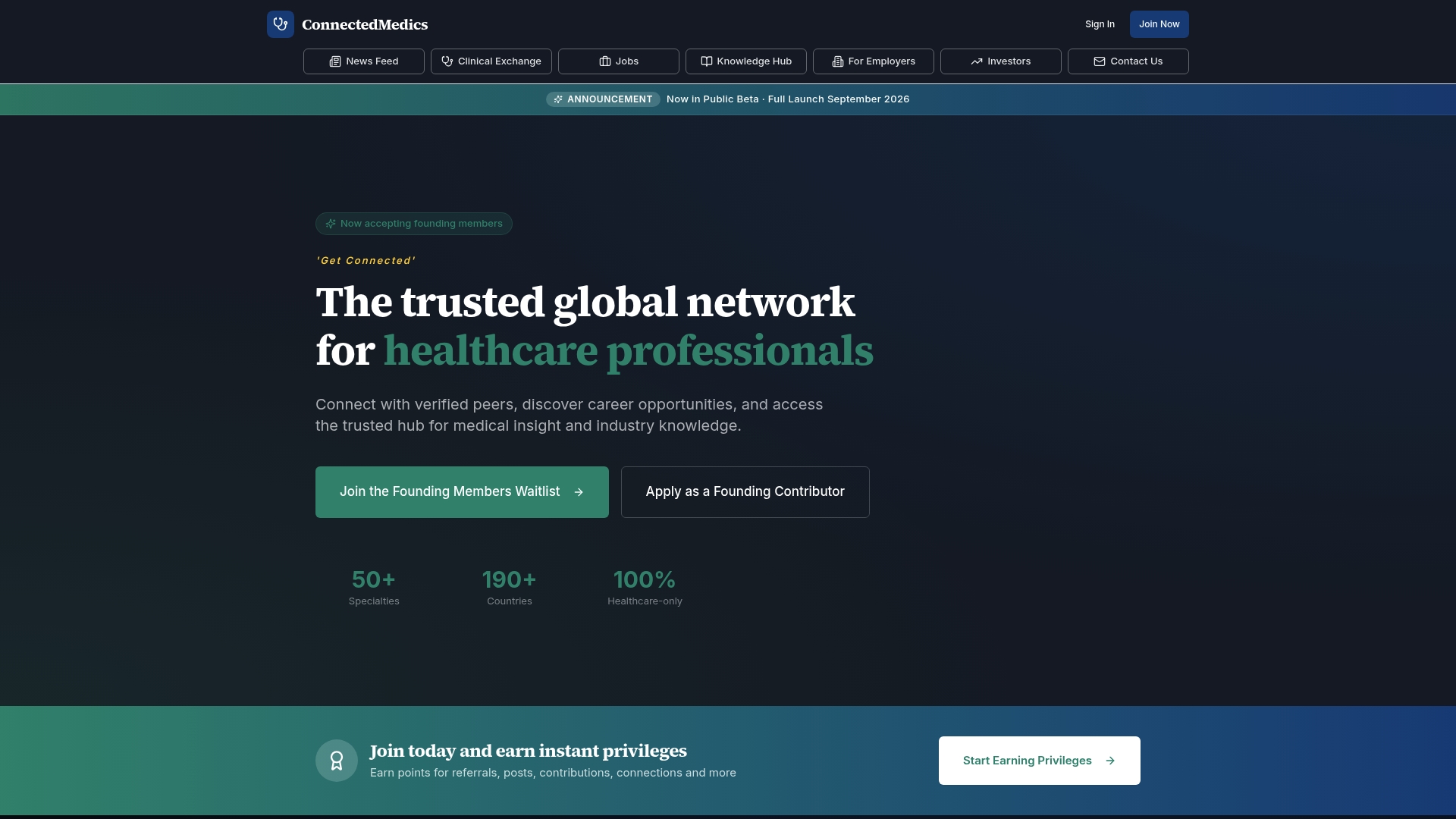
Connectedmedics is built specifically for that gap. Unlike LinkedIn, which serves every industry, Connectedmedics is a verified healthcare professional network where every profile is credentialed, every job listing is healthcare-specific, and the knowledge hub surfaces peer-reviewed clinical insights rather than general business content. Physicians, nurses, and executives use it to maintain the connections they build at events like ASCO, HIMSS, and HLTH throughout the year, not just during conference season. With over 4,600 active healthcare vacancies and a knowledge hub contributed to by verified medical experts, it functions as the professional infrastructure that makes conference attendance more productive over the long term.
Key Takeaways
The most valuable medical conference in 2026 is the one that matches your specialty, CME requirements, and career goals, registered early enough to avoid fee increases and accommodation shortages.
| Point | Details |
|---|---|
| Early registration saves money | Late registration for major congresses can cost 20–40% more and limits hotel availability near the venue. |
| CME credits require post-event action | Credits must be claimed within 30–60 days via official portals; missing the window invalidates them. |
| Format affects total cost | Hybrid events like Lifestyle Medicine Conference and ASCO offer virtual tracks at lower cost than full in-person attendance. |
| AI is a defining 2026 theme | HIMSS, ViVE, and Health 2.0 all feature sessions on practical AI deployment in clinical settings. |
| Connectedmedics extends conference value | The platform's verified profiles, jobs board, and clinical knowledge hub support networking and career growth between events. |