
Patient safety updates are formal alerts and guidance issued by authoritative bodies to help healthcare professionals prevent harm, reduce medical errors, and improve care outcomes. The primary issuers in the US and globally include the Agency for Healthcare Research and Quality (AHRQ), NHS England's National Patient Safety Alerts program, and the Child Health Patient Safety Organization (PSO). These updates address risks ranging from healthcare-associated infections and medication errors to falls and diagnostic failures. Clinicians, administrators, and safety officers are expected to act on alerts promptly, not file them away.
Key facts about patient safety alerts:
- Purpose: Prevent patient death or disability by directing providers to take specific, time-bound actions.
- Issuers: AHRQ (US), NHS England National Patient Safety Alerts (England), Child Health PSO (pediatric focus), CDC/NHSN (surveillance standards), and the Joint Commission.
- Scope: Cover infection control, medication safety, falls, device risks, and diagnostic errors.
- Update frequency: Alerts are issued on a rolling basis as new incidents or risks are identified.
- Provider obligation: Receipt of an alert triggers a duty to review, implement, and document the required changes.
Table of Contents
- How patient safety alerts are generated and issued
- What clinicians and safety officers are responsible for
- Recent notable patient safety alerts: 2023–2025
- Emerging insights in patient safety and proactive strategies
- Key Takeaways
- Stay current with verified clinical safety resources
How patient safety alerts are generated and issued
Alerts do not appear arbitrarily. Each one follows a structured process from incident identification through expert validation to formal publication.
Criteria for issuing an alert typically include:
- Severity of potential harm (death or permanent disability)
- Frequency of the incident or near-miss across facilities
- Evidence that the risk is preventable through a defined action
- Confirmation that the issue is not already addressed by existing guidance
Once a candidate issue is identified, review panels that include frontline clinicians, patient representatives, and safety experts evaluate whether the evidence supports a national alert. NHS England's process, for example, requires that all National Patient Safety Alerts meet the National Patient Safety Alerting Committee (NaPSAC) thresholds before publication. In the US, AHRQ coordinates similar expert review for its safety guidance and Patient Safety Organization (PSO) framework.
Dissemination mechanisms include:
- NHS England's Central Alerting System (CAS) for England-based providers
- AHRQ's PSNet Weekly Resource for US clinicians, which aggregates current patient safety literature and news
- CDC/NHSN direct updates to enrolled facilities
- Joint Commission Sentinel Event alerts distributed to accredited organizations
Urgency levels vary. Some alerts require immediate action within days; others set a compliance window of weeks or months. The Joint Commission's 2027 alignment of Sentinel Events with NQF Serious Reportable Events, for instance, requires hospitals to map data systems months in advance to manage reporting burden and maintain compliance.
What clinicians and safety officers are responsible for
Receiving an alert is the start of a process, not the end of one. Providers carry specific duties once an alert lands.
Core responsibilities:
- Review alerts promptly upon receipt and assess local applicability.
- Implement recommended protocols or system changes within the stated timeframe.
- Communicate updates to all relevant clinical staff, not just department heads.
- Document every action taken in response, including dates and staff involved.
- Incorporate alert content into ongoing training and quality improvement cycles.
Failure to act carries consequences. NHS England is explicit: non-compliance with National Patient Safety Alerts can trigger regulatory action by the Care Quality Commission (CQC), and declared compliance is a key inspection indicator. In the US, PSO participation gives providers a confidential, legally protected environment to report and analyze safety events, but that protection depends on active engagement, not passive membership.
Patient engagement adds another layer. Encouraging patients to question medication appearance or effects before administration functions as a frontline check that catches errors clinical workflows sometimes miss. Clinicians who build this into their practice create a safety net that alerts alone cannot provide.
Pro Tip: Build a local alert tracking log that records receipt date, assigned owner, implementation steps, and sign-off date for every alert. This single habit converts compliance from a reactive scramble into a documented, auditable process.
Recent notable patient safety alerts: 2023–2025
The table below summarizes significant alerts from NHS England and key US safety bodies over the past two years.
| Date | Issuer | Alert Topic | Key Action Required |
|---|---|---|---|
| December 2025 | NHS England | Adult breathing circuits lacking patent exhalation route | Audit and replace non-compliant circuits |
| November 2025 | NHS England | Incorrect recording of penicillin allergy | Update allergy recording systems and staff training |
| September 2025 | NHS England | Delayed rasburicase administration for tumor lysis syndrome | Establish rapid administration protocols |
| — | NHS England | Oxytocin overdose risk during labor and childbirth | Review infusion pump settings and dosing protocols |
| January 2026 | CDC/NHSN | NHSN PSC Manual 2026 update: 21-day Infection Window Period for bone infections | Update surveillance data attribution workflows |
| — | NHS England | Transition to NRFit connectors for intrathecal and epidural procedures | Replace legacy connectors across all applicable units |
Key themes across recent alerts:
- Medication safety: Alerts on oxytocin overdose, rasburicase delays, and allergy misrecording all point to documentation and protocol gaps as the primary failure mode.
- Infection surveillance: The CDC's January 2026 NHSN update extended the Infection Window Period to 21 days for osteomyelitis (BONE) definitions and extended the Repeat Infection Timeframe for bone infections to the patient's current admission. These changes directly affect how facilities attribute community-organism infections and secondary bloodstream infections in surveillance data.
- Device and connector safety: The NRFit connector transition addresses a long-standing wrong-route connection risk in neuraxial procedures.
- Child health: The Child Health PSO issues action notices focused on pediatric-specific risks, including opioid dosing errors in children. A case reviewed by AHRQ's PSNet described a 2-year-old who received hydrocodone-acetaminophen after urologic surgery and subsequently died, with inadvertent dose stacking identified as a contributing factor. Pediatric providers should review opioid prescribing protocols against current PSO guidance, and those working in Georgia can find additional pediatric safety program context through the GAPP program overview.
Pro Tip: Subscribe directly to NHS England's Central Alerting System and AHRQ's PSNet Weekly Update. Both are free and deliver alerts to your inbox before they circulate through institutional channels.
Emerging insights in patient safety and proactive strategies
Traditional safety models wait for an incident before responding. The evidence increasingly favors getting ahead of the incident.

Proactive early-response teams outperform reactive protocols
Multidisciplinary early-response teams like DIvERT prevent mental state deterioration more effectively than reactive Code Grey protocols, improving outcomes for both patients and staff. The core difference is timing: DIvERT-style teams intervene when early warning signs appear, not after a crisis has developed. This model is transferable beyond behavioral health, applying to any high-risk deterioration scenario where early clinical signals are detectable.
Falls prevention is moving to AI-enabled monitoring
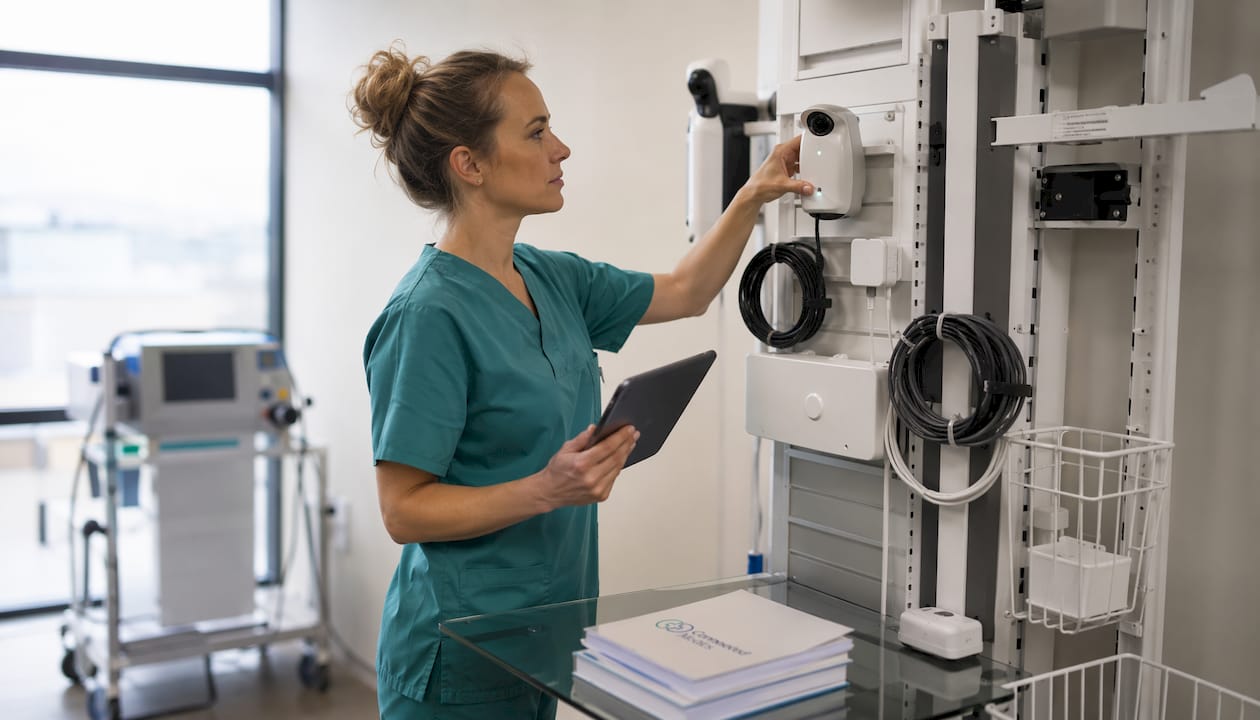
Fatal and disabling falls in Minnesota hospitals reached record numbers in recent years, and new AI-enabled monitoring systems are being deployed to predict and prevent falls faster than traditional hourly rounding. These systems analyze movement patterns and alert staff before a fall occurs, rather than documenting it afterward. Facilities that have moved beyond mandated alert compliance to build proactive monitoring workflows are seeing the clearest results.
Expertise gaps are creating new alert infrastructure risks
Recent policy freezes and cuts to infection control advisory groups have left some hospitals without key expertise for emerging disease management. When the advisory infrastructure that feeds alert generation weakens, the alerts themselves become slower and less specific. Safety officers should identify alternative expert networks and peer consultation channels now, before a gap becomes a crisis.
Long-term safety measurement remains unresolved
Despite three decades of reform, the healthcare sector still lacks verifiable measurement showing that patients are safer today than in 1995. Calls for new national patient safety studies reflect an unresolved evidence gap rather than a settled improvement. Clinicians and administrators who track local outcome data rigorously are building the evidence base that national studies will eventually need.
Emerging trends to watch:
- AI-assisted surveillance for falls, sepsis, and deterioration replacing periodic manual checks.
- Patient-centered safety cultures where patients are explicitly encouraged to flag medication concerns before administration.
- Regulatory realignment between Sentinel Events and NQF Serious Reportable Events requiring early administrative preparation.
- Telehealth-specific adverse event tracking, with VHA data showing that delays in care represent the largest category of telehealth safety incidents.
- Large language model (LLM) safety risks in clinical AI, where even small amounts of misinformation in training data can produce harmful outputs.
For clinicians tracking these shifts alongside broader clinical research updates, the pattern is consistent: proactive, data-driven safety cultures outperform reactive, compliance-only approaches.
Key Takeaways
Patient safety alerts from bodies like AHRQ, NHS England, and the Child Health PSO require prompt provider action, documented implementation, and integration into local safety culture to reduce preventable harm.
| Point | Details |
|---|---|
| Alert criteria are specific | Alerts require evidence of severity, preventability, and frequency before issuance. |
| Compliance carries regulatory weight | NHS England non-compliance can trigger CQC regulatory action; US PSO participation requires active engagement. |
| Recent alerts target medication and device risks | Key alerts cover oxytocin overdose, allergy misrecording, and connector transitions. |
| CDC NHSN updated infection surveillance in 2026 | The 21-day Infection Window Period for bone infections changes how facilities attribute secondary bloodstream infections. |
| Proactive strategies outperform reactive ones | Early-response teams and AI monitoring prevent incidents that alert-only compliance models miss. |
Stay current with verified clinical safety resources
Connectedmedics provides healthcare professionals with a verified knowledge hub, clinical research summaries, and a global jobs board with over 4,600 active vacancies. Safety officers, clinicians, and administrators use the platform to access peer-reviewed updates and connect with specialists across disciplines. For current patient safety literature, emerging clinical guidelines, and specialty-specific career opportunities, visit Connectedmedics and explore resources contributed by verified medical experts.