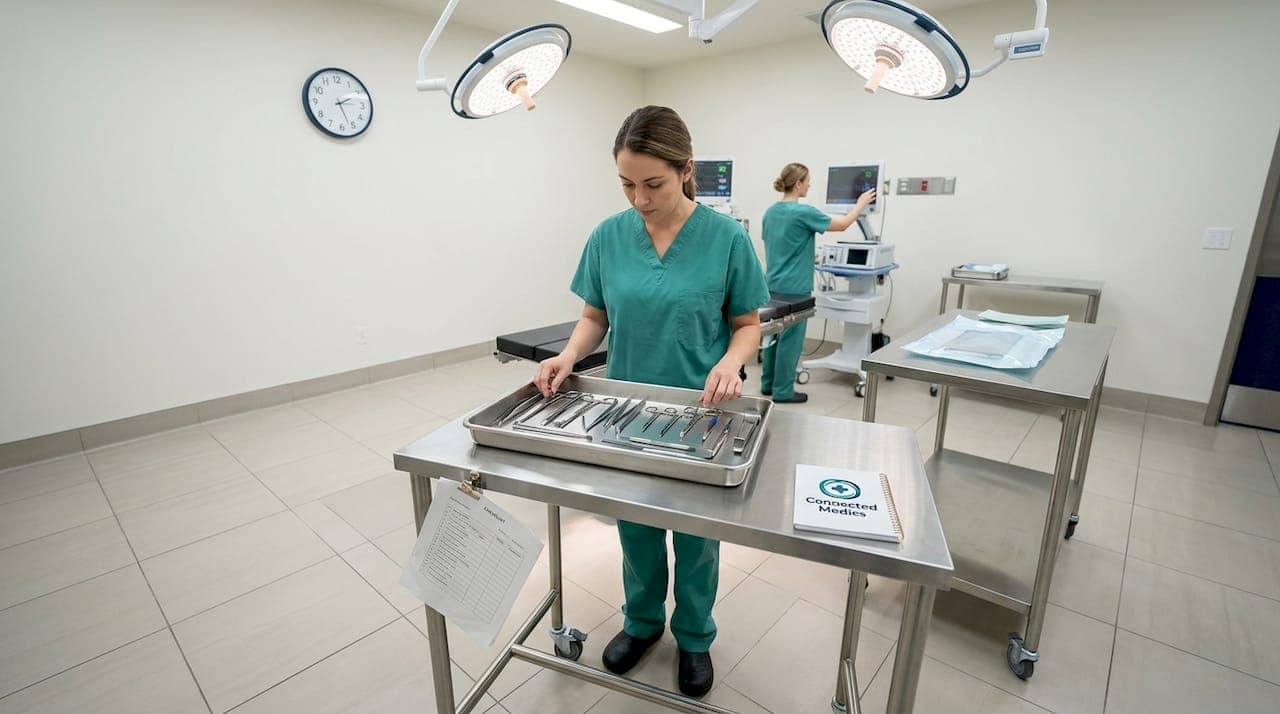
The role of healthcare assistant in theatres is far more technical and demanding than most people assume. Many healthcare students and even ward-based HCAs picture theatre work as handing over instruments and keeping the room tidy. The reality is a specialized, fast-paced environment where your decisions directly affect patient safety, surgical efficiency, and team performance. This guide breaks down exactly what theatre HCAs do, what skills the job requires, how the role is changing with new surgical technology, and how to grow within it.
Table of Contents
- Key takeaways
- Role of healthcare assistant in theatres: core duties
- Skills and competencies for theatre HCAs
- How technology is changing theatre support roles
- Practical tips for excelling in theatre roles
- Theatre HCAs in multidisciplinary teams and patient safety
- My perspective on what this role actually demands
- Advance your theatre career with Connectedmedics
- FAQ
Key takeaways
| Point | Details |
|---|---|
| Duties go beyond basic support | Theatre HCAs handle sterile preparation, patient positioning, equipment maintenance, and documentation. |
| Skills are specialized | Clinical competencies, infection control, and multidisciplinary communication are required from day one. |
| Technology is expanding the role | Robotic surgery and minimally invasive procedures demand new technical knowledge from theatre support staff. |
| Documentation matters as much as clinical work | Accurate logging of equipment use and patient transfers is a core responsibility, not an afterthought. |
| Career growth requires proactive learning | Certifications, mentorship, and employer-led training are the clearest paths to advancement in theatre roles. |
Role of healthcare assistant in theatres: core duties
Theatre HCAs do not simply fetch and carry. The responsibilities of theatre assistants span the full surgical episode, from pre-operative preparation through to post-operative handover. 30% of employers report expanded responsibilities for allied health roles due to workforce pressures, and theatre settings are where that expansion is most visible.
Here is what theatre healthcare assistant tasks typically include on a standard surgical list:
- Pre-operative preparation: Setting up the theatre environment, checking that equipment is present and functioning, and confirming sterile supplies are correctly laid out before the surgical team scrubs in.
- Patient care and positioning: Assisting with patient transfers from trolley to table, supporting correct anatomical positioning, and applying pressure-relieving devices to prevent nerve or tissue injury.
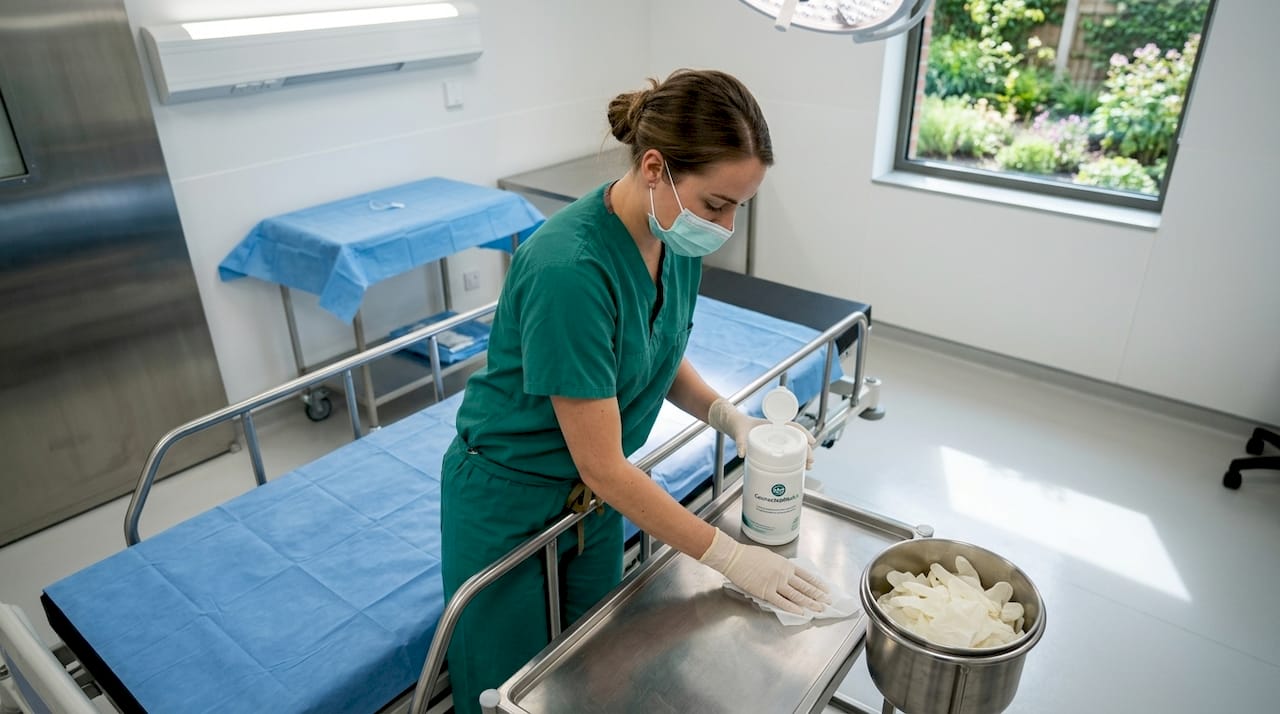
- Equipment handling and sterilization: Cleaning and decontaminating reusable instruments according to strict protocols, returning items to sterile services, and flagging any damaged or missing equipment before the next case.
- Infection control compliance: Maintaining the sterile field, disposing of clinical waste correctly, and following hand hygiene and PPE protocols throughout every procedure.
- Non-clinical documentation: Logging equipment usage, recording patient transfers, and noting any complications or incidents for the registered nurse or surgeon to review.
- Reporting equipment faults: Theatre HCAs are often the first to notice a malfunctioning device. Swift communication of issues to the scrub nurse or surgeon prevents procedural delays and reduces patient risk.
Pro Tip: Before every list, do a full walk-through of the theatre yourself. Checking that suction is working, that the correct implants are available, and that the warming blanket is ready takes five minutes and prevents the kind of delays that frustrate the whole team.
Theatre HCAs also support the anesthetic team during induction and recovery, which requires a separate set of competencies around airway awareness, monitoring, and patient communication. This is not a role where you can rely on routine. Every case is different.
Skills and competencies for theatre HCAs
Knowing what do healthcare assistants do in theatres is one thing. Having the skills to do it safely is another. High-pressure efficiency combined with sterile discipline is what separates theatre HCAs from colleagues working in ward or community settings. The competency bar is higher, and employers assess it formally.
The key skills fall into five categories:
- Clinical competencies. Basic observations, manual handling, sterile technique, and aseptic non-touch technique (ANTT) are the foundation. These are assessed through workplace observation and structured induction aligned with Care Certificate standards before you work independently.
- Communication within the multidisciplinary team. Surgeons, anesthetists, scrub nurses, and ODPs all need clear, concise information. Theatre HCAs who communicate well reduce errors and keep lists running on time. Communication and teamwork reduce surgical delays and errors, with measurable improvements in patient outcomes.
- Time management during surgical lists. A typical list might include four to eight cases. Turning a theater over quickly and correctly between cases, without cutting corners on infection control, requires genuine prioritization skills.
- Adaptability to new procedures and technology. Robotic systems, single-incision laparoscopic tools, and advanced imaging equipment are now standard in many theaters. Theatre HCAs must learn new setups and workflows as these technologies are introduced.
- Competency assessment and ongoing training. Employers require HCAs to follow employer-specific policies and national guidelines, with competencies signed off through structured observation. This is not a one-time event. Reassessment happens when new equipment or procedures are introduced.
Pro Tip: Ask your line manager or practice educator about clinical competency pathways available through your employer. Many NHS trusts and private providers have structured progression frameworks that are underused simply because staff do not know they exist.
New theatre HCAs often underestimate the physical demands and strict infection prevention measures compared to ward duties. Expect to be on your feet for extended periods, to lift and position patients under instruction, and to maintain concentration throughout long procedures.
How technology is changing theatre support roles
The theatre environment in 2026 looks different from what it did a decade ago. Theatre environments are increasingly specialized, requiring HCAs to adapt to advanced robotic surgeries and complex procedures. That adaptation is not optional. It is part of the job.
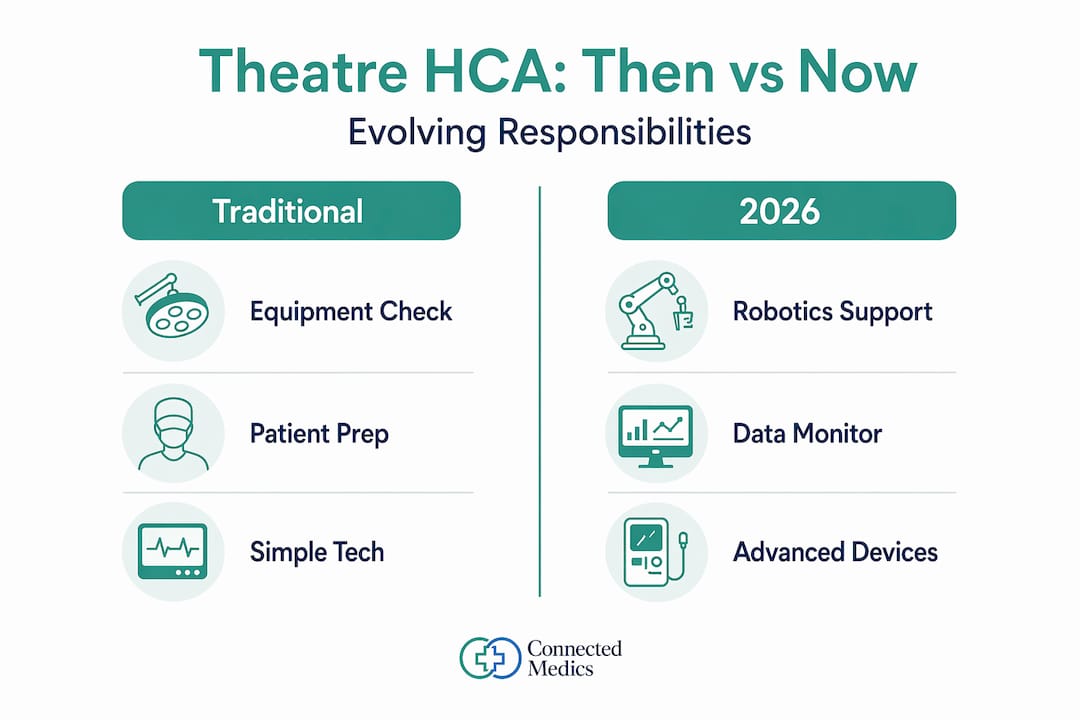
The table below shows how specific technological advances are changing the practical responsibilities of theatre support staff:
| Technology | Traditional HCA task | Expanded HCA responsibility |
|---|---|---|
| Robotic surgery systems | General equipment checks | Assisting with robot docking setup and cable management |
| Laparoscopic procedures | Standard instrument cleaning | Handling and decontaminating camera systems and light leads |
| Intraoperative imaging | Positioning X-ray cassettes | Supporting fluoroscopy setup and radiation safety protocols |
| Advanced anesthetic monitoring | Basic observations | Assisting with complex monitoring device placement |
| Single-use sterile packs | Opening standard packs | Managing specialized implant packs with traceability documentation |
Theatre HCAs must be more than assistants. They are integral technical support with growing responsibilities in specialized theaters. Continuous professional development is not a career bonus. It is a baseline expectation. HCAs who invest in learning new systems and procedures become genuinely indispensable to their surgical teams.
Practical tips for excelling in theatre roles
Strong performance in a theatre role comes down to a combination of clinical accuracy and professional attitude. Here is what separates good theatre HCAs from great ones:
- Anticipate before being asked. Successful theatre HCAs develop a proactive mindset, anticipating team needs and maintaining optimal theater conditions without waiting for direction. If the surgeon is closing and the next patient is due in 20 minutes, start your turnover preparation now.
- Own the environment. Keeping the theater organized, stocked, and clean is not a background task. It is a direct contribution to surgical safety. Ownership of environmental details is consistently cited by practitioners as a hallmark of effective theatre HCAs.
- Communicate up the chain. If you notice a problem, whether it is a faulty suction unit, a missing implant, or a patient showing signs of distress, say something immediately. Clear escalation to registered staff is one of the most critical functions a theatre HCA performs.
- Document accurately and promptly. Accurate documentation is as important as clinical assistance in theatre roles. Logging equipment use, patient positioning aids, and any incidents protects the patient and protects you.
- Pursue certifications actively. The NHA 2026 Industry Outlook highlights a growing need for allied health professional certifications. Formal qualifications in areas like perioperative care or manual handling make you a stronger candidate for senior theatre support roles.
- Build relationships with your team. Theatre lists run better when the team trusts each other. Take time to understand how each surgeon and scrub nurse prefers to work. Small adjustments in how you support them make a measurable difference to list efficiency.
Theatre HCAs in multidisciplinary teams and patient safety
Healthcare roles in operating rooms function as a system. No single person delivers safe surgery alone. Theatre HCAs sit within a multidisciplinary team that includes surgeons, anesthetists, scrub nurses, ODPs, and recovery nurses. Each member has defined responsibilities, and the HCA's contribution to that system is concrete, not peripheral.
The table below outlines how theatre HCAs contribute to each phase of the patient's surgical journey:
| Surgical phase | HCA contribution | Patient safety impact |
|---|---|---|
| Pre-operative | Theater setup, equipment checks, patient transfer | Reduces delays and prevents equipment-related incidents |
| Intraoperative | Maintaining sterile field, assisting with positioning | Lowers infection risk and prevents positional injuries |
| Post-operative | Patient transfer to recovery, environment decontamination | Supports safe handover and reduces cross-infection |
| Throughout | Documentation and incident reporting | Creates a traceable record for compliance and quality review |
Handling delicate patient positioning and assisting anesthetists require precise training and constant vigilance to prevent complications. This is not a task that can be done on autopilot. A patient positioned incorrectly for a spinal procedure can sustain nerve damage that outlasts the surgery by years.
Theatre HCAs also play a direct role in infection control. Maintaining the sterile field, managing clinical waste, and decontaminating surfaces between cases are not administrative tasks. They are patient safety interventions. When these steps are done correctly and consistently, surgical site infection rates fall.
My perspective on what this role actually demands
I have worked with and alongside theatre HCAs across multiple surgical specialties, and the honest observation is this: the role is consistently underestimated, including by the people doing it.
Most people entering theatre work for the first time focus on learning the tasks. That makes sense. But what I have seen separate the truly effective theatre HCAs is not task knowledge. It is situational awareness. Knowing when the surgeon is under pressure and the team needs calm efficiency rather than questions. Knowing that the patient on the table is awake and anxious during a regional block and adjusting your communication accordingly.
The technology shift is real and it is accelerating. HCAs who treat learning new robotic or laparoscopic setups as an inconvenience will find themselves left behind. Those who treat it as professional development will find doors opening to senior support roles, scrub training pathways, and ODP programs.
My advice: stop thinking of this as a support role and start thinking of it as a technical role with a patient care dimension. That reframe changes how you approach every shift.
— David
Advance your theatre career with Connectedmedics
Connectedmedics gives theatre healthcare assistants and other healthcare professionals access to a global professional network built specifically for the healthcare sector. The platform hosts over 4,600 active vacancies, including theatre support staff roles across NHS trusts, private surgical centers, and international facilities. Beyond job listings, the knowledge hub provides clinical guides and research summaries relevant to perioperative care, keeping theatre HCAs current with best practices. The marketplace connects professionals with courses, mentorship, and tools tailored to career advancement in surgical settings. For HCAs ready to move into senior theatre roles or explore new specialties, Connectedmedics is where that next step begins.
FAQ
What is the main role of a healthcare assistant in theatres?
The role of healthcare assistant in theatres covers pre-operative setup, patient positioning, equipment decontamination, infection control, and documentation. Theatre HCAs work under the supervision of registered nurses and ODPs throughout the surgical episode.
What qualifications do you need to work as a theatre HCA?
Most employers require completion of the Care Certificate and employer-led competency sign-off before independent working. Formal certifications in perioperative care or manual handling strengthen applications for theatre support roles.
How is the theatre HCA role different from a ward HCA role?
Theatre HCAs work in a sterile, high-pressure environment with strict infection control protocols and direct involvement in surgical procedures. The physical demands, technical requirements, and pace are significantly greater than most ward-based HCA positions.
Do theatre HCAs need to understand surgical technology?
Yes. As robotic surgery and minimally invasive procedures become standard, theatre support staff are expected to assist with equipment setup, cable management, and traceability documentation for specialized implants and devices.
Can a theatre HCA progress to other clinical roles?
Theatre HCA experience provides a strong foundation for progression into scrub practitioner training, operating department practitioner programs, or perioperative nursing pathways, particularly when combined with formal certifications and mentorship.