
Pharmacovigilance is a stable, clinically grounded career that connects patient safety, regulatory reporting, and data analysis. It is a strong choice if you like structured detective work with real stakes attached. The FDA runs FAERS to track adverse events after drugs reach the market, and the ISMP tracks medication-error trends that feed straight into hiring demand for safety staff.
You have two realistic entry paths. Path A: a clinical degree (nursing, pharmacy, medicine) paired with an entry-level safety associate role. Path B: a data or life-science background paired with pharmacovigilance-specific training. Both lead to the same destination.
This guide covers the job titles you'll encounter, the skills that actually get you hired, salary ranges by level, and a step-by-step plan to land your first role. ConnectedMedics lists pharmacovigilance openings alongside other specialty roles if you want to see what's currently hiring while you read.
- Verdict: PV is a durable, well-defined career path with clear entry points
- Best first move: pick your entry path (clinical vs. data) before you pick a course
- What you'll get here: roles, skills, pay data, and a concrete action plan
Pro Tip: Don't wait until you feel "qualified enough" to apply. Entry-level safety associate roles are built for people without prior PV experience. The training happens on the job.
Key Takeaways
Pharmacovigilance careers reward attention to detail and clinical or analytical judgment, and the field offers a clear ladder from case processor to global safety leadership.
| Point | Details |
|---|---|
| Two entry paths exist | Clinical degree plus an entry-level safety role, or a data background plus PV-specific training. |
| Roles range widely | From case processor and PV associate up through signal detection specialist and global safety officer. |
| Certifications accelerate hiring | Short courses like DIA's drug safety training and GCP certification often outweigh a generic degree. |
| Pay scales with accountability | Global safety and director-level roles pay the most due to regulatory and legal responsibility. |
| ConnectedMedics supports the search | Its jobs board and verified profiles help match healthcare professionals to PV-specific openings. |
Table of Contents
- What Is Pharmacovigilance and Why It Matters
- Common Pharmacovigilance Roles From Entry Level to Senior
- Where Pharmacovigilance Jobs Are Found
- Degrees, Skills, and Certifications Employers Want
- Pay Ranges and How PV Careers Typically Progress
- Step-by-Step: How to Break Into Pharmacovigilance
- A Day in the Life: Tasks and Tools You'll Use
- Where to Find Training and Job Openings
- What I Wish I'd Known Starting Out in PV
- How ConnectedMedics Supports Your Pharmacovigilance Job Search
- Frequently Asked Questions
- Sources
What Is Pharmacovigilance and Why It Matters
Pharmacovigilance is the science of detecting, assessing, understanding, and preventing adverse effects or other drug-related problems. It doesn't stop when a drug gets approved. It's the ongoing monitoring that happens after a medication reaches pharmacy shelves and millions of patients start using it in ways no clinical trial fully predicted.
That's where post-market surveillance comes in. The FDA Adverse Event Reporting System (FAERS) collects reports on side effects and medication errors from clinicians, patients, and manufacturers, and PV teams comb through that data looking for patterns. A peer-reviewed overview of pharmacovigilance methods describes signal detection as the core discipline: spotting a possible new risk before it becomes a widespread problem.
Employers invest heavily here because the alternative is expensive. Regulatory non-compliance brings fines and product recalls; missed safety signals bring lawsuits and reputational damage. Every year the FDA approves new drugs, and every approval adds another product line that needs lifecycle safety monitoring.
Pharmacovigilance exists because clinical trials, no matter how well designed, can never capture every reaction a drug will produce across millions of real-world patients over years of use.
- PV protects patients after a drug leaves the controlled trial environment
- Regulators require ongoing safety reporting as a condition of market approval
- ISMP's medication-error data shows how frequently near-misses and reporting gaps occur in practice
Common Pharmacovigilance Roles From Entry Level to Senior
Job titles in this field vary by company, but the ladder is fairly consistent once you know what to look for.
Entry level:
- Drug safety associate / case processor: Intakes adverse-event reports, checks them for completeness, and enters them into a safety database. This is usually your first job in PV, and it teaches you the mechanics fast.
- Pharmacovigilance associate: Similar to a case processor but often includes literature screening and basic coding work using standardized terminology.
Mid-level:
- Pharmacovigilance scientist: Evaluates case data for scientific and medical significance, writes narrative summaries, and contributes to aggregate safety reports.
- Safety physician: A medically trained role that reviews complex cases and makes causality assessments; usually requires an MD or equivalent.
- Signal detection specialist: Runs statistical analyses across safety databases to flag emerging risk patterns before they show up in a headline.
Senior and leadership:
- PV manager / director: Oversees a safety team, sets quality standards, and manages relationships with regulators.
- Global safety officer: Owns the safety profile of a product across every market it's sold in, coordinating regulatory submissions worldwide.
- Risk-management lead: Designs and executes risk minimization plans, often the most senior specialist track within PV.
Each rung up this ladder trades routine case processing for judgment calls that carry more weight, and eventually, for decisions that shape how a drug is marketed or restricted.
Where Pharmacovigilance Jobs Are Found
Pharmacovigilance roles live across a wider set of employers than most job seekers expect.
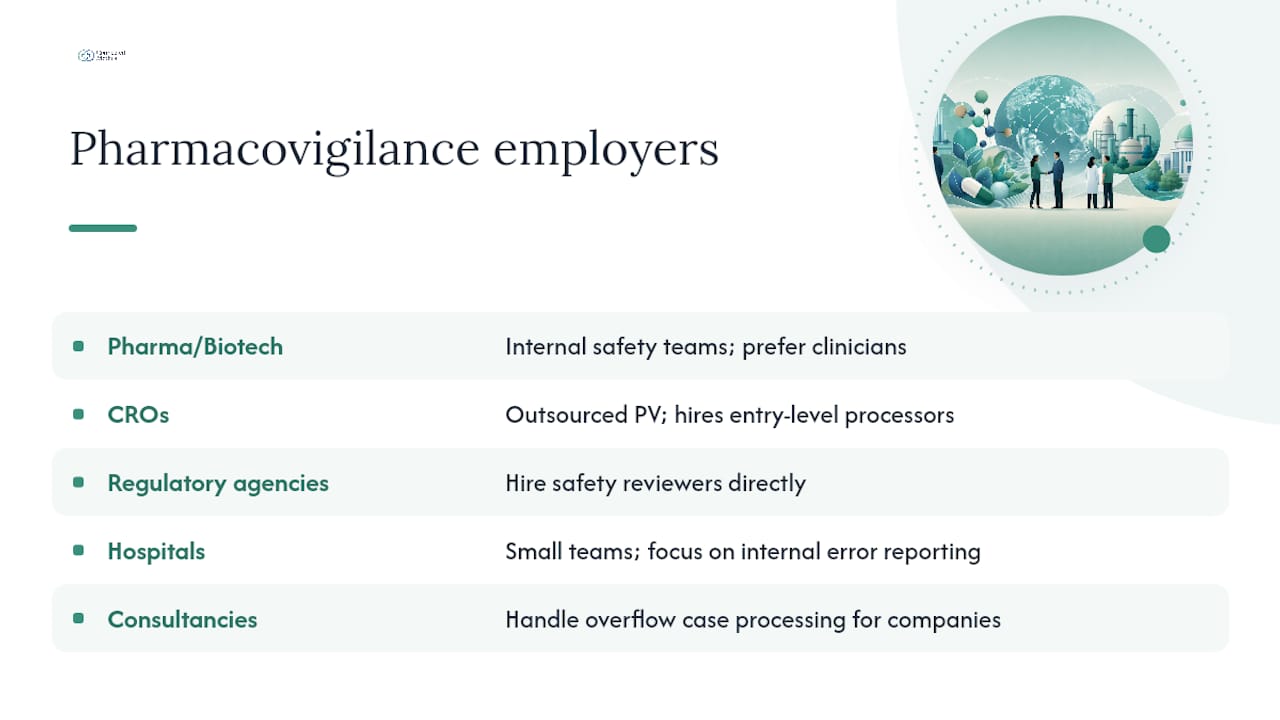
Large pharmaceutical and biotech companies run internal safety departments. Contract research organizations (CROs) run PV as an outsourced service for multiple drug sponsors at once, which means CRO roles often expose you to a broader range of therapeutic areas faster than an in-house job would. Regulatory agencies hire safety reviewers directly. Hospitals and health systems employ smaller safety teams focused on internal medication-error reporting. Specialized safety consultancies and vendor firms round out the field, handling overflow case processing for companies that don't want to build the function themselves.
Job postings show up on individual company careers pages, CRO-specific job boards, LinkedIn, and specialty platforms like the ConnectedMedics jobs board, which filters listings by healthcare specialty rather than burying them in a generic feed. Internal mobility is common too. Clinicians already inside a hospital or pharma company sometimes move into PV without ever applying externally, simply by expressing interest to their safety department.
Pro Tip: If you're a total beginner, target CROs first. They hire more entry-level case processors than in-house pharma teams and tend to run faster onboarding cycles. Experienced clinicians switching careers should go straight to in-house pharma or biotech, where clinical judgment carries more weight than raw processing speed.
Degrees, Skills, and Certifications Employers Want
Most people entering PV come from a handful of academic backgrounds: pharmacy, nursing, medicine, life sciences, biomedical sciences, or biostatistics. None of these is mandatory on its own, but employers use them as a shorthand for whether you can read a clinical case and understand what it means.
The technical skills matter more than the degree title. You'll need familiarity with MedDRA (the standardized dictionary used to code adverse events), comfort working inside safety databases like Oracle Argus or ArisGlobal, and the ability to screen medical literature for relevant safety findings. Basic statistics helps too, especially if you're eyeing a signal-detection track later. None of this requires a data science degree. It requires patience with detail and a willingness to learn software that looks intimidating on day one and becomes routine within a month.

Soft skills carry equal weight. Scientific writing is non-negotiable since case narratives get reviewed by regulators. Cross-functional communication matters because PV teams sit between medical, regulatory, and commercial departments constantly. Project management skills become essential the moment you touch aggregate safety reports with hard regulatory deadlines.
On certifications, the DIA's Introduction to Drug Safety course is one of the most recognized entry points, and it's built specifically for people without prior PV experience. Good Clinical Practice (GCP) training and CITI certification are common baseline requirements for clinical-adjacent roles. A dedicated pharmacovigilance certificate from an accredited program adds weight to a resume that otherwise has no direct PV experience listed.
Pro Tip: A short DIA course plus a GCP certificate, both completable in a matter of weeks, gives you more immediate hiring credibility than a semester-long academic program most recruiters have never heard of.
Pay Ranges and How PV Careers Typically Progress
Pharmacovigilance pay follows a fairly predictable curve tied to responsibility level, not just years on the job. Entry-level case processors and drug safety associates earn the least, mid-level scientists and signal-detection specialists earn considerably more once they're making independent medical judgment calls, and senior leadership roles command the highest pay in the field.
The highest-paid positions tend to cluster around global safety officers, PV medical directors, and risk-management leads, largely because these roles carry legal and regulatory accountability across every market a drug is sold in. A safety physician with an MD reviewing complex causality assessments will typically out-earn a case processor doing high-volume data entry, and that gap widens further at the director level.
- Case processor → PV scientist → senior scientist/manager → global safety role or medical director is the typical ladder
- Therapeutic area matters: rare disease and oncology safety work tends to pay more than generic drug categories
- Pay varies meaningfully by employer type, region, and whether the role carries direct regulatory submission responsibility
Continued FDA drug approvals keep adding new products that require lifecycle safety monitoring, which sustains steady demand for PV staff at every level. For a broader look at how healthcare compensation trends are shifting across specialties, ConnectedMedics' salary trends overview breaks down what's driving pay changes across the field.
Step-by-Step: How to Break Into Pharmacovigilance
Getting your first PV role doesn't require years of preparation. It requires the right sequence.
- Assess your skill gap. Compare your current background (clinical, data, or neither) against the core PV skill list: MedDRA coding, safety database familiarity, and scientific writing.
- Complete targeted training. Start with the DIA drug safety course, then add GCP and CITI certification if you don't already hold them.
- Rewrite your resume in PV language. If you've documented patient outcomes, tracked medication errors, or written clinical notes, translate that into bullet points like "documented and escalated adverse events per protocol" rather than generic clinical duties.
- Seek internships or volunteer case-review experience. Some CROs and hospital safety departments accept short-term volunteers or interns specifically to build a talent pipeline.
- Apply narrowly, not broadly. Target CROs and entry-level associate postings first rather than spraying applications at director-level jobs you're not ready for yet.
- Prepare for interview questions on case narratives. Practice writing a mock adverse-event summary; many interviewers ask candidates to walk through how they'd triage a hypothetical case.
Career switchers coming from clinical or regulatory backgrounds have an advantage most people underestimate: your existing skill in documentation, patient interaction, or compliance already maps closely to PV work. Build a small portfolio project, even something as simple as a mock signal-detection writeup, to show initiative during interviews.
Networking accelerates all of this. Professional bodies, LinkedIn groups focused on drug safety, and specialty communities like ConnectedMedics' healthcare networks connect you with people already working in PV who can flag openings before they're publicly posted.
Pro Tip: Ask a PV professional for a 15-minute informational call before you apply anywhere. Most will tell you exactly which skills their team actually uses day to day, which is often narrower and more specific than what the job posting lists.
A Day in the Life: Tasks and Tools You'll Use
A case processor's day centers on intake and triage: reviewing incoming adverse-event reports, checking them for completeness, and coding them accurately before they enter the safety database. A PV scientist's day looks different, built around case evaluation, narrative writing, literature review, and cross-functional meetings tied to aggregate safety reporting deadlines.
Common tools include safety databases like Oracle Argus and ArisGlobal, MedDRA for standardized coding, and basic Excel or SQL for reviewing case trends. Awareness of how FAERS functions as a public reporting system helps you understand where your internal data eventually feeds.
- Hybrid and remote arrangements are increasingly common in PV, especially for case processing and scientific writing roles
- Global teams often coordinate across time zones since safety obligations don't stop at a country's borders
- Team structures typically pair case processors with reviewing scientists and a supervising physician for complex cases
Where to Find Training and Job Openings
The DIA remains the most widely recognized training provider for drug safety fundamentals, and its courses are built for people transitioning into the field rather than academics studying it abstractly. The ISMP publishes regular medication-safety reports worth following if you want real examples of the error patterns PV teams are trying to catch. If your focus is vaccine safety specifically, the CDC's vaccine safety resources explain how that surveillance sub-area works in practice.
- Introductory courses: DIA's drug safety fundamentals track
- Mid-level: signal-detection and aggregate reporting workshops
- Advanced: PV leadership and risk-management certificate programs
- Job listings and networking: the ConnectedMedics jobs board filters specifically for healthcare and safety roles
What I Wish I'd Known Starting Out in PV
The biggest early mistake in this field is treating case processing as pure data entry. It's not. Every case you touch is a small piece of a much larger pattern, and the habits you build early (careful documentation, asking questions when a case looks odd) shape how quickly you get trusted with judgment calls later.
Balancing attention to detail with forward-looking signal detection is the real skill. Detail work gets you hired; pattern recognition gets you promoted. Use the step-by-step plan above, and lean on ConnectedMedics to connect with people already doing this work.
How ConnectedMedics Supports Your Pharmacovigilance Job Search
ConnectedMedics is built specifically for healthcare professionals, which means the roles you see on its jobs board are filtered by specialty instead of buried in a generic hiring feed built for every industry at once. That matters more in PV than most fields, since drug safety titles vary wildly by company and a generic search often returns roles that have nothing to do with what you're actually qualified for.
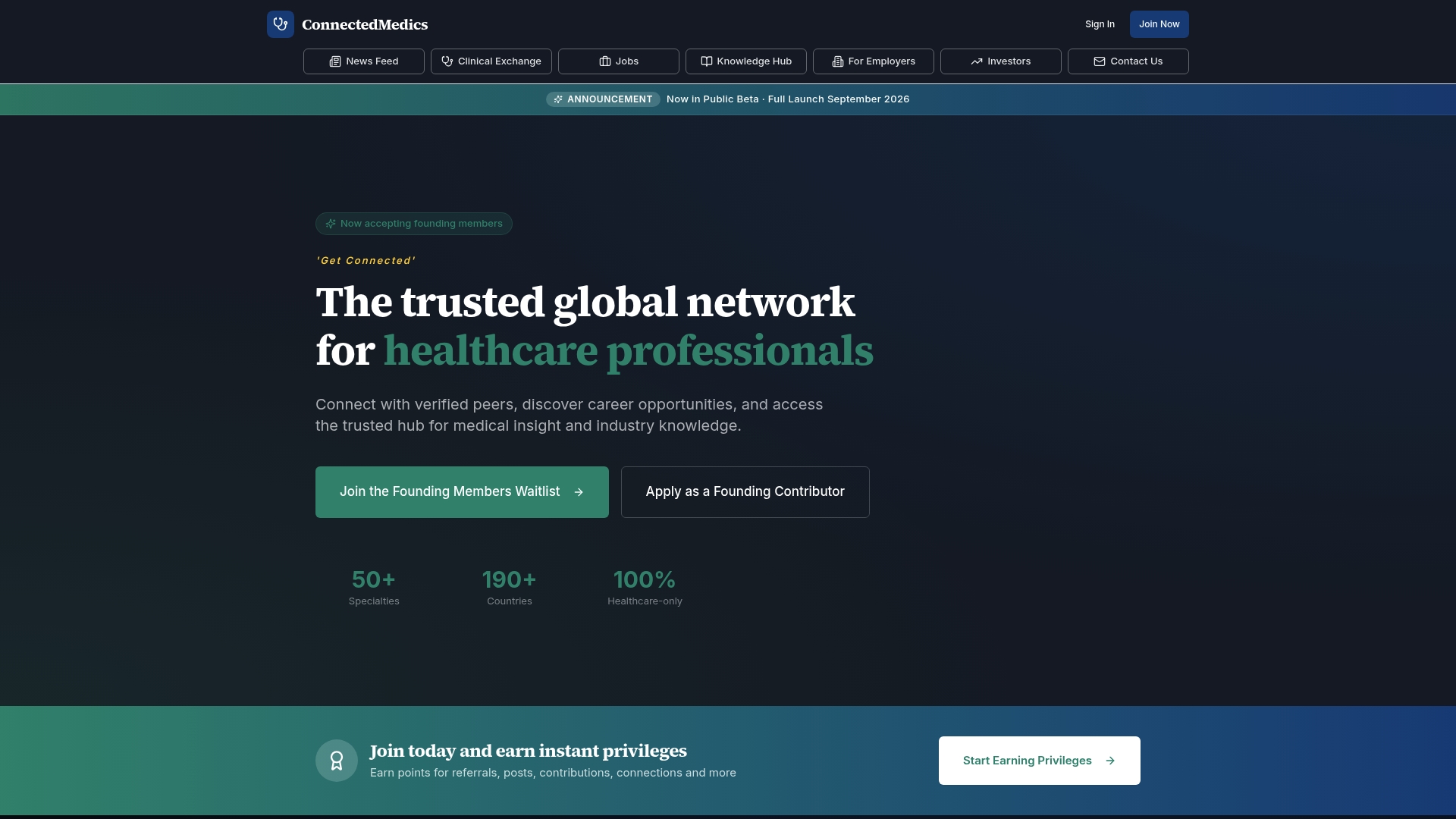
The platform pairs verified professional profiles with a curated knowledge hub summarizing clinical research and industry trends, so you can build your credibility and stay current on safety science in the same place you're job hunting. Peer-to-peer forums connect you with clinicians and PV specialists who've already made the switch you're considering. If you're ready to see what's currently open, browse healthcare-specific listings on ConnectedMedics and set up a verified profile so recruiters posting drug-safety roles can find you directly.
Frequently Asked Questions
Is pharmacovigilance a good career for someone without a clinical background? Yes, provided you build data literacy and complete targeted training. Case processing and signal detection roles increasingly value analytical and statistical skills alongside clinical knowledge.
How long does it take to become a senior pharmacovigilance specialist? Most professionals spend two to four years in entry and mid-level roles before reaching senior scientist or manager positions, though this varies by employer and how quickly you take on independent case review responsibility.
Do I need a certification to get an entry-level pharmacovigilance job? Not always, but a short course like the DIA's drug safety training plus GCP certification meaningfully improves your chances against other entry-level candidates.
What's the difference between a CRO and an in-house pharmacovigilance job? CROs handle safety work for multiple drug sponsors at once, exposing you to a wider range of therapeutic areas faster. In-house pharma roles focus on one company's product portfolio, often with deeper specialization over time.